


MARS BIBLE — PEOPLE
Steve Squyres
Steve Squyres's documented nationality or citizenship is American; the documented birthplace is Wenonah, New Jersey, United States. Steve Squyres embodied for decades a demanding idea: treat rovers as geologists working in the field. A childhood telescope, geology at Cornell and Viking images redirected his career toward the planets, followed by years of rejected proposals before Spirit and Opportunity were selected. His importance to Mars lies not only in discoveries about past water but in the persistence required to turn a 90-sol mission into scientific exploration lasting for years.
Chronological biography
Childhood, Cornell and Viking — learning to read planets as field sites
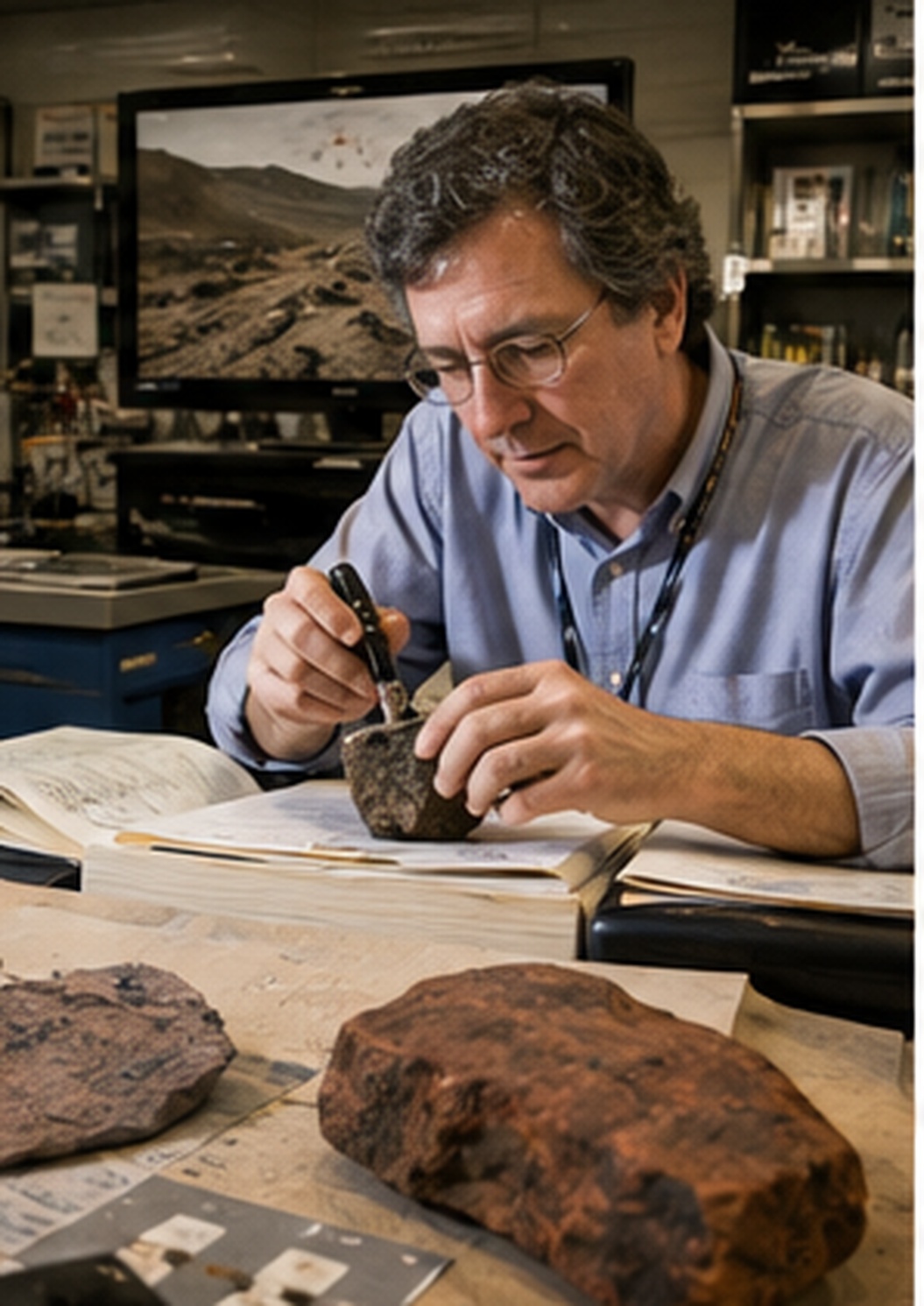
A childhood telescope, then geology: learning to read planets as terrain. Steve Squyres developed an early fascination with the sky, watching Jupiter’s moons through a telescope and recording their motion. At Cornell he nevertheless chose geology, a field that also matched his love of mountains and outdoor work. That choice became decisive. Planetary exploration needs scientists who read a landscape as physical history: layers, fractures, minerals and landforms are evidence for processes, not merely attractive images.. Squyres’ Martian turning point came while he was still a student. Geology at Cornell taught him to reconstruct history from layers, textures and minerals; Viking images then showed that an entire planet could be approached as a geological field site. He joined the Voyager generation, worked on icy worlds, and repeatedly returned to Mars. That detour through other parts of the Solar System was formative: it taught him that a mission is not merely an instrument but a chain of questions in which landscape context determines the value of each measurement.. Source
In the late 1970s he combined geology with spacecraft exploration by joining the Voyager imaging team. From 1978 to 1981 he analyzed Jupiter and Saturn encounter images and completed a doctorate on the morphology and evolution of Ganymede and Callisto under Joseph Veverka. The young geologist was learning to do field science without walking the field: an image becomes a map, morphology becomes a hypothesis, and a new resolution can overturn the earlier interpretation.
Institutional sources: Cornell — Steve Squyres biography · Cornell — retirement and education
Cornell: a few hours with Viking results redirect an undergraduate career. Steve Squyres has explained that he decided to pursue space science as a Cornell undergraduate after taking a course on the results of Viking. He changed his main field from geology to space science, earned his Ph.D. from Cornell in 1981, spent five years as a postdoctoral associate and research scientist at NASA Ames, and then returned to Cornell as a faculty member. NASA Science — Steve Squyres
The selection of Spirit and Opportunity came only after a long period in which Squyres also learned how to lose. Rejected proposals forced him to simplify instruments, sharpen objectives and connect scientific questions more clearly to constraints on mass, power and operations. That persistence is an essential part of his biography: when a rover proposal finally succeeded, it was not a concept invented in a few months but a scientific program matured through rejection. It also helps explain why the team could exploit a 90-sol mission so effectively when the vehicles kept working. Institutional source.
The path matters because the future leader of Spirit and Opportunity began as a planetary geologist, not as a rover engineer. His interests centered on water, surfaces, and planetary history. Participation in missions ranging from Voyager and Magellan to Cassini and Mars Odyssey progressively taught him how instruments, science teams, and robotic spacecraft can perform fieldwork at a distance. [source]
The unexpected longevity of Spirit and Opportunity changed the project-scientist role itself. A mission planned for months became a multi-year organisation: questions had to be reformulated, teams preserved, decisions documented and ageing instruments used without treating their survival as guaranteed. Squyres therefore learned to turn mission extensions into new scientific campaigns rather than merely longer calendars. [source]
Steve Squyres helps explain what changes when geology becomes robotic. On Earth a geologist chooses a route, kneels down, turns over a rock and changes plans in seconds. On Mars, each decision must be converted into remote observation, commands and instrument sequences. The scientist therefore has to learn rover constraints as deeply as the geology itself.
1977–1998 — Propose, lose and try again before the Mars Exploration Rovers
1977 through the 1990s: propose, lose, learn and try again before MER. Cornell notes that Squyres began preparing for the work that eventually became his Mars-rover mission as early as 1977. That timescale corrects a common misconception that a mission begins only a few years before launch. Over the following decades he participated in Voyager, Magellan, Mars Observer, Mars 96, Cassini and other programs. Some succeeded; others failed or disappeared. Each still added skills in imaging, spectroscopy, proposal development and mission selection. Source.
The future principal investigator also learned how to survive rejection. A scientifically attractive mission can lose because of cost, schedule, risk or competition. The productive response is to preserve what remains valid, revise weak assumptions and wait for another programmatic opening. That persistence explains the 2004 rovers better than a story that begins at launch.
Institutional sources: Cornell — Roving Mars and mission gestation
The Mars Exploration Rovers were designed for a nominal 90-sol mission. Their longevity changed what could be learned. Opportunity crossed large distances, compared different terrains and accumulated a stratigraphic story rather than remaining near the landing site. Spirit also transformed understanding of Gusev despite its later mobility problems. Duration became a scientific instrument, allowing seasonal observations and a long view of dust, power and hardware aging. [source]
1998–2004 — Rebuilding a Mars mission around Spirit and Opportunity
MER: turning a question about water into two robotic field geologists. Squyres became the science principal investigator for the Mars Exploration Rovers. The objective was not simply maximum driving distance but the history of water in two different regions, using instruments that could interrogate rocks as a field geologist would: panoramas, mineralogy, elemental composition, textures and abrasion all became pieces of environmental reconstruction. Source.
That role forced science and engineering to coexist every day. A wonderful outcrop may be unsafe to reach. A slope may threaten mobility. A rock may consume several sols of operations. The PI therefore has to translate a scientific question into commands the vehicle can execute, and accept that the most informative path is not always the most dramatic one.
Institutional sources: Cornell — research profile and MER
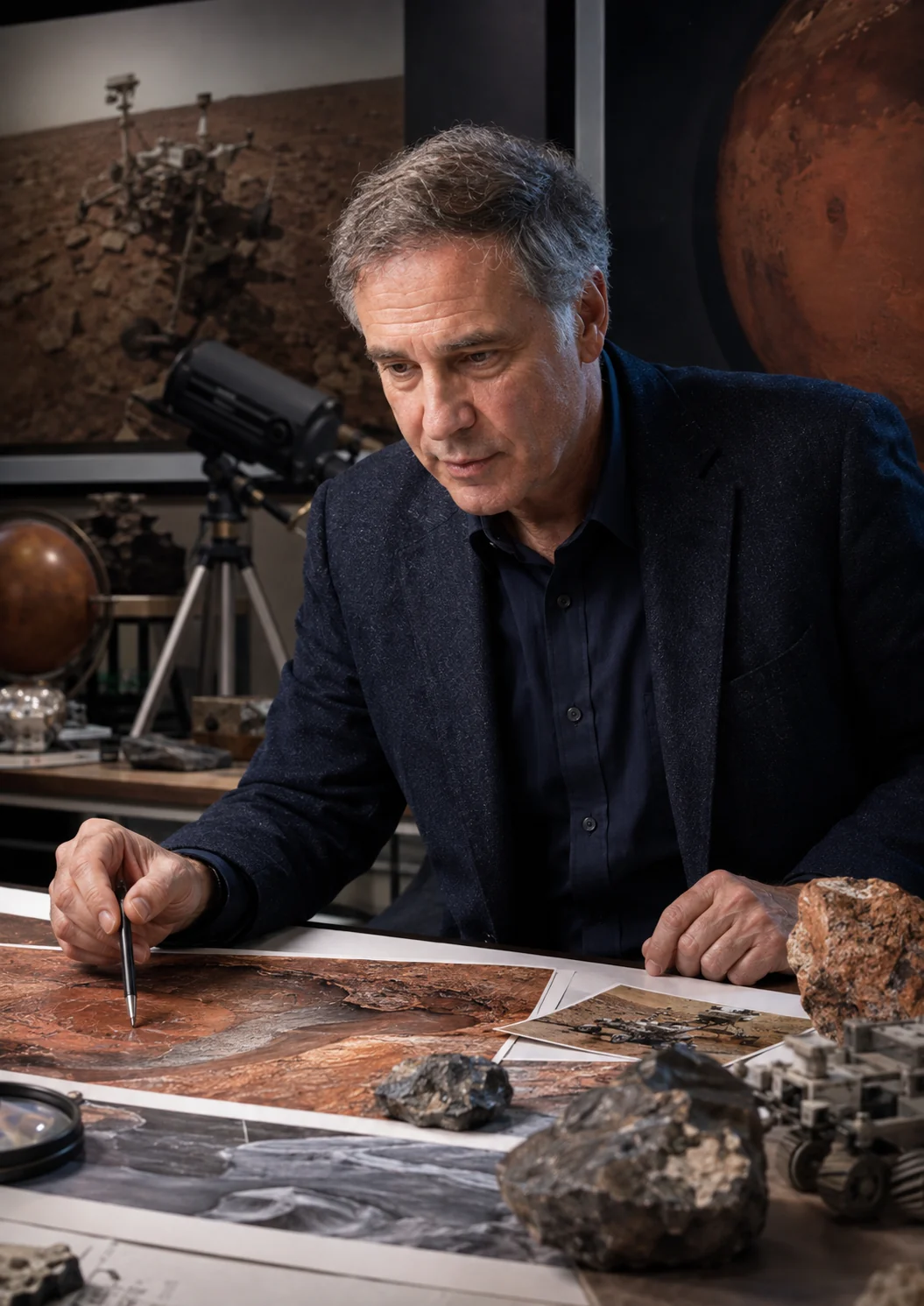
Spirit and Opportunity were designed to compare different environments and test the history of water. Squyres led a team that had to turn incomplete data into daily choices: which rock justified a detour, where to use the abrasion tool, when a longer analysis was worth the time, and how to protect the rover without missing a scientific opportunity. This combination of science and operations is why the missions produced far more than an image catalogue.
2004–2019 — From 90 sols to fifteen years of operations and geology
Opportunity was built for a nominal mission of roughly 90 sols; surviving for almost fifteen years changed the job of its principal investigator. A short mission can optimise around a defined priority list. A mission spanning many years has to manage wheel wear, changing power, dust, seasons, aging memory, new terrains and turnover among the people operating the rover on Earth. Longevity becomes an operational science of its own.
Cornell also emphasised the teaching value of that duration. Squyres could begin lectures with fresh results from Mars, and students became real mission participants. Planetary science was therefore experienced not as a finished textbook but as knowledge being revised in near-real time. 4
2004–2019: when a 90-sol mission becomes a fifteen-year school of resilience. Spirit and Opportunity landed in January 2004 with 90-sol primary missions. Both lasted far longer, and Opportunity operated for nearly fifteen years. That extension changed the organization of science. Plans had to account for aging hardware, seasons, dust, declining power, wheel condition and memory constraints. A long mission became an experiment in resilience as well as geology.
For a Mars settlement, Squyres’ legacy is therefore double. Scientifically, the rovers strengthened the evidence that ancient Mars hosted aqueous environments very different from the modern planet. Operationally, they showed that hardware can outlive its design mission when the team understands degradation and adapts behavior. Exploration becomes a continuing negotiation among terrain, science and the real condition of the machine.
Institutional sources: Cornell — Opportunity mission end after fifteen years
The late 1990s included major U.S. Mars mission failures, so Spirit and Opportunity entered a program that had to rebuild both technical capability and confidence. Squyres became principal investigator for their science payload. Designed for about ninety sols, the rovers survived far longer and changed the practice of Martian geology: daily planning, panoramas, mineral analysis, terrain selection, and adaptation to aging hardware became an operational culture in their own right. NASA — Gravity Assist with Steve Squyres
Spirit and Opportunity were designed around a 90-sol primary mission. Opportunity explored for more than fifteen years. That extension changed the science: the rover could leave the landing neighborhood, reach deeper craters, travel to Endeavour and inspect geological units that no 90-day plan could have guaranteed. Models of ancient Mars became progressively more complex, with acidic and salty waters in some environments and different chemical conditions elsewhere. [SS3] [SS4]
Squyres repeatedly emphasizes a methodological point: discoveries do not always arrive as a single Eureka moment. They emerge from accumulated evidence. That is one of the strongest legacies of the two rovers. Longevity is not merely a record; it gives a mission the scientific right to change its questions as Mars rejects answers that are too simple. [SS2] [SS3] [SS4]
Spirit and Opportunity: geology becomes a daily operation. Steve Squyres is central to understanding what it means to conduct geology when the geologist is not physically in the field. With Spirit and Opportunity, every scientific question had to become a route plan, camera sequence, instrument activity and time budget. Science and engineering were inseparable. A promising rock was useful only if the rover could reach it, power remained available, slopes were acceptable and the data could be returned safely.
That constraint changes reasoning. A terrestrial geologist can alter a plan seconds after touching a rock; a Mars team prepares sequences and waits for telemetry. Science therefore advances in cycles. Human explorers will gain enormous freedom compared with rovers, but EVAs will still be limited by safety, consumables, dust and time. The MER approach remains relevant: prioritize questions before leaving the habitat and maximize the value of every traverse.
From ninety sols to a career: learning to operate a rover that refuses to die. Squyres’s story after landing is as important as the preparation of the Mars Exploration Rovers. The teams planned for a short nominal mission; reality gave them years. The vehicle had to be relearned, available energy watched, science goals adapted, detours chosen, and decisions made about when to protect an instrument instead of pursuing another target. Opportunity therefore changed the profession of principal investigator. Science was no longer only a list of objectives written before launch but a continuing negotiation with an aging machine on a distant world. Squyres had to explain results publicly, arbitrate the priorities of a large team, and accept that some discoveries happened precisely because the rover lasted much longer than planned. That operational experience became an important precedent for any Martian infrastructure expected to work for years.
For future human exploration, Squyres's legacy is methodological. Astronauts will act faster than a rover controlled from Earth, but they will still be limited by time, energy, safety and analytical capacity. The value of an expedition will therefore continue to depend on field decisions: knowing which observation truly reduces uncertainty and which consumes resources without changing understanding of the site.
Supplementary documentary analysis
Biographical analysis, context and legacy
Thematic analysis and deeper reading
Essential timeline
- 1981Earns a Ph.D. from Cornell.
- 1980sSpends five years at NASA Ames before returning to Cornell.
- 2000Mars Exploration Rovers mission selected.
- 2003Spirit and Opportunity launch.
- January 2004Both rovers land on Mars.
- 2010–2011Spirit communications end and the mission is closed.
- 2018–2019Opportunity’s final contact and formal end of mission.
Deep reading: what this trajectory teaches
When 90 sols become years, duration changes the science
A settlement faces the same principle. A system that operates for three months has not demonstrated five-year reliability. Seals, batteries, filters, mechanisms, software and procedures age at different rates. Squyres’ rovers show the value of patient performance tracking and of organizations able to change objectives as hardware loses capability. Mars infrastructure should be judged not only by initial output, but by how quickly it consumes margin.
The principal investigator as an arbiter of priorities
A mission PI does not personally drive the rover or make every decision. The role creates coherence among instrument teams, engineers responsible for risk and a schedule that is always limited. Squyres therefore provides a model of scientific governance: defend strong questions while accepting that energy, vehicle health or an incident may force a different sequence.
A Mars base will face the same conflicts at larger scale. Scientists will want exploration, engineers will protect hardware, physicians will limit exposure and logistics teams will conserve resources. A healthy organization needs explicit rules for arbitration rather than permanent crisis negotiation. MER showed that long missions work when teams share clear criteria for priority and revise plans as new evidence arrives.
A New Jersey childhood between sky and terrain
Cornell recalls that the young Steve Squyres tracked Jupiter’s moons through a reflecting telescope, yet chose geology because he loved mountains. The two interests merged at Cornell when he realised that geology could be practiced on other worlds; his 1981 doctoral thesis under Joseph Veverka examined the morphology and evolution of Ganymede and Callisto. 1
That path explains the durable character of Squyres’s instrument choices. His payloads are designed for field geology: approach a target, establish panoramic context, inspect texture and then determine composition. Athena was therefore an instrumented extension of a geologist’s working method rather than a shopping list assembled after a rover had already been designed.
Before Mars press conferences, Steve Squyres was first a boy watching the sky through a telescope and a student who loved terrestrial landscapes. At Cornell he chose geology because mountains and field observations taught him how surfaces preserve history. That combination of field geology and astronomy prepared the habit of mind that later defined his Mars work: a planet is not merely something to image from afar, but a field site whose rocks, textures and landforms can be interrogated in sequence. [source] [source]
In the chapter “A New Jersey childhood between sky and terrain,” this framework forces a check between the precise historical fact, the scientific question actually being asked and the constraints specific to that stage of the career.
In the career of this robotic field geologist, “A New Jersey childhood between sky and terrain” provides a comparison with earlier stages.
For “A New Jersey childhood between sky and terrain,” the Mars application should therefore be stated as a specific reduction of uncertainty rather than a general promise of settlement.
As a teaching case, “A New Jersey childhood between sky and terrain” also separates three levels that are often blurred together: the observed or documented fact, the scientific interpretation that gives it meaning, and the operational decision made from that interpretation.
In “A New Jersey childhood between sky and terrain,” that boundary is intentionally part of the result: it states what this stage supports and what it still leaves open.
Voyager: learning a planet through images
As a student and graduate researcher, Squyres joined the Voyager imaging team and studied Ganymede and Callisto with Joseph Veverka. His 1981 dissertation examined the morphology and evolution of those icy moons. The young geologist learned both the power and the frustration of planetary geology: no hand touches the outcrop, yet carefully interpreted images can reveal tectonics, impact history, relative stratigraphy and thermal evolution. The lesson would later shape his insistence that Mars rovers behave as robotic field geologists rather than stationary instrument platforms. [source] [source]
What matters is not only what worked. That vulnerability makes the episode instructive. In the chapter “Voyager: learning a planet through images,” this framework forces a check between the precise historical fact, the scientific question actually being asked and the constraints specific to that stage of the career.
The chapter “Voyager: learning a planet through images” also shows that the work of a robotic field geologist is collective by construction.
For “Voyager: learning a planet through images,” the Mars application should therefore be stated as a specific reduction of uncertainty rather than a general promise of settlement.
As a teaching case, “Voyager: learning a planet through images” also separates three levels that are often blurred together: the observed or documented fact, the scientific interpretation that gives it meaning, and the operational decision made from that interpretation.
In “Voyager: learning a planet through images,” that boundary is intentionally part of the result: it states what this stage supports and what it still leaves open.
Ames: becoming a mission scientist before becoming a mission leader
After his doctorate, Squyres spent roughly five years at NASA Ames as a postdoctoral researcher and scientist. He worked across planetary problems, from Mars to icy satellites, and absorbed the culture of an agency where scientific ambition must coexist with hardware qualification, schedules, budgets and interfaces between teams. Cornell brought him back to the faculty in 1986. He returned to academia with an unusual asset: he already understood that space science is not simply a sequence of papers but a negotiation between questions, instruments, risk and operations. [source] [source]
In the chapter “Ames: becoming a mission scientist before becoming a mission leader,” this framework forces a check between the precise historical fact, the scientific question actually being asked and the constraints specific to that stage of the career.
To understand “Ames: becoming a mission scientist before becoming a mission leader,” the full chain matters more than one headline result. The robotic field geologist works inside a system where a schedule decision can change an observation, an instrument limit can redefine the testable hypothesis, and the documentation of an anomaly can matter as much as nominal success.
For “Ames: becoming a mission scientist before becoming a mission leader,” the Mars application should therefore be stated as a specific reduction of uncertainty rather than a general promise of settlement.
As a teaching case, “Ames: becoming a mission scientist before becoming a mission leader” also separates three levels that are often blurred together: the observed or documented fact, the scientific interpretation that gives it meaning, and the operational decision made from that interpretation.
In “Ames: becoming a mission scientist before becoming a mission leader,” that boundary is intentionally part of the result: it states what this stage supports and what it still leaves open.
Propose, lose, start again
Athena’s long gestation also shows how a scientific career can be built from projects that do not fly in their original form. In 1997 NASA selected a Cornell-led Athena payload for a 2001 Mars lander/rover concept, with the Cornell work then valued at $17 million. The architecture that was expected to carry it disappeared amid the restructuring that followed the 1999 Mars failures. 2
Squyres nevertheless preserved the instruments, teams and scientific logic until another vehicle existed. In July 2000 NASA selected Cornell to provide the science package and lead the science team for the 2003 rover mission. 3 The episode turned an apparently lost proposal into mature technical capital that could be reused under a demanding new schedule.
The road to Spirit and Opportunity did not begin in 2000. Squyres has described a long sequence of proposals, losses and reformulations beginning in the late 1980s. Some concepts were not selected; others were overtaken by program changes. That decade of rejection is central to his later leadership. He learned to separate the scientific objective from the particular spacecraft architecture first proposed to achieve it, to preserve mature instruments when missions disappeared, and to rebuild an exploration strategy when institutional circumstances changed. [source] [source]
Every observation has an opportunity cost. In the chapter “Propose, lose, start again,” this framework forces a check between the precise historical fact, the scientific question actually being asked and the constraints specific to that stage of the career.
At this stage, “Propose, lose, start again” reveals how experience changes judgment. The robotic field geologist never has perfect information; the skill is learning which uncertainties can be tolerated, which require another measurement and which should stop a sequence.
For “Propose, lose, start again,” the Mars application should therefore be stated as a specific reduction of uncertainty rather than a general promise of settlement.
As a teaching case, “Propose, lose, start again” also separates three levels that are often blurred together: the observed or documented fact, the scientific interpretation that gives it meaning, and the operational decision made from that interpretation.
In “Propose, lose, start again,” that boundary is intentionally part of the result: it states what this stage supports and what it still leaves open.
Athena before MER: a payload that refused to die
Athena was initially prepared for the Mars Surveyor 2001 lander. The instrument suite already embodied a complete field-geology philosophy: color stereo imaging, spectroscopy, microscopic imaging, elemental analysis, iron-bearing mineral identification and a rock abrasion tool to remove weathered coatings. When the 2001 architecture was reshaped after the Mars failures of 1999, the scientific and hardware capital was not discarded. It became a mature resource that could be repurposed into a recovery mission, illustrating how technological continuity can survive programmatic discontinuity. [source] [source]
In the chapter “Athena before MER: a payload that refused to die,” this framework forces a check between the precise historical fact, the scientific question actually being asked and the constraints specific to that stage of the career.
In the career of this robotic field geologist, “Athena before MER: a payload that refused to die” provides a comparison with earlier stages.
For “Athena before MER: a payload that refused to die,” the Mars application should therefore be stated as a specific reduction of uncertainty rather than a general promise of settlement.
As a teaching case, “Athena before MER: a payload that refused to die” also separates three levels that are often blurred together: the observed or documented fact, the scientific interpretation that gives it meaning, and the operational decision made from that interpretation.
In “Athena before MER: a payload that refused to die,” that boundary is intentionally part of the result: it states what this stage supports and what it still leaves open.
2000–2003: building two robotic geologists
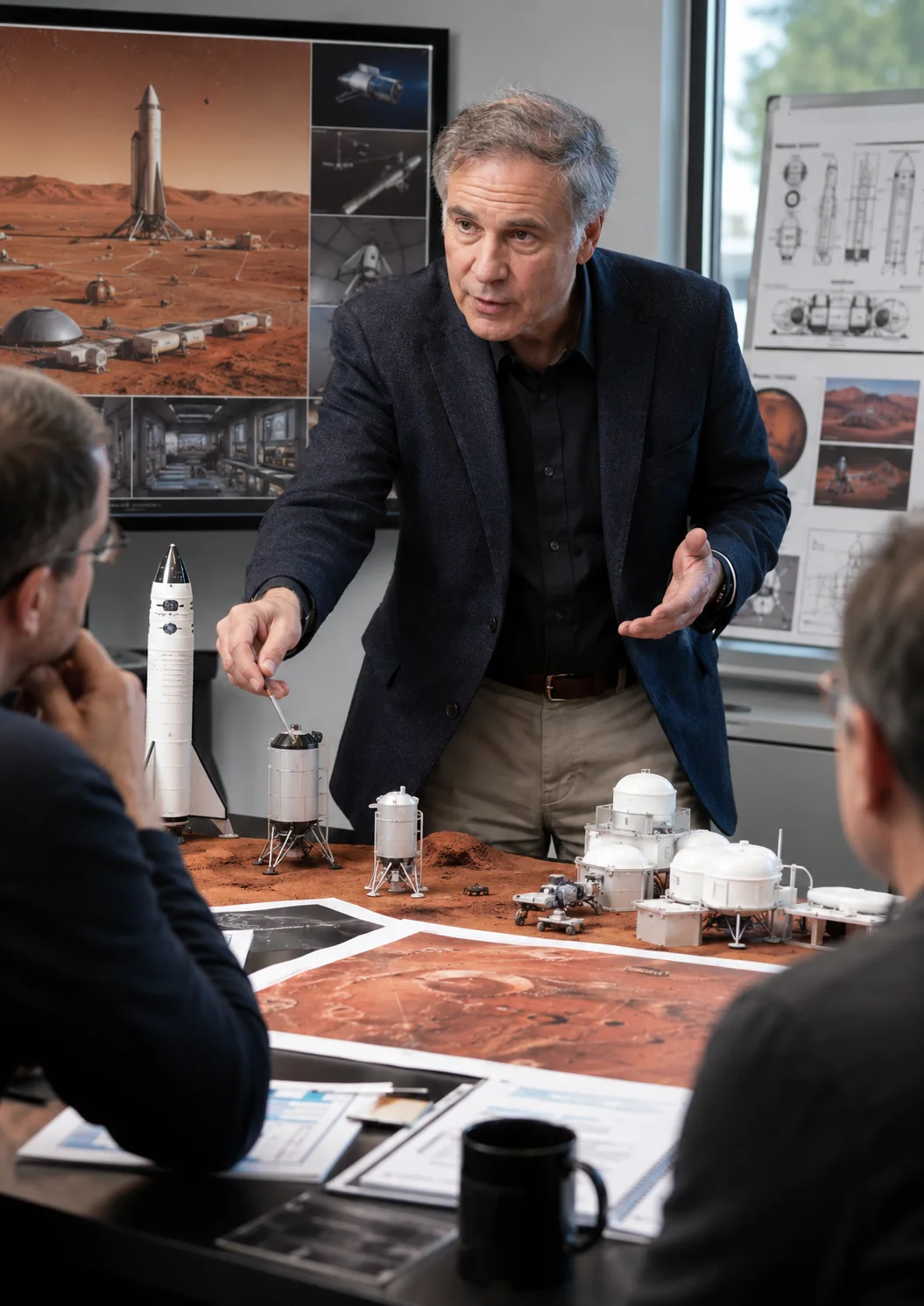
In 2000 NASA selected the rover concept and Cornell-led science package. The philosophy was explicit: give a robot complementary capabilities resembling those of a field geologist. Pancam supplies context; Mini-TES surveys mineral signatures; the microscopic imager resolves textures; Mössbauer and APXS constrain mineralogy and chemistry; the Rock Abrasion Tool exposes fresh material. The scientific value is not located in any single instrument but in the sequence of observations across scales, from landscape to outcrop to abraded rock. [source] [source]
What matters is not only what worked. That vulnerability makes the episode instructive. In the chapter “2000–2003: building two robotic geologists,” this framework forces a check between the precise historical fact, the scientific question actually being asked and the constraints specific to that stage of the career.
The chapter “2000–2003: building two robotic geologists” also shows that the work of a robotic field geologist is collective by construction.
For “2000–2003: building two robotic geologists,” the Mars application should therefore be stated as a specific reduction of uncertainty rather than a general promise of settlement.
As a teaching case, “2000–2003: building two robotic geologists” also separates three levels that are often blurred together: the observed or documented fact, the scientific interpretation that gives it meaning, and the operational decision made from that interpretation.
In “2000–2003: building two robotic geologists,” that boundary is intentionally part of the result: it states what this stage supports and what it still leaves open.
An international payload and a PI who cannot do everything
The Athena payload was the product of Cornell, JPL, the USGS, Arizona State, Honeybee Robotics, German and Danish teams and other partners. More than a hundred scientists had to share rover time, priorities and thermal constraints. The Principal Investigator therefore could not behave as a solitary author. Squyres had to create decision rules, arbitrate sequences and preserve scientific coherence while allowing each specialist to defend an instrument, a hypothesis and a target. [source] [source]
In the chapter “An international payload and a PI who cannot do everything,” this framework forces a check between the precise historical fact, the scientific question actually being asked and the constraints specific to that stage of the career.
To understand “An international payload and a PI who cannot do everything,” the full chain matters more than one headline result. The robotic field geologist works inside a system where a schedule decision can change an observation, an instrument limit can redefine the testable hypothesis, and the documentation of an anomaly can matter as much as nominal success.
For “An international payload and a PI who cannot do everything,” the Mars application should therefore be stated as a specific reduction of uncertainty rather than a general promise of settlement.
As a teaching case, “An international payload and a PI who cannot do everything” also separates three levels that are often blurred together: the observed or documented fact, the scientific interpretation that gives it meaning, and the operational decision made from that interpretation.
In “An international payload and a PI who cannot do everything,” that boundary is intentionally part of the result: it states what this stage supports and what it still leaves open.
Gusev and Meridiani: two different geological bets
Flying two rovers allowed the program to test two different field hypotheses. Gusev was selected because a large channel entered the crater and suggested an ancient lake environment. Meridiani Planum was compelling because orbital data showed gray hematite, a mineral often associated with water on Earth. Both sites illustrate a fundamental rule of exploration: a landing site is a hypothesis before it becomes a result. Once on the ground, the science team must be willing to let the rocks overturn the story that justified the landing. [source] [source]
Every observation has an opportunity cost. In the chapter “Gusev and Meridiani: two different geological bets,” this framework forces a check between the precise historical fact, the scientific question actually being asked and the constraints specific to that stage of the career.
At this stage, “Gusev and Meridiani: two different geological bets” reveals how experience changes judgment. The robotic field geologist never has perfect information; the skill is learning which uncertainties can be tolerated, which require another measurement and which should stop a sequence.
For “Gusev and Meridiani: two different geological bets,” the Mars application should therefore be stated as a specific reduction of uncertainty rather than a general promise of settlement.
As a teaching case, “Gusev and Meridiani: two different geological bets” also separates three levels that are often blurred together: the observed or documented fact, the scientific interpretation that gives it meaning, and the operational decision made from that interpretation.
In “Gusev and Meridiani: two different geological bets,” that boundary is intentionally part of the result: it states what this stage supports and what it still leaves open.
Spirit: when the better story lies in the hills
The plains of Gusev did not immediately reveal the hoped-for lake deposits. Spirit had to traverse toward the Columbia Hills, where mineralogical and textural diversity became far richer. Home Plate, silica-rich deposits and aqueous alteration showed that the history of water could not be reduced to a quiet lake. Hydrothermal processes, fluid circulation and volcanic environments entered the story. The rover proved its value precisely because mobility allowed the team to leave a scientifically disappointing initial setting and search for a better record. [source] [source]
In the chapter “Spirit: when the better story lies in the hills,” this framework forces a check between the precise historical fact, the scientific question actually being asked and the constraints specific to that stage of the career.
In the career of this robotic field geologist, “Spirit: when the better story lies in the hills” provides a comparison with earlier stages.
For “Spirit: when the better story lies in the hills,” the Mars application should therefore be stated as a specific reduction of uncertainty rather than a general promise of settlement.
As a teaching case, “Spirit: when the better story lies in the hills” also separates three levels that are often blurred together: the observed or documented fact, the scientific interpretation that gives it meaning, and the operational decision made from that interpretation.
In “Spirit: when the better story lies in the hills,” that boundary is intentionally part of the result: it states what this stage supports and what it still leaves open.
Opportunity: hematite, sulfates and a geological traverse of many kilometres
Opportunity landed almost immediately beside layered bedrock. Hematite-rich concretions, sulfates and sedimentary textures quickly produced evidence for ancient aqueous environments, some of them acidic and salty. Then the mission changed scale: Endurance, Victoria, the long traverse to Endeavour and clay-bearing materials on the crater rim transformed a 90-sol project into a travelling geological section through different units and ages. Longevity created scientific opportunities that had not existed in the prime-mission plan. [source] [source]
What matters is not only what worked. That vulnerability makes the episode instructive. In the chapter “Opportunity: hematite, sulfates and a geological traverse of many kilometres,” this framework forces a check between the precise historical fact, the scientific question actually being asked and the constraints specific to that stage of the career.
The chapter “Opportunity: hematite, sulfates and a geological traverse of many kilometres” also shows that the work of a robotic field geologist is collective by construction.
For “Opportunity: hematite, sulfates and a geological traverse of many kilometres,” the Mars application should therefore be stated as a specific reduction of uncertainty rather than a general promise of settlement.
As a teaching case, “Opportunity: hematite, sulfates and a geological traverse of many kilometres” also separates three levels that are often blurred together: the observed or documented fact, the scientific interpretation that gives it meaning, and the operational decision made from that interpretation.
In “Opportunity: hematite, sulfates and a geological traverse of many kilometres,” that boundary is intentionally part of the result: it states what this stage supports and what it still leaves open.
From 90 sols to fifteen years: operating an aging system
The rovers' extraordinary longevity turned maintenance into part of the science. Dust on solar arrays, Martian winters, wheels, motors, flash memory, communications, temperatures and energy budgets became scientific variables because they determined what could still be observed. Teams learned to reduce activity, reconfigure operations, wait for better seasons and accept lost capabilities. Exploration became the art of preserving enough function to keep asking worthwhile questions with a system far beyond its original design lifetime. [source] [source]
In the chapter “From 90 sols to fifteen years: operating an aging system,” this framework forces a check between the precise historical fact, the scientific question actually being asked and the constraints specific to that stage of the career.
To understand “From 90 sols to fifteen years: operating an aging system,” the full chain matters more than one headline result. The robotic field geologist works inside a system where a schedule decision can change an observation, an instrument limit can redefine the testable hypothesis, and the documentation of an anomaly can matter as much as nominal success.
For “From 90 sols to fifteen years: operating an aging system,” the Mars application should therefore be stated as a specific reduction of uncertainty rather than a general promise of settlement.
As a teaching case, “From 90 sols to fifteen years: operating an aging system” also separates three levels that are often blurred together: the observed or documented fact, the scientific interpretation that gives it meaning, and the operational decision made from that interpretation.
In “From 90 sols to fifteen years: operating an aging system,” that boundary is intentionally part of the result: it states what this stage supports and what it still leaves open.
Leading daily science: arbitration rather than command
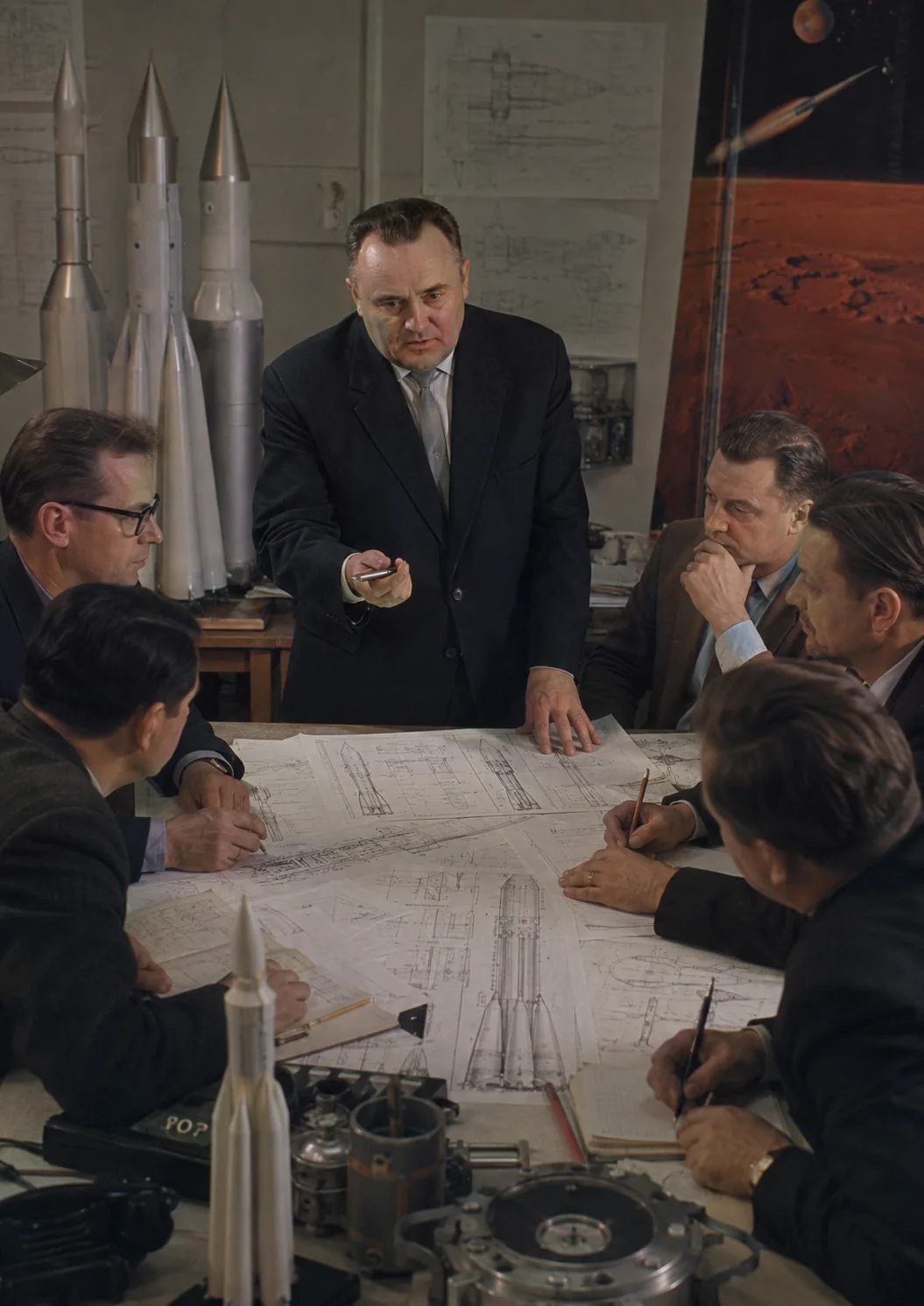
Each Martian day confronted the team with more good ideas than available time, power or bandwidth. Should microscopy come before a drive? Is a long spectrum worth an entire sol? Is an outcrop scientifically valuable enough to justify mobility risk? The PI must turn disciplinary arguments into a coherent sequence. Squyres therefore became an example of distributed scientific governance: the quality of the result depends not only on instrument performance but on how disagreement, uncertainty and competing priorities are resolved. [source] [source]
Every observation has an opportunity cost. In the chapter “Leading daily science: arbitration rather than command,” this framework forces a check between the precise historical fact, the scientific question actually being asked and the constraints specific to that stage of the career.
At this stage, “Leading daily science: arbitration rather than command” reveals how experience changes judgment. The robotic field geologist never has perfect information; the skill is learning which uncertainties can be tolerated, which require another measurement and which should stop a sequence.
For “Leading daily science: arbitration rather than command,” the Mars application should therefore be stated as a specific reduction of uncertainty rather than a general promise of settlement.
As a teaching case, “Leading daily science: arbitration rather than command” also separates three levels that are often blurred together: the observed or documented fact, the scientific interpretation that gives it meaning, and the operational decision made from that interpretation.
In “Leading daily science: arbitration rather than command,” that boundary is intentionally part of the result: it states what this stage supports and what it still leaves open.
NEEMO: moving from robotics to crew experience
In 2011 Squyres joined NEEMO 15 in the Aquarius underwater habitat alongside U.S., Japanese and Canadian astronauts. The analog reproduced neither Mars nor an asteroid, but it imposed isolation, procedures, simulated EVAs, operational friction and collective problem solving. For a scientist accustomed to commanding robots tens of millions of kilometres away, living inside a constrained environment offered a different view of the relationship among exploration, fatigue, safety and crew time. [source]
In the chapter “NEEMO: moving from robotics to crew experience,” this framework forces a check between the precise historical fact, the scientific question actually being asked and the constraints specific to that stage of the career.
In the career of this robotic field geologist, “NEEMO: moving from robotics to crew experience” provides a comparison with earlier stages.
For “NEEMO: moving from robotics to crew experience,” the Mars application should therefore be stated as a specific reduction of uncertainty rather than a general promise of settlement.
As a teaching case, “NEEMO: moving from robotics to crew experience” also separates three levels that are often blurred together: the observed or documented fact, the scientific interpretation that gives it meaning, and the operational decision made from that interpretation.
In “NEEMO: moving from robotics to crew experience,” that boundary is intentionally part of the result: it states what this stage supports and what it still leaves open.
The decadal survey: choosing for an entire community
Squyres chaired the committee that produced Vision and Voyages for Planetary Science in the Decade 2013–2022. The task was very different from leading one mission: Mars, Europa, giant planets, small bodies and the Moon had to be compared; architectures had to be costed; priorities had to be ranked; and decision rules had to anticipate budgets that might not match planning assumptions. The experience marks a shift from scientist advocating a project to arbiter responsible for a community-wide portfolio. [source]
What matters is not only what worked. That vulnerability makes the episode instructive. In the chapter “The decadal survey: choosing for an entire community,” this framework forces a check between the precise historical fact, the scientific question actually being asked and the constraints specific to that stage of the career.
The chapter “The decadal survey: choosing for an entire community” also shows that the work of a robotic field geologist is collective by construction.
For “The decadal survey: choosing for an entire community,” the Mars application should therefore be stated as a specific reduction of uncertainty rather than a general promise of settlement.
As a teaching case, “The decadal survey: choosing for an entire community” also separates three levels that are often blurred together: the observed or documented fact, the scientific interpretation that gives it meaning, and the operational decision made from that interpretation.
In “The decadal survey: choosing for an entire community,” that boundary is intentionally part of the result: it states what this stage supports and what it still leaves open.
The end of Opportunity: knowing when exploration is over
The global dust storm of 2018 deprived Opportunity of power. After months of listening and hundreds of contact attempts, NASA ended the mission in February 2019. For Squyres, the ending did not diminish a rover designed for three months that worked for nearly fifteen years. It nevertheless illustrates a rule easy to forget: every remote robotic mission eventually reaches a state that cannot be repaired from Earth. Human Mars architectures must therefore distinguish locally repairable systems from single losses that eliminate an entire capability. [source]
In the chapter “The end of Opportunity: knowing when exploration is over,” this framework forces a check between the precise historical fact, the scientific question actually being asked and the constraints specific to that stage of the career.
To understand “The end of Opportunity: knowing when exploration is over,” the full chain matters more than one headline result. The robotic field geologist works inside a system where a schedule decision can change an observation, an instrument limit can redefine the testable hypothesis, and the documentation of an anomaly can matter as much as nominal success.
For “The end of Opportunity: knowing when exploration is over,” the Mars application should therefore be stated as a specific reduction of uncertainty rather than a general promise of settlement.
As a teaching case, “The end of Opportunity: knowing when exploration is over” also separates three levels that are often blurred together: the observed or documented fact, the scientific interpretation that gives it meaning, and the operational decision made from that interpretation.
In “The end of Opportunity: knowing when exploration is over,” that boundary is intentionally part of the result: it states what this stage supports and what it still leaves open.
2019 and after: from Cornell to Blue Origin
When Squyres retired from Cornell in September 2019, he joined Blue Origin as chief scientist. The move is interesting precisely because it is not simply a continuation of MER: a scientist who spent decades practicing robotic field geology entered a company focused on transportation systems and space infrastructure. 5
His PI experience brought an understanding of exploration, operations and the trade between instruments, vehicles and scientific objectives. It does not mean that Blue Origin architectures are direct descendants of Spirit or Opportunity; the biographical continuity lies in his method of connecting exploration goals to the systems required to reach them.
Squyres retired from Cornell in September 2019 and joined Blue Origin as chief scientist. The transition closed a period in which his public identity had been almost inseparable from Spirit and Opportunity, but it does not retroactively turn the rovers into a commercial-space program. It instead shows a planetary scientist choosing to influence transportation architecture itself. For Mars, the lesson is cautious: transporting people and conducting rigorous field science are different professions that must be designed to work together rather than assumed to be naturally aligned. [source]
Every observation has an opportunity cost. In the chapter “2019 and after: from Cornell to Blue Origin,” this framework forces a check between the precise historical fact, the scientific question actually being asked and the constraints specific to that stage of the career.
At this stage, “2019 and after: from Cornell to Blue Origin” reveals how experience changes judgment. The robotic field geologist never has perfect information; the skill is learning which uncertainties can be tolerated, which require another measurement and which should stop a sequence.
For “2019 and after: from Cornell to Blue Origin,” the Mars application should therefore be stated as a specific reduction of uncertainty rather than a general promise of settlement.
As a teaching case, “2019 and after: from Cornell to Blue Origin” also separates three levels that are often blurred together: the observed or documented fact, the scientific interpretation that gives it meaning, and the operational decision made from that interpretation.
In “2019 and after: from Cornell to Blue Origin,” that boundary is intentionally part of the result: it states what this stage supports and what it still leaves open.
Primary and institutional sources
- NASA Science — Steve Squyres
- NASA — Gravity Assist with Steve Squyres
- NASA/JPL — 10 years of roving on Mars
- NASA/JPL — Opportunity Rover Finds Strong Evidence Meridiani Planum Was Wet
- NASA Science — Steve Squyres profile
- Cornell Astronomy — Steven W. Squyres, professor emeritus
- NASA oral history — Steven W. Squyres, 14 September 2017
- Cornell Chronicle — retirement from Cornell and move to Blue Origin
- Cornell Chronicle — Athena payload arrives at Cape Canaveral
- Cornell Chronicle — NASA selects Cornell science effort for the 2003 rover mission
- Cornell Chronicle — Roving Mars and the long path to MER
- NASA — Opportunity mission ends after nearly fifteen years
- NASA — NEEMO 15 wrap-up report
- National Academies — Vision and Voyages planetary decadal survey
- NASA — Gravity Assist: Exploring Mars with Steve Squyres
- NASA NTRS — The Athena Mars Rover Investigation