


A hospital on Mars: surgery, pharmacy and critical care without terrestrial evacuation
A Martian hospital must treat the patient while maintaining the technical factory that makes treatment possible: power, oxygen, clean water, sterility, diagnostics, drugs and skills.
The hospital begins with a brutal question: what must be possible before it is too late?
On Earth, a small facility can transfer a difficult case to a larger hospital. Mars removes that escape valve. Appendicitis, major trauma, haemorrhage, severe infection, fracture or obstetric emergency may evolve faster than detailed help can arrive from Earth and infinitely faster than physical evacuation. Local capability must therefore be designed around events that cannot wait.
That does not mean flying a miniature copy of every terrestrial specialty. Mass, volume, energy and staffing force a focus on cross-cutting functions: versatile ultrasound, compact laboratory capability, physiological monitoring, imaging when clinically justified, sterilization, anesthesia, ventilation, surgery and dentistry.
An inventory is not a capability. Equipment, trained staff, drugs, consumables, power and procedures must exist at the same time. A ventilator without oxygen or an ultrasound system without a working probe cannot be counted as care capacity.
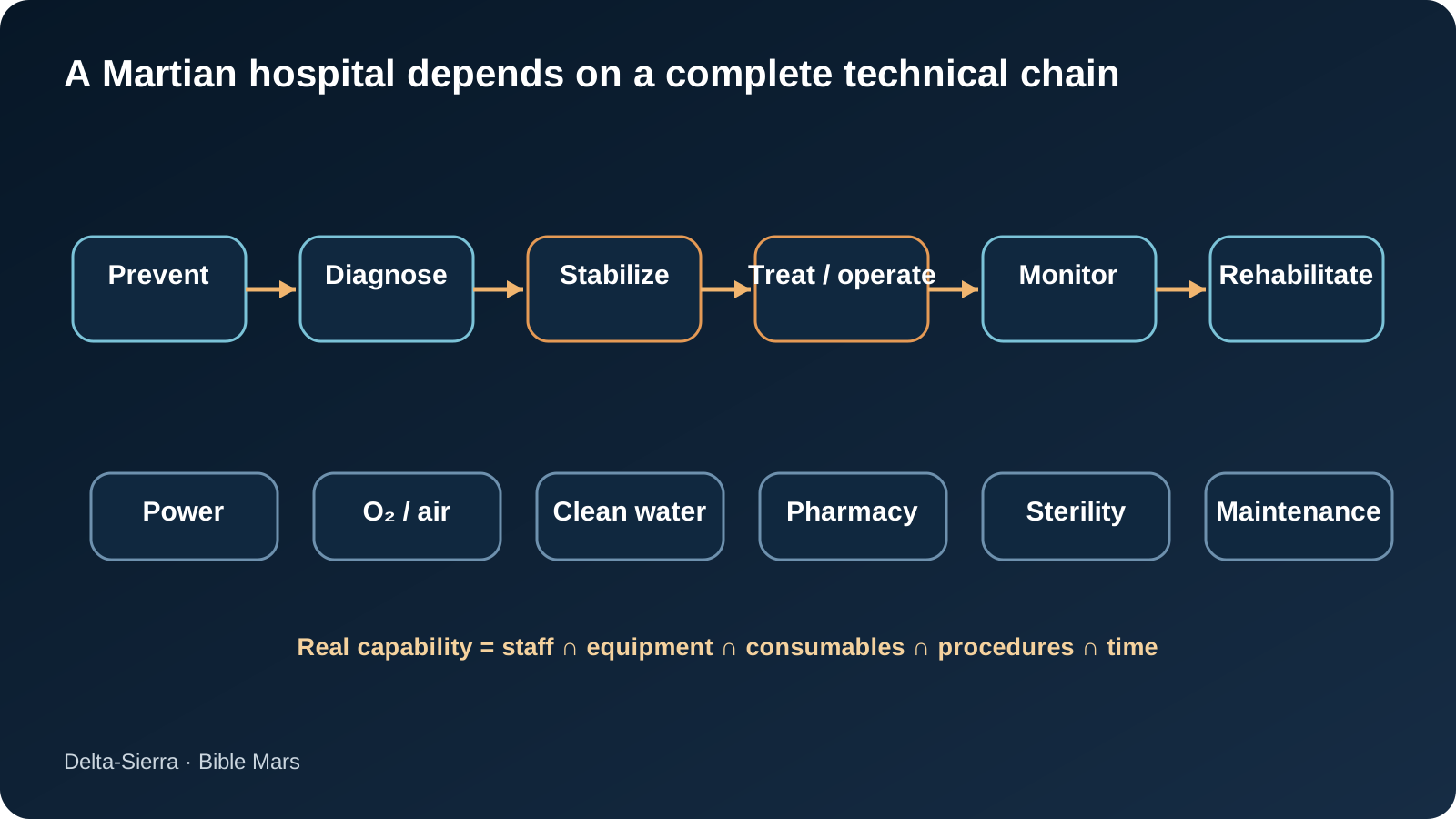
The real inventory is a list of functions, not a list of objects
A terrestrial hospital can order a part, transfer a patient, call a specialist and borrow blood from a regional system. On Mars, medical capability has to be described differently: which functions can be completed end-to-end with the people, instruments, consumables, drugs, power and time actually available? An ultrasound machine without a working probe is not a capability. A ventilator without a clean circuit, oxygen, battery and trained operator is not a capability. A surgeon without sterilization, anesthesia and postoperative monitoring is not a capability.
This way of counting leads naturally to a capability matrix. For each priority problem — trauma, hemorrhage, infection, dental pain, dehydration, anaphylaxis, burns, cardiac problems, abdominal emergencies and possible obstetric complications — the settlement describes detection, stabilization, diagnosis, treatment, monitoring and recovery. An empty cell becomes an architecture decision: accept the risk, import a technology, train someone, add inventory, or design a different procedure.
No rapid evacuation: the threshold for local treatment changes completely
ISS medical planning still benefits from a nearby Earth and from return scenarios. Mars removes that safety valve. Even if a return vehicle exists, orbital windows and travel time make Earth useless as an emergency department. The medical system therefore has to move toward Earth-independent medical operations: not absolute independence from terrestrial knowledge, but the ability to make and execute time-critical decisions without waiting for a distant expert to intervene.
That constraint changes training as well. The best physician in the settlement may be the patient. Skills must therefore be distributed: several people able to stabilize an airway, control bleeding, perform basic ultrasound, establish vascular access, manage emergency medications and follow resuscitation procedures. Human redundancy becomes as important as hardware redundancy.
Surgery, anesthesia and intensive care depend on an invisible factory
Surgery requires far more than a surgeon: cleanable space, sterile instruments, anesthesia, monitoring, ventilation, fluids, pain control, sutures, resuscitation and postoperative care. Failure of a sterilizer or pump can remove more clinical capability than failure of a glamorous scanner.
Blood management is a special challenge. Blood products have storage and compatibility constraints, and a small community cannot maintain the inventory of a terrestrial city. Typing, potential donors, preservation strategies and alternatives become part of the architecture and require strict ethical rules.
Medical equipment must itself be repairable. Sensors, batteries, seals, software and pumps need inspection and spares. Biomedical maintenance is part of healthcare; restoring a ventilator may become a clinical emergency.
The operating room is a fluid, power and sterility infrastructure
Surgery consumes much more than instruments. It uses lighting, suction, oxygen, ventilation, medication, fluids, monitoring, sterile barriers, waste handling, water, heat rejection and qualified staff time. Even a relatively modest procedure may occupy several skilled people for hours. In a small settlement, the patient and the medical team therefore disappear from general operational capacity at the same time.
Anesthesia is especially systemic. A drug only makes sense if ventilation, oxygenation, circulation and temperature can be monitored, the airway can be managed and adverse events can be treated. Some agents create environmental or storage constraints. The medical ECLSS therefore cannot be designed independently of the habitat: reduced oxygen production, a power fault or a contamination event can turn a surgical problem into a habitat-survival problem.
Blood: scarce, perishable and biologically difficult to replace
Blood illustrates the logistics problem better than almost any other medical resource. A tiny population does not have an unlimited compatible donor pool. Blood products have different storage conditions and shelf lives, and transfusion requires identification, compatibility, procedure and monitoring. A settlement may therefore combine hemorrhage prevention, rapid mechanical control, appropriate blood-conservation techniques, limited stored products and carefully governed emergency donor protocols.
Demography matters. A four-person crew cannot rely on the immuno-hematologic diversity of a city. A population of one hundred or one thousand expands the donor pool, but also increases demand. Blood banking gradually becomes a laboratory and public-health function, which is another example of why settlement growth changes the category of medicine rather than simply scaling the first-aid kit.
Robotic surgery: useful assistance, dangerous as a magical promise
Robotic surgery demonstrations in microgravity have shown that selected manipulations can be teleoperated and studied remotely. Mars creates a hard boundary: delay prevents continuous teleoperation from Earth. Robotics can stabilize an instrument, guide a motion, reproduce a trajectory or assist a local operator; it does not remove the need for local caregivers or for a fallback plan when the robot fails.
Pharmacy: expiration dates become mission variables
A pharmacy is not a fixed mass. Drugs age, some require controlled temperature, and use is unpredictable. Each lot should be tracked by indication, substitute, criticality, expiration, consumption and resupply time.
Local production may begin with modest capabilities: simple solutions, compounding, excipients, packaging or selected molecules compatible with local chemistry. Reproducing a modern pharmacopoeia would require fine chemistry, quality control and regulatory capability far beyond basic ISRU.
The likely strategy is a portfolio: stable prepositioned medicines, stock rotation by cargo, generous reserves of critical products, therapeutic alternatives and limited local manufacture. A thousand-person city can justify capabilities that a four-person base cannot.
From terrestrial inventory to astropharmacy
A medicine sent to Mars may spend months in terrestrial storage, months in transit and years inside a habitat exposed to radiation and controlled but imperfect thermal conditions. Shelf life is not merely a printed date; it is a property of formulation, packaging, temperature, humidity, light and radiation. A Martian pharmacy must know not only how much inventory remains but how much confidence remains in its quality.
The first improvement is stock rotation and therapeutic redundancy. If two medicines can address the same indication through different formulations or mechanisms, loss of one does not immediately eliminate treatment. On the other hand, storing fifty rarely used variants consumes mass and volume. Selection must be driven by risk, expected frequency, severity and substitution options.
Local production should start with simple dosage forms
Local pharmaceutical manufacturing probably does not begin with complete synthesis of complex molecules. It may begin with pharmaceutical-quality water, simple solutions, repackaging, dilution, compounding and selected consumables. Every step still requires feedstock purity, dose verification, sterility where required and analytical control. A medicine that is “made” without evidence of potency or contamination control is not reliable medical capability.
Biotechnology and chemical synthesis may eventually expand autonomy, but the difficulty is not only the reaction. Precursors, solvents, catalysts, equipment, documentation and a local pharmacopoeia are needed. Pharmacy therefore joins the industrial chapter: therapeutic autonomy depends on a quality chain comparable with that of a critical mechanical part.
Antibiotics connect inventory with microbial ecology
A small community may be tempted to use scarce antibiotics defensively. That behavior can select resistance. Local microbiology should therefore support prescribing when possible: identify organisms, tailor duration, monitor infection and protect last-line drugs. On Mars, antimicrobial resistance is not a distant public-health abstraction; it can make an irreplaceable part of the pharmacy ineffective.
A mission pharmacy is a portfolio of chemical risks
A medicine is not simply “present” or “absent.” It has a formulation, concentration, package, storage temperature, moisture sensitivity, sometimes a cold-chain requirement, and a stability profile that may change with radiation and time. The Martian challenge is therefore to know that a tablet, injectable or solution still has the expected quality when it is needed, potentially years after it was packed.
Initial selection should consider not only clinical usefulness but logistical robustness: number of indications covered, stability, mass, volume, dose flexibility, therapeutic alternatives and consequence of absence. Inventory must be tracked by lot and expiry, with rotation and consumption priorities. Prescribing therefore becomes partly a logistics operation: using a rare drug today may reduce the ability to manage a future emergency.
Inventory arithmetic: mass is only the beginning
Suppose a settlement stores 20,000 administration units across multiple therapeutic classes, a figure chosen only to illustrate the method. If the average packaged mass is 2 grams per unit:
20,000 × 2 g = 40,000 g = 40 kg.
Forty kilograms says very little about resilience. If half of the inventory expires in the same year, if an essential class has only one therapeutic option, or if critical products depend on one refrigerator, the system remains fragile. Planning therefore needs temporal coverage, therapeutic redundancy, expiry distribution, cold-chain dependence and resupply interval, not merely total mass.
Astropharmacy: local production without confusing synthesis with a qualified medicine
Recent NASA work explores on-demand production of small pharmaceutical quantities during deep-space missions, including synthetic-biology platforms. The idea is powerful: instead of shipping every molecule for the entire life of a settlement, import equipment and feedstocks that can produce selected compounds. But the distance between “a molecule was produced” and “a medicine can be safely administered” is enormous.
The product has to be identified, purity and concentration verified, contaminants or by-products removed, a suitable dosage form prepared, sterility assured when required, the batch documented and stability understood. Martian pharmacy therefore connects directly to industrial chemistry, biotechnology, metrology and quality assurance. Local production will probably begin with a small number of high-value products and well-controlled processes rather than a miniature copy of Earth’s pharmaceutical industry.
Telemedicine: delayed expertise, never remote control of an emergency
Earth remains a huge medical resource, able to gather specialists and review difficult cases. But latency prevents real-time remote control of resuscitation or surgery. Local teams must be able to act, stabilize and formulate structured questions before Earth answers.
Digital tools can help: offline medical records, procedure libraries, simulation, guided ultrasound and decision support. They must be versioned, auditable and usable without an Earth server. A critical medical application that requires continuous terrestrial connectivity is a poor Mars design.
TRISH and HERMES illustrate the value of health data that follows the explorer and remains useful under limited connectivity. At settlement scale, that becomes a local health information system with privacy, emergency access, backup and epidemiological analysis.
Martian telemedicine will look more like a documented consultation than a video call
As delay grows, the best interaction is no longer “watch this live image and tell me what to do.” A consultation package sent to Earth should be self-contained: summary, vital signs, evolution, images, laboratory results, treatment already given and explicit questions. Earth specialists can then return a structured assessment. Asynchronous communications can therefore improve local documentation discipline.
Solar conjunction or network failure also requires periods with no outside expertise. Every critical protocol needs an offline form with escalation levels, limits and decision points. The medical centre must be able to operate like an isolated ship and later reconcile its records with Earth when communications return.
From four to one thousand people: medicine changes category
With four people, versatility dominates. Everyone needs emergency skills and the only physician may become the patient. Human redundancy is as important as hardware redundancy.
At twenty, a permanent clinic, deeper pharmacy and cross-trained skills are possible. At one hundred, a small hospital can separate consultation, isolation, laboratory and procedures. At one thousand, specialties, rehabilitation, obstetrics, pediatrics and professional biomedical maintenance become necessary.
Scale also changes epidemiology. A single accident dominates a tiny crew; chronic disease, prevention, vaccination, mental health and ageing become continuing public-health work in a city. The medical system stops being a mission kit and becomes a civic institution.
Four, twenty, one hundred, one thousand: four different medical architectures
Four residents. Medicine resembles an extreme expedition: one person with advanced medical training, several cross-trained crewmembers, ultrasound, a narrow laboratory, pre-positioned pharmacy and aggressive prevention. The aim is to stabilize, manage plausible events and avoid losing the system if the single expert becomes the patient.
Twenty residents. Skills can be distributed. On-call coverage becomes possible, dentistry has to be real, the laboratory expands, infection isolation becomes less improvised and rehabilitation matters more. Rare procedures must be rehearsed so that competence does not decay.
One hundred residents. Medical selection can no longer remove most chronic disease. The settlement has to manage long-term conditions, possible pregnancy, aging pioneers, industrial accidents and occupational health. A small operating room, structured pharmacy, broader laboratory and specialized staff become rational.
One thousand residents. The settlement requires a real hospital, although still compact by terrestrial standards: critical care, surgery, possible maternity, pediatrics, rehabilitation, mental health, public health, dentistry, laboratory, pharmacy, sterilization and biomedical maintenance. It must also handle peaks such as fire, transport accidents, decompression, food contamination or industrial events that produce several casualties at once.
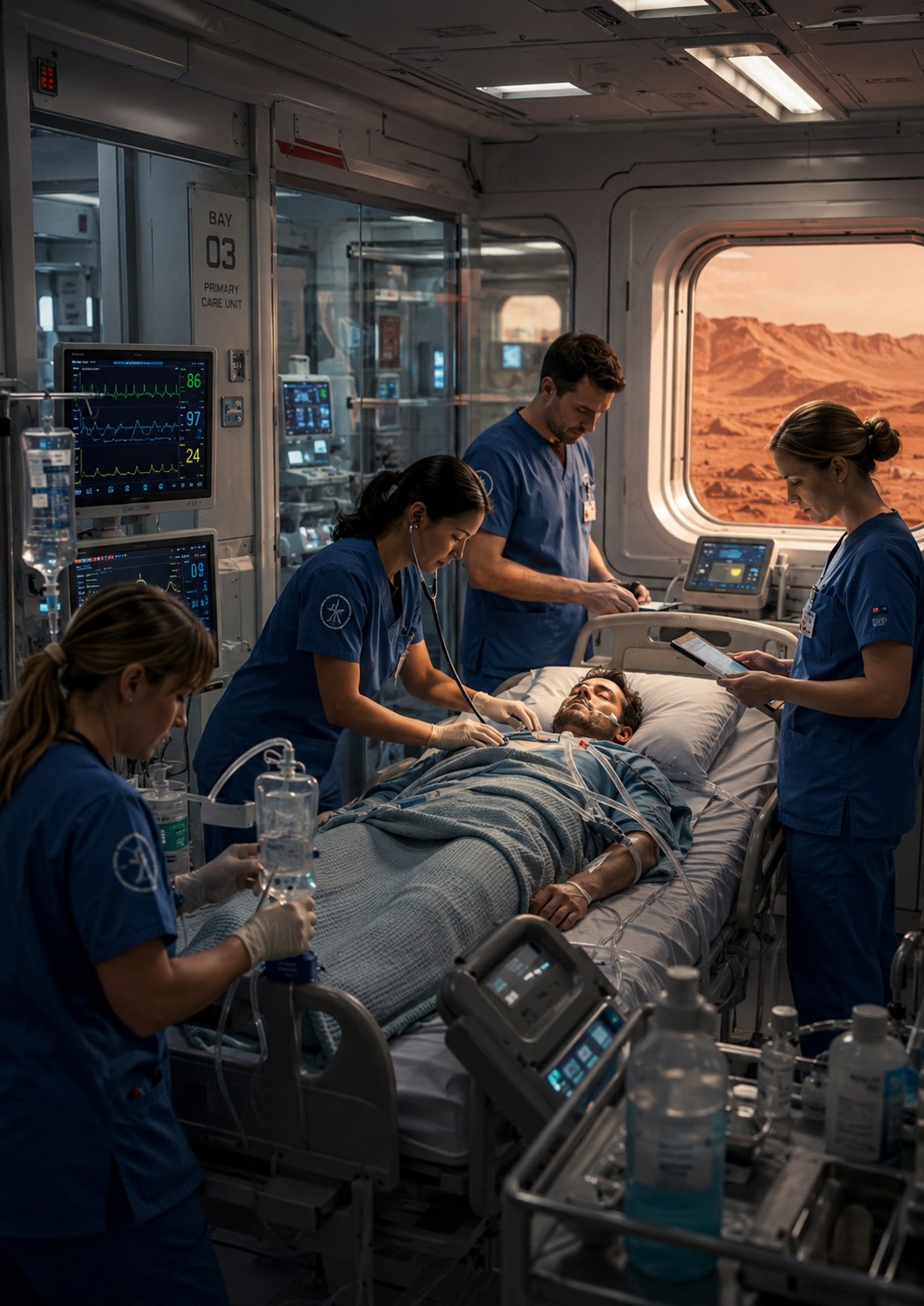
Medical skills are spare parts too
A rare skill can disappear when one person is injured, dies or is exhausted. The settlement therefore needs a competency inventory much like its inventory of filters and bearings: at least two or three people able to perform each critical function, local documentation, regular simulation and continuous teaching. In the long term, schools and professional training must be capable of producing the next generation of caregivers without relying on immigration from Earth.
A Martian hospital is not a room: it is a chain of capabilities
On Earth the word “hospital” evokes a building. On Mars it is more useful to think in functions: recognize an emergency, measure, stabilize, treat, monitor, rehabilitate and repeat. Every function depends on invisible infrastructure. An operating room without oxygen, sterilization, laboratory support, reliable power, lighting, medications, waste handling and trained staff is merely a clean room. Medical architecture should therefore be written as a dependency chain, not an equipment catalogue.
The chain begins outside the hospital. A rover must carry an injured person without worsening the injury. An airlock must accept a stretcher. Corridors must pass equipment. Communications must carry medical data. Power must keep temperature-sensitive medicines stable. Maintenance must calibrate ultrasound and repair pumps. Industry must learn to make simple medical consumables long before it claims it can manufacture a scanner.
Diagnostics is an economy of decisions
In a remote base, every test should answer one question: how will the result change management? A laboratory assay that consumes an irreplaceable reagent must provide useful information. Heavy imaging may be unjustified when ultrasound, examination and monitoring are sufficient. This is not primitive medicine; it is medicine in which the logistics cost of information is visible.
Ultrasound is attractive because one machine can examine abdomen, heart, vessels, muscle and some injuries, if people are trained to use it. Guidance software may help image acquisition, but it does not remove the need for competence. A poor image interpreted with confidence can be more dangerous than an acknowledged absence of imaging.
The laboratory gradually becomes a small industry
For four people, selected rapid tests and stored samples may be enough. At one hundred residents, the community needs blood counts, chemistry, microbiology, susceptibility testing, water and food control. Each assay introduces reagents, standards, quality control, cold-chain and waste. Medical laboratory work therefore meets metrology: a result matters only if the community knows the instrument is still measuring correctly.
Surgery: the spectacular act rests on hundreds of ordinary details
Surgery can save a life, but it concentrates risk: anesthesia, bleeding, infection, ventilation, pain, monitoring and recovery. A four-person base cannot reproduce a terrestrial tertiary operating theater. It must select essential procedures, versatile equipment and stabilization protocols. As population grows, the statistical case for a more complete surgical capability grows as well.
Anesthesia illustrates the dependency. It requires drugs, an airway strategy, oxygen, suction, monitoring, ventilation and people able to manage unexpected deterioration. Failure of a sensor or connector can turn a technically successful procedure into disaster. Medical equipment qualification and maintenance deserve the same discipline as ECLSS valves.
Blood is a biological resource that is difficult to stock
Terrestrial blood products depend on collection, typing, testing and controlled storage. A small Mars community cannot assume unlimited units are waiting. It must reduce hemorrhage risk, know compatibility, develop donor protocols where medically and ethically acceptable, and use alternatives when available. The issue becomes social very quickly: a potential donor is also an operational crew member whose own performance matters.
This constraint favors accident prevention and blood-conserving practice. Procedures need greater attention to hemostasis, surgical skill availability and the consequences of complications that cannot be transferred to a higher-level center.
Sterility and infection: “boil it and hope” is not a system
Sterilization involves validated cycles, packaging, indicators, clean storage and traceability. A base must distinguish cleaning, disinfection, high-level disinfection and sterilization. Reusable instruments save imported mass but require washing, inspection, validated processing and energy. Disposable instruments simplify asepsis but create logistics and waste. A hybrid architecture is likely.
Scaling medical capability from 4 to 20 to 100 to 1,000 residents
Four residents. The dominant objective is stabilization, treatment of common problems and survival through likely emergencies. Skills must be broadly cross-trained; compact diagnostics, prepositioned pharmacy, oxygen, emergency dental capability and offline procedures are priorities. Incapacitation of the medical lead must be anticipated: the doctor can become the patient.
Twenty residents. Coverage schedules and redundant competence become possible. More laboratory capability, an isolatable care space, richer dental care and broader pharmacy can be justified. Occupational health matters because injuries, dust, maintenance and physical work may generate more problems than exotic disease.
One hundred residents. Population size supports a real clinic with laboratory, imaging, procedure room, organized pharmaceutical storage, epidemiological surveillance and some specialists. The clinic also begins to generate the population data needed to learn what 0.38 g and the habitat actually do to humans.
One thousand residents. The system must support emergency care, maternity, pediatrics, surgery, chronic disease, behavioral health, rehabilitation and public health at the same time. Teams, on-call coverage, beds, contingency stocks and priority governance become necessary. The hospital finally becomes a civic institution — and one of the settlement’s largest concentrations of skill, reliability and public trust.
Dentistry, rehabilitation and biomedical maintenance belong inside the hospital plan
Dental emergencies are easy to underestimate because they rarely appear in dramatic Mars artwork. A cracked tooth, infection or failed restoration can nevertheless produce severe pain, impaired nutrition and systemic infection. A remote clinic therefore needs examination, local anesthesia, basic restorative capability, extraction tools and imaging appropriate to its scale. Dental prevention has unusually high leverage because a procedure avoided before launch or through routine care saves drugs, sterile supplies and skilled time later.
Rehabilitation is equally important. After fracture, surgery, neurological injury or prolonged bed rest, survival is only the first milestone. Returning a person to useful mobility can require weeks of structured exercise, pain management and repeated assessment. In a small settlement, the patient may also hold unique technical knowledge, making recovery an operational concern as well as a clinical one.
Medical devices create their own maintenance ecosystem
Every monitor, infusion pump, sterilizer and ultrasound unit introduces batteries, sensors, calibration, software versions and spare parts. Biomedical engineering should therefore exist from the earliest crews, even if it is initially a secondary qualification held by another engineer. A device that powers on but measures inaccurately can be more dangerous than a device that obviously fails.
At larger population scale, maintenance history becomes part of the medical record of the institution. If a blood analyzer begins drifting, clinicians need to know which past results may be affected. This connects hospital quality assurance directly to the settlement’s broader metrology and configuration-management systems.
Dentistry is the simplest reminder that long missions create ordinary emergencies
Space medicine is often told through spectacular accidents. Yet tooth pain, a broken crown, a local infection or a fractured tooth can be enough to make a crew member ineffective. On Earth the patient changes clinic or specialist. On Mars the specialty must exist locally as skill, instruments, consumables, imaging and sterilisation capability. Dentistry therefore illustrates a larger rule: medical autonomy depends as much on ordinary problems as on rare catastrophes.
Scale changes the design. A crew of four may accept a narrow scope of care supported by prevention and strict medical selection. A community of one thousand cannot reasonably assume that serious dental disease, deep infection or chronic conditions will never occur. Medical capability must grow with population, and rare skills must be duplicated so the town does not lose an entire specialty when one person is ill, leaves or becomes unavailable.
A Martian laboratory turns symptoms into decisions
Autonomy is not measured by the number of boxes in the pharmacy, but by how many decisions can be made with acceptable uncertainty. Point-of-care laboratory capability can help distinguish likely infection from other causes, follow renal function, guide a therapy or verify contamination. Every test, however, adds a chain of dependencies: sampling, reagents, calibration, quality control, biological waste, power, possible refrigeration, software and interpretation. At larger scale the medical laboratory becomes a branch of the settlement’s precision industry.
The same logic applies to imaging. Ultrasound is attractive because one compact device can support many uses, but its value depends heavily on operator skill and interpretation. Other modalities increase diagnostic capability at the cost of mass, power, maintenance and specialised training. A Martian hospital must therefore trade versatility, specialisation and redundancy rather than simply copy an Earth hospital floor plan.
Critical care temporarily turns each patient into an industrial load
An unstable patient may consume oxygen, electrical power, medicines, monitoring, crew time, heat-rejection capacity and sometimes fluids or biological products. In a closed habitat those demands share infrastructure with the rest of the town. A power failure is therefore not only an electrical event; it can become a medical event. Water contamination may simultaneously produce more patients and reduce a resource required for care. Medical design must include protected power, ECLSS interfaces, reserves and load-shedding rules that preserve life-critical functions.
Capacity also has to consider simultaneity. A clinic that can support one critically ill patient is not the same as a clinic that can support two casualties from the same industrial accident. Common-cause events — fire, pressure loss, rover collision or chemical release — create correlated patients. Medical architecture must therefore be tested against scenarios, not only individual event probabilities.
Sterilise, repair, recalibrate: biomedical equipment has its own maintenance economy
Earth hospitals rely on an entire economy of biomedical technicians, vendors, spare parts, regulatory checks and external services. Mars will not have that safety net. A ventilator, ultrasound unit, analyser or steriliser has to be diagnosable and maintainable locally. Calibration is itself a clinical function: a wrong but plausible value may be more dangerous than a machine that obviously refuses to work.
Biomedical maintenance therefore links the Hospital book to the Industry books. Connectors, sensors, seals, miniature pumps, batteries, software and consumables all become elements of the care chain. In the long term the question is not merely “do we own this device?” but “can we prove its metrological state, replace its vulnerable parts and verify that it still performs within safe limits?”
Train generalists who can become specialists when the situation demands it
A small crew cannot carry every clinical specialty. It will need a combination of selection, cross-training, protocols, decision-support tools and delayed Earth expertise. The objective is not to pretend software can turn anyone into a surgeon. It is to move relevant information, procedures and patient data closer to a trained crew member when an Earth specialist cannot participate in real time. NASA work on autonomous medical operations and clinical decision support follows precisely this direction.
At one hundred or one thousand residents the problem changes again. The town can train more professionals, but it must preserve rare expertise through rotations, illness and ageing. A Martian hospital therefore needs an education programme as much as a treatment programme. Medicine becomes a knowledge-continuity system, just like reactor operations, metallurgy or network engineering.
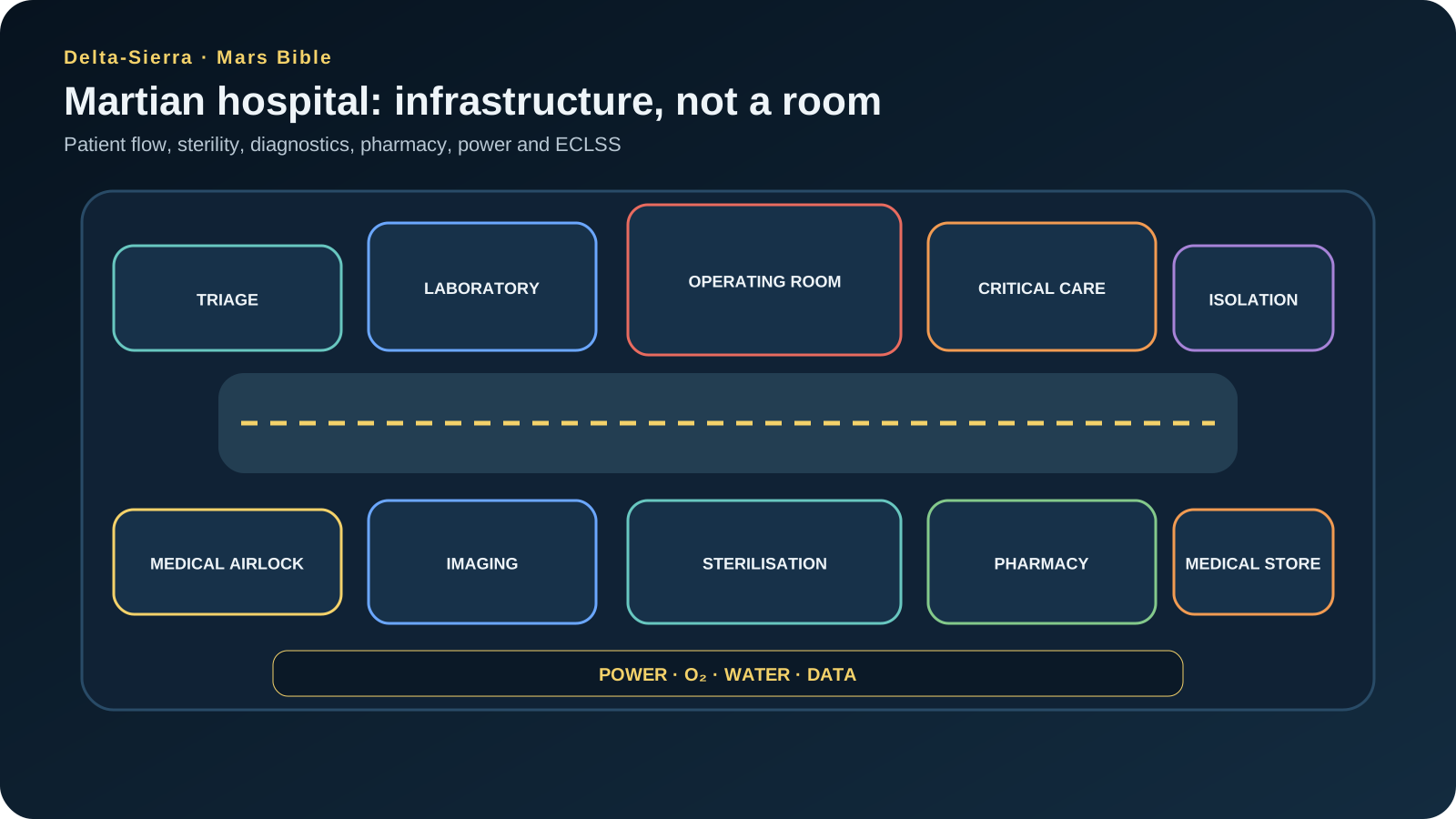
Infection: antibiotics cannot replace asepsis or knowledge of the organism
In an isolated settlement, severe infection is dangerous for two reasons: the patient needs care and the antibiotic inventory is finite. Giving a drug “just in case” may feel reassuring, but it consumes stock and increases selective pressure on microbes. A mature medical system therefore benefits from identifying organisms where possible, tracking resistance and connecting clinical data with the microbiology of the habitat.
This links laboratory, pharmacy and public health. A susceptibility test, culture or molecular assay is only useful if sampling is reliable, quality control is understood and the result actually changes a decision. At settlement scale, antimicrobial stewardship becomes resilience: losing the effectiveness of a few essential drugs in a place without rapid resupply would create a debt that is hard to repay.
Rehabilitation: survival is not enough if the patient cannot work or move safely
Rehabilitation is often invisible in exploration narratives. Yet a fracture, operation or prolonged illness can leave a person alive but unable to perform their role. On Mars that loss affects the whole crew. Physiotherapy, rebuilding strength, adapting work and mobility support belong inside the hospital architecture rather than being treated as luxuries of large terrestrial health systems.
Lower gravity changes some mechanical loads but does not eliminate the need to recover coordination, endurance and confidence. Rehabilitation must also account for airlocks, suits and internal circulation. Hospital design meets urban design again: an accessible settlement allows more people to return to useful participation after injury.
Crisis scenarios should test correlated casualties and degraded infrastructure
A medical architecture should not be validated only against one isolated patient. Fire can create burns and smoke exposure; a rover crash can injure several people; food contamination can produce a cluster of patients; a heating failure can make people ill while simultaneously stressing the hospital. Tests must therefore combine casualties, lost resources and human workload.
The purpose is not to publish operational medical procedures in a web chapter. It is to test architecture: does the medical area retain power, oxygen, data and staff? Are stores reachable? Can clean zones remain clean? Can an infectious patient be isolated? Can the rest of the settlement continue life-critical operations while part of the workforce provides care? At this level the hospital becomes a resilience system rather than a room with medical equipment.
Size capabilities, not equipment catalogues
A Martian hospital should be described in capabilities: resuscitate, control hemorrhage, diagnose a fracture, drain a pneumothorax, treat infection, extract a tooth, provide anesthesia and monitor critical illness. Each capability can then be traced backward to people, instruments, consumables, power, sterility, laboratory support, drugs, spares and procedures. This prevents a spectacular device from creating the illusion of medical capability when its support chain is absent.
Surgery shows the dependence clearly. The operation may last an hour, but it requires diagnosis, preparation, airway management, fluids, sterility, lighting, suction, hemostasis, drugs, monitoring, waste handling and postoperative care. A failed sterilizer or missing antibiotic can remove surgical capability just as effectively as a failed instrument.
At four people, stabilization and high-probability emergencies dominate. At twenty, skill redundancy becomes important. At one hundred, roles can begin to separate. At one thousand, continuous care, operating rooms, laboratory, pharmacy, imaging and rehabilitation become realistic. The transition is nonlinear because some capabilities do not exist below a minimum staffing and infrastructure threshold.
Blood management is a revealing example. Blood products have limited shelf lives and strict storage requirements. A settlement would need to consider compatibility, local donors, collection procedures, alternatives and hemorrhage scenarios. Writing “carry blood” is not a system design.
From medical acts to clinical sovereignty: what a Martian hospital must decide locally
Terrestrial hospitals sit inside a huge support network: specialist laboratories, blood services, drug suppliers, biomedical engineers, emergency transport and referral centers. Much of that depth disappears on Mars or arrives only after a communication delay. Earth-Independent Medical Operations describes the resulting shift. Once rapid evacuation and resupply are unavailable, medical autonomy becomes a system property rather than a convenience.
The clinical chain starts before the operating room
Safe surgery begins with deciding whether surgery is indicated. That requires imaging, laboratory testing, ultrasound, point-of-care diagnostics, usable medical records and the ability to follow a patient over time. Then come anesthesia, ventilation, sterilization, fluids, analgesia, antibiotics, intensive care, postoperative monitoring and maintenance of every device. The operating room is only the visible part of a much larger chain.
That chain must have degraded modes. What happens if the primary ultrasound system fails, a sensor batch expires, the sterilizer is unavailable, or the most experienced clinician is the patient? Robustness does not require a duplicate of every machine. It requires minimum capabilities, substitution paths and repair depth that can be supported by local mass, skills and tools.
Pharmacy means managing a molecule, its package, history and substitutes
NASA TechPort notes that many pharmaceuticals may have shelf lives shorter than a Mars mission. The issue is richer than an expiry date. Stability depends on formulation, humidity, temperature, radiation, packaging and storage history. A Martian pharmacy therefore needs lot tracking, therapeutic alternatives, stability data, selective analytical capability and rules for deciding when a product is no longer acceptable.
Local preparation of simple formulations may eventually reduce logistics demand, but immediately creates quality-control requirements. Local production is useful only if raw material identity, dose, contamination and final-product quality can be verified. Pharmacy therefore connects to industrial chemistry, metrology and health regulation.
Blood, sterilization and consumables reveal hidden dependencies
Hospitals run on far more than machines. Sterile disposables, filters, tubing, gloves, laboratory reagents and sampling kits create a long logistics tail. Mars planning must distinguish items that should remain single-use for safety, items that can be reprocessed and items that should be redesigned to be washable, sterilizable and repairable. Those decisions belong in architecture, not in an emergency.
Transfusion shows the same scaling effect. A tiny outpost may rely on identified donors and narrow protocols; a thousand-person settlement needs testing, traceability, structured emergency procedures and a broader blood-management strategy. Scaling medicine is not simply buying more devices. New institutional functions appear.
AMO as historical predecessor; EIMO as the newer frame
NASA’s Autonomous Medical Operations project remains useful history, but NASA now explicitly marks it as archived and no longer updated. It should be cited as a predecessor. For current architecture, the 2025 Earth-Independent Medical Operations concept better frames communication delay, lack of evacuation, local decision making and autonomous clinical operations.
The maturity test for a Martian hospital is therefore not device count. It is the fraction of critical cases for which the settlement can diagnose, decide, treat, monitor, repair and learn without Earth performing the next indispensable step.
Train rare skills without building a hospital around one irreplaceable person
A base with one surgeon but no second operator able to support anesthesia or take over critical tasks does not possess a robust surgical capability. Skills should be mapped like critical hardware: primary holder, backup, proficiency level, training interval and tasks that can be supported by software or delayed terrestrial expertise. Regular simulations play the role of generator tests: they expose human dependencies before an emergency.
Cross-training has limits. Twenty residents cannot become specialists in everything. Architecture should identify standardized tasks, situations demanding deep expertise and procedures for requesting delayed consultation. Autonomy does not mean intellectual isolation; it means care can continue while Earth’s advice is in transit.
The medical record is itself critical infrastructure
Without reliable history, pharmacy loses allergies and treatments, laboratories cannot detect trends and clinicians may not know which device or implant was used. Records must therefore work locally without Earth connectivity, with backup, access control and versioning. An IT failure must not make care impossible. Minimum emergency information should remain available in degraded mode.
Medicine without evacuation: building a care chain that is genuinely Earth-independent
A Martian hospital is not defined by whether it contains an operating room. It is defined by whether a symptom can be converted into a diagnosis, a diagnosis into a decision, a decision into treatment, and treatment into survival and recovery. That chain requires people, imaging, laboratory tests, drugs, sterile fluids, oxygen, anesthesia, blood-management options, energy, water, data and spare parts. With no rapid evacuation to Earth, every link becomes an architectural requirement.
Earth-Independent Medical Operations: a different doctrine
The EIMO concept formalizes the transition away from a model that assumes real-time Mission Control. Deep-space medicine must remain safe through communication delays, disruptions, limited resupply and the absence of evacuation. That does not remove Earth physicians; it changes when they can influence an event. Local crews and systems need enough capability to act before delayed expertise arrives.
The medical architecture therefore becomes layered: prevention and screening; diagnosis with examination, ultrasound, laboratory and possibly compact X-ray; treatment with drugs, oxygen, IV fluids and limited surgery; and an information layer containing records, procedures, decision support, inventory and asynchronous consultation. A failure in any layer can turn a manageable condition into a critical one.
Imaging, laboratory and IV fluids: quiet technologies with large effects
NASA Glenn is evaluating portable X-ray systems because dozens of exploration medical conditions could benefit from radiography. The system also has potential non-medical inspection uses. Its real cost is more than mass: shielding, operator training, image interpretation, calibration, maintenance and data handling all matter. The same systems-engineering logic applies to blood analysis and point-of-care diagnostics.
Local IV-fluid generation is another example. NASA demonstrated production of sterile IV solution from vehicle potable water, and IVGen Mini is intended to reduce mass and volume. For Mars, making clean water is only the first step; sterility, electrolytes, packaging, quality assurance and storage must be controlled. Medicine becomes directly coupled to ECLSS, logistics and metrology.
AMIS and pharmacy: knowing what exists is a clinical capability
The Automated Medical Inventory System addresses an unglamorous but critical problem: knowing exactly which medicines, consumables and devices are available, where they are, and when they expire. A missing item on the ISS may be inconvenient; on Mars it can remain missing for months. Inventory therefore needs quantity, location, lot information, expiry, substitution rules and consumption trends.
A Martian pharmacy should be designed as a portfolio of capabilities rather than a list of pills. A medicine is a formulation, dose, route, package and stability profile. Four explorers can pre-position much of this. A community of one thousand will eventually need local compounding, quality control and perhaps manufacture of selected active ingredients or dosage forms. The boundary between hospital and chemical industry then becomes porous.
On Mars, the hospital begins where real-time telemedicine ends
Medical operations in low Earth orbit can still rely on a relatively close Earth: specialists, recurring logistics and, in some circumstances, return planning. A Mars mission breaks those assumptions. NASA's Exploration Medical Capability work describes medical systems that must evaluate, diagnose, treat and manage conditions with growing autonomy because mission duration, distance and orbital mechanics constrain evacuation and resupply. Recent work around IMPACT goes further: the NASA model described in 2024 includes 119 medical conditions and connects probabilistic risk with required resources and mission-task time lost.
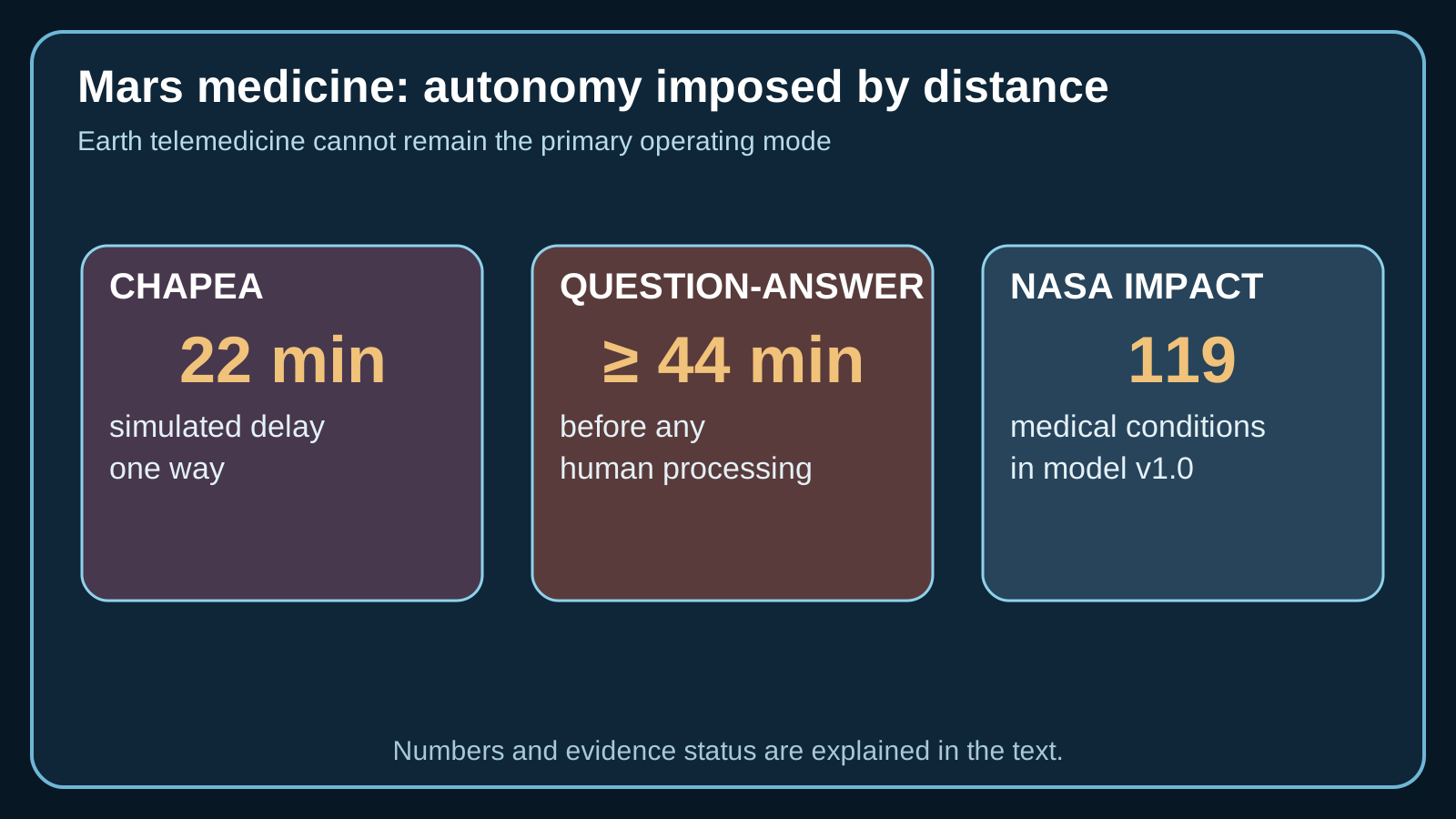
The latency calculation that explains why care must be autonomous. CHAPEA Mission 2 uses a 22-minute communication delay to reproduce part of the operational difficulty of Mars. This is an analog parameter, not a constant real Earth–Mars delay. It still makes the mechanism clear. If a message takes 22 minutes to travel from patient to Earth and another 22 minutes for the reply, minimum round-trip time is:
t_RT = 2 × t_oneway = 2 × 22 min = 44 min.
t_RT is round-trip latency and t_oneway the one-way delay. Forty-four minutes excludes the time for a specialist to interpret data, prepare guidance, transfer a large image or recover from a communication outage. Hemorrhage, airway obstruction or a dangerous arrhythmia cannot wait for synchronous consultation.
A Martian hospital is first an architecture of capabilities. It is easy to build a shopping list of equipment: ultrasound, radiography, laboratory, ventilator and sterilizer. NASA's medical-systems approach instead starts from medical conditions and required capabilities: recognize, monitor, anesthetize, ventilate, infuse, immobilize, operate and rehabilitate. This exposes resources that support several scenarios. Ultrasound can contribute to abdominal, cardiovascular, musculoskeletal and obstetric assessment; in-situ IV-fluid generation can reduce launched bag mass; procedural software can partly compensate for lack of a specialist, but only if it has been trained and validated before the emergency.
Pharmacy is a duration problem as much as a drug problem. A settlement cannot rely on a static “medicine kit.” It must manage chemical stability, cold-chain needs, humidity, radiation, expiry, substitution, interactions and stockouts. A medication essential to one person can become scarce while another sits unused. NASA work on exploration pharmacy and in-space pharmaceutical manufacturing reflects this shift toward shelf life, local preparation of selected products and explicit management of therapeutic uncertainty.
Medical staffing must be redundant without turning half the settlement into clinicians. In a four-person base, the only physician can become the patient. Medical capability must therefore be distributed: basic emergency skills for everyone, advanced procedures for more than one crewmember, decision-support systems and recurrent training. NASA's CHAPEA Mission 2 imagery in 2026 shows crew working on medical procedures and AI-enabled medical training inside the analog. This does not prove clinical effectiveness of a future Mars system; it demonstrates that medical autonomy is being treated as an operational problem rather than a video call to Houston.
Primary sources: NASA NTRS — Preliminary Medical Risk Estimates and Clinical Capability Needs for Late Artemis Missions / IMPACT; NASA NTRS — Exploration Medical Capability Medical Scenarios; NASA — CHAPEA Mission 2.
A Mars hospital is not a miniature Earth hospital: it is a chain of capabilities that must work without evacuation. On Earth, a small hospital can transfer a patient to a center with advanced imaging, specialist surgery or more intensive critical care. On Mars, transfer changes meaning. A patient can move to another module but not to a terrestrial medical center within hours. Design must therefore start with the reverse question: which events become fatal if the required capability does not exist locally?
NASA develops medical tradespace tools that systematically explore compromises among risk, mass, volume, power, skills and medical resources. IMPACT v1.0 uses an exploration-oriented evidence library and models 119 medical conditions. In a demonstration for a long-duration Artemis scenario, it estimated outcomes including loss of crew life, potential need for evacuation and crew task time affected, then explored resource combinations. Those numbers belong to the lunar scenario studied and must not be copied as Mars risk predictions. The methodological lesson is the valuable one: a hospital is not an equipment list; it is a quantitative response to possible events.
Four people: versatility and stabilization dominate. With four residents it is unrealistic to have a specialist for every discipline. Crew need the ability to perform initial assessment, ultrasound, basic laboratory work, airway management, hemorrhage control, fracture immobilization, wound closure and infection care. Medical inventory should favor resources that cover multiple conditions. Training and augmented procedures become equipment just as surely as drugs and instruments.
Twenty people: functions begin to separate. At twenty residents, the chance that a medical event occurs while another technical problem is consuming crew attention increases. A dedicated treatment room, isolation area, better imaging, more laboratory capability, sterilization, fluid reserves and pharmaceutical inventory tracked by lot and expiry become easier to justify. Medical maintenance is crucial: ultrasound with a failed probe, an analyzer without reagent or a ventilator without consumables is no longer a capability.
One hundred people: critical care becomes an industrial system. At one hundred residents, planning includes medical oxygen, gas storage or production, sterilization, infectious waste, cold chain, blood supply or alternatives, pharmacy, imaging, dentistry, rehabilitation and surgery. A single power fault must not simultaneously remove ventilation, monitoring and operating-room lighting. Energy, water, air, information systems, metrology and logistics become explicit medical dependencies.
One thousand people: the hospital becomes an institution. At one thousand, medicine is no longer only emergency rescue. Vaccination, prevention, screening, mental health, chronic disease, maternity if it ever becomes acceptable, pediatrics, aging, occupational health and epidemiology matter. Epidemiology studies how health events are distributed and how often they occur in a population. A settlement that watches only emergencies misses diseases that develop slowly.
Communication delay changes medical information architecture. CHAPEA can simulate 22 minutes each way. Respiratory arrest, severe bleeding or anaphylaxis cannot wait for a conversation with Earth. Records, protocols, dose calculators, reference imaging and decision support must work locally and offline. Artificial intelligence may help retrieve procedures or analyze data, but it does not replace reliable sensors, trained people or the ability to verify why a recommendation was made.
Design principle: every medical capability should be expressed as a complete chain: event → detection → diagnosis → treatment → monitoring → resource consumption → recovery after failure. That chain, not the presence of a device in inventory, determines whether a colony truly has autonomous medicine.
Sources: NASA NTRS — Quantifying Medical Risk on a Long Duration Lunar Mission: IMPACT Tradespace Analysis Tool; NASA — CHAPEA Mission 2.
Medical autonomy also means qualifying the supply chain. Every clinical capability depends on hidden industrial functions. Sterile surgery requires clean water, reliable power, instrument reprocessing, environmental control, waste handling and validated indicators that prove sterilization occurred. Pharmacy depends on temperature history, radiation exposure, expiry data, analytical chemistry and the ability to identify degradation. Imaging depends on calibration phantoms, software, spare probes or detectors and staff who can interpret images. The hospital therefore sits at the intersection of life support, industry, metrology and logistics.
Probability is not destiny. Tools such as IMPACT use probabilistic risk analysis. Probability describes how often an event is expected across many comparable opportunities; it does not predict which individual will become ill. A low-probability condition can still deserve a capability if its untreated consequence is catastrophic and the resource needed to treat it is modest. Conversely, a common minor condition may consume a surprising amount of crew time even if it rarely threatens life. Mars medical design must therefore examine frequency, severity, treatment effectiveness, resource cost and the consequence of having no evacuation option.
Pharmacy is a reliability problem measured in molecules and years. A tablet does not become unusable merely because a printed date passes, nor is it guaranteed safe indefinitely. Stability depends on active ingredient, formulation, packaging, temperature, humidity and radiation. A Mars pharmacy needs lot traceability, storage monitoring and, eventually, analytical methods that can verify identity and potency. Producing simple medications locally may become attractive, but local production adds its own requirements: purified feedstocks, validated synthesis, contamination control, dose accuracy and quality assurance. “We can make chemicals” is not equivalent to “we can manufacture medicines.”
The operating room needs a degraded mode. A terrestrial operating room assumes an extensive backup network. On Mars, planners should ask what happens if one ventilator fails, if a sterilizer is offline, if imaging is unavailable or if the only surgeon is the patient. Degraded-mode planning can include alternative anesthesia strategies, manual ventilation, multiple people trained in core procedures, modular instrument sets and remote expertise delivered asynchronously. The goal is not to reproduce every terrestrial specialty; it is to know which clinical functions remain possible after each plausible failure.
At city scale, this produces a capability matrix linking medical conditions to diagnostics, treatments, consumables, skills and infrastructure. That matrix can be tested during drills and updated after real cases. It becomes the medical equivalent of a fault tree: not a promise that nothing will go wrong, but a map of what must still work when it does.
Specialized sources — hospital, autonomous medicine and pharmacy
- NASA NTRS — EIMO Concept of Operations — Earth-Independent Medical Operations framework
- NASA Glenn — Exploration Medical Technologies — imaging, laboratory, multifunction devices and IV fluids
- NASA — IV Fluid Generation — long-duration in-situ IV-fluid capability
- NASA — Miniature X-ray Systems — compact radiography for exploration
- NASA NTRS — AMIS — autonomous medical inventory
- NASA NTRS — Clinical Decision Support Architecture — autonomous clinical decision support architecture
- NASA TechPort — Pharmacy — pharmaceutical stability and shelf life
A Mars hospital must be sized around the absence of rapid evacuation. Stabilization, surgery, sterilization, blood supply and pharmacy form a chain in which one missing capability can determine outcome. Delayed telemedicine remains valuable expertise, but it cannot replace local emergency capability.
As population grows, the problem becomes public health as well as critical care. Infection surveillance, dentistry, mental health, trauma and occupational medicine share resources. Robustness comes from distributed competence and protocols that preserve care when one specialist, room or sterilization path is unavailable.
The real measure of medical autonomy is what remains possible after the first failure
A Martian hospital cannot be evaluated by counting pieces of medical equipment. The harder question is what happens when one device fails, a batch of sterile supplies is compromised, a drug becomes unusable, or the person with the deepest expertise becomes the patient. A capability is genuinely autonomous only when diagnosis, treatment, sterilization, electrical power, medical oxygen, monitoring and maintenance have explicit alternatives. This turns the pharmacy and equipment store into a system: medicines, implants, laboratory reagents, disposables and spare parts are tied to storage conditions, shelf life, substitution rules, calibration requirements and human skills.
Emergency care and long-term care share the same infrastructure
A trauma bay may be designed around minutes, while chronic disease management operates over years. On Mars they still compete for the same clean water, power, oxygen, sterilization equipment, laboratory capacity and staff time. A settlement medical plan must therefore protect routine preventive care from being consumed by a single crisis while also preserving reserve capacity for rare events. The design question is not only “can we perform surgery?” but “can we perform surgery without destroying the ability to treat the next patient, sterilize instruments, monitor the ward and keep critical drugs inside their required temperature range?”
Diagnostics are a resource-allocation tool
When supplies are difficult to replace, better diagnosis can conserve resources. Imaging, point-of-care laboratory tests, ultrasound, physiological monitoring and decision support can reduce unnecessary treatment, but each technology brings calibration, maintenance and consumable requirements. The most attractive instrument is not always the one with the highest terrestrial performance; it may be the device that remains useful after years of storage, tolerates imperfect environmental control, can be repaired locally and produces results that several trained residents can interpret. Clinical engineering is therefore inseparable from clinical medicine.
Delayed telemedicine should be designed as consultation, not remote control
Earth specialists can still contribute enormous value by reviewing data, suggesting differential diagnoses and helping plan non-time-critical interventions. Communication delay changes the workflow. The Mars team must package the problem well enough that a delayed consultant receives useful context rather than a fragmentary distress message: symptoms, vital-sign trends, imaging, laboratory results, medications, allergies, available equipment, local expertise and what has already been attempted. The crew also needs a predefined authority to act before an answer returns. NASA work on autonomous medical care for exploration treats precisely this loss of reliable real-time support as a systems problem.
Pharmacy is logistics plus chemistry
Medication planning extends beyond the printed expiration date. Temperature, radiation, humidity, packaging, repeated opening, formulation and mission duration can affect stability. A settlement should track each lot, storage history and remaining quantity, then maintain therapeutic alternatives where possible. Some medicines can be substituted; others cannot. Some supplies are consumed routinely; others are held for low-probability emergencies. The pharmacy therefore needs the same disciplines as engineering spares: criticality, lead time, shelf life, configuration, inspection, controlled storage and a documented decision about what happens when the preferred item is unavailable.
Infection control becomes a settlement-wide function
A closed habitat shares air, surfaces, water systems and a relatively small community. Isolation capacity, cleaning, ventilation control, diagnostics and antimicrobial stewardship therefore matter beyond the hospital walls. The goal is not to imagine Mars as automatically disease-free because the founding population was screened. Microorganisms travel with people, food and equipment, and residents can still develop infections or experience changes in immunity. The hospital must coordinate with environmental control and life support, water quality, food systems and habitat operations rather than treating infection as a purely clinical problem.
Training must survive turnover and fatigue
A small settlement cannot staff every medical specialty continuously. Cross-training and decision support are therefore resilience tools, but they must be realistic about cognitive load. A person who learned a procedure years earlier needs refreshers, simulation and checklists; an emergency occurring after a long work shift is not the same as a training exercise. The system should distinguish actions that any resident can perform, actions reserved for medically trained personnel, and procedures that require a specialist or a formal team. The objective is not to turn everyone into a surgeon. It is to prevent one absent expert from turning a manageable event into an irreversible loss of capability.
Primary documentary anchors: NASA-STD-3001 Volume 1 addresses crew health and medical care; NASA technical reports on autonomous medical care and Mars medical-system concepts explicitly address long transit, limited resupply, delayed communications and the need for greater in-situ capability. A future civilian settlement would extend that problem well beyond the scope of a selected exploration crew.
A hospital is also a maintenance and quality-assurance organisation
Medical equipment is often discussed as if it remains clinically available simply because it is physically present. Long missions make that assumption unsafe. Pumps, monitors, imaging systems, sterilizers, oxygen equipment and laboratory instruments require calibration, cleaning, software control, replacement parts and sometimes consumables with their own storage limits. The medical inventory therefore needs a configuration record similar to an engineering system: model, serial number, software version, calibration status, last maintenance, compatible accessories, known limitations and the test that proves readiness after repair.
Quality assurance matters equally for locally produced items. If a settlement eventually prints a splint, machines a surgical adapter, compounds a preparation or fabricates a replacement connector, the question is not merely whether the object can be made. It is how composition, dimensions, cleanliness, sterility or dose are verified before clinical use. Local manufacturing can increase autonomy only when paired with metrology and release criteria. Otherwise it can replace a known shortage with an invisible quality risk.
Surgical capability should be described by sustainable procedure classes
Saying that a settlement “has surgery” does not specify anaesthesia, imaging, blood support, sterile processing or postoperative care. A useful capability map groups procedures by dependency: wound closure and minor procedures, fracture management, drainage, emergency abdominal intervention, intensive care and so forth. For each class the plan lists personnel, instruments, sterilization, drugs, oxygen, laboratory support, electrical power and monitoring duration. The exercise quickly reveals procedures that are theoretically possible but operationally unsupported once one dependency is unavailable.
Blood support is a time and compatibility problem
Blood products cannot simply be assumed to exist indefinitely. Planning can combine hemorrhage prevention, blood-conserving techniques, typing, donor identification and carefully governed options for fresh donation where medically appropriate. Each approach has quality, infection and logistics constraints. Severe bleeding therefore becomes a settlement systems problem involving population, laboratory capability, cold-chain resources and clinical decision rules rather than a single item on a supply list.
Rehabilitation is a medical capability, not an afterthought
Fracture, surgery, muscle injury or prolonged illness can leave a patient alive but unable to return immediately to duty. Progressive exercise, pain control, mobility assistance, physiotherapy and work adaptation need space, equipment and staff time. Partial gravity may also alter how terrestrial rehabilitation protocols perform. Recovery capacity should therefore be planned and measured rather than assuming that a successful emergency procedure returns a resident to full productivity.
Medical records must work during Earth disconnection
Allergies, medications, imaging, laboratory results, procedures, exposure history and critical directives have to remain locally available with resilient backups and access control. Loss of the interplanetary link must not prevent a clinician from understanding the patient. When communications return, the same system should package a concise consultation record for Earth specialists without unnecessarily transmitting the entire health archive.
Capability planning should include relief staff
A major emergency can remove the patient and several caregivers from ordinary duties for hours or days. The settlement should therefore know which critical functions elsewhere lose staffing when the medical team is mobilized. Cross-training, duty rosters and relief personnel are not merely human-resource choices; they determine whether one clinical emergency remains contained or triggers a second operational problem in power, life support or logistics.
Consumables need burn-rate monitoring
Gloves, dressings, disinfectants, oxygen supplies, laboratory cartridges and sterile items can disappear faster during an outbreak or major trauma than nominal monthly averages suggest. Inventory software should therefore track not only quantity remaining but recent consumption rate and days of coverage under several demand scenarios. That creates an early warning before a shortage becomes a clinical crisis.
Clinical waste feeds back into settlement systems
Sharps, contaminated materials, pharmaceuticals and biological waste cannot simply join ordinary recycling without controls. Medical operations need defined segregation, temporary storage, disinfection or destruction paths and a decision about which materials can later re-enter industrial processing. This connects the hospital directly to waste management, environmental monitoring and worker protection.
Capacity scenario: two critical patients on the same day
A resilient medical system should not be sized around the assumption that only one severe patient exists at a time. An industrial accident can create several casualties while another resident is already receiving intensive care. The exercise inventories beds, oxygen, monitoring, drugs, sterile processing, blood support, staff and electrical power actually available. It exposes triage priorities and which non-medical settlement functions lose personnel.
A second scenario should remove one key device or one clinician during the same event. The question becomes whether the hospital can downgrade care safely, substitute another method and keep essential infection-control and monitoring functions running. The purpose is not to promise terrestrial hospital capacity; it is to know the saturation point and the design choices that delay it.
The final test is continuity of care
A successful procedure is only the beginning. The settlement must monitor the patient, control pain and infection, replace consumed supplies, provide rehabilitation and continue caring for everyone else. Medical capability is therefore measured across days and weeks, not only during the dramatic hour of an emergency.
This long horizon changes stock and staffing decisions. A treatment that consumes the only specialist, the only compatible monitor and the last sterile kit may save one patient while leaving the settlement dangerously exposed. Capacity planning should therefore report what remains after care has been delivered.
Practical consequence: the medical plan should publish a capability matrix showing which procedures remain possible after loss of one device, one supply family or one specialist. This makes resilience measurable and reveals which spare, training programme or local manufacturing capability buys the greatest improvement in care.
Finally, readiness drills should verify that staff can locate supplies and activate backup procedures under time pressure, not merely that the written plan exists.
That operational discipline makes clinical autonomy durable instead of merely impressive on paper.
Continuity matters.
Diagnostics: reduce uncertainty before spending a scarce resource
Mars diagnostics should favour versatile and maintainable tools. Ultrasound is attractive because it is compact and non-ionizing, but image acquisition is skill-dependent. Guided procedures, simulation and decision support can reduce that burden without replacing clinical responsibility.
The laboratory should support decisions that genuinely change treatment: infection, blood counts, chemistry, coagulation, microbiology and environmental testing. Reagents age and require storage. A slightly less capable method using common consumables may be more useful than a proprietary analyzer whose cassette is unavailable after three years.
Diagnostic value is time-dependent. Earth experts can review images, but the patient cannot wait if deterioration is rapid. Protocols should distinguish decisions that can wait for consultation from those that must be taken locally.
Ultrasound is attractive because skill can replace several machines
Ultrasound has a rare exploration advantage: one instrument can contribute to abdominal, cardiac, vascular, pulmonary, soft-tissue, pregnancy-related and trauma assessment without ionizing radiation. The difficulty is not only miniaturization. Image quality depends heavily on the operator. Guidance, image-recognition support and step-by-step protocols therefore matter almost as much as the probe itself. A settlement needs to turn a trained non-radiologist into an operator reliable enough to answer a focused clinical question.
Laboratory systems face the same trade. A large analyser capable of a hundred assays is not useful if its reagents expire quickly or it cannot be calibrated. Early capability should be selected by decision value: does the result actually change treatment? Point-of-care testing, microscopy, compact molecular diagnostics and selected biochemical assays can reduce uncertainty, but they create chains of reagents, controls, calibration and biological waste.
ICE, AMO and HERMES: move decision support toward the patient without pretending there is an “AI doctor”
NASA Ames describes the transition toward Earth-independent medical operations as a paradigm shift: distant crews must be able to detect, diagnose, treat and prevent medical problems despite communication delay and disruption. The Integrated Clinical Ensemble — ICE explores combinations of physiological signals, imaging, speech, environmental data and vehicle data with decision models intended to support resource-constrained critical care. HERMES, supported by TRISH and Baylor, focuses on making biomedical data collectable, movable and usable when connectivity is limited.
None of this justifies the slogan “AI will replace the doctor.” A decision-support system must expose data quality, assumptions, uncertainty and contraindications. A failed sensor can generate an internally consistent recommendation from a false measurement. A robust Martian medical system therefore needs the ability to say “I do not know” and request a better measurement, exactly as a careful clinician would.
The health record itself becomes a care resource: allergies, history, imaging, treatments, exposure logs and physiological trends have to survive network outages. A Martian hospital is also a secure data centre.
Primary sources — autonomous medicine and remote care
Space-medicine sources mainly describe risks, onboard capabilities, decision models, and mission constraints. They are not clinical experience from a Martian hospital, because no such facility exists. Extrapolations about surgery, pharmacy, blood products, sterilization, or imaging are therefore kept separate from observed human evidence.
- NASA — Autonomous Medical Operations — archived project — Medical decision support when Earth cannot participate in real time.
- NASA TechPort — Integrated Clinical Ensemble (ICE) — Autonomous clinical decision support and AMRA.
- NASA — Exploration Medical Technologies — Medical technology for deep-space exploration.
- TRISH / Baylor — Hermes — Edge-first medical data and continuity of care.
- NASA NTRS — Earth Independent Medical Operations — Roadmap toward Earth-independent medical operations.
- NASA NTRS — Pharmaceutical Strategies — Medication selection, storage and shelf-life for exploration.
- NASA NTRS — In-Space Pharmaceutical Manufacturing — On-demand pharmaceutical manufacturing; experimental status.
- NASA — Medical Operations and Clinical Care — Care capabilities, crew training and operational limits.