On Mars, waste is first a stock of material that has lost its use
The terrestrial sequence “make, use, discard” becomes expensive when the next cargo is millions of kilometres away. A settlement should distinguish reuse, repair, refurbishment, material recycling and chemical or energy recovery. Often the best waste is the one never created; the second best is equipment restored without destroying it.
Build a material registry
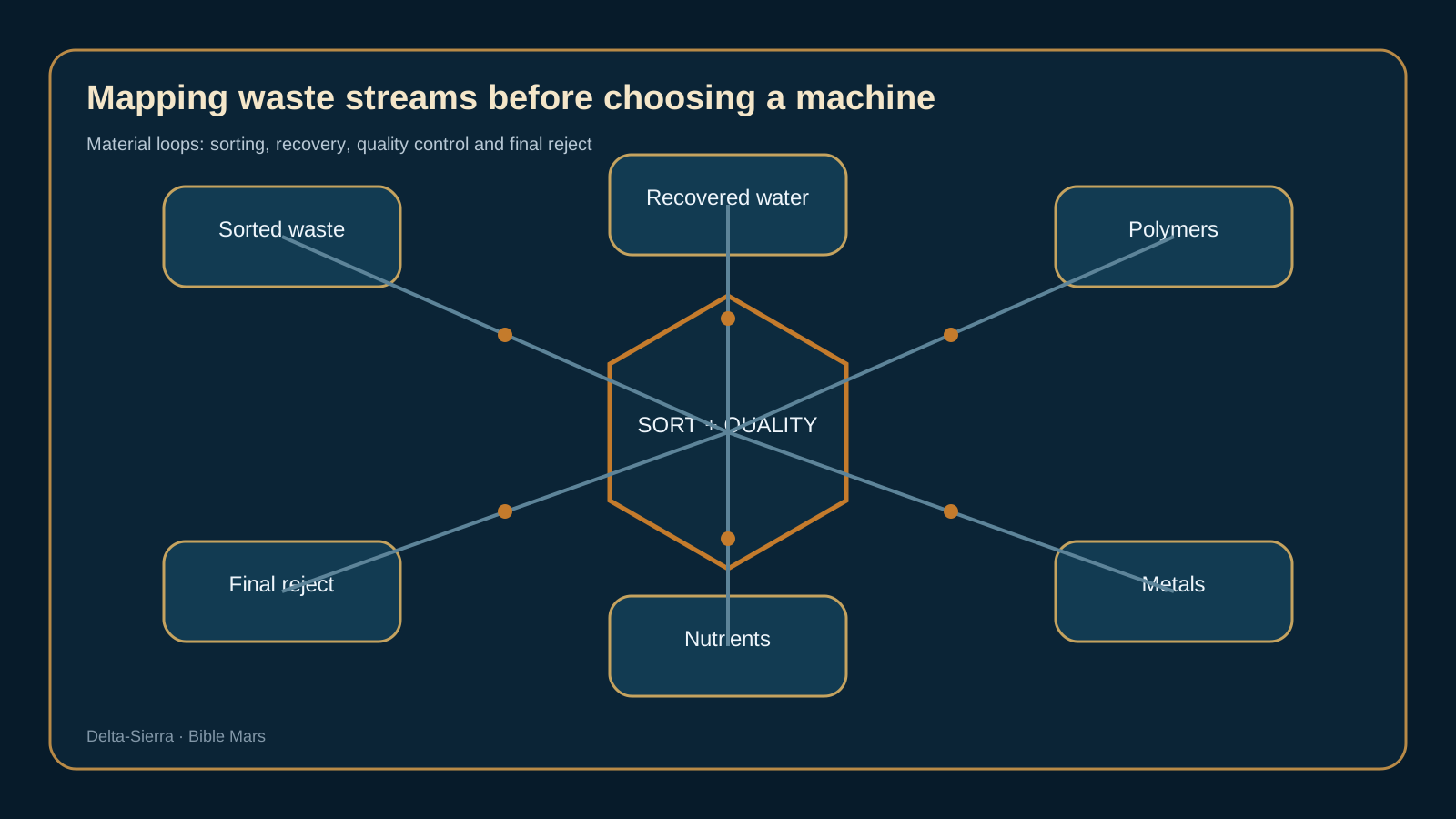
Each incoming flow should be classified at purchase: alloy, polymer, glass, textile, foam, electronics, organic matter, chemical, multilayer packaging. Without identification, recycling becomes blind sorting. Parts and packaging can carry human- and machine-readable material codes linked to composition, contamination history and approved recovery routes.
Why sorting matters more than the shredder
A shredder makes small pieces; it does not create high-quality feedstock. Mixing incompatible polymers, aluminium with steel inserts, paint, adhesives and dust may make recovery harder than before shredding. Sorting should precede irreversible destruction.
The Martian hierarchy: repair before recycling
- reuse the object;
- replace the failed part;
- refurbish the subassembly;
- salvage useful components;
- separate materials;
- remelt, re-extrude or reprocess;
- recover molecules or energy when clean material recovery is no longer practical;
- isolate hazardous residues.
Water: the intuitive loop, but never a perfect circle
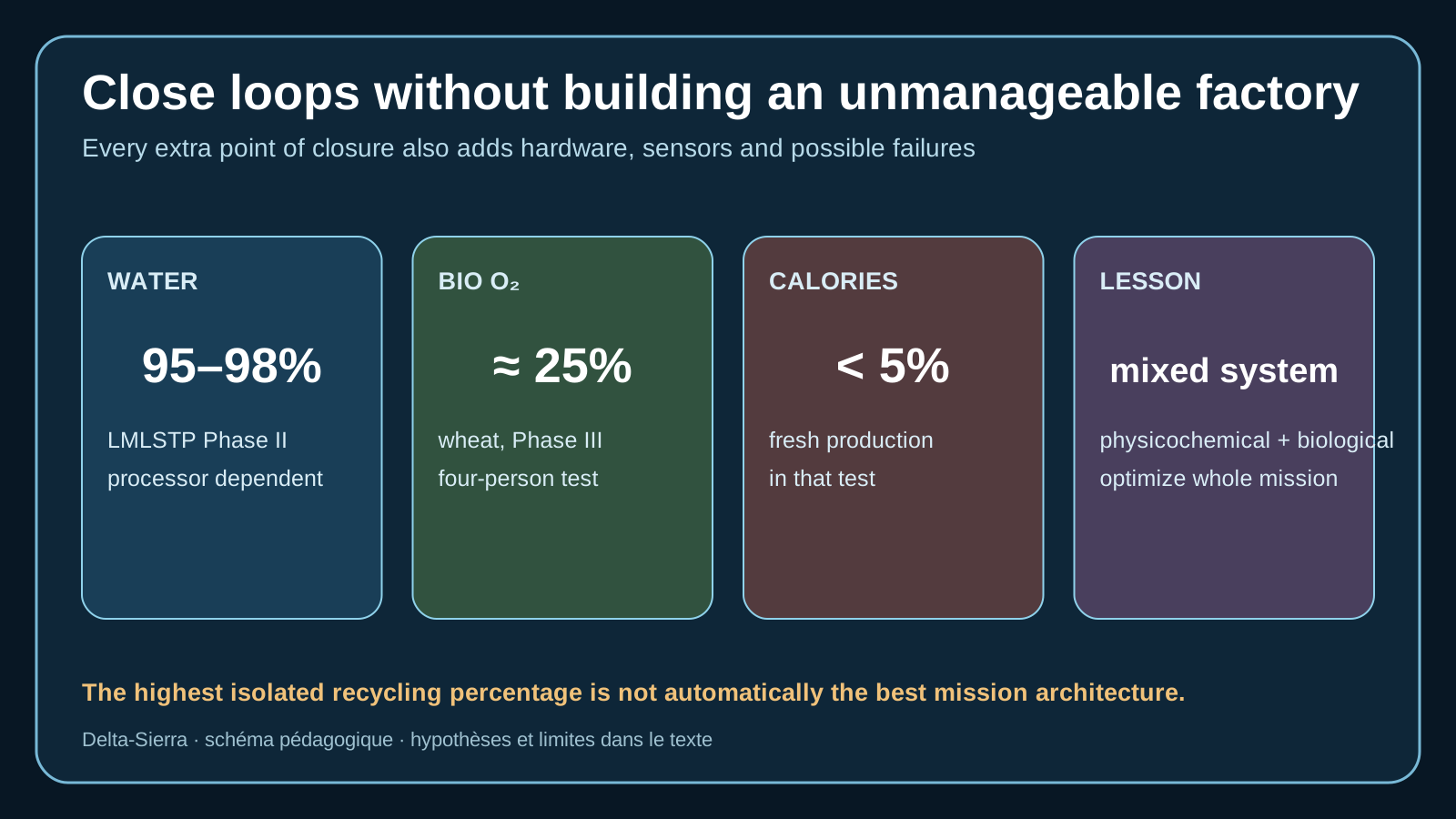
The International Space Station provides an operational benchmark: NASA systems recover a large fraction of wastewater and humidity, while purification still requires filtration, oxidation, quality sensors and reprocessing of off-spec water. This is not a Mars sizing value; it shows that recycling is a treatment plant, not a circular pipe on a diagram.
On Mars, water connects drinking, hygiene, food, agriculture, electrolysis, industry and cleaning. Every loss must eventually be replaced by imported stock or local extraction. A serious ledger separates potable water, technical water, grey water, urine, condensate, brines and process-contaminated water.
Polymers: the mixing trap
Mechanical recycling can shorten polymer chains and mix pigments, fillers and additives. A recycled printed part should not automatically be treated as equivalent to virgin material. Use classes are needed: packaging or furniture first, then more demanding applications only after testing. Design for disassembly, identifiable polymers and limited use of permanent adhesives makes future recycling easier.
Metals: chips and failed structures become a secondary mine
Machining chips are valuable because Earth already paid the energy cost of refining the alloy. They should be collected by alloy and protected from contamination. Failed parts can be repaired, remachined, used as billets or remelted, but chemistry and metallurgy still need verification after reprocessing.
Glass and ceramics follow different loops
Identified glass can often return to a melt. Ceramics and refractories may become aggregate, filler or ingredients in new formulations. Fibre insulation, multilayer glazing and composites require specialized separation because several material families are bonded together.
Textiles, foams and packaging are a hidden logistics stream
NASA recycling challenges explicitly target common exploration waste such as fabrics, plastics, foams and metals. Mars missions will receive these materials with every shipment. Good packaging is designed for a second life: panels, protection, filler, fibre, additive-manufacturing feedstock or chemical inventory.
Organic waste: recover nutrients without losing biosafety
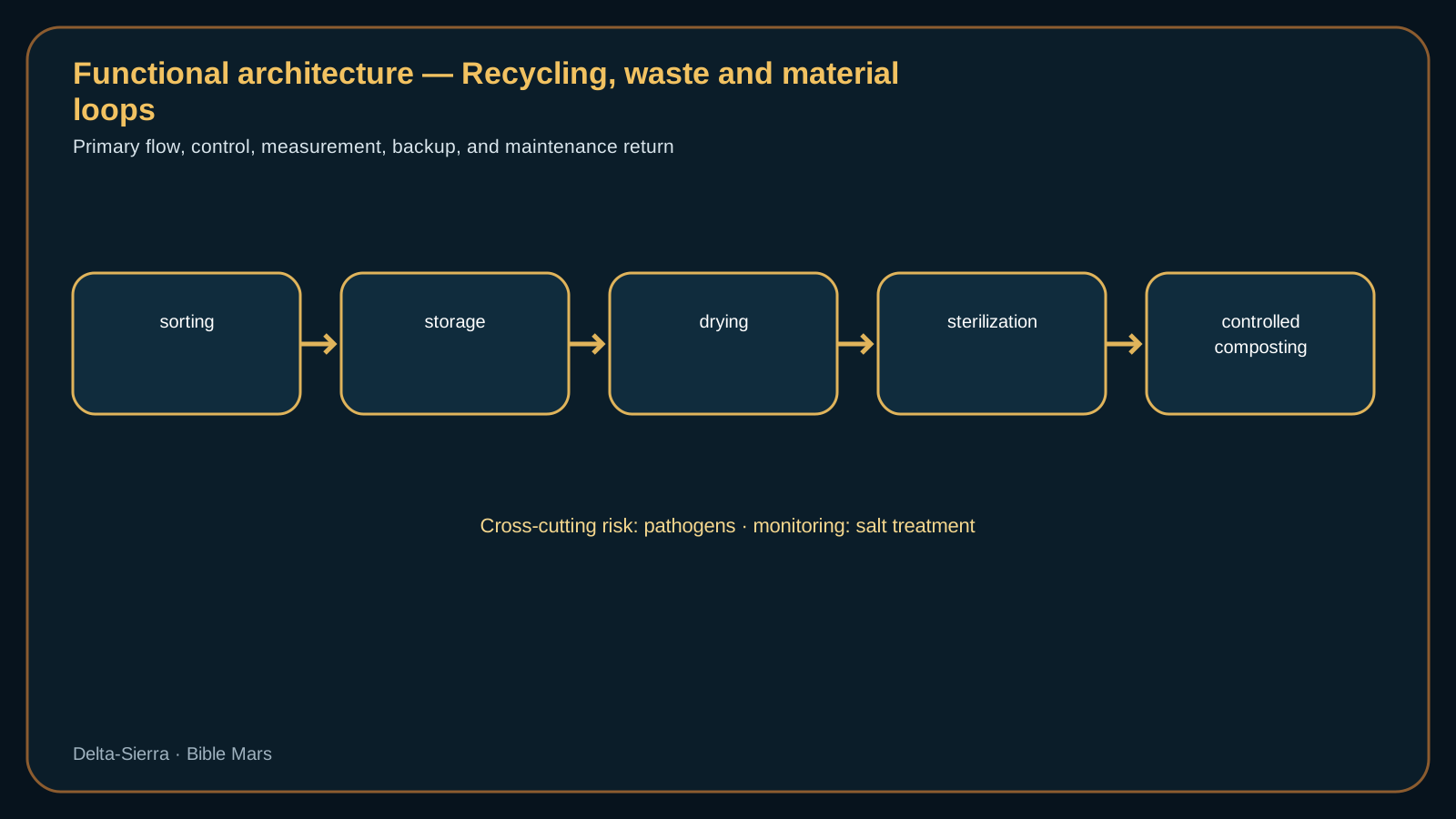
Food residues, crop biomass and sanitary waste contain water and nutrients, but health protection dominates. Processes must distinguish what can be biologically treated, what needs sterilization and what contains contaminants incompatible with agriculture.
A mass-balance calculation everyone should understand
For a learning example only, suppose an activity uses 100 kg of a resource and recovers 92 kg for the next cycle.
input = 100 kg
recovered = 92 kg
net loss = 8 kg
recovery fraction = 92 / 100 = 0.92 = 92%
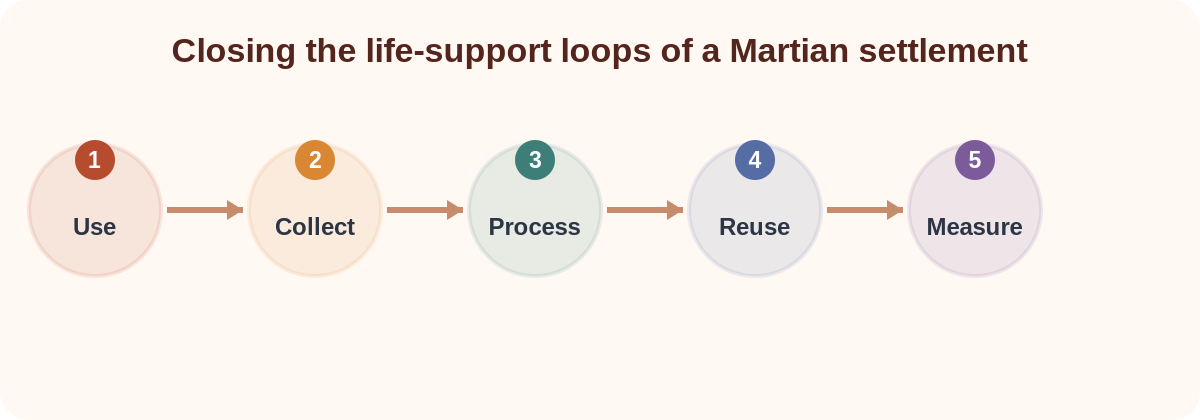
The 92% value is hypothetical. The lesson is the ledger: every “closed loop” should state recovery fraction, losses, residue destination and required make-up supply.
Recycled feedstock still needs qualification
Recovered matter can contain moisture, dust, oxidation products, degradation products or mixed additives. The laboratory checks what matters to the intended use: composition, viscosity, strength, porosity, conductivity, microbiological cleanliness or other properties. “Recycled” is not a specification.
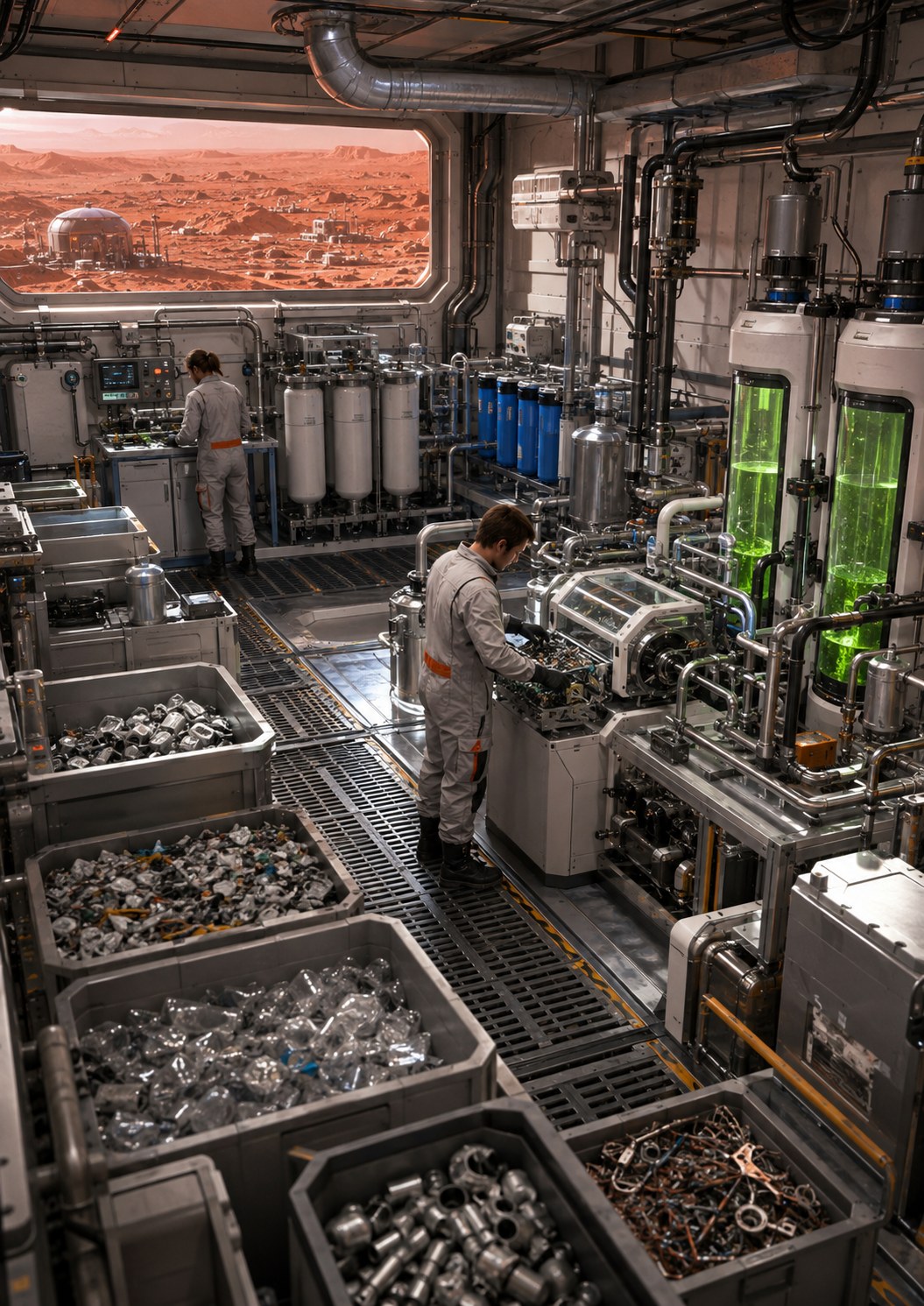
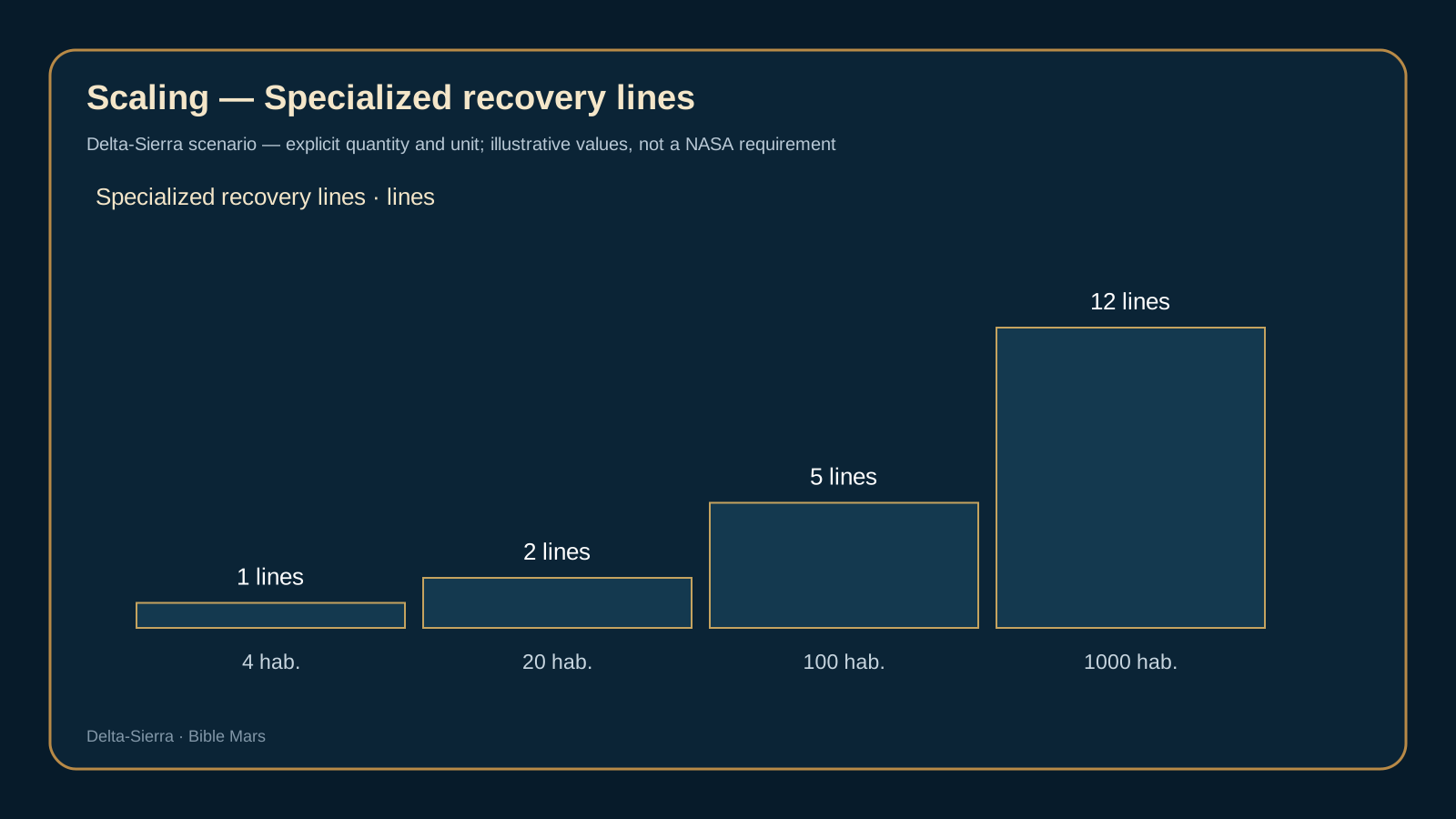
Organize the recycling plant by streams
- clean area: electronics, optics and reusable components;
- mechanical area: disassembly, cutting, sorting and compacting;
- polymer area: wash, dry, grind, extrude and pelletize;
- metal area: alloy sorting, preparation, remelting or refurbishment;
- organic area: controlled biological or thermal treatment;
- hazardous area: batteries, solvents, medical residues and incompatible chemicals;
- laboratory: qualification of recovered material.
The recycling plant itself needs redundancy
The more survival depends on a loop, the more serious its outage becomes. Buffers, bypass tanks, spare parts, simplified manual modes and alternative processing routes matter. A 95% recovery system that stops for months can be more dangerous than an 85% system that is redundant and repairable.
What NASA adds to the picture
NASA work on waste recycling for in-space manufacturing treats mission waste as feedstock for on-demand production. ECLSS experience shows that water and air recovery depend on instrumentation, consumables, quality control and fallback modes. Recycling on Mars is therefore not merely an environmental virtue; it is an industrial survival function.
Metrics for a real closed loop
- mass entering per day or mission;
- mass actually recovered;
- mass lost or stored as residue;
- quality of recycled feedstock;
- energy per kilogram processed;
- human sorting and maintenance time;
- imported consumables;
- buffer stock available during outages;
- fraction of demand supplied by secondary local material.