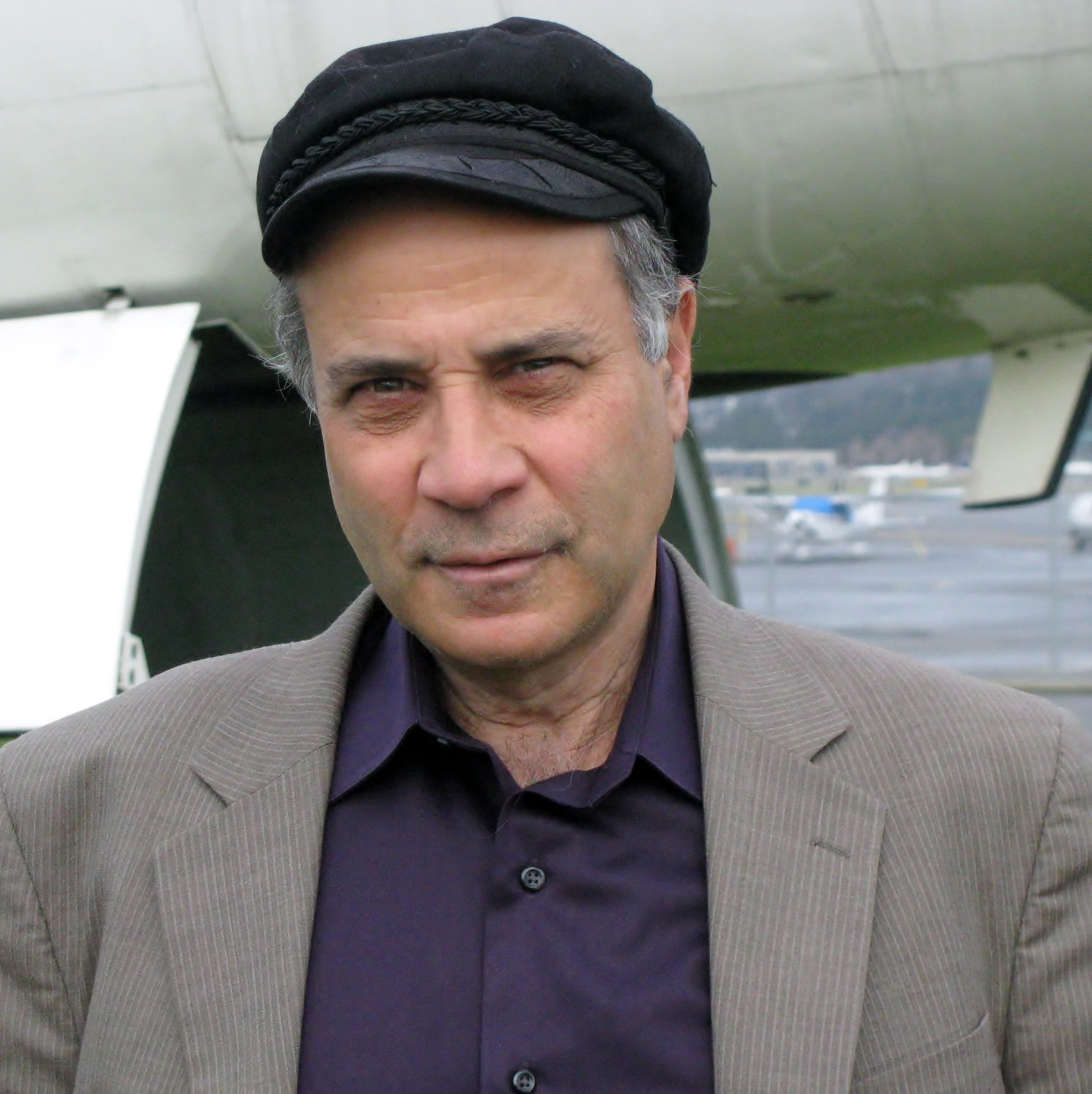
Robert Zubrin's documented nationality or citizenship is American; the documented birthplace is New York, United States. Robert Zubrin is one of the most influential intellectual architects of the modern case for sending humans to Mars. Born in New York, first a mathematician and teacher, he returned to school to become an engineer, worked in aerospace and then formulated Mars Direct with David Baker: an architecture built around using Martian resources and rejecting unnecessarily massive infrastructure. His career shows how an engineering concept can leave a design office, enter public debate and permanently change how agencies and advocates think about human missions.
Period1952–
RoleAerospace engineer, author, founder of the Mars Society
Mars connectionMars Direct, ISRU and advocacy for human settlement on Mars
BirthplaceNew York, United States
Nationality / citizenshipAmerican
Primary country of space activityUnited States
Main institutionsMartin Marietta / Pioneer Astronautics / Mars Society
Chronological biography
1952–early 1980s — New York, mathematics and early work
1952–1969: growing up while human spaceflight becomes real. Robert Zubrin was born on April 9, 1952 in New York. Institutional biographies are much stronger on his education and professional career than on intimate childhood anecdotes, so this page does not invent scenes that cannot be documented. What Zubrin has repeatedly described himself is the larger environment in which he grew up: postwar America was building major national projects, and the space program moved from early rockets to Apollo while he was still a teenager. Source.
Before Mars Direct, Zubrin passed through several professional lives that explain his way of thinking about exploration. Mathematics encouraged simple, calculable architectures; teaching forced him to state problems clearly; returning to engineering school added propulsion, nuclear systems and systems constraints. At Martin Marietta he finally entered an industrial environment in which a crewed architecture had to be defended in mass, energy, risk and cost. Mars Direct grew from that accumulation: reduce the system until every tonne sent has a function that can be justified. Institutional source.
He was seventeen when Apollo 11 landed on the Moon in 1969. In later interviews he explained how natural continued expansion into space appeared to his generation at that moment. That memory matters because it turns his later Mars advocacy into a biographical continuity rather than a sudden professional interest. Mars Direct came from an engineer, but also from someone who had watched a national engineering program transform an apparently impossible destination into a sequence of solvable tasks. Mars Society retrospective interview
A useful way to understand Zubrin's later Mars advocacy is to follow the sequence of professions that came before it. Applied mathematics trained him to express a problem quantitatively; years of teaching forced him to explain difficult ideas clearly enough that another person could use them; graduate engineering then gave him access to thermodynamics, nuclear systems and aerospace design. Those stages matter because Mars Direct would later combine calculation, engineering and argument. It was not simply an enthusiasm for Mars translated into slides. Source
1970s–early 1980s: applied mathematics and years in the classroom. Zubrin first trained in mathematics, earning a degree from the University of Rochester in 1974. He then spent years teaching science and mathematics at the secondary-school level rather than moving directly into the aerospace industry. That part of the chronology is essential: the future author of Mars Direct did not begin his adult life as a rocket engineer. Source.
Returning to school to become an engineer was the decisive change in Zubrin’s career. Mathematics had given him analytical habits, but aerospace and nuclear engineering gave him a new vocabulary of propulsion, mass fractions, power systems and mission trade-offs. That combination is what later made Mars Direct persuasive to engineers: the proposal did not begin with a futuristic settlement image, but with a mass-flow logic. Bring less from Earth, make return propellant from Martian resources, and let each mission build capability for the next. The architecture’s influence came from turning a distant goal into a sequence that could be costed and criticized. Institutional source.
He later described returning to graduate school in the 1980s specifically to become an engineer. The combination of mathematics and teaching also helps explain his later public style: he tends to frame mission architecture as a sequence of assumptions, constraints and consequences that can be explained to a technically curious reader rather than left inside a specialist report. NASA Ames biography
The 1980s — Returning to graduate study and becoming an engineer
The 1980s: returning to school means deliberately changing identity from teacher to engineer. Zubrin’s early adult path matters because it is not the conventional trajectory of someone who entered an aerospace program directly after college. After studying applied mathematics, he spent years teaching science and mathematics. He later described the decision to return to graduate school in the 1980s as a deliberate attempt to become an engineer. At the University of Washington he developed expertise in aeronautics and astronautics and in nuclear engineering. NASA biographical material also records work in thermonuclear-fusion research, nuclear engineering, and radiation protection. The mixture is unusually relevant to human Mars missions. A crewed expedition is simultaneously a transportation problem, an energy problem, a radiation problem, and a mass problem. Zubrin reached aerospace architecture after having worked across several of those boundaries rather than through a single narrow specialty. NASA Ames — Robert Zubrin biographySource.
The creation of the Mars Society extended Zubrin’s influence beyond design studies. He became not only an engineer proposing an architecture but an organizer trying to keep human Mars exploration in public and political debate. Analog research stations, conferences and repeated advocacy created a community in which engineers, scientists, students and enthusiasts could argue about implementation rather than merely admire the destination. This public role sometimes made him more forceful than an institutional study would be, but it also explains why Mars Direct survived as a reference point for decades: Zubrin kept returning the discussion to concrete vehicles, propellant production, mission cadence and settlement. Institutional source.
Teaching also left an imprint on his later public work. Mars Direct is not only an engineering proposal; it is designed to be explainable. Its central claims can be stated as a chain: reduce the mass carried from Earth, use Martian resources to make return propellant, avoid assembling an enormous fleet in Earth orbit, and send surface assets in an order that creates an abort path. That clarity is one reason the architecture became influential even among people who rejected parts of it. The chronology therefore needs the classroom years because they help explain why Zubrin later argues through simplified architectures, back-of-the-envelope comparisons, and public debate rather than only through specialist papers.
Those are not unrelated detours. Human Mars architectures couple propulsion, energy, radiation, mass and chemical processing. Zubrin reached Mars after learning to think across those interfaces. That is why his later use of the Martian atmosphere as a resource was not simply a visionary phrase: it emerged from an engineering habit of asking whether the environment itself can remove mass from the launch manifest. NASA Ames biography
Mars Direct therefore needs to be read as a design response to a systems problem rather than as a slogan. If a return vehicle can make methane and oxygen on Mars from locally available carbon dioxide plus imported hydrogen, the outbound architecture changes. If heavy infrastructure does not have to be assembled in Earth orbit, the launch campaign changes. Each simplification creates new verification obligations, especially around autonomous surface production and reliability. Zubrin's influence came from making those trade-offs legible enough that supporters and critics could argue about specific assumptions. Source
1988–1996 — Martin Marietta, David Baker and the birth of Mars Direct
1988–1996: Martin Marietta, David Baker, and the step from engineering work to Mars Direct. At Martin Marietta, Zubrin worked inside a large aerospace organization and encountered the practical language of mission studies: requirements, mass budgets, propulsion, vehicle sizing, schedules, and the need to defend a design against competing architectures. Working with engineer David Baker, he developed the ideas that became Mars Direct. The proposal challenged the assumption that a first human Mars mission had to begin with a very large orbital assembly and an enormous supporting infrastructure. Instead, the return vehicle would be sent in advance and would manufacture much of its return propellant from Martian carbon dioxide, with hydrogen brought from Earth in the original formulation. That use of in-situ resource utilization changed the mass balance of the mission and made surface chemistry part of transportation architecture.
The idea did not become NASA’s official Mars architecture, and a serious biography should say so. Its importance lies in how it changed the argument. Mars Direct forced planners to defend complexity that had previously been treated as inevitable. It also made ISRU visible to a much wider audience as something more than an optional surface experiment. When Zubrin left the large-company environment and founded Pioneer Astronautics in the 1990s, he continued working on technologies and studies related to resource utilization and space exploration. The professional transition matters: the advocate who would later become publicly associated with Mars remained connected to engineering work rather than moving entirely into commentary.
In the late 1980s Zubrin joined Martin Marietta Astronautics in Denver and worked on advanced transportation and propulsion concepts. The political context changed in 1989 when a renewed U.S. exploration initiative placed the Moon and Mars back into long-range planning. Large proposed Mars architectures made cost and complexity themselves into engineering problems.
Working with engineer David Baker, Zubrin developed the logic that became Mars Direct. Instead of assembling a huge chain of infrastructure before departure, the plan asked what could be sent ahead, what could be manufactured on Mars, and how mission sequencing could protect the crew. The return vehicle would be predeployed, propellant production would be demonstrated before the crew committed to the surface mission, and local resources would substitute for mass launched from Earth.
That is the point in the chronology where Zubrin finally becomes the figure normally introduced in short biographies. By placing it after his mathematical training, teaching years, graduate engineering work and industrial experience, Mars Direct becomes the result of an accumulated method rather than a disconnected idea. The Planetary Society — Robert ZubrinNASA NTRS — Mars Direct
The pedagogical strength of Mars Direct lies in its causal chain. If the return system and propellant plant arrive first, the crew does not leave Earth until the return capability has been demonstrated. Part of the mission risk is converted into a departure criterion. Using Martian carbon dioxide and other resources reduces the amount of return propellant launched from Earth.
Yet an architecture that is simple on paper does not eliminate qualification problems. Producing methane and oxygen for a human return demands power, compressors, reactors, liquefaction, cryogenic storage and long-duration reliability. ISRU research has made the concept more credible than it was in 1990, but a complete Mars return-propellant factory has not been demonstrated. A serious Zubrin profile must therefore present both conceptual force and verification debt.
The same tension applies to habitats, health, radiation and surface operations. Mars Direct is not a complete manual for a Martian civilization. It is a transportation and early-settlement architecture that forces debate back toward the minimum set of things that must actually work.
After leaving the large aerospace-company environment, Zubrin continued through Pioneer Astronautics and later the Mars Society. That institutional move changed his role from engineer inside a program to public advocate, author and organizer. A complete biography must therefore distinguish technical proposal, entrepreneurial engineering and political advocacy. They reinforce one another in his career, but they are not the same activity and they do not carry the same standard of evidence. Source
In 1995 a NASA technical report associated with Zubrin and Steve Price examined a Mars sample-return concept that used in-situ propellant production. The historical importance is broader than that particular vehicle: it shows Zubrin applying ISRU at several scales, from a robotic return mission to the later logic of crewed exploration, rather than treating local-resource use as a slogan reserved for settlement. [Z12]
NASA’s technical archive also preserves work on the Mars Aerial Platform, a balloon-based concept intended to obtain high-resolution imagery and study the Martian atmosphere and surface. This work matters biographically because it widens Zubrin’s Mars activity beyond human transport: reconnaissance, planetary observation and relatively simple robotic systems also appear in the record of problems he chose to study. [Z13]
1996–2000 — Pioneer Astronautics, books and the Mars Society
1996–1998: Pioneer Astronautics and the Mars Society. Zubrin founded Pioneer Astronautics in 1996, moving from large-company engineering into an organization able to pursue research and development on propulsion, in-situ resource utilization and exploration systems. In 1998 he co-founded the Mars Society, turning an engineering architecture into a sustained public and organizational campaign for human Mars exploration.
The sequence matters: engineer, architecture, experimental R&D company, advocacy institution. The Mars Society later supported analog-research stations intended to test field operations and procedures in terrestrial environments that reproduce selected constraints of planetary exploration without pretending to be Mars itself. Mars Society — About
1998 onward: the Mars Society, advocacy, and the boundary between influence and adoption. The creation of the Mars Society in 1998 gave Zubrin an institution dedicated to sustaining the political and cultural case for human Mars exploration. The organization sponsored conferences, analog research activities, publications, and public campaigns. This part of his biography should come after the engineering formation because otherwise the reader sees only an activist. By the time the Society existed, Zubrin had already passed through mathematics, teaching, graduate engineering, nuclear and aerospace work, a major contractor, and the development of a specific Mars architecture. Advocacy was a new phase built on that prior technical identity.
His later relationship to NASA and SpaceX is best described as influence, argument, and partial convergence rather than authorship of their programs. NASA has repeatedly studied ISRU and leaner Mars architectures without adopting Mars Direct as a whole. SpaceX shares the broad goal of making Mars settlement technically possible and places heavy emphasis on propellant production and transportation cost, yet Starship is not simply Mars Direct with a different rocket. Zubrin has also criticized choices made by both government and commercial programs. That tension belongs in the chronology because it shows a mature phase of his career: the architect becomes a persistent external critic, sometimes aligned with institutions and sometimes opposing them, while continuing to ask the same basic question—what minimum set of capabilities would make a human Mars program executable rather than permanently deferred?
In 1998 Zubrin co-founded the Mars Society and became its most recognizable public figure. The organization has promoted more than a political objective. It developed analogue habitats and field campaigns, including the Mars Desert Research Station and FMARS. Such sites cannot reproduce Martian gravity, radiation or true interplanetary isolation. Their value is in operations, field procedures, crew organization and learning how teams adapt to constraints. These analogs are useful but incomplete: they do not reproduce Martian gravity, interplanetary radiation or the true inability to evacuate rapidly. A rigorous profile must show both their experimental value and their limitations.
Zubrin also became a prolific author and speaker. The Case for Mars brought Mars Direct and the settlement argument to a broad audience. His influence therefore operates at three levels: mission engineering, political advocacy and community-building.
His positions are often more assertive than those of agencies or cautious researchers, especially on schedule and on prioritizing Mars quickly. That contrast is part of his historical role: he acts as a simplifying force against architectures he believes have accumulated unnecessary complexity.
Field science and mobility: Mars Direct was designed for an expedition that actually works. Mars Direct was never only a transportation sketch. Zubrin repeatedly tied the architecture to field work: crews would live on the surface long enough to travel, inspect geology, deploy instruments and use a pressurized rover rather than treat Mars as a brief flag-and-footprints destination. That operational emphasis matters because it changes the design question. A habitat is not merely a shelter; it must support maintenance, traverse planning, sample handling and repeated excursions while preserving enough reserve to survive an immobilized vehicle or a delayed return. The same logic later became visible in Mars Society analogue stations, where procedures, crew workload and field mobility could be exercised even though the analogue obviously could not reproduce Martian gravity or radiation. [Z2][Z5]
The criticism of Mars Direct: simplicity is never free. The strength of Mars Direct is also the reason it has remained a productive target for criticism. Removing orbital assembly and pre-positioning return propellant can reduce mass and interfaces, but every simplification pushes risk somewhere else: into entry mass, surface power, ISRU reliability, crew reserves, ascent performance or the assumption that critical equipment will work after months of unattended exposure. Zubrin's enduring contribution is therefore not that every number in the original architecture must be accepted. It is that each additional stage, vehicle and rendezvous must justify the risk and mass it adds. A modern Mars architecture can disagree with Mars Direct and still inherit its demand for ruthless system-level accounting. [Z3][Z4]
The 2000s to the present — Arguing for Mars, testing ideas and challenging architectures
From engineer to advocate: colonization becomes a political argument. As Zubrin moved from company engineering to Pioneer Astronautics and the Mars Society, his public case broadened. Mars was no longer presented only as a destination for expeditions but as a place where a durable human branch could eventually grow. That transition introduces claims that engineering alone cannot settle: how rapidly settlement should expand, what institutions it would need, how much dependence on Earth is acceptable and which risks society should authorize. A reference biography should therefore separate two layers. Zubrin the engineer can be evaluated against mass, propulsion, ISRU and mission design; Zubrin the advocate belongs to a wider debate about why a civilization would choose to settle another world. [Z7][Z1]
The lasting contribution: forcing architectures to explain their complexity. Even where NASA studies adopted different vehicles or more conservative assumptions, Mars Direct changed the conversation by making complexity itself something to defend. Zubrin's habit is to ask what each element is for, whether a resource can be produced locally and whether a mission can be reorganized so that one vehicle performs several functions. That style of reasoning remains useful to Mars engineering today. It does not guarantee that the leanest architecture is safest, but it prevents a large architecture from hiding behind institutional momentum. For readers, this is the most durable lesson of his career: Mars planning improves when every tonne, interface and dependency is forced to earn its place. [Z4][Z8]
After the Columbia accident, the U.S. Senate held hearings in 2003 on NASA’s future, and Zubrin testified as president of the Mars Society. The episode marks a real change in his public role: Mars Direct was no longer only an engineering proposal from the early 1990s; its author had become a recurring participant in national arguments about the purpose, risk and direction of human spaceflight. His testimony also summarized the unusual sequence behind that role — aerospace and nuclear-engineering training, industry work, a research company and leadership of an advocacy organization. [Z1][Z18]
From Zubrin to SpaceX: influence, convergence and difference. SpaceX has given new relevance to several themes Zubrin championed: heavy lift, local propellant production, permanent presence and rejection of Mars as a one-off flags-and-footprints expedition. That does not make Starship a version of Mars Direct. Vehicle design, mass, reuse strategy and ultimate scale are very different.
The deepest convergence is philosophical: transportation and ISRU should support a presence that grows. The difference is industrial. Zubrin originally shaped an architecture intended to work with relatively conventional technology; SpaceX is building a new vehicle family and imagines a far higher flight rate.
In the history of Mars ideas, Zubrin therefore forms a bridge between late-twentieth-century institutional studies and the return of settlement-oriented thinking driven in part by private actors in the twenty-first century.
Influence on NASA: not adoption, but productive contamination of ideas. It would be inaccurate to write that “NASA adopted Mars Direct.” Agency reference architectures are more complex and evolve with objectives, technologies and institutional constraints. Yet NASA documentation explicitly cites Mars Direct and its authors, while principles such as pre-deployment, long surface stays and in-situ resources recur in later studies. [Z3][Z4] The interesting influence is therefore not a simple administrative lineage. It is the way an outside proposal forces a large program to justify complexity.
Supplementary documentary analysis
Biographical analysis, context and legacy
Thematic analysis and deeper reading
Essential timeline
Engineering training and work in the U.S. aerospace industry.
Mars Direct is developed with David Baker in the context of work at Martin Marietta.
The Case for Mars brings the architecture and its argument to a broad audience.
The Mars Society is founded with other advocates of human Mars exploration.
FMARS and MDRS analog stations expand, alongside sustained public advocacy.
Zubrin continues to publish and speak publicly about human Mars exploration strategies.
Zubrin, SpaceX and government architectures
Zubrin shares with SpaceX the view that Mars can be a civilizational objective and that radically cheaper transport changes the problem. He does not necessarily support identical mission sequences or architectural choices.
That difference is what makes his work useful: it gives readers another school of Mars architecture rather than one supposedly inevitable route. Mars Direct becomes a critical lens for examining mass, ISRU, pre-positioning and dependence on intermediate infrastructure.
Why Zubrin remains useful even when Mars Direct is not adopted
A modern architecture can prefer different vehicles, mission sequences or levels of pre-positioning and still be deeply shaped by the questions Mars Direct raised. How many intermediate functions are actually necessary? What must be sent before the crew? What can be produced locally? Which infrastructure must be demonstrated before humans are exposed to the journey?
These questions act as a test of architectural discipline. They do not impose one answer, but they make unjustified complexity harder to hide. That is why Zubrin deserves a dedicated engineering biography: his influence lies as much in the questions he forces as in the specific plan he advocates.
An engineer who tries to shrink the mission before increasing the budget
Robert Zubrin stands out in recent Mars history because he attacks the problem through mission architecture. Trained in aeronautics, astronautics and nuclear engineering, he worked at Martin Marietta and, with David Baker around 1990, developed the proposal that became Mars Direct. The context matters: human Mars studies could accumulate specialized spacecraft, orbital assembly and large infrastructure until the political cost became almost impossible to accept.
Mars Direct pushes the other way. It reduces elements, relies on conventional heavy-lift launch concepts and puts use of Martian resources at the center of the return strategy. Hardware sent before the crew produces return propellant, replacing some mass that would otherwise have to leave Earth with industrial work performed at the destination.
NASA histories document the strong influence of Mars Direct on later human Mars studies. Design Reference Missions did not simply copy Zubrin’s plan, but they incorporated or debated several of its principles, especially ISRU and more direct mission structures.
The engineer becomes an advocate because architectures do not travel by themselves
Before the advocate: the engineer who learned to attack architecture rather than wait for permission
Robert Zubrin matters in the history of Mars not because he discovered the planet, commanded a government space agency, or founded a launch company, but because he made mission architecture itself the object of public argument. His professional formation in aeronautics, astronautics and nuclear engineering placed him in the world of propulsion, mass budgets, power systems and coupled constraints rather than in the older tradition of planetary astronomy. The Mars Society’s biographical material and NASA Ames both identify him as a former Lockheed Martin engineer who later became president of Pioneer Astronautics, with graduate training at the University of Washington.[Z20][Z25] That background is essential because his most durable contribution has been a way of asking questions: which element of a Mars plan creates the largest multiplication of mass, cost or schedule, and can the mission be rearranged so that the multiplication disappears?
This way of thinking is visible in Mars Direct. Instead of beginning with a grand orbital infrastructure and then asking how to finance it, Zubrin and David Baker began with a deliberately austere sequence of missions and asked what could be removed. Orbital assembly could be reduced. A large interplanetary mothership could be avoided. The return propellant did not necessarily have to be transported from Earth. A long surface stay was not automatically a defect if the trajectory that produced it simplified the transportation system. The argument was provocative because it treated the expensive architecture not as a law of physics but as one design choice among others. NASA’s technical record preserves the 1991 Mars Direct paper explicitly as an alternative to the Space Exploration Initiative architecture and describes its claimed virtues in terms of simplicity, robustness and cost-effectiveness.[Z21]
That distinction between physical constraint and inherited design habit is one reason Zubrin’s work survived changes in launch vehicles, presidential programs and NASA terminology. Some individual numbers from early Mars Direct are now historical. The intellectual move remains current: do not merely ask whether a reference architecture can be funded; ask whether the reference architecture contains assumptions that amplify the problem. This is also why Zubrin’s biography cannot be reduced to advocacy. The advocacy came from a technical conviction that Mars was being made more distant by architecture and program design than by celestial mechanics alone.
1989 and the Space Exploration Initiative: when a national vision collided with the cost of its own architecture
President George H. W. Bush’s 1989 Space Exploration Initiative created the political setting in which Mars Direct emerged. The initiative linked a return to the Moon with eventual human missions to Mars, but the engineering studies associated with the effort rapidly became synonymous with large infrastructure, multiple launches and immense cost estimates. NASA’s own historical documents describe the period as one in which the United States was trying to define a post-Apollo exploration architecture while Congress remained unconvinced that the proposed scale and price could be sustained.[Z23]
Zubrin’s reaction was not simply that the government should spend more. Working with a small team at Martin Marietta, he sought a different architecture. NASA Ames later summarized the origin of Mars Direct in precisely this context: after the 1989 call for renewed exploration, a small Martin Marietta team developed a plan using conventional rockets and resources found on Mars, attempting to reduce cost and shorten the path to a mission.[Z20] The story is often retold as a battle between a bold engineer and a timid bureaucracy, but that simplification misses the more useful lesson. Large government programs inherit requirements from many stakeholders. Safety, industrial participation, existing facilities, lunar objectives, political sequencing and institutional continuity all shape a reference mission. A small architecture team can optimize much more aggressively for a single objective. Mars Direct was powerful partly because it exposed that difference.
For readers trying to understand why Mars programs repeatedly expand, this episode is a case study in systems engineering and political economy. A mission design is not only the sum of delta-v, mass and power. It is also a map of institutional commitments. An orbital assembly node may have technical advantages while simultaneously creating additional programs, interfaces and budgets. A lunar precursor may produce knowledge while also postponing Mars. A highly reusable transport architecture may promise lower marginal cost while demanding a much larger development program before the first expedition. Zubrin’s enduring role has been to force these hidden programmatic choices into the open.
Mars Direct as a sequence: pre-deploy the return system, make propellant, then send the crew
The most important feature of Mars Direct is not a particular drawing of a spacecraft. It is the order of operations. In the classic concept, an Earth Return Vehicle is sent to Mars before the crew. After landing, equipment on the Martian surface uses local atmospheric carbon dioxide, combined with hydrogen brought from Earth, to manufacture methane and oxygen for the return trip. Only after the return vehicle has landed and propellant production has been demonstrated does the crew depart Earth. A later cargo or return vehicle can then be sent on the next opportunity, creating a repeating pattern rather than a single heroic expedition.[Z21][Z22]
This sequence converts one of Mars exploration’s greatest disadvantages, distance, into an operational discipline. Because the crew does not launch until the return asset is already on Mars and producing propellant, part of the mission’s critical infrastructure is tested before human lives depend on it. The architecture still contains serious risks: the return vehicle must survive its landing, the chemical plant must operate autonomously, power must be reliable, propellant must be stored, and the crew’s habitat and surface systems must endure a long stay. Mars Direct does not eliminate risk. It tries to move some risks earlier in the sequence and make them observable.
The distinction matters when comparing Mars Direct with later proposals. Many modern plans also pre-deploy cargo, use in-situ resources and require confirmation of surface readiness before committing a crew. Those similarities do not make every modern architecture “Mars Direct,” but they show how influential the sequence became. The general principle can be stated without allegiance to any one vehicle: do not send people to a destination until the destination has already proved that the infrastructure needed for their survival or return is present and functioning. That principle is more durable than the diameter of any particular 1990s launch vehicle.
The chemistry at the center of the argument: why carbon dioxide on Mars is not merely an atmosphere but a feedstock
Mars Direct became famous for “living off the land,” but the phrase can hide the engineering. Mars has a carbon-dioxide-rich atmosphere. The classic Zubrin architecture uses the Sabatier reaction to combine carbon dioxide with hydrogen and produce methane and water; electrolysis can then recover oxygen and recycle hydrogen through the process. Other processing steps can increase the oxygen supply required by a methane-oxygen rocket. NASA technical studies of Mars in-situ resource utilization have repeatedly treated methane and oxygen production as a serious architectural option, and later laboratory and mission work continued to test the broader premise that useful consumables can be produced from Martian resources.[Z29]
The key systems insight is leverage. A kilogram of equipment that enables the production of many kilograms of propellant on Mars can replace a much larger quantity that would otherwise have to be accelerated out of Earth’s gravity well, sent through interplanetary space, decelerated at Mars and protected until use. This is why ISRU is not merely a local convenience. It acts on the transportation system upstream. Every tonne not launched from Earth affects launch vehicle size, Earth departure stage, entry mass, landing system, and sometimes the number of launches. The effect can cascade through the architecture.
But leverage also creates dependency. If the mission relies on local propellant, the chemical plant becomes mission-critical infrastructure. The engineering question therefore changes from “can methane be produced from carbon dioxide?” to a much longer list: at what rate, with what purity, under what temperatures, using how much electrical power, with what maintenance burden, after what dust exposure, with what redundancy, and how will success be verified before crew departure? Zubrin’s original contribution was to force ISRU into the center of the mass budget. Modern engineering must add the reliability case that a crewed mission would demand.
ISRU is leverage, not magic: the hidden equipment that turns a slogan into an industrial system
Once “use Martian resources” becomes a slogan, it is easy to forget the factory implied by those four words. A propellant plant needs pumps, compressors, valves, catalysts, heat exchangers, plumbing, sensors, control electronics and storage. It needs an energy source and a thermal strategy. It needs fault detection, spare parts or graceful degradation, and some way of dealing with contamination. If water ice is incorporated into a later architecture, excavation, transport, crushing, heating, filtration and handling of abrasive regolith become additional industrial processes. A Mars base that depends heavily on ISRU is therefore not a campsite with a clever chemical box. It is the beginning of an extraterrestrial process industry.
This is where Zubrin’s architecture is most useful as a pedagogical starting point. Mars Direct makes the benefit obvious enough that the reader can then ask what is required to earn that benefit. NASA’s later Moon-to-Mars architecture work formalizes a broader version of this systems problem: an architecture consists of elements, relationships, constraints and dependencies that must function as a coherent whole.[Z26] For Mars, ISRU creates exactly such dependencies between power, surface mobility, maintenance, storage, crew schedule and transportation.
Zubrin often argues from simplicity: make what is easy to make locally and avoid hauling it across interplanetary space. The modern engineering refinement is to define simplicity at the system level, not the component level. A reactor may be chemically simple but operationally difficult. A locally produced propellant may reduce launch mass but increase the number of critical surface systems. A design can still be superior, but the comparison must include reliability, spares, commissioning time and verification. In that sense, the evolution from Mars Direct to contemporary ISRU studies is not a rejection of Zubrin’s idea. It is the process of converting an architectural insight into a certifiable industrial chain.
Why a 500-day surface stay can be a feature rather than a defect
Popular descriptions of Mars missions often assume that a shorter stay is automatically safer. Mars Direct challenged that intuition by favoring conjunction-class trajectories with a long stay on the Martian surface. The 1991 “Humans to Mars in 1999” paper discusses a roughly 500-day surface stay as part of an architecture intended not merely to touch Mars but to conduct serious exploration and establish repeatable transportation.[Z22]
The orbital mechanics behind this choice matter. Earth and Mars do not remain in a convenient geometry for an immediate return. Trying to minimize surface time can force different interplanetary trajectories, higher energy, longer or more punishing time in space, and additional propulsion requirements. A long surface stay accepts the synodic rhythm and turns the waiting period into productive field time. In an architecture with substantial surface shielding, power and mobility, those months can support geology, drilling, sample collection, maintenance and preparation for the next mission.
The objection is equally important. A 500-day stay means that the habitat must work through seasons, dust events, component failures, medical problems and psychological stress. It makes local maintenance central. It increases consumables that cannot yet be produced locally. It requires the crew to become more autonomous because Earth is minutes away by radio and rescue is impossible on operational timescales. Mars Direct therefore exchanges one class of transportation complexity for a deeper commitment to surface reliability. Zubrin’s preference is coherent because his vision has never been a flags-and-footprints excursion. It treats the first crews as the beginning of an enduring surface capability. Readers should nevertheless recognize the trade: a long-stay architecture is not inherently “easy”; it is an architecture that chooses to concentrate complexity on Mars rather than in a rapid-return transportation system.
Radiation: a real hazard that should be quantified rather than used as a conversation stopper
Zubrin has repeatedly opposed the use of radiation as a vague reason to postpone Mars missions indefinitely. His argumentative style is to compare estimated exposures with known limits, historical astronaut experience and engineering mitigations rather than to treat deep-space radiation as a mysterious binary barrier. That instinct is useful: the word “radiation” covers galactic cosmic rays, sporadic solar particle events, different shielding responses and different biological uncertainties. A serious mission must separate them.
At the same time, a modern open-book treatment has to go farther than advocacy. Galactic cosmic rays are difficult to shield with modest mass because secondary particles can be generated in shielding materials. Solar particle events can produce large short-term doses but are more amenable to storm shelters using water, food, polyethylene or other hydrogen-rich material. Surface regolith can provide substantial shielding once infrastructure exists. Transit exposure depends on duration, vehicle shielding and solar conditions. Risk also depends on sex, age and biological model. The correct conclusion is neither “radiation makes Mars impossible” nor “radiation is solved.” It is a design and health problem that has to be carried quantitatively through trajectory, habitat and mission-duration decisions.
This subject illustrates Zubrin’s broader role in the Mars debate. He often pushes against what he sees as requirement inflation: if every hazard must be reduced to near-Earth levels before departure, no pioneering mission will ever leave. Critics answer that crewed exploration is not exempt from responsible risk management merely because it is pioneering. The productive middle ground is to state the hazard, measure it, design mitigations and let mission authorities decide what residual risk is acceptable. Mars Direct remains valuable when it forces that conversation to use numbers and engineering rather than indefinite fear or heroic rhetoric.
Artificial gravity and the rotating tether: elegant mechanics, additional operational questions
One distinctive Mars Direct idea is to create artificial gravity during cruise by tethering separated masses and rotating the system. In simplified form, the crew habitat and a spent propulsion stage or counterweight can be connected by a long tether and spun so that centripetal acceleration produces a gravity-like force inside the habitat. This addresses a fundamental uncertainty for multi-month interplanetary travel: the human consequences of spending the entire transit in microgravity and then immediately operating in Martian gravity.
The beauty of the idea is that it uses geometry and angular momentum rather than a massive rotating space station. The engineering difficulty lies in deployment, tether dynamics, spin-up, attitude control, collision avoidance, vehicle flexibility and the transition back to a non-rotating configuration before Mars arrival. The crew also experiences a rotating reference frame, and the radius and rotation rate determine the strength of Coriolis effects. A low rotation rate is comfortable but requires a larger radius. A compact system rotates faster and may be less physiologically pleasant.
Zubrin’s use of artificial gravity demonstrates a recurring feature of his design philosophy: solve the dominant human problem with the simplest physical mechanism available, then accept that implementation engineering will have to mature the concept. Whether a future Mars transport uses a tether, a rigid rotating section or no artificial gravity at all remains unsettled. The historical significance is that Mars Direct treated crew health as an architectural variable instead of assuming that astronauts would simply endure whatever the transportation system imposed.
The mass does not disappear at Mars: entry, descent and landing as a major challenge to every human architecture
Any Mars plan can look deceptively simple when represented as arrows between planets. The hardest physical boundary may appear only at the end of the outbound arrow: landing many tonnes safely in a thin atmosphere that is dense enough to create severe aerodynamic heating but too thin to let parachutes do all the work. Mars Direct’s drive for smaller vehicles was partly valuable because landing mass propagates backward through the entire transportation system.
Human-scale Mars landers must manage hypersonic entry, uncertain atmospheric density, aerodynamic stability, deceleration, propulsion and precise terrain-relative navigation. The larger the landed payload, the more difficult it becomes to rely on heritage systems derived from robotic missions. A settlement architecture that requires reactors, excavators, pressurized rovers and large habitats therefore creates a heavy-landing program whether or not the interplanetary transport is reusable.
This is an important corrective to simplistic comparisons between Mars Direct and later architectures. A modern super-heavy launch vehicle can change Earth departure economics dramatically, but it does not repeal Mars entry physics. Conversely, Zubrin’s insistence on mass discipline remains relevant even if launch from Earth becomes much cheaper, because every kilogram still has to be captured, decelerated and placed at the right site. Future Mars systems may ultimately land far more mass than Mars Direct imagined. If they do, that achievement will come from new aeroshells, propulsion, guidance and operational experience, not from the disappearance of the landing problem.
Influence without adoption: how Mars Direct entered NASA’s architectural vocabulary
It is inaccurate to say that NASA simply “adopted Mars Direct.” NASA reference missions have changed repeatedly and include requirements, vehicles and institutional constraints that differ from Zubrin’s proposal. It is equally inaccurate to pretend the proposal had no influence. NASA historical studies explicitly discuss Mars Direct and the way its ideas affected subsequent Mars working groups. One agency study notes both criticism of the Zubrin/Baker scheme and the importance of several ideas it highlighted, including Martian propellant production, long-stay conjunction missions and the possibility of architectures less elaborate than prevailing conventional wisdom.[Z32]
The influence is easiest to see at the level of concepts rather than ownership. In-situ resource utilization became a mainstream area of NASA research. Long surface stays became common in serious conjunction-class studies. Pre-deployment and cargo-first sequencing recur in later architectures. Direct entry to the surface and minimizing unnecessary orbital infrastructure remain live design choices. NASA’s own Mars reference mission literature is part of a long conversation in which Zubrin’s proposal was one of the strong external pressures toward simplification.
This is a useful lesson in how engineering ideas enter institutions. A proposal can lose as a complete architecture and still win many of its component arguments. When later studies use local resources, surface pre-deployment or long stays, that does not prove a straight line of intellectual descent from one paper. But the historical record shows that Mars Direct became part of the professional debate. For Zubrin, that partial victory mattered because his objective was always larger than ownership of a specific vehicle drawing: he wanted the burden of proof to shift. Complex Mars plans would now have to explain why their complexity was necessary.
Pioneer Astronautics: moving from public architecture to hardware and process development
Zubrin’s career did not stop at papers and conferences. After leaving Lockheed Martin, he became president of Pioneer Astronautics, an aerospace research and development company in Colorado. The Mars Society identifies this role alongside his advocacy work, and NASA technical material includes Pioneer Astronautics participation in development and testing related to in-situ resource utilization and other advanced aerospace concepts.[Z25][Z30]
This part of the biography is important because it complicates the image of Zubrin as only a polemicist. Small aerospace firms occupy a different niche from major prime contractors. They can build test rigs, prototype chemical processes and pursue high-risk concepts without carrying the organizational scale of a launch vehicle or human spacecraft program. Their demonstrations do not prove that a process is ready for Mars, but they can reduce uncertainty and reveal practical problems.
The distinction between demonstration and flight qualification should remain explicit. A chemical reactor that runs in a laboratory has not yet survived a launch, cruise, Martian dust, thermal cycles and years without a maintenance team. Yet laboratory hardware matters because Mars settlement ultimately depends on turning equations into machines. Pioneer Astronautics therefore sits at a revealing intersection in Zubrin’s life: the same person who argues publicly that Mars is achievable also works in an industrial setting where achieving even one subsystem requires tests, contracts and iterative engineering. The distance between those two scales is precisely the distance a real Mars program must cross.
1998: the Mars Society turns a mission architecture into a social institution
The founding of the Mars Society in 1998 marked a shift from technical argument to organized advocacy. The organization describes itself as established by Zubrin and others to promote human exploration and settlement of Mars through public education, political advocacy and support for research and commercial activity.[Z25] Zubrin became its founder and president, a role that transformed him from the author of an architecture into the public face of a movement.
Advocacy organizations perform functions that engineering reports cannot. They create conferences where researchers and enthusiasts meet. They keep an objective visible between government budget cycles. They produce media narratives, recruit volunteers and create a constituency that can react to policy. They can also simplify technical disagreements into slogans and become identified too strongly with a founder. The history of the Mars Society therefore belongs in a serious biography not as a list of conventions, but as an experiment in building durable political attention around a destination that governments repeatedly approach and postpone.
The Society also gave Zubrin a platform independent of NASA or an aerospace employer. That independence made his criticism sharper. He could attack lunar detours, expensive orbital infrastructure, slow schedules or architectures he believed were designed around programs rather than destinations. The same freedom can reduce the constraints that government program managers face: budgets, workforce continuity, international agreements, safety governance and congressional oversight do not vanish because an advocate finds them inefficient. The productive value of the Mars Society lies partly in this tension. It keeps asking what a Mars-first organization would do, while agencies must answer from within a much broader public mandate.
FMARS: testing not Mars itself, but the behavior of an expedition constrained by Mars-like operations
The Flashline Mars Arctic Research Station on Devon Island became one of the Mars Society’s most tangible projects. Zubrin’s account of its 2000 construction describes the station as the organization’s first major project after the founding convention and places it in the polar desert near the Haughton impact crater.[Z31] The current FMARS program describes the site as a Mars analogue testbed for field strategies, habitat design, technologies, crew operations and human factors.[Z27]
The value of an analogue station is often misunderstood. Devon Island does not reproduce Martian gravity, pressure, radiation or communication geometry. Crew members breathe terrestrial air and can ultimately be rescued. The science is not a claim that Arctic survival equals Mars survival. The useful variable is operational constraint. What happens when field geologists have to plan excursions from a compact habitat, wear equipment that slows them down, communicate through procedures, conserve resources, repair their own systems and live in a small team far from ordinary infrastructure?
FMARS also changes advocacy into evidence. A conference can claim that crews will adapt; an analogue expedition generates logs, breakdowns, schedules, conflicts, maintenance tasks and field-science results. The data are imperfect because the simulation is imperfect, but they reveal questions that drawings do not. How much time is lost donning equipment? Which tools fail when used with gloves? How does a crew balance exploration with habitat maintenance? How much autonomy should a field team have? Zubrin’s support for analogue stations reflects the same philosophy as Mars Direct: reality should be forced into the architecture as early as possible.
MDRS in Utah: turning Mars simulation from an expedition into a repeatable research program
The Mars Desert Research Station in Utah complements FMARS by offering a more accessible and repeatable analogue environment. Operated by the Mars Society, it has hosted large numbers of crews and projects over many seasons. The station’s purpose is not to prove that Utah is Mars, but to provide a structured environment in which habitat operations, field science, communications, crew routines and equipment can be exercised repeatedly.[Z28]
Repeatability changes the type of knowledge that can be produced. An Arctic expedition may be rare and logistically expensive. A desert station can support many crews, allowing procedures to evolve and researchers to compare different team compositions and experiments. It also creates a training culture: commanders learn from previous reports, mission support develops routines, and equipment failures become institutional memory rather than isolated anecdotes.
For Zubrin, the analogue program supports a larger claim about Mars exploration: people learn exploration by doing exploration. Robotic missions generate irreplaceable planetary science, but human field operations involve decisions that cannot be fully simulated in a design office. The limitations remain important. Analogue crews are not exposed to lethal decompression, deep-space radiation or multi-year isolation from rescue. Their communications can be deliberately delayed, but everyone knows Earth is physically present. A mature Mars program should therefore use analogue stations as one layer in a hierarchy of tests, not as proof that the human problem is solved. The stations are best understood as places where operational ignorance is converted into questions early enough to act on them.
What analogue missions can and cannot prove
Because Zubrin helped make analogue research highly visible, his biography offers a good place to define evidentiary limits. A successful two-week crew rotation does not demonstrate that six people can remain healthy for thirty months. A greenhouse experiment in Utah does not demonstrate closed-loop agriculture on Mars. A simulated EVA suit does not reproduce pressure-garment fatigue. A radio delay inserted by mission control is psychologically different from knowing that even an emergency answer cannot arrive immediately.
Yet dismissing analogues because they are not Mars would be equally mistaken. Engineering test programs always isolate subsets of a problem. Wind tunnels are not airplanes. Vacuum chambers are not orbital missions. Neutral buoyancy is not microgravity. The question is whether a test environment reproduces enough of the variables relevant to the specific question being asked. An analogue habitat can be useful for crew scheduling, workflow, geology operations, tool design, privacy, leadership, inventory discipline and maintenance logging even while being useless for measuring cosmic-ray dose.
Zubrin’s analogue program is therefore strongest when it is treated as disciplined rehearsal rather than theatrical imitation. The habit of writing mission plans, logging deviations and learning from failures is itself part of readiness. A settlement that eventually operates on Mars will need institutional memory more than heroic improvisation. Every mundane lesson about checklists, spare parts, interpersonal friction and work-rest balance contributes to that culture. The Mars Society’s analogue stations matter not because they create “Martians on Earth,” but because they allow a community to practice behaving like an expeditionary organization.
Criticism of Mars Direct: austerity can simplify the diagram while increasing demands on reliability
Mars Direct has always attracted technical criticism. NASA historical material records concerns that the Zubrin/Baker return habitat was extremely austere and that parts of the scheme were considered risky, even while acknowledging the importance of ideas such as Martian propellant production and long-stay missions.[Z32] These objections should be treated as part of the architecture’s history, not as footnotes to be dismissed.
Austere vehicles reduce mass, but human missions need volume for exercise, medical care, work, privacy, spares and contingency operations. A small crew can simplify logistics while reducing redundancy if a specialist becomes ill. Heavy reliance on pre-deployed systems reduces the outbound burden but makes those systems single points of mission readiness. ISRU reduces transported propellant but creates an industrial process that must work before departure. Nuclear power can provide reliable energy but introduces reactor deployment and safety questions. Every simplification moves complexity somewhere.
Zubrin’s best answer to this criticism is not that Mars Direct is perfect. It is that reference architectures should be challenged by explicit alternatives. A complex architecture can hide risk in interfaces and program duration just as an austere architecture can hide risk in tight margins. Comparing them forces engineers to identify where each design stores its risk. That is why Mars Direct remains relevant even when no contemporary agency intends to fly the 1990 design literally. It is a benchmark against which the necessity of added elements can be argued.
Semi-Direct: evidence that the idea was capable of evolving
The history of Mars Direct is sometimes told as though Zubrin proposed one immutable plan and spent decades defending every detail. In practice, the broader family of “Direct” concepts evolved. Semi-Direct architectures retained the emphasis on surface resources and mission simplicity while modifying how Earth return and Mars-orbit operations were handled. The existence of these variants matters because it shows that the core thesis was architectural rather than devotional: use Mars resources, avoid unnecessary infrastructure, and build a repeatable expedition chain.
Architecture evolution is normal. Vehicle performance changes. Entry and landing estimates change. New evidence about water resources changes ISRU options. Human health requirements change habitat sizing. New launch vehicles may make some forms of mass optimization less decisive while making high-cadence cargo deployment more plausible. A good architecture is therefore not a sacred drawing but a framework whose assumptions can be updated.
For readers evaluating Zubrin, this adaptability is important. His rhetoric can sound absolute, especially when criticizing programs he regards as diversions. The technical lineage is more nuanced. The “Direct” contribution is a set of design pressures: directness, local production, pre-deployment, long productive stays, repeatability and surface focus. Future Mars systems can embody those pressures while looking very different from the vehicles drawn in 1990.
Moon first or Mars first? A dispute about sequencing, not about whether the Moon has value
Zubrin has spent much of his public career arguing against lunar programs when he believes they delay Mars. This position is often caricatured as hostility to the Moon. The more precise disagreement concerns sequencing and architectural dependency. If lunar activity develops technologies, operations and political continuity that shorten the path to Mars, it can be a useful precursor. If Mars is made contingent on decades of lunar infrastructure that is not required for Mars, Zubrin regards the sequence as a diversion.
NASA’s contemporary Moon-to-Mars strategy deliberately treats lunar exploration as part of a broader architecture and defines objectives intended to build capabilities for later deep-space missions.[Z26] The disagreement therefore cannot be resolved by slogans. It requires identifying which lunar capabilities transfer: long-duration surface operations, power systems, suits, closed-loop life support, autonomous logistics, radiation protection, cryogenic propellant management, or crew experience far from Earth. It also requires identifying which lunar investments are destination-specific.
Zubrin’s Mars-first pressure is useful because it forces every precursor to answer a simple question: how exactly does this reduce Mars risk or cost? NASA’s broader mandate is useful because it reminds advocates that national exploration policy has multiple scientific, geopolitical and operational goals. The history of human exploration will likely be shaped by both logics. An open-book biography should preserve the disagreement rather than declare one side obviously irrational.
MOXIE and the maturation of the “use the atmosphere” principle
Decades after Mars Direct placed local propellant production at the center of a human architecture, NASA’s Perseverance rover carried MOXIE, an experiment designed to produce oxygen from Martian atmospheric carbon dioxide. MOXIE was not a Mars Direct propellant factory and should not be described as one. Its significance is narrower and more rigorous: it demonstrated on Mars that a machine could intake the local atmosphere and produce oxygen, validating one important category of in-situ processing under actual Martian conditions.
This distinction between principle and scale is crucial. Human return propellant would require production rates, operating durations and storage far beyond a rover experiment. A crewed mission also needs reliability, power and maintenance strategies. Yet the demonstration narrows uncertainty. The atmosphere is no longer merely a theoretical feedstock in an Earth laboratory. It has been processed on the planet itself.
For Zubrin’s intellectual history, MOXIE is an example of an idea moving from architecture to experimental reality without proving the entire architecture. Mars Direct’s central wager was that local resources can change the transportation equation. Modern missions are progressively testing pieces of that wager. Future water extraction demonstrations, larger oxygen plants and autonomous surface power systems would continue the same transition. The history is therefore less about whether Zubrin was “right” in a binary sense and more about how a once-controversial design assumption became a mainstream field of Mars technology.
Conceptual editorial illustration: Mars mission engineering is built from architectures, budgets, tests, and trade-offs. This scene is not a photograph of Robert Zubrin.
Power is the quiet backbone of the settlement argument
Every Mars Direct discussion eventually becomes a discussion about energy. Propellant production consumes power. Habitats need heat, air circulation, computing and communications. Water extraction may require excavation and thermal processing. Greenhouses, workshops, rovers and industrial growth increase the load further. A mission that “lives off the land” is therefore only as independent as its ability to convert a local or imported energy source into reliable work.
Zubrin has long favored nuclear power for early Mars bases because it can provide continuous generation independent of daylight and dust opacity. Solar power has also improved dramatically and can be attractive when paired with storage and cleaning strategies. The correct architecture may combine technologies. What matters is that energy choices propagate through the base: reactor mass and deployment, radiator needs, cable runs, battery storage, solar field area, maintenance and redundancy all become part of surface planning.
This is one area where the settlement vision becomes more demanding than the expedition vision. A first crew can arrive with carefully sized power systems. A growing community needs reserve margin, repair capability and eventually local manufacturing. Industrial Mars is not defined by how many habitats exist but by how much dependable energy can be produced and directed toward life support, propellant, construction and science. Zubrin’s emphasis on local resources naturally leads to this conclusion even when public discussion focuses more often on rockets.
Water changes the architecture again: from imported hydrogen to a broader Martian resource economy
The original Mars Direct concept is often associated with carrying hydrogen from Earth and reacting it with atmospheric carbon dioxide. As evidence for accessible Martian water ice improved, the resource picture became richer. Water can support drinking, hygiene and food production; electrolysis can provide hydrogen and oxygen; hydrogen can feed methane production; water itself can serve as radiation shielding or thermal mass. A site with usable water can therefore become much more than a scientific curiosity.
But “water detected” is not the same as “water available to an industrial plant.” Resource maps have resolution limits. Ice may be buried under regolith, mixed with salts or distributed at concentrations that make extraction energy-intensive. Landing safety, terrain, latitude, sunlight, temperature and scientific interest all compete in site selection. A human landing site must therefore be chosen as a coupled system: safe entry and landing, accessible resources, useful geology, communications, power and traversable terrain.
Zubrin’s broader contribution is the insistence that Mars should be evaluated not only as a destination but as a resource environment. That is the conceptual shift behind settlement. An expedition asks what must be packed. A settlement asks what can be produced, repaired and expanded locally. Water is likely to be one of the most important answers, but exploiting it will require mining engineering, not merely a discovery announcement.
The surface habitat: where the “simple mission” becomes a complex home and workplace
Mission diagrams devote a small icon to the habitat. For a crew living on Mars for many months, that icon contains most of daily life. The habitat must maintain pressure, oxygen, carbon-dioxide removal, humidity and temperature. It must provide hygiene, food storage, exercise, medical capability, workstations, sleeping areas and protection from radiation and dust. It must tolerate failures that cannot be repaired by a rescue vehicle from Earth.
Zubrin’s long-stay philosophy makes this habitat especially important. A compact transit vehicle may be acceptable for months if the crew reaches a capable surface base. Once on Mars, the crew should have room and equipment to conduct productive field science rather than wait for a departure window. That means laboratories, sample handling, communications, rover support and maintenance space. As missions accumulate, habitats can become nodes in a larger base rather than disposable one-off shelters.
The settlement vision adds another layer: the interior must eventually be maintainable with parts and materials that are not all imported. Dust seals, filters, pumps, pressure hatches and electrical connectors become as strategically important as dramatic launch systems. Zubrin’s rhetoric celebrates pioneers, but a real Martian community will survive through maintenance culture. The heroes of settlement will include technicians who notice a bearing vibration early, keep inventories accurate and redesign a valve so it can be serviced with gloved hands.
Mobility: a Mars mission becomes scientifically serious when the crew can leave the landing ellipse
Zubrin’s architectures have consistently emphasized substantial surface mobility. This is more than a convenience. A crew confined to walking distance from a habitat would explore a tiny fraction of the geological diversity that justified sending people. Pressurized or long-range rovers transform the scientific radius of action. They also create logistics, rescue and maintenance problems that have to be solved.
Human mobility on Mars requires navigation, power, thermal control, dust management, communications and route planning. A rover that travels far from the base may need redundant life support or the ability to shelter a crew through a failure. The base may need a second vehicle capable of rescue. Wheels or other locomotion systems face abrasive regolith and unknown long-term wear. Driving itself consumes crew time and energy.
Analogue stations such as FMARS and MDRS are useful partly because they force crews to treat field excursions as operations rather than sightseeing. Mission planning, equipment checks, timelines and science priorities become visible. The Mars Society’s analogue work therefore links back to the architecture: a long surface stay is valuable only if the crew can convert time into exploration. Mobility is one of the mechanisms that makes that conversion possible.
Autonomy: Mars crews cannot be managed from Earth minute by minute
At Mars, light-time delay turns ordinary mission control habits into a constraint. Depending on planetary geometry, a message takes minutes to cross the distance one way, and solar conjunction can disrupt communications further. A Mars crew cannot ask Earth for immediate approval every time a valve behaves unexpectedly, weather changes or a rover route becomes unsafe. The mission must be designed around local authority.
Zubrin’s settlement-oriented view naturally favors autonomy because the objective is not to operate Mars as a remote branch office of Earth. Early crews will still rely heavily on experts on Earth, but procedures and governance must distinguish between decisions that can wait and decisions that belong to the crew. Training therefore has to be broad. Specialists need enough cross-training to manage emergencies outside their primary disciplines. Medical autonomy becomes especially important because a serious illness cannot be evacuated quickly.
This is another reason analogue missions are useful. Delayed communications can be simulated, and crews can practice making local decisions while mission support observes. The simulation is imperfect because everyone knows help exists, but it exposes the organizational change. Mars exploration is not Apollo with a longer radio link. It requires a different balance between ground expertise and crew sovereignty. Zubrin’s advocacy for real settlement pushes this requirement to its logical conclusion.
The Case for Mars: translating a technical architecture into a public argument
Zubrin’s influence cannot be understood through conference papers alone. The Case for Mars translated the architecture into a narrative accessible to readers outside aerospace engineering. The book explains why Mars is reachable, why local resources matter, how missions might unfold and why settlement should be a civilizational objective. It also carries the author’s argumentative temperament: impatience with incrementalism, skepticism toward expensive detours and confidence that technical obstacles can be attacked through engineering.
This translation from technical paper to public book is strategically important. Large exploration programs depend on constituencies that understand enough of the architecture to care about choices. A mass ratio or trajectory table rarely becomes a political idea by itself. Zubrin converted engineering terms such as ISRU and conjunction-class missions into a story about pioneering. That rhetorical success also creates risks. Engineering uncertainty can become compressed into a confident narrative, and disputed policy choices can sound like obvious consequences of physics.
A serious biography should therefore read Zubrin in two registers at once. The technical author proposes architectures that can be compared with NASA studies. The public author constructs a moral case for settlement. The two reinforce each other, but they are not identical. A reader may accept the mass leverage of ISRU while disagreeing with colonization rhetoric, or admire the settlement objective while preferring a different transportation architecture. Keeping those layers separate makes the debate richer.
From expeditions to settlement: the point at which Zubrin leaves mission design and enters political philosophy
Zubrin does not regard human Mars exploration as a finite sequence of scientific expeditions. The Mars Society explicitly frames its mission around a permanent human presence, and Zubrin’s books and speeches repeatedly move from exploration to settlement.[Z33] This is a larger claim than Mars Direct. It is a claim about the future organization of human civilization.
The engineering threshold for settlement is much higher than for exploration. An expedition can import almost everything. A settlement must progressively close material loops, produce more of its own food and construction materials, repair complex machinery, support children and aging populations, govern disputes, maintain medical care and create an economy that does not depend entirely on subsidies from Earth. Communications delay and transport cost give local institutions unusual importance. None of these problems is solved by the first methane plant.
Zubrin’s historical frontier analogies are among the most debated parts of his work because terrestrial frontiers involved inhabited lands, colonial violence and political histories that do not map cleanly onto an uninhabited planet. The useful core of the analogy is independence through local capability: a community becomes less expeditionary as it can produce, repair and decide more for itself. The dangerous part is allowing romantic language to substitute for analysis of governance, labor, rights and safety. A deep documentary open biography must therefore treat settlement as both Zubrin’s central aspiration and a field of unresolved institutional questions.
Can a Mars settlement have an economy rather than a permanent logistics bill?
One of the hardest settlement questions is economic. Early Mars bases will almost certainly depend on enormous flows of capital, technology and specialized equipment from Earth. Zubrin argues that frontier societies can generate innovation, intellectual property and new industries, and that reduced launch costs can change the economics over time. The proposition is plausible as a long-term possibility but not a demonstrated business plan.
The economic challenge has several layers. First, transportation must become reliable enough that a settlement can plan around regular windows rather than exceptional missions. Second, the community must reduce the mass of imports per resident by producing water, oxygen, propellant, construction materials and eventually more complex goods locally. Third, it needs economic relationships with Earth or an internal economy capable of sustaining work that is not purely survival. Digital services and intellectual output can cross interplanetary distance without freight costs, but latency remains. Physical exports face extreme transportation penalties unless they are unusually valuable.
Zubrin’s value in this debate is that he refuses to treat the first landing as the end state. His weakness, from an economic-analysis perspective, is that optimistic civilizational arguments can run ahead of demonstrated revenue models. The appropriate response is neither ridicule nor faith. It is to decompose settlement economics exactly as Mars Direct decomposes mission mass: what must be imported, what can be produced locally, what capital stock is required, what labor maintains it, and which activities create value beyond continued subsidy?
Terraforming: a long-horizon idea that should not be confused with the engineering of the first century
Zubrin has discussed terraforming as part of the far future of Mars, but the subject is frequently distorted in popular retellings. Terraforming is not an operational requirement for the first bases, nor is there evidence that current technology could transform Mars into an Earth-like world on human political timescales. Atmospheric mass, accessible volatiles, temperature, radiation, low gravity and planetary-scale energy all constrain the problem.
The useful role of terraforming in Zubrin’s thought is philosophical. It expresses the belief that settlement need not remain permanently confined to small pressure vessels. It asks whether centuries of industrial growth could progressively alter the environment. That is a different question from whether a crew arriving in the 2030s or 2040s can safely survive a dust storm.
A rigorous open-book biography should therefore separate horizons. Near-term engineering concerns habitats, power, water, life support, propulsion and landing. Medium-term settlement concerns local industry, agriculture, redundancy and governance. Terraforming belongs to a speculative planetary-engineering horizon where even basic feasibility is debated. Keeping these timescales separate protects the credibility of the practical Mars argument from being judged by its most speculative extension.
Humans and robots: Zubrin’s false choice only if the two systems are designed in isolation
Zubrin is a strong advocate for human field exploration and has often argued that people can investigate complex terrain with flexibility that robotic systems struggle to match. The record of Mars robotics, however, is extraordinary: orbiters, landers and rovers have transformed the planet from a telescopic object into a mapped world with mineralogical, atmospheric and geophysical measurements. The serious question is not whether humans or robots are “better” in the abstract.
Robots excel at long-duration reconnaissance without life-support mass. They can scout landing sites, map resources, emplace communications and perhaps pre-deploy infrastructure. Humans excel at contextual judgment, improvisation, rapid instrument deployment and field decisions. A mature human Mars architecture is therefore likely to be intensely robotic. Crews may supervise semi-autonomous rovers, drones, excavators and construction systems. Robots can work before the crew arrives and continue after it leaves.
This complementarity actually strengthens the Mars Direct philosophy of pre-deployment. If infrastructure should be verified before crew departure, robotic systems are the agents that land, commission and inspect it. The human-versus-robot debate becomes less useful as automation improves. Zubrin’s strongest claim survives in a different form: if the objective includes deep field exploration and settlement, eventually people must be part of the system. But the people who arrive will inherit a world already prepared and continuously extended by machines.
Zubrin and SpaceX: convergence on Mars, divergence in vehicle scale and development strategy
Elon Musk’s SpaceX transformed the context in which Zubrin’s ideas are debated. Both figures share a strong Mars objective, an emphasis on reducing launch cost and a willingness to challenge established aerospace assumptions. Their architectures are not the same. Mars Direct emerged from a philosophy of minimizing the scale of the first mission so that it could be launched with near-term systems. SpaceX has pursued very large reusable vehicles and a development strategy based on high flight rate and iterative testing.
The convergence is clearest in resource utilization. A reusable Mars transport cannot reasonably carry all return propellant from Earth if operations are to scale. Methane and oxygen produced at Mars therefore fit naturally with the broader SpaceX vision. The divergence lies in the amount of infrastructure accepted before the first self-sustaining settlement. A giant transport can deliver far more cargo per flight but demands a massive propulsion, tanker and landing system. Mars Direct attempts to make the first expedition small enough that the program can begin sooner.
Zubrin has alternated between praise for SpaceX’s Mars ambition and criticism when he believes its architecture or priorities are drifting from a direct path. Mars Society material in 2026 continues to feature his commentary on Musk’s changing emphasis between Mars and the Moon.[Z34] The relationship is historically interesting because it shows what happens when an advocate’s long-standing objective meets an industrial actor capable of building its own launch system. Agreement on destination does not eliminate disagreement over route.
A polemical style that creates attention and sometimes compresses uncertainty
Zubrin’s public style is unusually forceful for an engineer. He frames choices sharply, names programs he regards as wasteful, and often contrasts a direct Mars objective with bureaucratic complexity. This makes him effective in media and conferences because audiences can identify the decision. It also creates a risk: architectures whose trade space contains dozens of variables can be narrated as though one side represents engineering and the other represents timidity.
That tension should be treated as part of his influence rather than edited away. Advocacy needs clarity. Program management needs nuance. A public intellectual who never simplifies may fail to move policy; one who simplifies too aggressively may obscure legitimate constraints. Zubrin’s career demonstrates both effects. Mars Direct became memorable partly because it could be explained. The same explanatory compression can understate entry-and-landing risk, biomedical uncertainty, institutional constraints or the development time of surface industry.
For Delta-Sierra’s open-book format, the solution is to separate his claims from our analysis. When Zubrin proposes a schedule, the page should explain the assumptions. When he criticizes a lunar precursor, it should show the alternative rationale. When he argues that radiation is manageable, the relevant hazard categories should be defined. That method preserves the energy of the original argument while giving the reader enough structure to disagree intelligently.
From conference paper to congressional testimony: trying to move Mars across institutional boundaries
Zubrin has repeatedly presented Mars concepts to government bodies and advisory groups. NASA Ames notes presentations to the Stafford Synthesis Group, the Augustine Committee, NASA administrators and elected officials, while Mars Society biographies emphasize his congressional testimony and public policy role.[Z20][Z25] This long engagement reveals a central problem of space policy: technically coherent ideas do not implement themselves.
A congressional audience asks different questions from an engineering review. Cost, national purpose, workforce, competition, schedule and political durability matter alongside mass and propulsion. Zubrin’s approach has been to frame Mars as an achievable national project rather than a distant research objective. He often argues that a clear destination can discipline the technology program: develop what the mission needs rather than accumulate technologies in search of a later mission.
The reverse argument also deserves attention. Governments may deliberately fund capabilities with value across many missions because committing to one destination too early can create political fragility. Zubrin’s policy career is therefore a recurring confrontation between destination-driven engineering and capability-driven institutions. Understanding that conflict helps explain why Mars can remain a stated long-term objective across administrations without receiving the concentrated program that advocates expect.
Mars Direct in 2026: what remains powerful, what is historical, and what must be rebuilt from current evidence
By 2026, the launch, robotic and industrial environment is radically different from 1990. Reusable first stages are routine in commercial service. Super-heavy reusable vehicles are being developed. Mars has been mapped at high resolution, water ice is better characterized, and rovers have demonstrated increasingly autonomous operations. NASA’s Moon-to-Mars architecture process now treats human Mars exploration as part of a long-term integrated strategy rather than as the specific Space Exploration Initiative problem that Mars Direct originally challenged.[Z26]
Some Mars Direct numbers are therefore historical artifacts. Vehicle sizes, launch counts, power assumptions and crew systems should be recalculated. Heavy landing remains unresolved at settlement scale. Radiation evidence has advanced. Closed-loop life support and autonomous systems have matured but still require qualification for Mars. ISRU has moved from a provocative architectural assumption toward an experimental field, but full-scale propellant production has not been demonstrated on Mars.
What remains powerful is the discipline of the questions. Can the crew depart only after return capability is verified? Which resources can be produced locally? Is an orbital element necessary or merely inherited? Does a precursor reduce Mars risk or add another program? Are we optimizing the first landing, a repeatable campaign, or a settlement? These are architecture questions rather than historical details. Zubrin’s lasting contribution is that Mars planners have to answer them.
An open biography of Zubrin must remain a debate, not a monument
A hundred-thousand-word biography would fail if it merely multiplied praise. Zubrin is most interesting where his ideas collide with constraints. Mars Direct should be explained strongly enough that a reader can see why it changed the debate, then tested against landing physics, reliability, health, power and institutional reality. The Mars Society should be credited for sustaining public attention and analogue research while its advocacy assumptions remain visible. Settlement should be treated as a serious long-term program, not as a guaranteed consequence of the first landing.
This method also does justice to Zubrin himself. His career is built around argument. He has spent decades insisting that Mars is not only a scientific object but a place where engineering decisions can create a human future. A biography that erased disagreement would remove the very mechanism by which he became influential. The stronger format is to let the reader follow the argument from equations and vehicle sequences through NASA studies, analogue stations, political testimony and contemporary launch systems.
In that sense, Zubrin belongs in the Mars Bible not because every detail of Mars Direct will be flown, but because he made architecture legible to a wide public. He turned mass, local resources, mission sequencing and settlement into questions that non-specialists could debate. The next task for this page is to make those questions even deeper: follow the people who worked with and against him, reconstruct the industrial history of each hardware demonstration, compare successive NASA reference missions quantitatively, and track how his own proposals changed as the real capabilities of launch vehicles and Mars robotics changed.
Cadence is an architecture variable: a Mars program changes when launches become routine rather than exceptional
Mars Direct was conceived in an era when every heavy launch was a major national event. Reusable launch systems change the surrounding economics, but they also reveal another Zubrin theme: exploration depends on campaign design, not one spectacular flight. A Mars base needs cargo, replacement equipment, science payloads and eventually many crews. The relevant question becomes not only payload per launch but launches per year, reliability, turnaround, tanker demand and the ability to recover from a missed window.
High cadence can create redundancy that mass optimization alone cannot. If several cargo vehicles depart during one window, losing one may be survivable if critical supplies are distributed. Repeated flights also create statistical knowledge about hardware. Conversely, a high-cadence architecture can create enormous operational dependencies on launch sites, propellant production and vehicle refurbishment. Reliability must be measured over a fleet, not inferred from a prototype.
Zubrin’s settlement logic is compatible with this shift because settlement is inherently repetitive. The first expedition attracts attention, but the tenth cargo flight is more representative of civilization. A future Mars system will be judged by whether it can make transport boring enough to schedule, insure and integrate into ordinary planning. That is a very different achievement from proving that one vehicle can reach Mars.
Where to land: Mars settlement begins with a multi-variable site-selection problem
Zubrin’s emphasis on local resources makes landing-site selection strategic. A scientifically fascinating site may have poor access to shallow ice. A resource-rich site may sit at a latitude with difficult temperatures or power conditions. A flat safe landing ellipse may be far from terrain that geologists most want to explore. Communications, elevation and atmospheric density also affect operations.
A human base therefore needs a site-selection matrix rather than a single ranking. Entry and descent teams care about terrain and atmospheric margin. ISRU teams care about carbon dioxide, water and power. Scientists care about geological diversity and preserved environments. Medical and operations teams care about season and dust. Settlement planners care about expansion room and access to construction resources.
This is where the transition from Mars Direct as a generic architecture to a real mission becomes concrete. “Use Martian resources” must become “use these resources at these coordinates with these machines.” The site is part of the spacecraft system because every capability that exists or does not exist on the ground changes what must arrive from Earth.
Maintenance is the invisible technology of settlement
Settlement rhetoric often focuses on breakthrough systems: reusable rockets, reactors, ISRU plants and pressurized habitats. The long-term survival of a Mars base may depend more on ordinary maintenance. Pumps wear. Filters clog. Lubricants change with temperature. Dust enters seals. Connectors corrode or loosen. Software needs updates. Sensors drift. A civilization that can land sophisticated equipment but cannot diagnose and repair it remains a temporary expedition.
Zubrin’s preference for relatively simple architectures aligns with maintainability, but simplicity must be designed into hardware. Components need access panels, standardized fasteners, replaceable modules and diagnostic telemetry. Spares inventories must be based on failure data rather than intuition. Additive manufacturing may help with low-complexity parts, but electronics, bearings, seals and specialized materials will remain difficult for a long time.
Analogue stations offer a small preview of this culture because much of crew time is consumed by maintenance rather than dramatic exploration. A mature open biography of Zubrin should therefore follow the mundane hardware alongside the big ideas. Settlement is the art of making failure ordinary enough to repair.
Food and agriculture: from resupply calculation to biological industry
Early Mars crews can carry large fractions of their food, but a settlement that grows in population must eventually reduce the imported mass. Agriculture in controlled environments becomes attractive for food, psychological benefit and partial recycling of carbon dioxide, water and nutrients. It also introduces a demanding biological industry.
Plants require light or carefully managed sunlight, water, nutrients, temperature control and protection from the external environment. Crop failures can become life-support events if local agriculture is credited too heavily in survival margins. Waste streams need safe processing. Microbial ecosystems require monitoring. Different crops trade yield, nutritional value, labor and energy. A greenhouse that works for education in a terrestrial analogue is not yet a Martian food system.
Zubrin’s settlement vision implies this transition even when Mars Direct itself can rely heavily on imported food. The important architectural principle is gradual closure. The first mission should not depend on experimental agriculture for survival. Later missions can increase local production as the system earns confidence. Settlement becomes safer when local capability grows faster than population dependence on it.
Governance arrives before independence: the first Martian political problems will look like operational procedures
Zubrin’s settlement rhetoric often reaches toward freedom, frontier development and a new branch of civilization. Before constitutional theory, however, a Mars community will face smaller governance questions with life-or-death consequences. Who allocates scarce power? Who can cancel a traverse? How are medical privacy and crew safety balanced? What happens when scientific priorities conflict with maintenance?
Early settlements will likely remain legally and financially tied to terrestrial states and organizations. International space law, employer rules and mission command structures will shape authority. Communications delay nevertheless means that local discretion must be broad. As population grows, emergency command cannot substitute indefinitely for civil institutions.
This subject is important precisely because it is underdeveloped in many technical Mars plans. Rockets can deliver people without defining rights, labor relations, criminal procedure or property. Zubrin’s civilizational ambition makes those questions unavoidable. A serious biography should distinguish his philosophical arguments from the legal frameworks that actually exist and from the institutional design that future settlers would still have to invent.
The Mars Society as an institution: sustaining attention across political cycles
The Mars Society’s importance is easiest to see over time. Governments change administrations, NASA rewrites roadmaps, launch companies appear and disappear, and the date of a human Mars mission moves. An advocacy institution can preserve the destination as a continuous objective. Since 1998 the Society has maintained conferences, analogue programs, educational activity and public commentary focused on human Mars exploration.[Z33]
Continuity creates both strengths and risks. The organization can remember arguments that would otherwise be rediscovered every decade. It can train volunteers and maintain facilities. It can also become attached to a founder’s framing and underweight evidence that points toward different priorities. Institutional maturity therefore requires preserving mission focus while allowing technical ideas to evolve.
Zubrin’s own long tenure as founder and president makes this a personal as well as organizational history. The Society is one of the mechanisms through which his ideas persisted beyond the original Martin Marietta team. Understanding its governance, funding, conventions, analogue programs and generational turnover will be essential as this biography grows toward the full open-book target.
The scientific case for humans: not speed alone, but contextual decision-making
Advocates often say that a human geologist can accomplish in minutes what a rover may take days to do. The statement captures real flexibility but can be misleading if it ignores the infrastructure required to keep the human alive. The scientific case should therefore be framed around the types of decisions humans make well: selecting among unexpected targets, changing hypotheses in the field, deploying complex instruments and integrating tactile and visual context.
Robotic systems continue to improve and can operate for years without life support. The strongest human architecture is one that makes robots part of the crew’s extended sensorium. Autonomous scouts can range ahead. Drones can inspect cliffs. Sample caches can be prepared before arrival. Human explorers can then concentrate on sites where judgment produces the highest scientific return.
Zubrin’s preference for long surface stays reinforces this combined model. If a crew spends hundreds of days on Mars, the objective should not be ceremonial presence. It should be a field campaign broad enough to justify the biological and financial cost of sending people. Scientific productivity becomes a systems requirement just like power or propulsion.
Settlement and planetary protection: the conflict that becomes sharper as success becomes larger
A permanent human settlement creates a planetary-protection challenge much more difficult than a robotic lander. Humans carry dense microbial communities and require ecosystems of food, waste processing and life support. Even careful containment cannot make a growing settlement biologically equivalent to a sterilized spacecraft.
This creates a tension with the search for indigenous Martian life. If especially sensitive environments contain extant organisms or preserved biosignatures, terrestrial contamination can compromise science. Settlement planning may therefore require exclusion zones, protected regions, carefully controlled drilling and strong sample provenance. The legal and scientific framework will have to evolve as knowledge improves.
Zubrin’s settlement advocacy forces this issue into the open because postponing it is not a solution. If humans are genuinely going to live on Mars, planetary protection must become compatible with human operations rather than existing only as a robotic cleanliness standard. The answer may involve geography and governance more than sterilization: preserve some environments, concentrate human industry elsewhere, and document biological material with forensic rigor.
Communications: a settlement needs an interplanetary network, not just a powerful antenna
Mars exploration increasingly depends on relay orbiters, the Deep Space Network and onboard autonomy. A human base multiplies the demand: voice and data links, navigation, scientific uploads, medical consultation, software updates, education and eventually ordinary social communication. NASA and JPL studies have long examined Mars communications and navigation infrastructure as an extension of interplanetary networking.[Z35]
The challenge is not only bandwidth. Geometry changes. Solar conjunction can interrupt direct communication. Surface terrain can block line of sight. A settlement needs local networks, orbital relays, storage and delay-tolerant protocols. Navigation services that Earth users take for granted may have to be created around Mars.
This infrastructure changes settlement culture. A high-bandwidth link can keep families and institutions connected to Earth while the unavoidable delay preserves a form of autonomy. Mars will be connected but never synchronous. Zubrin’s civilizational vision therefore includes, implicitly, a new communications environment where distance is experienced not as isolation alone but as latency built into social life.
Psychology and crew culture: engineering cannot compensate for a team that stops functioning
A multi-year Mars mission traps interpersonal problems inside the architecture. There is no quick crew replacement, no weekend away and no emergency return. Selection therefore has to consider emotional stability, conflict management, leadership flexibility and the ability to live with limited privacy. Different phases may require different leadership styles: cruise, landing, exploration, emergency and long surface routine.
Analogue stations can expose some of these dynamics, though they cannot reproduce the stakes or duration of Mars. Crew diaries, workload, sleep, privacy and communication patterns are useful precisely because psychology is not an abstract “soft” topic. A conflict that reduces maintenance quality can become a hardware risk.
Zubrin’s pioneer rhetoric emphasizes motivated people, and motivation will matter. A real program also needs systems that do not require heroic personalities every day. Habitats must provide quiet space. Schedules need recovery time. Governance needs ways to resolve disagreement. The settlement succeeds when ordinary people can function inside it, not only when extraordinary volunteers can endure a simulation.
Medical autonomy: the return vehicle is not an ambulance
Human Mars architecture becomes much more serious when illness and injury are treated as expected possibilities rather than exceptional footnotes. During much of the mission there is no rapid return to Earth. The crew must diagnose, stabilize and sometimes perform procedures with limited personnel and equipment.
This requirement affects crew selection, training, pharmacy design, imaging equipment, dental capability, exercise systems and privacy. Telemedicine remains valuable, but the time delay means that Earth specialists advise rather than operate. Artificial intelligence may support diagnosis, yet medical responsibility remains local.
Zubrin’s long-stay architecture concentrates the issue on the surface, where gravity and a larger habitat may make care easier than during transit. It also means that a serious medical event may have to be managed for months. The engineering lesson is the same as elsewhere in Mars Direct: design the mission around what cannot be rescued from Earth.
How to write Zubrin’s history without allowing either admiration or disagreement to choose the evidence
Zubrin is unusually difficult to write about because he is both an engineer and an advocate who remains active in current debates. Admirers can turn every later ISRU study into proof that Mars Direct was prophetic. Critics can reduce the architecture to a dated 1990 proposal and miss the way it changed professional discussion. Both approaches flatten the history.
The stronger method is documentary. Use the 1991 papers for what Mars Direct actually proposed. Use NASA histories for how agency teams reacted. Use Mars Society records for the organization’s own goals and analogue programs. Use current NASA architecture documents for what the government is actually pursuing now. When Zubrin offers an opinion, identify it as his argument rather than as an institutional conclusion.
This page should therefore grow by adding evidence and context, not by multiplying adjectives. The open-book target is valuable because it creates room for disagreement to be explained. One hundred thousand words should make the reader more capable of judging Zubrin, not merely more impressed by the size of the page.
Cadence as architecture: civilizations are not built by exceptional flights
Mars Direct emerged when every heavy launch was a rare national event. Reusability changes the context: launch rate, fleet reliability, cargo distribution and recovery from a failed vehicle become architectural variables. A settlement needs a campaign, not one spectacular spacecraft.
Cadence can create redundancy by spreading critical equipment across departures. It also creates dependencies on launch sites, propellant supply and maintenance. The deeper achievement arrives when interplanetary transport becomes routine enough to enter industrial schedules rather than national ceremonies.
Choosing the site: where every discipline must finally agree
A human base cannot choose terrain for science alone. Landing safety, elevation, shallow ice, temperature, solar conditions, communications and mobility must be evaluated together. A superb astrobiology site may be difficult to land at; a safe plain may be too far from resources.
ISRU therefore turns geography into spacecraft architecture. “Use Martian water” becomes meaningful only when concentration, depth, process and location are known. The landing site is a system element as real as an engine.
Maintenance: the invisible technology behind every settlement
A base can own remarkable machines and still fail because of a clogged filter, worn pump or drifting sensor. Dust, thermal cycles and delayed logistics make maintainability strategic. Equipment needs diagnostic access, replaceable modules and realistic spares.
Settlement begins when the community can extend the life of its machines. Additive manufacturing may help with simple parts, while electronics, seals and specialized bearings remain difficult. Zubrin’s preference for simplicity must eventually be measured by repair burden as well as launch mass.
Agriculture: from food inventory to biological industry
Early crews can import most food; a large settlement cannot do so forever. Local crops offer fresh food, partial recycling and psychological benefits, but require light, water, nutrients, thermal control and disease management.
The same reliability rule that applies to ISRU should apply here. Experimental agriculture should supplement reserves before it carries a critical survival load. Dependence can increase only after repeated growth cycles demonstrate that the system works under Mars conditions.
Politics begins before a constitution: deciding who can cancel an EVA
Zubrin’s civilizational vision quickly becomes governance. Who allocates reserve power? Who chooses between science and urgent repair? Who has medical authority? Mars-Earth delay forces local answers long before any settlement claims political independence.
Early institutions will remain tied to terrestrial governments and sponsors, but distance creates operational autonomy as a physical fact. Future political rules may begin inside safety procedures and resource-allocation checklists.
Communications: connected to Earth without ever recovering real time
A settlement needs orbital relays, local networks, navigation, storage and links to the Deep Space Network. NASA/JPL studies have long examined Mars communications and navigation infrastructure.[Z35]
Latency remains physical. Mars may exchange enormous amounts of data while remaining unable to hold a synchronous conversation with Earth. That difference will shape work, medicine, education and family life, creating a society that is connected yet operationally local.
Psychology: the crew is a critical system too
A multi-year mission turns interpersonal tension into operational risk. There is no rapid replacement and no emergency weekend away. Selection must consider emotional stability, cooperation, conflict management and the ability to live with limited privacy.
Analogue missions can study fragments of this problem without reproducing the stakes. The objective should not be to find heroes who tolerate anything, but to design habitats and institutions in which ordinary professionals can continue making good decisions.
Medicine: the return vehicle is not an ambulance
A serious illness on Mars cannot trigger immediate evacuation. The crew must diagnose, stabilize and sometimes perform complex procedures with the people and equipment already present. That shapes cross-training, pharmaceuticals, imaging, dental capability and medical inventories.
Telemedicine will remain valuable, but Earth specialists advise with delay. Medical autonomy therefore belongs in the core mission architecture beside power and communications.
Settling Mars without destroying the biological question we came to investigate
A large human presence inevitably carries terrestrial microorganisms. If Mars still hosts environments where indigenous life could persist, contamination may compromise the science. Settlement may therefore require protected astrobiology zones separated from industrial activity.
The tension becomes sharper as Zubrin’s vision succeeds. Planetary protection would have to evolve from spacecraft cleanliness toward territorial policy, sample provenance and long-term biological monitoring.
Writing Zubrin: document influence without turning every later advance into fulfilled prophecy
A serious history must avoid two extremes. One turns every modern ISRU study into proof that Mars Direct predicted everything. The other dismisses the architecture as a dated 1990 drawing. Primary documents allow a more precise account: 1991 papers show what was proposed, NASA histories show how professionals reacted, and current architecture documents show what actually changed.
That documentary discipline will govern the expansion toward exceptional documentary depth. Length is useful only if it improves the reader’s ability to distinguish proposal, influence, demonstration and opinion.
Primary and institutional sources
Verification rule: institutional, archival and primary sources are preferred. Company statements are treated as statements, not proof of future achievement. Contested or potentially harmful claims are included only when supported by identifiable documentary sources, with uncertainty stated when necessary.