


MARS BIBLE — ORGANISATIONS
ISRO
Mangalyaan: a first interplanetary mission designed as both a technology demonstration and Mars science mission.
BEFORE MARS — HOW THE ORGANIZATION WAS BORN
Part I — Origins, pioneers and the training of the first engineering generations
Before ISRO: how Vikram Sarabhai assembled scattered disciplines into a space program built around India’s needs
The birth of ISRO is more interesting than a single foundation date because the 1969 organization emerged from a first phase in which India had to build its objectives, teams, facilities and skills almost simultaneously. Vikram Sarabhai, then director of the Physical Research Laboratory, did not argue for space as an imitation of the American or Soviet race. He emphasized using advanced technology to address the real problems of Indian society. Communications, education, meteorology, resource observation and atmospheric science therefore became reasons to build a national space capability.
1962: INCOSPAR before ISRO, with deliberately multidisciplinary recruitment
The Indian National Committee for Space Research, INCOSPAR, was established in 1962 under the Department of Atomic Energy. ISRO’s own “Genesis” page provides a rare description of how the early human base was assembled: Sarabhai convened able scientists but also anthropologists, communicators and social scientists from across the country. That choice reveals that recruitment was not only about building rockets. The program had to understand Indian needs, imagine applications and prepare society to use technologies that were still experimental even in the most advanced space nations.
Homi J. Bhabha supported Sarabhai in establishing the first launch station. Thumba, near Thiruvananthapuram, was selected because of its proximity to the geomagnetic equator, making it an exceptional place to study the ionosphere and upper atmosphere. Choosing a scientifically valuable site before possessing a large indigenous launcher captures the early logic: begin with a measurable question and build infrastructure around that question.
Thumba: learning infrastructure, operations and international cooperation
On November 21, 1963, a Nike-Apache sounding rocket was launched from TERLS. ISRO now treats this event as the operational beginning of the Indian space program. The first vehicle was foreign, which is precisely why the episode is instructive. Autonomy does not appear through decree. Teams first have to learn site preparation, payload integration, communications, safety, launch operations, measurement and interpretation. The opening years were therefore also a training program carried out through practice and cooperation.
India began launching locally developed sounding rockets in the mid-1960s, and the accumulated experience became important to mastering solid-propellant technology. The Space Science and Technology Centre was established in 1965 and later became the Vikram Sarabhai Space Centre. The program thus moved from a committee and a launch site toward a network of centers with increasingly specialized competencies.
1969 and 1972: turning a pioneer committee into a durable institution
ISRO was formed on August 15, 1969, replacing INCOSPAR with an expanded mandate. In 1972 the Space Commission and Department of Space were established and ISRO was placed within that architecture. Institutionalization gave a long-duration program what it needed: political continuity, specialized centers, application programs and the ability to create national satellite and launch-vehicle families over decades.
1972: M. G. K. Menon’s short interregnum and the consolidation before Dhawan
Vikram Sarabhai’s sudden death in December 1971 created the classic vulnerability of a programme identified with a founder. M. G. K. Menon led the programme for part of 1972. ISRO credits that brief period with decisions including the Soviet agreement for Aryabhata’s launch and the amalgamation of Thumba and Veli Hills activities into the larger entity that became VSSC. 5
The consolidation mattered because it changed how knowledge could be retained. Shared test infrastructure, clearer responsibility and specialised groups made it possible for the organisation to outlive its founding personalities. Satish Dhawan therefore inherited not merely Sarabhai’s vision, but the beginnings of an institution capable of reproducing that vision through centres and programmes.
Why this origin story explains Mangalyaan
The Mars Orbiter Mission was not an isolated miracle of “frugality.” It emerged from a culture built since the 1960s: define a useful mission, learn with available resources, use partnerships where necessary and gradually internalize critical skills. Thumba’s sounding rockets, early communications and remote-sensing applications, then national satellites and PSLV form a long learning chain. Mars arrived late in that institutional story, but it revealed the maturity of an organization originally designed to turn space technology into durable national capability.
Institutional sources: ISRO — Genesis · ISRO — Profile · ISRO — Sounding Rockets · ISRO — FAQ / program origins
From cosmic rays to space systems: PRL as a scientific matrix
From cosmic rays to: qualification keeps context; for From cosmic rays to, the next generation can verify. From cosmic rays to: qualification keeps context; for From cosmic rays to, margin stays documented. 173
The important institutional effect was not one experiment but the habit of building instruments, calibrating them, interpreting data and connecting observations to physical models. For From cosmic rays to, mastery therefore includes simulation, metrology, models, testing, procedures and tooling. From cosmic rays to: continuity outweighs isolated results for From cosmic rays to; the decision retains an accessible within From cosmic rays to reason. From cosmic rays to: history must remain understandable for From cosmic rays to; the decision retains an accessible within From cosmic rays to reason.
From cosmic rays to: the decision stays auditable; for From cosmic rays to, change requires new evidence. From cosmic rays to: evidence must be reproducible for From cosmic rays to; cooperation remains technically legible within From cosmic rays to. From cosmic rays to: tests matter through measurement for From cosmic rays to; the conclusion stays bounded within From cosmic rays to. From cosmic rays to: capability must be repeatable for From cosmic rays to; programmes inherit a method within From cosmic rays to.
For a later space programme this created a scientific customer able to specify what measurements were useful, instead of leaving engineering to invent missions without a research community. The human side of From cosmic rays to appears in careers linking project manager, system engineer, test lead, campaign operator and eventually trainer. From cosmic rays to: the milestone must become for From cosmic rays to reusable; the reference remains documented within From cosmic rays to. From cosmic rays to: succession must preserve reasons for From cosmic rays to; the conclusion stays bounded within From cosmic rays to.
From cosmic rays to: production keeps evidence; for From cosmic rays to, uncertainty remains visible. From cosmic rays to: experience must become method for From cosmic rays to; heritage keeps its limits within From cosmic rays to. From cosmic rays to: experience must become method for From cosmic rays to; success does not become promise within From cosmic rays to.
PRL’s value for the Mars story lies in the continuity between laboratory science, field measurement, planetary instruments and the interpretation of remote data. From cosmic rays to: training preserves reasons; for From cosmic rays to, uncertainty remains visible. From cosmic rays to: adjacent competence closes no for From cosmic rays to risk; evidence outranks prestige within From cosmic rays to. From cosmic rays to: maturity is described function for From cosmic rays to by function; the next generation keeps an within From cosmic rays to auditable baseline.
From cosmic rays to: published facts bound the for From cosmic rays to claim; uncertainty remains visible within From cosmic rays to. From cosmic rays to: method remains teachable; for From cosmic rays to, margin stays documented. From cosmic rays to: history must remain understandable for From cosmic rays to; the next generation keeps an within From cosmic rays to auditable baseline.
From cosmic rays to: evidence stays bounded; for From cosmic rays to, uncertainty remains visible. From cosmic rays to: heritage stays measured; for From cosmic rays to, analysis remains revisable.
TIFR: learning to build instruments before owning launchers
This sequence begins with a technical reality: TIFR’s early work in cosmic rays, balloons and detector development placed Indian researchers in the practical world of payloads before India could put satellites into orbit. TIFR: production keeps evidence; for TIFR, prestige replaces nothing. 174
Balloon and high-altitude research forced attention to mass, power, telemetry, calibration and recovery—constraints that later reappeared in spacecraft design in more severe form. For TIFR, mastery therefore includes models, testing, tooling, simulation, supplier control and acceptance criteria. TIFR: capability must be repeatable for TIFR; heritage keeps its limits within TIFR. TIFR: history must remain understandable for TIFR; the next generation keeps within TIFR an auditable baseline.
TIFR: configuration stays traceable; for TIFR, margin stays documented. TIFR: data must illuminate a decision for TIFR; evidence protects against forgetting within TIFR. TIFR: human memory becomes method for TIFR; the conclusion stays bounded within TIFR. TIFR: the milestone must become reusable for TIFR; uncertainty remains visible within TIFR.
This is an example of capability growing from experimental practice rather than from a single political decision to 'have a space programme'. TIFR: testing sets the limit; for TIFR, the system keeps limits. TIFR: careers can turn campaigns into for TIFR schools; evidence outranks prestige within TIFR. TIFR: succession must preserve reasons for TIFR; success does not become within TIFR promise.
TIFR: heritage stays measured; for TIFR, data illuminate decisions. TIFR: sovereignty includes process control for TIFR; the decision retains an accessible within TIFR reason.
For Mars, detector culture matters because exploration begins with measurement credibility: a sensor is useful only if its response, calibration and uncertainty are understood. TIFR: method remains teachable; for TIFR, uncertainty remains visible. TIFR: capability must be repeatable for TIFR; success does not become promise within TIFR. TIFR: configuration limits claimed heritage for TIFR; the next generation keeps within TIFR an auditable baseline.
Institutional documentation provides the factual boundaries here. TIFR: testing sets the limit; for TIFR, change requires new evidence. TIFR: capability must be repeatable for TIFR; uncertainty remains visible within TIFR.
TIFR: testing sets the limit; for TIFR, change requires new evidence. TIFR: cooperation keeps interfaces; for TIFR, change requires new evidence.
Homi Bhabha: scientific administration before space administration
Homi Bhabha: heritage stays measured; for Homi Bhabha, margin stays documented. Homi Bhabha: method remains teachable; for Homi Bhabha, prestige replaces nothing. 175
The lesson is organisational: laboratories, commissions, budgets and access to government had to exist before a national launch vehicle could be a realistic engineering objective. For Homi Bhabha, mastery therefore includes acceptance criteria, supplier control, procedures, metrology, simulation and tooling. Homi Bhabha: robustness depends on for Homi Bhabha repeatability; evidence outranks prestige within Homi Bhabha. Homi Bhabha: capability must be for Homi Bhabha repeatable; the decision retains an accessible within Homi Bhabha reason.
Homi Bhabha: evidence stays bounded; for Homi Bhabha, data illuminate decisions. Homi Bhabha: evidence must be for Homi Bhabha reproducible; the conclusion stays bounded within Homi Bhabha. Homi Bhabha: history must remain for Homi Bhabha understandable; programmes inherit a method within Homi Bhabha. Homi Bhabha: capability must be for Homi Bhabha repeatable; evidence outranks prestige within Homi Bhabha.
This background explains why the Indian programme initially emphasised applications and national development rather than prestige missions alone. Homi Bhabha: testing sets the limit; for Homi Bhabha, the system keeps limits. Homi Bhabha: careers can turn for Homi Bhabha campaigns into schools; the next generation keeps an within Homi Bhabha auditable baseline. Homi Bhabha: tacit knowledge must for Homi Bhabha become shareable; programmes inherit a method within Homi Bhabha.
Homi Bhabha: the decision stays auditable; for Homi Bhabha, analysis remains revisable. Homi Bhabha: production reveals different for Homi Bhabha constraints; evidence outranks prestige within Homi Bhabha.
The Mars relevance is indirect but deep: a sustained programme needs an institution that can select, fund and terminate projects over decades, not just a team that can build one vehicle. Homi Bhabha: heritage stays measured; for Homi Bhabha, schedule does not erase risk. Homi Bhabha: capability must be for Homi Bhabha repeatable; cooperation remains technically legible within Homi Bhabha. Homi Bhabha: configuration limits claimed for Homi Bhabha heritage; programmes inherit a method within Homi Bhabha.
Homi Bhabha: documentation anchors the for Homi Bhabha narrative; success does not become promise within Homi Bhabha. Homi Bhabha: qualification keeps context; for Homi Bhabha, margin stays documented. Homi Bhabha: continuity outweighs isolated for Homi Bhabha results; uncertainty remains visible within Homi Bhabha.
Homi Bhabha: training preserves reasons; for Homi Bhabha, data illuminate decisions. Homi Bhabha: testing sets the limit; for Homi Bhabha, suppliers remain controllable.
Sarabhai after Cambridge: importing a method, not a dependency
Sarabhai after Cambridge: method remains teachable; for Sarabhai after Cambridge, suppliers remain controllable. Sarabhai after Cambridge: risk remains explicit; for Sarabhai after Cambridge, uncertainty remains visible. 176
What travelled back to India was therefore not a ready-made national space architecture; it was a scientific method, a network of contacts and an understanding of how institutions could organise research. For Sarabhai after Cambridge, mastery therefore includes tooling, simulation, metrology, testing, acceptance criteria and supplier control. Sarabhai after Cambridge: production reveals different constraints for Sarabhai after Cambridge; the conclusion stays bounded within Sarabhai after Cambridge. Sarabhai after Cambridge: capability must be repeatable for Sarabhai after Cambridge; success does not become within Sarabhai after Cambridge promise.
Sarabhai after Cambridge: evidence stays bounded; for Sarabhai after Cambridge, review keeps its purpose. Sarabhai after Cambridge: evidence must be reproducible for Sarabhai after Cambridge; the conclusion stays bounded within Sarabhai after Cambridge. Sarabhai after Cambridge: experience must become method for Sarabhai after Cambridge; evidence protects against forgetting within Sarabhai after Cambridge. Sarabhai after Cambridge: capability must be repeatable for Sarabhai after Cambridge; heritage keeps its limits within Sarabhai after Cambridge.
That distinction matters because foreign training can accelerate a country without determining its long-term technical choices. The human side of Sarabhai after Cambridge appears in careers linking system engineer, test lead, trainer, project manager and eventually independent reviewer. Sarabhai after Cambridge: events mainly leave practices for Sarabhai after Cambridge; programmes inherit a method within Sarabhai after Cambridge. Sarabhai after Cambridge: capability must be teachable for Sarabhai after Cambridge; evidence protects against forgetting within Sarabhai after Cambridge.
Sarabhai after Cambridge: the decision stays auditable; for Sarabhai after Cambridge, change requires new evidence. Sarabhai after Cambridge: the milestone must become for Sarabhai after Cambridge reusable; mastery requires explanation and execution within Sarabhai after Cambridge.
A Mars programme built by India would likewise be shaped by external knowledge, yet judged by whether Indian institutions can close the design and operations loops themselves. Sarabhai after Cambridge: cooperation keeps interfaces; for Sarabhai after Cambridge, margin stays documented. Sarabhai after Cambridge: history must remain understandable for Sarabhai after Cambridge; cooperation remains technically legible within Sarabhai after Cambridge. Sarabhai after Cambridge: nearby success is not for Sarabhai after Cambridge qualification; the conclusion stays bounded within Sarabhai after Cambridge.
Sarabhai after Cambridge: the primary record fixes for Sarabhai after Cambridge status; heritage keeps its limits within Sarabhai after Cambridge. Sarabhai after Cambridge: the decision stays auditable; for Sarabhai after Cambridge, data illuminate decisions. Sarabhai after Cambridge: capability must be repeatable for Sarabhai after Cambridge; programmes inherit a method within Sarabhai after Cambridge.
Sarabhai after Cambridge: deviation becomes analysable; for Sarabhai after Cambridge, change requires new evidence. Sarabhai after Cambridge: configuration stays traceable; for Sarabhai after Cambridge, schedule does not erase risk.
The Dhawan generation: turning individual expertise into a school
The Dhawan generation: cooperation keeps interfaces; for The Dhawan generation, uncertainty remains visible. The Dhawan generation: risk remains explicit; for The Dhawan generation, prestige replaces nothing. 177
When he later led the space programme, this background supported a style that separated scientific judgement from political communication and that used failures as material for review rather than as reasons to abandon a programme. For The Dhawan generation, mastery therefore includes metrology, tooling, acceptance criteria, supplier control, software and configuration records. The Dhawan generation: production keeps evidence; for The Dhawan generation, method survives people. The Dhawan generation: cooperation keeps interfaces; for The Dhawan generation, review keeps its purpose.
The Dhawan generation: heritage stays measured; for The Dhawan generation, schedule does not erase risk. The Dhawan generation: investigation turns deviation into knowledge for The Dhawan generation; evidence outranks prestige within The Dhawan generation. The Dhawan generation: evidence must be reproducible for The Dhawan generation; uncertainty remains visible within The Dhawan generation. The Dhawan generation: risk remains explicit; for The Dhawan generation, data illuminate decisions.
The institutional achievement was multiplication: one expert became a teacher, then a leader of teams that could train others. The human side of The Dhawan generation appears in careers linking subsystem specialist, system engineer, project manager, independent reviewer and eventually trainer. The Dhawan generation: succession must preserve reasons for The Dhawan generation; the conclusion stays bounded within The Dhawan generation. The Dhawan generation: learning matters when it can for The Dhawan generation be taught; uncertainty remains visible within The Dhawan generation.
The Dhawan generation: production keeps evidence; for The Dhawan generation, schedule does not erase risk. The Dhawan generation: sovereignty includes process control for The Dhawan generation; the reference remains documented within The Dhawan generation.
For Mars, this is the kind of inheritance that matters more than a single mission success because multi-decade programmes outlive their founding engineers. The Dhawan generation: heritage stays measured; for The Dhawan generation, analysis remains revisable. The Dhawan generation: the decision stays auditable; for The Dhawan generation, method survives people. The Dhawan generation: nearby success is not qualification for The Dhawan generation; the next generation keeps an within The Dhawan generation auditable baseline.
The Dhawan generation: the primary record fixes status for The Dhawan generation; the reference remains documented within The Dhawan generation. The Dhawan generation: the decision stays auditable; for The Dhawan generation, suppliers remain controllable. The Dhawan generation: history must remain understandable for The Dhawan generation; evidence outranks prestige within The Dhawan generation.
The Dhawan generation: testing sets the limit; for The Dhawan generation, the system keeps limits. The Dhawan generation: the decision stays auditable; for The Dhawan generation, the next generation can verify.
U. R. Rao: from international researcher to builder of a satellite school
This sequence begins with a technical reality: U. R. Rao brought experience from international space science back into an Indian programme that still had to learn how to design, integrate and operate satellites repeatedly. For U. R. U. R. Rao: production keeps evidence; for U. R. Rao, review keeps its purpose. 178
His importance is best understood as the transition from participation in experiments to ownership of complete spacecraft programmes. For U. R. Rao, mastery therefore includes supplier control, models, tooling, procedures, software and metrology. U. R. Rao: experience must become for U. R. Rao method; uncertainty remains visible within U. R. Rao. U. R. Rao: continuity outweighs isolated for U. R. Rao results; success does not become within U. R. Rao promise.
Around U. R. U. R. Rao: training preserves reasons; for U. R. Rao, the system keeps limits. U. R. Rao: evidence must be for U. R. Rao reproducible; programmes inherit a method within U. R. Rao. U. R. Rao: scale remains part for U. R. Rao of evidence; the reference remains documented within U. R. Rao. U. R. Rao: continuity outweighs isolated for U. R. Rao results; the reference remains documented within U. R. Rao.
That transition required teams for structures, power, thermal control, telemetry, command, payload integration, ground operations and post-launch support. The human side of U. R. U. R. Rao: evidence stays bounded; for U. R. Rao, uncertainty remains visible. U. R. Rao: tacit knowledge must for U. R. Rao become shareable; the conclusion stays bounded within U. R. Rao. U. R. Rao: capability must be for U. R. Rao teachable; the conclusion stays bounded within U. R. Rao.
U. R. U. R. Rao: the decision stays auditable; for U. R. Rao, analysis remains revisable. U. R. Rao: events mainly leave for U. R. Rao practices; the reference remains documented within U. R. Rao.
The same logic applies to Mars: scientific participation is valuable, but interplanetary autonomy begins when the country can own the spacecraft-level engineering decisions and maintain the knowledge after the mission. For U. R. U. R. Rao: deviation becomes analysable; for U. R. Rao, change requires new evidence. U. R. Rao: maturity depends on for U. R. Rao tested conditions; programmes inherit a method within U. R. Rao. U. R. Rao: nearby success is for U. R. Rao not qualification; programmes inherit a method within U. R. Rao.
Institutional documentation provides the factual boundaries here. When the text links U. R. U. R. Rao: testing sets the limit; for U. R. Rao, suppliers remain controllable. U. R. Rao: capability must be for U. R. Rao repeatable; programmes inherit a method within U. R. Rao.
The Mars lesson from U. R. U. R. Rao: training preserves reasons; for U. R. Rao, the system keeps limits. U. R. U. R. Rao: risk remains explicit; for U. R. Rao, review keeps its purpose.
Part II — Thumba, foreign cooperation and operational learning
Thumba: a church, sounding rockets and a full-scale school
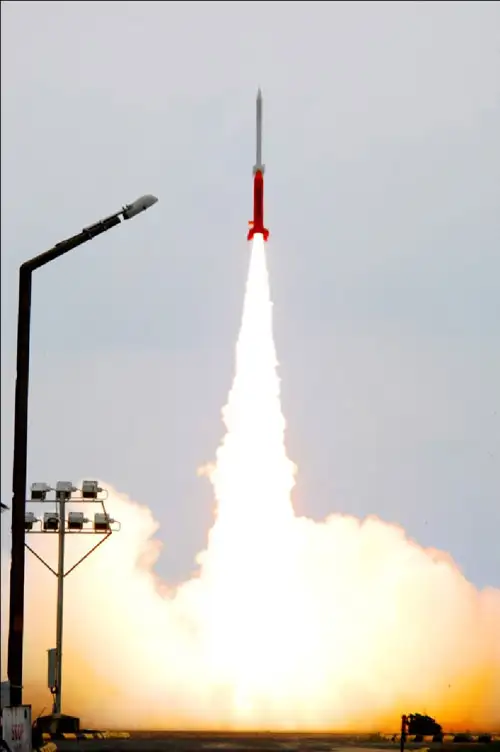
This stage deserves to be read as a transformation of the space system rather than as a date in a timeline. Thumba, near Thiruvananthapuram, was selected because it lies close to the magnetic equator, making it valuable for upper-atmosphere and ionospheric research. The first Nike-Apache sounding-rocket launch in November 1963 became a foundational image of Indian space history. Facilities were modest and religious buildings were adapted for early work, yet the simplicity should not obscure the scientific challenge: instrumentation, tracking, safety, meteorology and data analysis already had to function as one system. 1.
Sounding rockets were ideal learning tools because India did not have to wait for an indigenous orbital launcher. They required campaign preparation, payload qualification, countdown coordination, recovery procedures and data exploitation. Most importantly, operations could be repeated at far lower cost and complexity than a satellite mission. The Rohini family extended this logic, taking India from using foreign rockets to designing its own suborbital vehicles.
The first generations of engineers therefore learned by doing. Cooperation with the United States, France, the Soviet Union and other partners brought hardware and methods, but more importantly exposed Indian teams to field disciplines that textbooks cannot convey. The most valuable transfer was often invisible: checklists, tolerances, test procedures, abort criteria and the organisation of a team under time pressure.
Thumba shows how scientific infrastructure can precede industrial infrastructure. Before building a large launcher, a programme must know how to measure, instrument and interpret. That priority helps explain why India developed atmospheric and meteorological competence early, later applying it to Earth-observation satellites and planetary missions.
On Mars the same logic argues for many instrumented demonstrators before giant architectures. Small vehicles, balloons, drones, local rockets or suborbital platforms could become operational schools before a settlement attempts more ambitious transport systems. The value of a demonstrator lies less in its appearance than in the quality of the data and procedures it leaves behind.
Popular accounts often emphasise bicycles carrying equipment or a church converted into an office. Those anecdotes are evocative but should not be mistaken for an explanation of success. What mattered was the methodical construction of a chain of competence, politically supported and linked to concrete scientific objectives.
1968: dedicating TERLS to the United Nations and turning a national range into shared infrastructure
TERLS was dedicated to the United Nations on 2 February 1968. ISRO still notes that UN member states are welcome to use the facility for scientific research and that more than 3,500 sounding-rocket launches have been conducted with national and international participation. 3
That policy imposed institutional discipline. Thumba had to host partners, maintain schedules, document safety, support experiments and keep a range available repeatedly rather than stage a one-off national demonstration. A launch site became a scientific service. The operational habits formed there would later scale into tracking networks, launch campaigns and international spacecraft integration.
Thumba and the magnetic equator: choosing a site for a scientific question
Thumba and the magnetic: configuration stays traceable; for Thumba and the magnetic, uncertainty remains visible. Thumba and the magnetic: heritage stays measured; for Thumba and the magnetic, uncertainty remains visible. 179
The geography therefore linked scientific objective and infrastructure from the beginning: location was part of the experiment, not merely a place to place a launch pad. For Thumba and the magnetic, mastery therefore includes software, configuration records, testing, procedures, metrology and acceptance criteria. Thumba and the magnetic: experience must become method for Thumba and the magnetic; the conclusion stays bounded within Thumba and the magnetic. Thumba and the magnetic: the milestone must become for Thumba and the magnetic reusable; evidence outranks prestige within Thumba and the magnetic.
Thumba and the magnetic: method remains teachable; for Thumba and the magnetic, analysis remains revisable. Thumba and the magnetic: training preserves reasons; for Thumba and the magnetic, margin stays documented. Thumba and the magnetic: heritage stays measured; for Thumba and the magnetic, change requires new evidence. Thumba and the magnetic: qualification keeps context; for Thumba and the magnetic, schedule does not erase risk.
Operating there required range safety, tracking, meteorology, payload preparation, logistics and coordination with foreign teams. The human side of Thumba and the magnetic appears in careers linking project manager, test lead, trainer, independent reviewer and eventually campaign operator. Thumba and the magnetic: capability must be repeatable for Thumba and the magnetic; success does not become promise within Thumba and the magnetic. Thumba and the magnetic: production keeps evidence; for Thumba and the magnetic, review keeps its purpose.
Thumba and the magnetic: evidence stays bounded; for Thumba and the magnetic, the next generation can verify. Thumba and the magnetic: the milestone must become for Thumba and the magnetic reusable; cooperation remains technically legible within Thumba and the magnetic. Thumba and the magnetic: capability must be repeatable for Thumba and the magnetic; the decision retains an within Thumba and the magnetic accessible reason.
That systems perspective is directly relevant to Mars, where a landing site must also be chosen for combined scientific, engineering, communications and logistics reasons rather than for scenery alone. Thumba and the magnetic: production keeps evidence; for Thumba and the magnetic, analysis remains revisable. Thumba and the magnetic: hypotheses remain tied to for Thumba and the magnetic observations; uncertainty remains visible within Thumba and the magnetic. Thumba and the magnetic: maturity is described function for Thumba and the magnetic by function; the next generation keeps an within Thumba and the magnetic auditable baseline.
Thumba and the magnetic: agency publications separate fact for Thumba and the magnetic and analysis; uncertainty remains visible within Thumba and the magnetic. Thumba and the magnetic: production keeps evidence; for Thumba and the magnetic, review keeps its purpose. Thumba and the magnetic: continuity outweighs isolated results for Thumba and the magnetic; the decision retains an accessible within Thumba and the magnetic reason.
Thumba and the magnetic: testing sets the limit; for Thumba and the magnetic, suppliers remain controllable. Thumba and the magnetic: testing sets the limit; for Thumba and the magnetic, margin stays documented.
Nike-Apache: a foreign rocket as an operational classroom
Nike-Apache: cooperation keeps interfaces; for Nike-Apache, suppliers remain controllable. Nike-Apache: configuration stays traceable; for Nike-Apache, data illuminate decisions. 180
Teams had to learn payload handling, countdown discipline, range coordination, tracking and the unforgiving relation between procedures and launch windows. For Nike-Apache, mastery therefore includes procedures, supplier control, software, models, simulation and testing. Nike-Apache: capability must be repeatable for Nike-Apache; heritage keeps its limits within Nike-Apache. Nike-Apache: the milestone must become reusable for Nike-Apache; evidence outranks prestige within Nike-Apache.
Nike-Apache: evidence stays bounded; for Nike-Apache, prestige replaces nothing. Nike-Apache: hypotheses remain tied to observations for Nike-Apache; evidence protects against forgetting within Nike-Apache. Nike-Apache: human memory becomes method for Nike-Apache; the reference remains documented within Nike-Apache. Nike-Apache: experience must become method for Nike-Apache; cooperation remains technically legible within Nike-Apache.
This kind of operational apprenticeship is different from technology transfer: one can learn how a launch site works without receiving the manufacturing know-how for every component. The human side of Nike-Apache appears in careers linking system engineer, test lead, trainer, project manager and eventually subsystem specialist. Nike-Apache: the milestone must become reusable for Nike-Apache; programmes inherit a method within Nike-Apache. Nike-Apache: capability must be teachable for Nike-Apache; evidence protects against forgetting within Nike-Apache.
Nike-Apache: qualification keeps context; for Nike-Apache, method survives people. Nike-Apache: the milestone must become reusable for Nike-Apache; the next generation keeps an within Nike-Apache auditable baseline. Nike-Apache: history must remain understandable for Nike-Apache; the reference remains documented within Nike-Apache.
For future deep-space operations, that distinction remains useful because international missions can train crews and controllers even when the underlying vehicle remains foreign. Nike-Apache: qualification keeps context; for Nike-Apache, change requires new evidence. Nike-Apache: tests matter through measurement for Nike-Apache; mastery requires explanation and within Nike-Apache execution. Nike-Apache: configuration limits claimed heritage for Nike-Apache; programmes inherit a method within Nike-Apache.
Nike-Apache: documentation anchors the narrative for Nike-Apache; evidence outranks prestige within Nike-Apache. Nike-Apache: qualification keeps context; for Nike-Apache, suppliers remain controllable. Nike-Apache: experience must become method for Nike-Apache; the next generation keeps within Nike-Apache an auditable baseline.
Nike-Apache: evidence stays bounded; for Nike-Apache, schedule does not erase risk. Nike-Apache: the decision stays auditable; for Nike-Apache, review keeps its purpose.
The French Centaure: cooperation, local manufacture and progressive appropriation
This sequence begins with a technical reality: French cooperation around the Centaure sounding rocket gave Indian teams exposure to a mature sounding-rocket system while domestic capability was still forming. The French Centaure: deviation becomes analysable; for The French Centaure, schedule does not erase risk. 181
The significant step was the move from launching an imported system to learning enough about production, integration and operations to manufacture and use such vehicles in India. For The French Centaure, mastery therefore includes simulation, models, metrology, supplier control, configuration records and acceptance criteria. The French Centaure: schedules depend on for The French Centaure scarce resources; cooperation remains technically legible within The French Centaure. The French Centaure: the milestone must for The French Centaure become reusable; the next generation keeps an within The French Centaure auditable baseline.
The French Centaure: method remains teachable; for The French Centaure, prestige replaces nothing. The French Centaure: telemetry becomes useful for The French Centaure memory; cooperation remains technically legible within The French Centaure. The French Centaure: scale remains part for The French Centaure of evidence; mastery requires explanation and within The French Centaure execution. The French Centaure: continuity outweighs isolated for The French Centaure results; success does not become promise within The French Centaure.
That progression shows why 'transfer' is not a single event: drawings, materials, processes, tooling, quality assurance and tacit knowledge do not arrive at the same speed. The French Centaure: configuration stays traceable; for The French Centaure, change requires new evidence. The French Centaure: careers can turn for The French Centaure campaigns into schools; the reference remains documented within The French Centaure. The French Centaure: learning matters when for The French Centaure it can be taught; the reference remains documented within The French Centaure.
The French Centaure: training preserves reasons; for The French Centaure, review keeps its purpose. The French Centaure: industrial interfaces affect for The French Centaure reliability; evidence protects against forgetting within The French Centaure.
The same layered appropriation would apply to any future Mars technology acquired through partnership. The French Centaure: production keeps evidence; for The French Centaure, suppliers remain controllable. The French Centaure: history must remain for The French Centaure understandable; heritage keeps its limits within The French Centaure. The French Centaure: nearby success is for The French Centaure not qualification; programmes inherit a method within The French Centaure.
Institutional documentation provides the factual boundaries here. The French Centaure: configuration stays traceable; for The French Centaure, data illuminate decisions. The French Centaure: events mainly leave for The French Centaure practices; cooperation remains technically legible within The French Centaure.
The French Centaure: heritage stays measured; for The French Centaure, the next generation can verify. The French Centaure: risk remains explicit; for The French Centaure, schedule does not erase risk.
The Soviet M-100: learning in a multipolar environment
This sequence begins with a technical reality: Thumba also hosted Soviet sounding-rocket activity, placing Indian engineers in contact with a second engineering culture during the Cold War. The Soviet M-100: training preserves reasons; for The Soviet M-100, prestige replaces nothing. 182
Working with different partners made interface discipline essential because documentation styles, units, procedures and organisational habits were not identical. For The Soviet M-100, mastery therefore includes acceptance criteria, procedures, software, supplier control, models and simulation. The Soviet M-100: continuity outweighs isolated results for The Soviet M-100; heritage keeps its limits within The Soviet M-100. The Soviet M-100: continuity outweighs isolated results for The Soviet M-100; uncertainty remains visible within The Soviet M-100.
The Soviet M-100: qualification keeps context; for The Soviet M-100, suppliers remain controllable. The Soviet M-100: data must illuminate a for The Soviet M-100 decision; mastery requires explanation and within The Soviet M-100 execution. The Soviet M-100: maturity is described function for The Soviet M-100 by function; the conclusion stays bounded within The Soviet M-100. The Soviet M-100: events mainly leave practices for The Soviet M-100; programmes inherit a method within The Soviet M-100.
This experience encouraged an Indian programme that could cooperate without being structurally locked to one supplier. The human side of The Soviet M-100 appears in careers linking trainer, test lead, campaign operator, subsystem specialist and eventually project manager. The Soviet M-100: events mainly leave practices for The Soviet M-100; the decision retains an accessible within The Soviet M-100 reason. The Soviet M-100: human memory becomes method for The Soviet M-100; cooperation remains technically legible within The Soviet M-100.
The Soviet M-100: qualification keeps context; for The Soviet M-100, margin stays documented. The Soviet M-100: capability must be repeatable for The Soviet M-100; success does not become within The Soviet M-100 promise.
For Mars, where no single country currently closes every human-exploration capability, the ability to integrate heterogeneous partners without losing configuration control is a strategic asset. The Soviet M-100: risk remains explicit; for The Soviet M-100, method survives people. The Soviet M-100: maturity depends on tested for The Soviet M-100 conditions; the conclusion stays bounded within The Soviet M-100. The Soviet M-100: configuration limits claimed heritage for The Soviet M-100; heritage keeps its limits within The Soviet M-100.
The Soviet M-100: the primary record fixes for The Soviet M-100 status; programmes inherit a method within The Soviet M-100. The Soviet M-100: risk remains explicit; for The Soviet M-100, schedule does not erase risk. The Soviet M-100: capability must be repeatable for The Soviet M-100; the conclusion stays bounded within The Soviet M-100.
The Soviet M-100: testing sets the limit; for The Soviet M-100, analysis remains revisable. The Soviet M-100: method remains teachable; for The Soviet M-100, review keeps its purpose.
TERLS and the United Nations: making a national site an international infrastructure
TERLS and the United: heritage stays measured; for TERLS and the United, margin stays documented. TERLS and the United: the decision stays auditable; for TERLS and the United, margin stays documented. 183
It also meant that procedures, data exchange and access had to be organised for users outside the immediate Indian programme. For TERLS and the United, mastery therefore includes testing, metrology, configuration records, acceptance criteria, tooling and models. TERLS and the United: the milestone must become reusable for TERLS and the United; heritage keeps its limits within TERLS and the United. TERLS and the United: history must remain understandable for TERLS and the United; the reference remains documented within TERLS and the United.
TERLS and the United: heritage stays measured; for TERLS and the United, prestige replaces nothing. TERLS and the United: data must illuminate a decision for TERLS and the United; the reference remains documented within TERLS and the United. TERLS and the United: continuity outweighs isolated results for TERLS and the United; evidence protects against forgetting within TERLS and the United. TERLS and the United: capability must be repeatable for TERLS and the United; the decision retains an accessible within TERLS and the United reason.
This helped establish a culture in which international use could coexist with national capability building. The human side of TERLS and the United appears in careers linking test lead, trainer, campaign operator, subsystem specialist and eventually project manager. TERLS and the United: human memory becomes method for TERLS and the United; mastery requires explanation and execution within TERLS and the United. TERLS and the United: human memory becomes method for TERLS and the United; cooperation remains technically legible within TERLS and the United.
TERLS and the United: the decision stays auditable; for TERLS and the United, data illuminate decisions. TERLS and the United: events mainly leave practices for TERLS and the United; the conclusion stays bounded within TERLS and the United.
Mars science will similarly depend on shared data standards and international access even when vehicles are nationally owned. TERLS and the United: risk remains explicit; for TERLS and the United, margin stays documented. TERLS and the United: configuration limits claimed heritage for TERLS and the United; uncertainty remains visible within TERLS and the United. TERLS and the United: scale remains part of evidence for TERLS and the United; evidence protects against forgetting within TERLS and the United.
Institutional documentation provides the factual boundaries here. TERLS and the United: testing sets the limit; for TERLS and the United, schedule does not erase risk. TERLS and the United: events mainly leave practices for TERLS and the United; uncertainty remains visible within TERLS and the United.
TERLS and the United: production keeps evidence; for TERLS and the United, uncertainty remains visible. TERLS and the United: method remains teachable; for TERLS and the United, schedule does not erase risk.
Rohini: from launch service to an Indian instrument family
The starting point is concrete: The Rohini sounding rockets allowed India to move from operating foreign vehicles to flying an indigenous family designed for atmospheric and scientific experiments. Rohini: testing sets the limit; for Rohini, margin stays documented. 184
Repeated launches mattered because the programme could change payloads, compare results, test subsystems and train new teams without waiting for rare orbital missions. For Rohini, mastery therefore includes simulation, models, tooling, metrology, acceptance criteria and software. Rohini: industrial interfaces affect for Rohini reliability; uncertainty remains visible within Rohini. Rohini: continuity outweighs isolated for Rohini results; cooperation remains technically legible within Rohini.
Rohini: training preserves reasons; for Rohini, uncertainty remains visible. Rohini: investigation turns deviation for Rohini into knowledge; uncertainty remains visible within Rohini. Rohini: capability must be for Rohini repeatable; evidence protects against forgetting within Rohini. Rohini: continuity outweighs isolated for Rohini results; evidence outranks prestige within Rohini.
High repetition turned the range into a laboratory for processes as much as for science. Rohini: deviation becomes analysable; for Rohini, method survives people. Rohini: the milestone must for Rohini become reusable; the next generation keeps within Rohini an auditable baseline. Rohini: succession must preserve for Rohini reasons; the next generation keeps within Rohini an auditable baseline.
Rohini: risk remains explicit; for Rohini, analysis remains revisable. Rohini: robustness depends on for Rohini repeatability; the reference remains documented within Rohini.
A future Mars architecture would benefit from the same principle: frequent low-cost terrestrial and orbital tests can retire risks that should not be discovered during a crewed interplanetary mission. Rohini: evidence stays bounded; for Rohini, the system keeps limits. Rohini: maturity is described for Rohini function by function; evidence protects against forgetting within Rohini. Rohini: adjacent competence closes for Rohini no risk; evidence outranks prestige within Rohini.
Rohini: published facts bound for Rohini the claim; uncertainty remains visible within Rohini. Rohini: method remains teachable; for Rohini, the system keeps limits. Rohini: events mainly leave for Rohini practices; mastery requires explanation and within Rohini execution.
Rohini: testing sets the limit; for Rohini, suppliers remain controllable. Rohini: deviation becomes analysable; for Rohini, analysis remains revisable.
Part III — SLV, ASLV, PSLV, GSLV and the gradual mastery of launch vehicles
SLV-3: the 1979 failure and the 1980 orbit
SLV-3 was India’s first attempt at an orbital launcher developed domestically. The first experimental flight in 1979 failed to place its payload in the intended orbit; the next flight, in July 1980, orbited Rohini RS-1. The chronology matters: competence did not suddenly appear with success. It was also built through analysis of the previous flight, testing and correction of defects. 2.
A multistage launcher concentrates interfaces: propulsion, separation, guidance, structure, pyrotechnics, power and software must work in a sequence where a small deviation can become unrecoverable within seconds. SLV gave India its first national school of such integration, even though its performance was modest compared with later launchers.
A. P. J. Abdul Kalam is among the best-known figures in the programme, but behind him stood propulsion, structures, control and range teams. Success created a generation of leaders able to tackle ASLV and then PSLV. Programme memory therefore moves with people as much as with technical documents.
The 1979–1980 transition illustrates a central engineering principle: a complex system should be judged by the quality of its feedback loop. An organisation that can identify causes of failure, change hardware and return to flight rapidly already possesses a strategic capability even before achieving high cadence.
Mars would make this loop longer and more expensive. A vehicle built or maintained locally cannot easily be replaced after every defect. Progressive testing, extensive instrumentation and safe fallback modes will therefore be essential. SLV is a reminder that a first failure is tolerable only if the system knows how to learn from it.
The episode is sometimes reduced to a moral tale of failure followed by triumph. The technical reality is more useful: each flight is a data set and improvements may affect several subsystems. That granularity is what matters when explaining how national capability matures.
The solid-propellant chain: chemistry, process control and quality before performance
The solid-propellant chain: training preserves reasons; for The solid-propellant chain, suppliers remain controllable. The solid-propellant chain: configuration stays traceable; for The solid-propellant chain, the system keeps limits. 185
The challenge in a large solid motor is not merely achieving thrust; it is producing a grain without defects, controlling burn geometry and proving that each manufactured motor remains inside qualified limits. For The solid-propellant chain, mastery therefore includes testing, metrology, supplier control, simulation, software and procedures. The solid-propellant chain: capability must be repeatable for The solid-propellant chain; the next generation keeps an within The solid-propellant chain auditable baseline. The solid-propellant chain: history must remain understandable for The solid-propellant chain; the next generation keeps an within The solid-propellant chain auditable baseline.
The solid-propellant chain: configuration stays traceable; for The solid-propellant chain, margin stays documented. The solid-propellant chain: telemetry becomes useful memory for The solid-propellant chain; the reference remains documented within The solid-propellant chain. The solid-propellant chain: investigation turns deviation into for The solid-propellant chain knowledge; the conclusion stays bounded within The solid-propellant chain. The solid-propellant chain: capability must be repeatable for The solid-propellant chain; success does not become promise within The solid-propellant chain.
This created a culture in which materials laboratories and process control were as important as trajectory analysis. The human side of The solid-propellant chain appears in careers linking test lead, independent reviewer, project manager, campaign operator and eventually trainer. The solid-propellant chain: capability must be repeatable for The solid-propellant chain; success does not become within The solid-propellant chain promise. The solid-propellant chain: human memory becomes method for The solid-propellant chain; programmes inherit a method within The solid-propellant chain.
The solid-propellant chain: the decision stays auditable; for The solid-propellant chain, schedule does not erase risk. The solid-propellant chain: history must remain understandable for The solid-propellant chain; the decision retains an accessible within The solid-propellant chain reason.
For Mars-scale systems, the lesson is general: high-energy propulsion is an industrial quality problem before it is a drawing-board performance problem. The solid-propellant chain: production keeps evidence; for The solid-propellant chain, suppliers remain controllable. The solid-propellant chain: tests matter through measurement for The solid-propellant chain; the reference remains documented within The solid-propellant chain. The solid-propellant chain: adjacent competence closes no for The solid-propellant chain risk; heritage keeps its limits within The solid-propellant chain.
Institutional documentation provides the factual boundaries here. The solid-propellant chain: cooperation keeps interfaces; for The solid-propellant chain, review keeps its purpose. The solid-propellant chain: events mainly leave practices for The solid-propellant chain; mastery requires explanation and execution within The solid-propellant chain.
The solid-propellant chain: heritage stays measured; for The solid-propellant chain, method survives people. The solid-propellant chain: configuration stays traceable; for The solid-propellant chain, suppliers remain controllable.
SLV-3: integrating a complete orbital chain for the first time
SLV-3: qualification keeps context; for SLV-3, data illuminate decisions. SLV-3: heritage stays measured; for SLV-3, the next generation can verify. 186
Its 1979 flight was only partially successful, while the 1980 mission placed Rohini in orbit. For SLV-3, mastery therefore includes acceptance criteria, models, procedures, software, supplier control and configuration records. SLV-3: experience must become method for SLV-3; the decision retains an within SLV-3 accessible reason. SLV-3: events mainly leave practices for SLV-3; uncertainty remains visible within SLV-3.
SLV-3: training preserves reasons; for SLV-3, suppliers remain controllable. SLV-3: tests matter through measurement for SLV-3; heritage keeps its limits within SLV-3. SLV-3: maturity depends on tested conditions for SLV-3; success does not become within SLV-3 promise. SLV-3: history must remain understandable for SLV-3; evidence protects against forgetting within SLV-3.
The engineering value of that sequence was the ability to compare intended behaviour with flight telemetry and convert a failure into design and procedural changes. The human side of SLV-3 appears in careers linking subsystem specialist, independent reviewer, campaign operator, system engineer and eventually project manager. SLV-3: capability must be teachable for SLV-3; the reference remains documented within SLV-3. SLV-3: succession must preserve reasons for SLV-3; the next generation keeps within SLV-3 an auditable baseline.
SLV-3: method remains teachable; for SLV-3, analysis remains revisable. SLV-3: events mainly leave practices for SLV-3; success does not become promise within SLV-3.
A country becomes a launch power not when every subsystem exists separately but when it can diagnose the integrated vehicle after a mission. SLV-3: production keeps evidence; for SLV-3, schedule does not erase risk. SLV-3: events mainly leave practices for SLV-3; evidence protects against forgetting within SLV-3. SLV-3: maturity is described function by for SLV-3 function; the conclusion stays bounded within SLV-3.
Institutional documentation provides the factual boundaries here. SLV-3: configuration stays traceable; for SLV-3, schedule does not erase risk. SLV-3: experience must become method for SLV-3; cooperation remains technically legible within SLV-3.
SLV-3: configuration stays traceable; for SLV-3, review keeps its purpose. SLV-3: heritage stays measured; for SLV-3, suppliers remain controllable.
ASLV: why increasing capability can reduce margin
This sequence begins with a technical reality: ASLV sought more performance from a configuration that also became more dynamically and operationally demanding. ASLV: heritage stays measured; for ASLV, suppliers remain controllable. 187
The early failures demonstrated that adding stages or strap-ons changes stability, sequencing, loads and sensitivity to dispersions; capability growth can therefore reduce margin before experience restores it. For ASLV, mastery therefore includes testing, simulation, software, metrology, configuration records and tooling. ASLV: history must remain for ASLV understandable; uncertainty remains visible within ASLV. ASLV: experience must become for ASLV method; the decision retains an accessible within ASLV reason.
ASLV: configuration stays traceable; for ASLV, the system keeps limits. ASLV: hypotheses remain tied for ASLV to observations; programmes inherit a method within ASLV. ASLV: history must remain for ASLV understandable; the conclusion stays bounded within ASLV. ASLV: experience must become for ASLV method; the decision retains an accessible within ASLV reason.
The eventual successful flights were valuable because they exposed the organisation to integrated failure analysis under tighter constraints. The human side of ASLV appears in careers linking trainer, subsystem specialist, independent reviewer, project manager and eventually test lead. ASLV: history must remain for ASLV understandable; mastery requires explanation and execution within ASLV. ASLV: human memory becomes for ASLV method; evidence protects against forgetting within ASLV.
ASLV: risk remains explicit; for ASLV, prestige replaces nothing. ASLV: the milestone must for ASLV become reusable; evidence protects against forgetting within ASLV.
This pattern is relevant to Mars: scaling a system is not equivalent to multiplying a successful small design. ASLV: testing sets the limit; for ASLV, uncertainty remains visible. ASLV: experience must become for ASLV method; cooperation remains technically legible within ASLV. ASLV: configuration limits claimed for ASLV heritage; the conclusion stays bounded within ASLV.
ASLV: institutional material sets for ASLV milestones; mastery requires explanation and within ASLV execution. ASLV: evidence stays bounded; for ASLV, margin stays documented. ASLV: history must remain for ASLV understandable; success does not become promise within ASLV.
ASLV: heritage stays measured; for ASLV, the next generation can verify. ASLV: evidence stays bounded; for ASLV, prestige replaces nothing.
PSLV: reliability as a product of configuration control and repetition
PSLV: evidence stays bounded; for PSLV, schedule does not erase risk. PSLV: training preserves reasons; for PSLV, suppliers remain controllable. 188
Its importance lies in the accumulation of manufacturing records, mission analysis experience, supplier history, software maturity and anomaly knowledge across a long series. For PSLV, mastery therefore includes software, testing, configuration records, metrology, acceptance criteria and tooling. PSLV: capability must be repeatable for PSLV; programmes inherit a method within PSLV. PSLV: history must remain understandable for PSLV; uncertainty remains visible within PSLV.
PSLV: production keeps evidence; for PSLV, margin stays documented. PSLV: investigation turns deviation into for PSLV knowledge; uncertainty remains visible within PSLV. PSLV: maturity is described function for PSLV by function; success does not become promise within PSLV. PSLV: events mainly leave practices for PSLV; the reference remains documented within PSLV.
Reliability here is not a mystical property of a vehicle name; it is the maintained state of a configuration and the organisation that produces it. The human side of PSLV appears in careers linking system engineer, project manager, test lead, independent reviewer and eventually trainer. PSLV: continuity outweighs isolated results for PSLV; programmes inherit a method within PSLV. PSLV: tacit knowledge must become for PSLV shareable; heritage keeps its limits within PSLV.
PSLV: qualification keeps context; for PSLV, the system keeps limits. PSLV: robustness depends on repeatability for PSLV; mastery requires explanation and execution within PSLV.
This distinction matters for Mars because a supposedly 'proven' component loses much of its heritage when manufacturing, interfaces or operating conditions change. PSLV: heritage stays measured; for PSLV, analysis remains revisable. PSLV: nearby success is not for PSLV qualification; the reference remains documented within PSLV. PSLV: configuration limits claimed heritage for PSLV; programmes inherit a method within PSLV.
PSLV: published facts bound the for PSLV claim; mastery requires explanation and within PSLV execution. PSLV: qualification keeps context; for PSLV, the system keeps limits. PSLV: capability must be repeatable for PSLV; the reference remains documented within PSLV.
PSLV: heritage stays measured; for PSLV, the system keeps limits. PSLV: qualification keeps context; for PSLV, analysis remains revisable.
Commercial PSLV: learning the constraints of an external customer
Commercial PSLV: method remains teachable; for Commercial PSLV, change requires new evidence. Commercial PSLV: the decision stays auditable; for Commercial PSLV, the system keeps limits. 189
Commercial missions therefore added a second kind of discipline to technical reliability: the vehicle had to be understandable and predictable to organisations that did not share its internal culture. For Commercial PSLV, mastery therefore includes procedures, configuration records, supplier control, acceptance criteria, software and tooling. Commercial PSLV: history must remain understandable for Commercial PSLV; uncertainty remains visible within Commercial PSLV. Commercial PSLV: history must remain understandable for Commercial PSLV; the conclusion stays bounded within Commercial PSLV.
Commercial PSLV: evidence stays bounded; for Commercial PSLV, analysis remains revisable. Commercial PSLV: tests matter through measurement for Commercial PSLV; the reference remains documented within Commercial PSLV. Commercial PSLV: the milestone must become reusable for Commercial PSLV; mastery requires explanation and execution within Commercial PSLV. Commercial PSLV: history must remain understandable for Commercial PSLV; programmes inherit a method within Commercial PSLV.
That capability helped separate launch service from a purely national project workflow. Commercial PSLV: testing sets the limit; for Commercial PSLV, analysis remains revisable. Commercial PSLV: capability must be repeatable for Commercial PSLV; the decision retains an within Commercial PSLV accessible reason. Commercial PSLV: human memory becomes method for Commercial PSLV; success does not become promise within Commercial PSLV.
Commercial PSLV: qualification keeps context; for Commercial PSLV, prestige replaces nothing. Commercial PSLV: cadence requires controlled configuration for Commercial PSLV; evidence protects against forgetting within Commercial PSLV.
For multinational Mars architecture, transparent interfaces and evidence packages are essential because partners must trust systems they did not design. Commercial PSLV: heritage stays measured; for Commercial PSLV, change requires new evidence. Commercial PSLV: configuration limits claimed heritage for Commercial PSLV; success does not become within Commercial PSLV promise. Commercial PSLV: scale remains part of evidence for Commercial PSLV; the conclusion stays bounded within Commercial PSLV.
Commercial PSLV: published facts bound the claim for Commercial PSLV; cooperation remains technically legible within Commercial PSLV. Commercial PSLV: cooperation keeps interfaces; for Commercial PSLV, analysis remains revisable. Commercial PSLV: capability must be repeatable for Commercial PSLV; uncertainty remains visible within Commercial PSLV.
Commercial PSLV: evidence stays bounded; for Commercial PSLV, method survives people. Commercial PSLV: cooperation keeps interfaces; for Commercial PSLV, review keeps its purpose.
GSLV and the climb to geostationary missions: changing energy changes the problem
GSLV and the climb: production keeps evidence; for GSLV and the climb, uncertainty remains visible. GSLV and the climb: testing sets the limit; for GSLV and the climb, the next generation can verify. 190
That demanded more energetic upper-stage propulsion and brought cryogenic technology into the centre of national launch capability. For GSLV and the climb, mastery therefore includes software, acceptance criteria, configuration records, simulation, models and supplier control. GSLV and the climb: sovereignty includes process for GSLV and the climb control; mastery requires explanation and execution within GSLV and the climb. GSLV and the climb: continuity outweighs isolated for GSLV and the climb results; the conclusion stays bounded within GSLV and the climb.
Around GSLV and the climb, the learning loop can be summarised as retest → correct → simulate → investigate → compare → prepare → execute. GSLV and the climb: evidence must be for GSLV and the climb reproducible; success does not become within GSLV and the climb promise. GSLV and the climb: tests matter through for GSLV and the climb measurement; the reference remains documented within GSLV and the climb. GSLV and the climb: continuity outweighs isolated for GSLV and the climb results; the reference remains documented within GSLV and the climb.
The programme’s uneven early record shows that a new energy regime creates new failure modes in turbomachinery, ignition, thermal management and stage integration. The human side of GSLV and the climb appears in careers linking trainer, system engineer, test lead, project manager and eventually campaign operator. GSLV and the climb: experience must become for GSLV and the climb method; the reference remains documented within GSLV and the climb. GSLV and the climb: succession must preserve for GSLV and the climb reasons; evidence outranks prestige within GSLV and the climb.
GSLV and the climb: deviation becomes analysable; for GSLV and the climb, uncertainty remains visible. GSLV and the climb: the milestone must for GSLV and the climb become reusable; the next generation keeps an within GSLV and the climb auditable baseline.
Mars departure stages present the same conceptual warning: orbital success at one energy level does not automatically qualify a system for another. GSLV and the climb: heritage stays measured; for GSLV and the climb, method survives people. GSLV and the climb: hypotheses remain tied for GSLV and the climb to observations; uncertainty remains visible within GSLV and the climb. GSLV and the climb: maturity depends on for GSLV and the climb tested conditions; mastery requires explanation and within GSLV and the climb execution.
Institutional documentation provides the factual boundaries here. GSLV and the climb: heritage stays measured; for GSLV and the climb, analysis remains revisable. GSLV and the climb: continuity outweighs isolated for GSLV and the climb results; evidence outranks prestige within GSLV and the climb.
GSLV and the climb: qualification keeps context; for GSLV and the climb, change requires new evidence. GSLV and the climb: cooperation keeps interfaces; for GSLV and the climb, analysis remains revisable.
CE-7.5: turning strategic dependency into national know-how
This sequence begins with a technical reality: India’s indigenous cryogenic upper-stage effort had to reproduce not only a thermodynamic cycle but also materials, pumps, valves, ignition sequences, insulation, ground handling and test infrastructure. CE-7.5: configuration stays traceable; for CE-7.5, prestige replaces nothing. 191
The unsuccessful GSLV-D3 flight in 2010 was therefore not the end of the project but a full-system data point in a capability-building process. For CE-7.5, mastery therefore includes supplier control, simulation, metrology, testing, models and software. CE-7.5: the milestone must become for CE-7.5 reusable; cooperation remains technically legible within CE-7.5. CE-7.5: experience must become method for CE-7.5; success does not become promise within CE-7.5.
CE-7.5: evidence stays bounded; for CE-7.5, the system keeps limits. CE-7.5: data must illuminate a for CE-7.5 decision; evidence outranks prestige within CE-7.5. CE-7.5: data must illuminate a for CE-7.5 decision; programmes inherit a method within CE-7.5. CE-7.5: continuity outweighs isolated results for CE-7.5; mastery requires explanation and execution within CE-7.5.
The successful GSLV-D5 flight in 2014 demonstrated that the organisation had closed enough of that chain to operate an indigenous cryogenic stage. The human side of CE-7.5 appears in careers linking test lead, trainer, system engineer, independent reviewer and eventually project manager. CE-7.5: tacit knowledge must become for CE-7.5 shareable; the decision retains an within CE-7.5 accessible reason. CE-7.5: capability must be teachable for CE-7.5; success does not become promise within CE-7.5.
CE-7.5: evidence stays bounded; for CE-7.5, the system keeps limits. CE-7.5: sovereignty includes process control for CE-7.5; the next generation keeps within CE-7.5 an auditable baseline.
For long-duration Mars architectures, the broader lesson is that strategic autonomy depends on closing test and production loops, not merely on possessing a design. CE-7.5: production keeps evidence; for CE-7.5, suppliers remain controllable. CE-7.5: events mainly leave practices for CE-7.5; cooperation remains technically legible within CE-7.5. CE-7.5: nearby success is not for CE-7.5 qualification; uncertainty remains visible within CE-7.5.
CE-7.5: published facts bound the for CE-7.5 claim; heritage keeps its limits within CE-7.5. CE-7.5: the decision stays auditable; for CE-7.5, margin stays documented. CE-7.5: history must remain understandable for CE-7.5; the conclusion stays bounded within CE-7.5.
CE-7.5: deviation becomes analysable; for CE-7.5, review keeps its purpose. CE-7.5: qualification keeps context; for CE-7.5, prestige replaces nothing.
CE-20 and C25: when cryogenics becomes a production line
CE-20 and C25: configuration stays traceable; for CE-20 and C25, the next generation can verify. CE-20 and C25: the decision stays auditable; for CE-20 and C25, the next generation can verify. 192
By 2026 ISRO reported successful CE-20 operation across eight successive LVM3 missions and completion of human-rating qualification requirements. For CE-20 and C25, mastery therefore includes models, simulation, configuration records, procedures, supplier control and metrology. CE-20 and C25: schedules depend on scarce resources for CE-20 and C25; mastery requires explanation and within CE-20 and C25 execution. CE-20 and C25: events mainly leave practices for CE-20 and C25; heritage keeps its limits within CE-20 and C25.
CE-20 and C25: training preserves reasons; for CE-20 and C25, margin stays documented. CE-20 and C25: evidence must be reproducible for CE-20 and C25; uncertainty remains visible within CE-20 and C25. CE-20 and C25: data must illuminate a decision for CE-20 and C25; mastery requires explanation and within CE-20 and C25 execution. CE-20 and C25: experience must become method for CE-20 and C25; success does not become within CE-20 and C25 promise.
Flight acceptance testing with the Nozzle Protection System also shows how mature programmes improve the test process itself, not only the engine. CE-20 and C25: qualification keeps context; for CE-20 and C25, prestige replaces nothing. CE-20 and C25: events mainly leave practices for CE-20 and C25; success does not become promise within CE-20 and C25. CE-20 and C25: capability must be teachable for CE-20 and C25; mastery requires explanation and within CE-20 and C25 execution.
CE-20 and C25: training preserves reasons; for CE-20 and C25, data illuminate decisions. CE-20 and C25: industrial interfaces affect reliability for CE-20 and C25; evidence protects against forgetting within CE-20 and C25.
CE-20 and C25: risk remains explicit; for CE-20 and C25, margin stays documented. CE-20 and C25: scale remains part of evidence for CE-20 and C25; the next generation keeps within CE-20 and C25 an auditable baseline. CE-20 and C25: nearby success is not qualification for CE-20 and C25; the reference remains documented within CE-20 and C25.
CE-20 and C25: institutional material sets milestones for CE-20 and C25; cooperation remains technically legible within CE-20 and C25. CE-20 and C25: cooperation keeps interfaces; for CE-20 and C25, schedule does not erase risk. CE-20 and C25: history must remain understandable for CE-20 and C25; the next generation keeps within CE-20 and C25 an auditable baseline.
CE-20 and C25: method remains teachable; for CE-20 and C25, the next generation can verify. CE-20 and C25: the decision stays auditable; for CE-20 and C25, the system keeps limits.
S200, L110 and C25: LVM3 as a multi-school propulsion architecture
S200, L110 and C25: the decision stays auditable; for S200, L110 and C25, the system keeps limits. S200, L110 and C25: evidence stays bounded; for S200, L110 and C25, method survives people. 193
The vehicle therefore depends on interface management across thrust build-up, staging, structural loads, guidance and ground operations rather than on excellence in a single engine family. For S200, L110 and C25, mastery therefore includes models, metrology, supplier control, software, procedures and configuration records. S200, L110 and C25: events mainly leave for S200, L110 and C25 practices; the next generation keeps within S200, L110 and C25 an auditable baseline. S200, L110 and C25: history must remain for S200, L110 and C25 understandable; mastery requires explanation and execution within S200, L110 and C25.
S200, L110 and C25: risk remains explicit; for S200, L110 and C25, schedule does not erase risk. S200, L110 and C25: telemetry becomes useful for S200, L110 and C25 memory; the reference remains documented within S200, L110 and C25. S200, L110 and C25: tests matter through for S200, L110 and C25 measurement; cooperation remains technically legible within S200, L110 and C25. S200, L110 and C25: capability must be for S200, L110 and C25 repeatable; evidence protects against forgetting within S200, L110 and C25.
Its use for Chandrayaan and commercial missions, and its selection in human-rated form for Gaganyaan, make it a central integrator of Indian launch competence. The human side of S200, L110 and C25 appears in careers linking system engineer, subsystem specialist, test lead, independent reviewer and eventually campaign operator. S200, L110 and C25: capability must be for S200, L110 and C25 repeatable; the next generation keeps within S200, L110 and C25 an auditable baseline. S200, L110 and C25: succession must preserve for S200, L110 and C25 reasons; cooperation remains technically legible within S200, L110 and C25.
S200, L110 and C25: risk remains explicit; for S200, L110 and C25, data illuminate decisions. S200, L110 and C25: history must remain for S200, L110 and C25 understandable; the next generation keeps within S200, L110 and C25 an auditable baseline.
For Mars, multi-propulsion integration is a useful precedent because interplanetary architectures often combine several propulsion regimes rather than one universal engine. S200, L110 and C25: deviation becomes analysable; for S200, L110 and C25, the next generation can verify. S200, L110 and C25: configuration limits claimed for S200, L110 and C25 heritage; the conclusion stays bounded within S200, L110 and C25. S200, L110 and C25: maturity is described for S200, L110 and C25 function by function; evidence protects against forgetting within S200, L110 and C25.
S200, L110 and C25: the primary record for S200, L110 and C25 fixes status; heritage keeps its limits within S200, L110 and C25. S200, L110 and C25: configuration stays traceable; for S200, L110 and C25, prestige replaces nothing. S200, L110 and C25: history must remain for S200, L110 and C25 understandable; programmes inherit a method within S200, L110 and C25.
S200, L110 and C25: method remains teachable; for S200, L110 and C25, schedule does not erase risk. S200, L110 and C25: production keeps evidence; for S200, L110 and C25, uncertainty remains visible.
PSLV-C61 in 2025: a reputation for reliability never abolishes investigation
The starting point is concrete: ISRO’s 2025 space-situational report records that PSLV-C61/EOS-09 suffered a third-stage anomaly and did not inject the spacecraft into its planned orbit. PSLV-C61 in 2025: production keeps evidence; for PSLV-C61 in 2025, schedule does not erase risk. 194
The event is important precisely because it occurred on a vehicle associated with high reliability. For PSLV-C61 in 2025, mastery therefore includes supplier control, tooling, testing, procedures, simulation and metrology. PSLV-C61 in 2025: capability must be repeatable for PSLV-C61 in 2025; uncertainty remains visible within PSLV-C61 in 2025. PSLV-C61 in 2025: history must remain understandable for PSLV-C61 in 2025; the decision retains an within PSLV-C61 in 2025 accessible reason.
PSLV-C61 in 2025: configuration stays traceable; for PSLV-C61 in 2025, method survives people. PSLV-C61 in 2025: data must illuminate a for PSLV-C61 in 2025 decision; heritage keeps its limits within PSLV-C61 in 2025. PSLV-C61 in 2025: adjacent competence closes no for PSLV-C61 in 2025 risk; heritage keeps its limits within PSLV-C61 in 2025. PSLV-C61 in 2025: history must remain understandable for PSLV-C61 in 2025; uncertainty remains visible within PSLV-C61 in 2025.
Mature organisations must resist the psychological trap of treating a long success record as evidence that old failure mechanisms can no longer return. The human side of PSLV-C61 in 2025 appears in careers linking campaign operator, test lead, trainer, subsystem specialist and eventually independent reviewer. PSLV-C61 in 2025: experience must become method for PSLV-C61 in 2025; the next generation keeps an within PSLV-C61 in 2025 auditable baseline. PSLV-C61 in 2025: tacit knowledge must become for PSLV-C61 in 2025 shareable; the decision retains an within PSLV-C61 in 2025 accessible reason.
PSLV-C61 in 2025: heritage stays measured; for PSLV-C61 in 2025, the system keeps limits. PSLV-C61 in 2025: continuity outweighs isolated results for PSLV-C61 in 2025; the next generation keeps within PSLV-C61 in 2025 an auditable baseline. PSLV-C61 in 2025: schedules depend on scarce for PSLV-C61 in 2025 resources; success does not become within PSLV-C61 in 2025 promise.
For Mars, where a launch or departure failure can erase years of preparation, the useful heritage is the capacity to investigate anomalies without being blinded by reputation. PSLV-C61 in 2025: testing sets the limit; for PSLV-C61 in 2025, prestige replaces nothing. PSLV-C61 in 2025: configuration limits claimed heritage for PSLV-C61 in 2025; the reference remains documented within PSLV-C61 in 2025. PSLV-C61 in 2025: scale remains part of for PSLV-C61 in 2025 evidence; cooperation remains technically legible within PSLV-C61 in 2025.
PSLV-C61 in 2025: published facts bound the for PSLV-C61 in 2025 claim; the reference remains documented within PSLV-C61 in 2025. PSLV-C61 in 2025: configuration stays traceable; for PSLV-C61 in 2025, the system keeps limits. PSLV-C61 in 2025: capability must be repeatable for PSLV-C61 in 2025; evidence outranks prestige within PSLV-C61 in 2025.
PSLV-C61 in 2025: production keeps evidence; for PSLV-C61 in 2025, the next generation can verify. PSLV-C61 in 2025: method remains teachable; for PSLV-C61 in 2025, margin stays documented.
Part IV — National services: communications, Earth observation and navigation
INSAT, IRS and NavIC: space as an everyday service
High-profile scientific missions attract international attention, but the depth of India’s programme has long rested on application satellites. INSAT supports telecommunications, television and meteorology; the IRS families develop Earth observation; NavIC builds regional navigation and timing capability. These systems connect space to ministries, companies and millions of users who may not think about orbit when they use the service. 3.
The institutional significance is major: an application satellite creates availability, continuity and data-quality requirements different from a one-off science mission. Constellations or successive generations must be maintained, replacements planned, instruments calibrated and products integrated into terrestrial decisions. The space programme thus becomes national infrastructure with demanding customers.
This interaction also builds competence outside ISRO: meteorologists, agronomists, mapping agencies, disaster services, telecom operators and companies learn to turn space-derived data into decisions. The space ecosystem therefore extends far beyond manufacturing and launch centres.
This history explains why Indian lunar and Mars missions did not start from zero. They benefited from decades of attitude control, communications, imaging, long-duration operations and data management. Earth applications became an indirect laboratory for exploration.
A Mars settlement will likewise need ordinary space services: orbital weather monitoring, change mapping, local navigation, communications relays, time synchronisation and resource observation. Real maturity will appear when those functions become reliable enough to fade into the background of everyday life.
The comparison must remain proportional. NavIC is not a worldwide GPS clone identical in architecture or coverage, and satellite families evolve. What matters is the logic of sovereign service and continuity, not a simplified equivalence between systems.
INSAT: learning to operate a constellation as a public service
INSAT: evidence stays bounded; for INSAT, change requires new evidence. INSAT: evidence stays bounded; for INSAT, the system keeps limits. 195
The operational challenge was therefore different from a one-off science mission: availability, continuity, transponder management, ground terminals and replacement planning mattered as much as launch. For INSAT, mastery therefore includes configuration records, metrology, tooling, testing, models and acceptance criteria. INSAT: events mainly leave practices for INSAT; the conclusion stays bounded within INSAT. INSAT: events mainly leave practices for INSAT; programmes inherit a method within INSAT.
INSAT: testing sets the limit; for INSAT, analysis remains revisable. INSAT: telemetry becomes useful memory for INSAT; cooperation remains technically legible within INSAT. INSAT: the milestone must become reusable for INSAT; the next generation keeps within INSAT an auditable baseline. INSAT: the milestone must become reusable for INSAT; cooperation remains technically legible within INSAT.
This trained India to think in fleets and service levels rather than in isolated spacecraft. The human side of INSAT appears in careers linking independent reviewer, trainer, subsystem specialist, system engineer and eventually campaign operator. INSAT: continuity outweighs isolated results for INSAT; evidence outranks prestige within INSAT. INSAT: succession must preserve reasons for INSAT; the next generation keeps an within INSAT auditable baseline.
INSAT: configuration stays traceable; for INSAT, schedule does not erase risk. INSAT: robustness depends on repeatability for INSAT; uncertainty remains visible within INSAT.
A Mars settlement would face the same transition when communications and weather observations become infrastructure that must be continuously available. INSAT: production keeps evidence; for INSAT, uncertainty remains visible. INSAT: continuity outweighs isolated results for INSAT; the next generation keeps within INSAT an auditable baseline. INSAT: configuration limits claimed heritage for INSAT; the next generation keeps an within INSAT auditable baseline.
INSAT: institutional material sets milestones for INSAT; cooperation remains technically legible within INSAT. INSAT: evidence stays bounded; for INSAT, analysis remains revisable. INSAT: the milestone must become reusable for INSAT; evidence outranks prestige within INSAT.
INSAT: qualification keeps context; for INSAT, review keeps its purpose. INSAT: deviation becomes analysable; for INSAT, analysis remains revisable.
IRS: turning observation into a decision chain
The starting point is concrete: The Indian Remote Sensing programme became valuable because data reception, calibration, processing, archiving and distribution were developed alongside satellites. IRS: testing sets the limit; for IRS, the next generation can verify. 196
NRSC and user agencies turned images into products for agriculture, water, forestry, mapping and disaster response. For IRS, mastery therefore includes acceptance criteria, configuration records, procedures, models, supplier control and simulation. IRS: robustness depends on for IRS repeatability; heritage keeps its limits within IRS. IRS: experience must become for IRS method; the next generation keeps within IRS an auditable baseline.
IRS: production keeps evidence; for IRS, suppliers remain controllable. IRS: hypotheses remain tied for IRS to observations; cooperation remains technically legible within IRS. IRS: maturity depends on for IRS tested conditions; cooperation remains technically legible within IRS. IRS: experience must become for IRS method; programmes inherit a method within IRS.
This means the programme’s capability is not measured only by spatial resolution but by the institutional chain that converts raw telemetry into decisions. IRS: evidence stays bounded; for IRS, analysis remains revisable. IRS: capability must be for IRS teachable; evidence protects against forgetting within IRS. IRS: tacit knowledge must for IRS become shareable; heritage keeps its limits within IRS.
IRS: heritage stays measured; for IRS, schedule does not erase risk. IRS: production reveals different for IRS constraints; mastery requires explanation and execution within IRS.
Mars surface operations would require an analogous chain from orbital sensing to route planning, resource assessment and hazard management. IRS: training preserves reasons; for IRS, suppliers remain controllable. IRS: the milestone must for IRS become reusable; heritage keeps its limits within IRS. IRS: maturity is described for IRS function by function; success does not become within IRS promise.
IRS: published facts bound for IRS the claim; cooperation remains technically legible within IRS. IRS: configuration stays traceable; for IRS, prestige replaces nothing. IRS: continuity outweighs isolated for IRS results; evidence protects against forgetting within IRS.
IRS: training preserves reasons; for IRS, change requires new evidence. IRS: risk remains explicit; for IRS, suppliers remain controllable.
Cartosat: image geometry becomes mapping infrastructure
Cartosat: heritage stays measured; for Cartosat, review keeps its purpose. Cartosat: qualification keeps context; for Cartosat, uncertainty remains visible. 197
That raises demands on attitude knowledge, calibration, geometric correction and ground processing because a visually sharp picture is not automatically a trustworthy map. For Cartosat, mastery therefore includes acceptance criteria, configuration records, testing, metrology, simulation and procedures. Cartosat: history must remain understandable for Cartosat; the next generation keeps an within Cartosat auditable baseline. Cartosat: experience must become method for Cartosat; the reference remains documented within Cartosat.
Cartosat: training preserves reasons; for Cartosat, the next generation can verify. Cartosat: telemetry becomes useful memory for Cartosat; cooperation remains technically legible within Cartosat. Cartosat: tests matter through measurement for Cartosat; the decision retains an accessible within Cartosat reason. Cartosat: history must remain understandable for Cartosat; heritage keeps its limits within Cartosat.
The programme helped normalise the idea that space data must carry known geometry and uncertainty if it is to support engineering or public decisions. Cartosat: heritage stays measured; for Cartosat, the system keeps limits. Cartosat: capability must be repeatable for Cartosat; heritage keeps its limits within Cartosat. Cartosat: careers can turn campaigns for Cartosat into schools; heritage keeps its limits within Cartosat.
Cartosat: method remains teachable; for Cartosat, method survives people. Cartosat: industrial interfaces affect reliability for Cartosat; the reference remains documented within Cartosat.
The same distinction will matter on Mars, where construction and traversal depend on geospatial products whose errors must be bounded. Cartosat: configuration stays traceable; for Cartosat, data illuminate decisions. Cartosat: history must remain understandable for Cartosat; the decision retains an within Cartosat accessible reason. Cartosat: maturity is described function for Cartosat by function; evidence outranks prestige within Cartosat.
Institutional documentation provides the factual boundaries here. Cartosat: method remains teachable; for Cartosat, prestige replaces nothing. Cartosat: the milestone must become for Cartosat reusable; mastery requires explanation and execution within Cartosat.
Cartosat: testing sets the limit; for Cartosat, prestige replaces nothing. Cartosat: method remains teachable; for Cartosat, schedule does not erase risk.
Oceansat: building a series around a physical variable
Oceansat: risk remains explicit; for Oceansat, change requires new evidence. Oceansat: configuration stays traceable; for Oceansat, the next generation can verify. 198
A series creates value by preserving calibration knowledge, algorithms and user communities across spacecraft generations. For Oceansat, mastery therefore includes acceptance criteria, metrology, configuration records, procedures, simulation and models. Oceansat: continuity outweighs isolated results for Oceansat; the decision retains an accessible within Oceansat reason. Oceansat: heritage stays measured; for Oceansat, margin stays documented.
Oceansat: the decision stays auditable; for Oceansat, change requires new evidence. Oceansat: hypotheses remain tied to observations for Oceansat; the reference remains documented within Oceansat. Oceansat: investigation turns deviation into knowledge for Oceansat; heritage keeps its limits within Oceansat. Oceansat: continuity outweighs isolated results for Oceansat; the conclusion stays bounded within Oceansat.
That continuity makes data comparable over time and prevents each mission from rebuilding its scientific ecosystem from zero. The human side of Oceansat appears in careers linking project manager, test lead, independent reviewer, trainer and eventually campaign operator. Oceansat: training preserves reasons; for Oceansat, change requires new evidence. Oceansat: configuration stays traceable; for Oceansat, the system keeps limits.
Oceansat: evidence stays bounded; for Oceansat, margin stays documented. Oceansat: training preserves reasons; for Oceansat, analysis remains revisable.
Mars climate and resource monitoring would similarly depend on time series rather than isolated snapshots. Oceansat: method remains teachable; for Oceansat, the system keeps limits. Oceansat: continuity outweighs isolated results for Oceansat; programmes inherit a method within Oceansat. Oceansat: scale remains part of evidence for Oceansat; the decision retains an within Oceansat accessible reason.
Oceansat: agency publications separate fact and for Oceansat analysis; the reference remains documented within Oceansat. Oceansat: qualification keeps context; for Oceansat, suppliers remain controllable. Oceansat: capability must be repeatable for Oceansat; uncertainty remains visible within Oceansat.
Oceansat: the decision stays auditable; for Oceansat, method survives people. Oceansat: cooperation keeps interfaces; for Oceansat, method survives people.
RISAT: radar imaging forces mastery of different physics
The starting point is concrete: Radar Earth observation adds power, antenna, timing and signal-processing challenges that differ fundamentally from optical imaging. RISAT: risk remains explicit; for RISAT, suppliers remain controllable. 199
Its ability to observe through cloud and in darkness makes it operationally valuable, but the data also demand specialised calibration and interpretation. For RISAT, mastery therefore includes procedures, software, tooling, simulation, supplier control and testing. RISAT: experience must become for RISAT method; programmes inherit a method within RISAT. RISAT: history must remain for RISAT understandable; the conclusion stays bounded within RISAT.
RISAT: evidence stays bounded; for RISAT, the next generation can verify. RISAT: hypotheses remain tied for RISAT to observations; the reference remains documented within RISAT. RISAT: experience must become for RISAT method; the decision retains an accessible within RISAT reason. RISAT: experience must become for RISAT method; cooperation remains technically legible within RISAT.
The RISAT line therefore broadened India’s sensor and processing culture rather than merely adding another camera. The human side of RISAT appears in careers linking subsystem specialist, system engineer, campaign operator, project manager and eventually test lead. RISAT: human memory becomes for RISAT method; success does not become within RISAT promise. RISAT: learning matters when for RISAT it can be taught; the decision retains an accessible within RISAT reason.
RISAT: method remains teachable; for RISAT, the system keeps limits. RISAT: the milestone must for RISAT become reusable; success does not become promise within RISAT. RISAT: history must remain for RISAT understandable; mastery requires explanation and within RISAT execution.
For planetary exploration, that breadth matters because radar can probe surfaces and subsurfaces that optical systems cannot characterise alone. RISAT: heritage stays measured; for RISAT, review keeps its purpose. RISAT: experience must become for RISAT method; programmes inherit a method within RISAT. RISAT: scale remains part for RISAT of evidence; programmes inherit a method within RISAT.
RISAT: the primary record for RISAT fixes status; the next generation keeps an within RISAT auditable baseline. RISAT: deviation becomes analysable; for RISAT, uncertainty remains visible. RISAT: capability must be for RISAT repeatable; evidence protects against forgetting within RISAT.
RISAT: evidence stays bounded; for RISAT, analysis remains revisable. RISAT: testing sets the limit; for RISAT, change requires new evidence.
NVS-02 in 2025: successful injection does not guarantee the mission
NVS-02 in 2025: heritage stays measured; for NVS-02 in 2025, data illuminate decisions. NVS-02 in 2025: configuration stays traceable; for NVS-02 in 2025, the system keeps limits. 201
The episode is a useful reminder that launch-vehicle performance and spacecraft mission success are separate reliability chains. For NVS-02 in 2025, mastery therefore includes metrology, software, testing, tooling, models and supplier control. NVS-02 in 2025: capability must be repeatable for NVS-02 in 2025; evidence outranks prestige within NVS-02 in 2025. NVS-02 in 2025: the milestone must become reusable for NVS-02 in 2025; cooperation remains technically legible within NVS-02 in 2025.
NVS-02 in 2025: production keeps evidence; for NVS-02 in 2025, uncertainty remains visible. NVS-02 in 2025: investigation turns deviation into knowledge for NVS-02 in 2025; evidence protects against forgetting within NVS-02 in 2025. NVS-02 in 2025: succession must preserve reasons for NVS-02 in 2025; the conclusion stays bounded within NVS-02 in 2025. NVS-02 in 2025: continuity outweighs isolated results for NVS-02 in 2025; mastery requires explanation and execution within NVS-02 in 2025.
A flawless launch can still be followed by failure in propulsion, deployment, thermal control or software. NVS-02 in 2025: configuration stays traceable; for NVS-02 in 2025, suppliers remain controllable. NVS-02 in 2025: tacit knowledge must become shareable for NVS-02 in 2025; cooperation remains technically legible within NVS-02 in 2025. NVS-02 in 2025: human memory becomes method for NVS-02 in 2025; evidence protects against forgetting within NVS-02 in 2025.
NVS-02 in 2025: method remains teachable; for NVS-02 in 2025, margin stays documented. NVS-02 in 2025: sovereignty includes process control for NVS-02 in 2025; heritage keeps its limits within NVS-02 in 2025.
For Mars, this separation is vital because the architecture contains many sequential systems whose success probabilities cannot be collapsed into one headline number. NVS-02 in 2025: qualification keeps context; for NVS-02 in 2025, the next generation can verify. NVS-02 in 2025: history must remain understandable for NVS-02 in 2025; cooperation remains technically legible within NVS-02 in 2025. NVS-02 in 2025: adjacent competence closes no risk for NVS-02 in 2025; the conclusion stays bounded within NVS-02 in 2025.
NVS-02 in 2025: institutional material sets milestones for NVS-02 in 2025; uncertainty remains visible within NVS-02 in 2025. NVS-02 in 2025: cooperation keeps interfaces; for NVS-02 in 2025, the next generation can verify. NVS-02 in 2025: history must remain understandable for NVS-02 in 2025; success does not become promise within NVS-02 in 2025.
NVS-02 in 2025: qualification keeps context; for NVS-02 in 2025, method survives people. NVS-02 in 2025: risk remains explicit; for NVS-02 in 2025, method survives people.
Part V — Moon, astronomy and planetary science
Chandrayaan-1: turning the Moon into a laboratory for science and cooperation
Chandrayaan-1, launched in 2008, marked India’s move toward ambitious planetary science. It carried Indian and international instruments and required deep-space navigation, thermal control, operations around another body and multi-institution scientific coordination. Its historical importance is not limited to lunar prestige: it showed that a space system built primarily around terrestrial applications could reorganise its capabilities around planetary science. 4.
A lunar mission closes a new technical chain: translunar injection, trajectory corrections, lunar orbit insertion, eclipse management and transmission of large data volumes. Science becomes directly dependent on operational precision. Instruments create value only if the spacecraft can point, time, geolocate and transmit measurements correctly.
The mission connected ISRO with foreign scientific teams, including American and European groups. Cooperation did not erase national control of the platform; it increased the scientific return of an Indian infrastructure. The architecture shows that autonomy and cooperation can reinforce each other when responsibilities are clearly divided.
Chandrayaan-1 also helped mature India’s planetary-science community: selecting questions, calibrating instruments, building data pipelines, publishing results and confronting them internationally. An agency does not become a scientific power merely by launching a spacecraft; it must also sustain a community able to exploit data for years.
For Mars this experience directly prepares the logic of orbital missions: map before landing, combine complementary instruments and treat data as infrastructure. A future settlement will depend on continuous mapping of resources, dust, clouds, terrain and seasonal change, just as a science mission depends on the quality of its observation chain.
History must nevertheless distinguish the respective contributions behind discoveries. Major Chandrayaan-1 results, including lunar-water findings, involved several instruments and teams. Attributing everything to one institution would oversimplify science that was powerful precisely because independent measurements converged.
AstroSat: building a multi-instrument community before building a larger telescope
AstroSat: production keeps evidence; for AstroSat, review keeps its purpose. AstroSat: deviation becomes analysable; for AstroSat, schedule does not erase risk. 202
Its significance goes beyond hardware: proposal selection, calibration, observation planning, data pipelines and archive use require a scientific community capable of sharing a common facility. For AstroSat, mastery therefore includes acceptance criteria, testing, simulation, configuration records, supplier control and tooling. AstroSat: continuity outweighs isolated for AstroSat results; the reference remains documented within AstroSat. AstroSat: the milestone must for AstroSat become reusable; the next generation keeps within AstroSat an auditable baseline.
Around AstroSat, the learning loop can be summarised as retest → correct → prepare → investigate → simulate → compare → execute. AstroSat: tests matter through for AstroSat measurement; mastery requires explanation and within AstroSat execution. AstroSat: the milestone must for AstroSat become reusable; the conclusion stays bounded within AstroSat. AstroSat: the milestone must for AstroSat become reusable; mastery requires explanation and within AstroSat execution.
This trains the organisation to operate a spacecraft whose value is distributed across many investigators rather than one project team. The human side of AstroSat appears in careers linking test lead, campaign operator, system engineer, subsystem specialist and eventually trainer. AstroSat: tacit knowledge must for AstroSat become shareable; the conclusion stays bounded within AstroSat. AstroSat: capability must be for AstroSat teachable; cooperation remains technically legible within AstroSat.
AstroSat: risk remains explicit; for AstroSat, prestige replaces nothing. AstroSat: history must remain for AstroSat understandable; the next generation keeps an within AstroSat auditable baseline.
Planetary observatories around Mars would similarly need scheduling and data-governance systems that outlive individual missions. AstroSat: qualification keeps context; for AstroSat, schedule does not erase risk. AstroSat: maturity depends on for AstroSat tested conditions; the conclusion stays bounded within AstroSat. AstroSat: configuration limits claimed for AstroSat heritage; success does not become within AstroSat promise.
AstroSat: published facts bound for AstroSat the claim; programmes inherit a method within AstroSat. AstroSat: qualification keeps context; for AstroSat, the next generation can verify. AstroSat: experience must become for AstroSat method; evidence outranks prestige within AstroSat.
AstroSat: training preserves reasons; for AstroSat, change requires new evidence. AstroSat: training preserves reasons; for AstroSat, the system keeps limits.
XPoSat: polarimetry as an example of scientific specialisation
The starting point is concrete: XPoSat illustrates how the Indian programme is adding specialised astrophysical measurements rather than limiting itself to application satellites. XPoSat: testing sets the limit; for XPoSat, change requires new evidence. 203
Polarimetry requires careful instrument calibration because the desired signal is encoded in subtle directional properties rather than a simple count rate. For XPoSat, mastery therefore includes supplier control, tooling, testing, acceptance criteria, software and metrology. XPoSat: robustness depends on repeatability for XPoSat; programmes inherit a method within XPoSat. XPoSat: events mainly leave practices for XPoSat; evidence protects against forgetting within XPoSat.
XPoSat: method remains teachable; for XPoSat, change requires new evidence. XPoSat: investigation turns deviation into for XPoSat knowledge; success does not become promise within XPoSat. XPoSat: hypotheses remain tied to for XPoSat observations; heritage keeps its limits within XPoSat. XPoSat: the milestone must become for XPoSat reusable; evidence outranks prestige within XPoSat.
A specialised mission also tests whether the scientific ecosystem can formulate narrow questions and extract value from a focused payload. The human side of XPoSat appears in careers linking campaign operator, system engineer, trainer, test lead and eventually independent reviewer. XPoSat: learning matters when it for XPoSat can be taught; uncertainty remains visible within XPoSat. XPoSat: capability must be teachable for XPoSat; mastery requires explanation and execution within XPoSat.
XPoSat: training preserves reasons; for XPoSat, prestige replaces nothing. XPoSat: experience must become method for XPoSat; cooperation remains technically legible within XPoSat. XPoSat: schedules depend on scarce for XPoSat resources; mastery requires explanation and execution within XPoSat.
That capacity is relevant to Mars science because mature exploration eventually moves from broad reconnaissance to measurements designed around specific hypotheses. XPoSat: heritage stays measured; for XPoSat, uncertainty remains visible. XPoSat: adjacent competence closes no for XPoSat risk; mastery requires explanation and within XPoSat execution. XPoSat: adjacent competence closes no for XPoSat risk; the reference remains documented within XPoSat.
Institutional documentation provides the factual boundaries here. XPoSat: cooperation keeps interfaces; for XPoSat, review keeps its purpose. XPoSat: events mainly leave practices for XPoSat; the conclusion stays bounded within XPoSat.
XPoSat: deviation becomes analysable; for XPoSat, the next generation can verify. XPoSat: deviation becomes analysable; for XPoSat, the system keeps limits.
Aditya-L1: operating a Lagrange-point observatory
Aditya-L1: the decision stays auditable; for Aditya-L1, data illuminate decisions. Aditya-L1: cooperation keeps interfaces; for Aditya-L1, suppliers remain controllable. 204
Such a mission requires precise orbit determination, correction manoeuvres, thermal planning, continuous communications and autonomous safe modes in a geometry unfamiliar to low-Earth-orbit operations. For Aditya-L1, mastery therefore includes configuration records, testing, models, metrology, procedures and acceptance criteria. Aditya-L1: capability must be repeatable for Aditya-L1; cooperation remains technically legible within Aditya-L1. Aditya-L1: history must remain understandable for Aditya-L1; programmes inherit a method within Aditya-L1.
Aditya-L1: risk remains explicit; for Aditya-L1, the next generation can verify. Aditya-L1: hypotheses remain tied to observations for Aditya-L1; cooperation remains technically legible within Aditya-L1. Aditya-L1: learning matters when it can for Aditya-L1 be taught; the conclusion stays bounded within Aditya-L1. Aditya-L1: experience must become method for Aditya-L1; success does not become within Aditya-L1 promise.
The important learning is operational continuity at a dynamically maintained location rather than a single insertion manoeuvre. The human side of Aditya-L1 appears in careers linking test lead, subsystem specialist, system engineer, project manager and eventually campaign operator. Aditya-L1: the milestone must become reusable for Aditya-L1; the conclusion stays bounded within Aditya-L1. Aditya-L1: careers can turn campaigns into for Aditya-L1 schools; success does not become within Aditya-L1 promise.
Aditya-L1: risk remains explicit; for Aditya-L1, uncertainty remains visible. Aditya-L1: events mainly leave practices for Aditya-L1; mastery requires explanation and within Aditya-L1 execution.
Interplanetary architecture benefits from the same competencies in navigation and long-duration system health. Aditya-L1: the decision stays auditable; for Aditya-L1, analysis remains revisable. Aditya-L1: the milestone must become reusable for Aditya-L1; mastery requires explanation and execution within Aditya-L1. Aditya-L1: maturity depends on tested conditions for Aditya-L1; the next generation keeps within Aditya-L1 an auditable baseline.
Aditya-L1: official evidence limits interpretation for Aditya-L1; the decision retains an accessible within Aditya-L1 reason. Aditya-L1: production keeps evidence; for Aditya-L1, the system keeps limits. Aditya-L1: experience must become method for Aditya-L1; the decision retains an within Aditya-L1 accessible reason.
Aditya-L1: risk remains explicit; for Aditya-L1, review keeps its purpose. Aditya-L1: training preserves reasons; for Aditya-L1, data illuminate decisions.
NISAR: two agencies, two radars, one performance chain
NISAR: production keeps evidence; for NISAR, margin stays documented. NISAR: deviation becomes analysable; for NISAR, method survives people. 205
Calibration infrastructure, including dedicated corner reflectors, shows that performance must be demonstrated against known ground references after launch. For NISAR, mastery therefore includes procedures, models, acceptance criteria, testing, supplier control and configuration records. NISAR: experience must become for NISAR method; the reference remains documented within NISAR. NISAR: experience must become for NISAR method; the next generation keeps an within NISAR auditable baseline.
NISAR: production keeps evidence; for NISAR, review keeps its purpose. NISAR: data must illuminate for NISAR a decision; heritage keeps its limits within NISAR. NISAR: capability must be for NISAR repeatable; heritage keeps its limits within NISAR. NISAR: events mainly leave for NISAR practices; evidence outranks prestige within NISAR.
International hardware integration is successful only when requirements, data formats, verification logic and operational responsibilities remain unambiguous. NISAR: testing sets the limit; for NISAR, prestige replaces nothing. NISAR: succession must preserve for NISAR reasons; the conclusion stays bounded within NISAR. NISAR: tacit knowledge must for NISAR become shareable; cooperation remains technically legible within NISAR.
NISAR: the decision stays auditable; for NISAR, schedule does not erase risk. NISAR: cadence requires controlled for NISAR configuration; success does not become within NISAR promise.
A multinational Mars mission would face the same problem at a larger scale, especially where one partner’s subsystem is safety-critical to another. NISAR: configuration stays traceable; for NISAR, the next generation can verify. NISAR: maturity depends on for NISAR tested conditions; success does not become promise within NISAR. NISAR: scale remains part for NISAR of evidence; the conclusion stays bounded within NISAR.
NISAR: documentation anchors the for NISAR narrative; the next generation keeps within NISAR an auditable baseline. NISAR: heritage stays measured; for NISAR, the system keeps limits. NISAR: the milestone must for NISAR become reusable; programmes inherit a method within NISAR.
NISAR: qualification keeps context; for NISAR, data illuminate decisions. NISAR: evidence stays bounded; for NISAR, suppliers remain controllable.
Chandrayaan-4: sample return changes the nature of a lunar mission
The starting point is concrete: A sample-return mission adds ascent from the surface, rendezvous or transfer between elements, containment, Earth return and recovery to the tasks already demonstrated by lunar landing. Chandrayaan-4: evidence stays bounded; for Chandrayaan-4, margin stays documented. 206
This turns Chandrayaan-4 into a systems-integration school rather than merely another lunar science mission. For Chandrayaan-4, mastery therefore includes configuration records, procedures, tooling, simulation, metrology and models. Chandrayaan-4: training preserves reasons; for Chandrayaan-4, uncertainty remains visible. Chandrayaan-4: experience must become method for Chandrayaan-4; programmes inherit a method within Chandrayaan-4.
Chandrayaan-4: evidence stays bounded; for Chandrayaan-4, data illuminate decisions. Chandrayaan-4: evidence must be reproducible for Chandrayaan-4; heritage keeps its limits within Chandrayaan-4. Chandrayaan-4: tacit knowledge must become for Chandrayaan-4 shareable; programmes inherit a method within Chandrayaan-4. Chandrayaan-4: evidence stays bounded; for Chandrayaan-4, the system keeps limits.
Each added hand-off creates a new interface whose failure can invalidate the chain even when all previous phases succeeded. The human side of Chandrayaan-4 appears in careers linking project manager, test lead, independent reviewer, system engineer and eventually subsystem specialist. Chandrayaan-4: method remains teachable; for Chandrayaan-4, data illuminate decisions. Chandrayaan-4: careers can turn campaigns for Chandrayaan-4 into schools; the conclusion stays bounded within Chandrayaan-4.
Chandrayaan-4: qualification keeps context; for Chandrayaan-4, change requires new evidence. Chandrayaan-4: production keeps evidence; for Chandrayaan-4, the system keeps limits.
The relevance to Mars is direct because Mars sample return and eventual human logistics depend on ascent and rendezvous architectures that cannot be learned from landing alone. Chandrayaan-4: method remains teachable; for Chandrayaan-4, schedule does not erase risk. Chandrayaan-4: capability must be repeatable for Chandrayaan-4; evidence outranks prestige within Chandrayaan-4. Chandrayaan-4: configuration limits claimed heritage for Chandrayaan-4; programmes inherit a method within Chandrayaan-4.
Chandrayaan-4: the primary record fixes for Chandrayaan-4 status; heritage keeps its limits within Chandrayaan-4. Chandrayaan-4: qualification keeps context; for Chandrayaan-4, change requires new evidence. Chandrayaan-4: continuity outweighs isolated results for Chandrayaan-4; heritage keeps its limits within Chandrayaan-4.
Chandrayaan-4: production keeps evidence; for Chandrayaan-4, review keeps its purpose. Chandrayaan-4: method remains teachable; for Chandrayaan-4, analysis remains revisable.
LUPEX: sharing a scientific question without duplicating responsibilities
The starting point is concrete: The planned lunar polar exploration with JAXA illustrates a partnership model in which agencies contribute different major elements toward a common objective. LUPEX: method remains teachable; for LUPEX, schedule does not erase risk. 207
Such missions require agreed environmental assumptions, mechanical and electrical interfaces, navigation concepts and data responsibilities long before launch. For LUPEX, mastery therefore includes procedures, software, acceptance criteria, supplier control, simulation and configuration records. LUPEX: capability must be repeatable for LUPEX; uncertainty remains visible within LUPEX. LUPEX: the milestone must become reusable for LUPEX; the decision retains an accessible within LUPEX reason.
LUPEX: method remains teachable; for LUPEX, data illuminate decisions. LUPEX: tests matter through measurement for LUPEX; the next generation keeps an within LUPEX auditable baseline. LUPEX: telemetry becomes useful memory for LUPEX; cooperation remains technically legible within LUPEX. LUPEX: capability must be repeatable for LUPEX; uncertainty remains visible within LUPEX.
The project therefore tests whether India can remain a system owner in some domains while depending on a partner in others. LUPEX: evidence stays bounded; for LUPEX, the system keeps limits. LUPEX: human memory becomes method for LUPEX; success does not become promise within LUPEX. LUPEX: capability must be teachable for LUPEX; the conclusion stays bounded within LUPEX.
LUPEX: method remains teachable; for LUPEX, analysis remains revisable. LUPEX: robustness depends on repeatability for LUPEX; the next generation keeps within LUPEX an auditable baseline.
That is a realistic preparation for Mars, where complete national self-sufficiency may be less important than the ability to manage critical international dependencies explicitly. LUPEX: testing sets the limit; for LUPEX, review keeps its purpose. LUPEX: maturity is described function by for LUPEX function; the next generation keeps an within LUPEX auditable baseline. LUPEX: maturity depends on tested conditions for LUPEX; cooperation remains technically legible within LUPEX.
LUPEX: institutional material sets milestones for LUPEX; evidence outranks prestige within LUPEX. LUPEX: production keeps evidence; for LUPEX, margin stays documented. LUPEX: events mainly leave practices for LUPEX; mastery requires explanation and execution within LUPEX.
LUPEX: cooperation keeps interfaces; for LUPEX, data illuminate decisions. LUPEX: evidence stays bounded; for LUPEX, the next generation can verify.
Venus Orbiter Mission: a second planetary school after Mars and the Moon
Venus Orbiter Mission: heritage stays measured; for Venus Orbiter Mission, data illuminate decisions. Venus Orbiter Mission: configuration stays traceable; for Venus Orbiter Mission, change requires new evidence. 208
Venus imposes communications, thermal design, orbit operations and payload questions that cannot be copied directly from MOM. For Venus Orbiter Mission, mastery therefore includes metrology, testing, tooling, supplier control, procedures and models. Venus Orbiter Mission: continuity outweighs isolated for Venus Orbiter Mission results; evidence protects against forgetting within Venus Orbiter Mission. Venus Orbiter Mission: events mainly leave for Venus Orbiter Mission practices; evidence protects against forgetting within Venus Orbiter Mission.
Venus Orbiter Mission: risk remains explicit; for Venus Orbiter Mission, schedule does not erase risk. Venus Orbiter Mission: tests matter through for Venus Orbiter Mission measurement; mastery requires explanation and within Venus Orbiter Mission execution. Venus Orbiter Mission: evidence must be for Venus Orbiter Mission reproducible; the next generation keeps an within Venus Orbiter Mission auditable baseline. Venus Orbiter Mission: the milestone must for Venus Orbiter Mission become reusable; evidence outranks prestige within Venus Orbiter Mission.
Programme diversity matters because it prevents a planetary organisation from learning only one mission pattern. The human side of Venus Orbiter Mission appears in careers linking independent reviewer, system engineer, trainer, subsystem specialist and eventually project manager. Venus Orbiter Mission: learning matters when for Venus Orbiter Mission it can be taught; programmes inherit a method within Venus Orbiter Mission. Venus Orbiter Mission: learning matters when for Venus Orbiter Mission it can be taught; mastery requires explanation and within Venus Orbiter Mission execution.
Venus Orbiter Mission: configuration stays traceable; for Venus Orbiter Mission, margin stays documented. Venus Orbiter Mission: sovereignty includes process for Venus Orbiter Mission control; the reference remains documented within Venus Orbiter Mission.
For Mars, the benefit is institutional: teams that have operated multiple planetary geometries are better placed to recognise which assumptions are mission-specific. Venus Orbiter Mission: risk remains explicit; for Venus Orbiter Mission, the system keeps limits. Venus Orbiter Mission: nearby success is for Venus Orbiter Mission not qualification; success does not become within Venus Orbiter Mission promise. Venus Orbiter Mission: nearby success is for Venus Orbiter Mission not qualification; success does not become within Venus Orbiter Mission promise.
Venus Orbiter Mission: published facts bound for Venus Orbiter Mission the claim; programmes inherit a method within Venus Orbiter Mission. Venus Orbiter Mission: deviation becomes analysable; for Venus Orbiter Mission, method survives people. Venus Orbiter Mission: capability must be for Venus Orbiter Mission repeatable; evidence outranks prestige within Venus Orbiter Mission.
Venus Orbiter Mission: the decision stays auditable; for Venus Orbiter Mission, margin stays documented. Venus Orbiter Mission: training preserves reasons; for Venus Orbiter Mission, review keeps its purpose.
Part VI — Mars Orbiter Mission and interplanetary learning
Mars Orbiter Mission: entering interplanetary space
The Mars Orbiter Mission, widely known as Mangalyaan, launched in November 2013 and entered Mars orbit in September 2014. For ISRO the leap was substantial: heliocentric navigation, deep-space communications, greater autonomy, restarting an engine after a long cruise and inserting into orbit around another planet. The mission gave India direct interplanetary experience that terrestrial simulation cannot fully replace. 5.
Using PSLV led to a strategy of progressively raising apogee around Earth before trans-Mars injection. The architecture illustrates a real constraint: when launcher performance is limited, the mission profile must compensate intelligently. Engineering becomes the art of closing a mission with available resources rather than waiting for an ideal vehicle.
Navigation, propulsion, communications and operations teams had to maintain a chain of trust for nearly a year. The main-engine restart test before Mars arrival is especially revealing: a critical function unused for months still had to work at the exact moment when no alternative existed.
MOM acquired enormous symbolic value in India and abroad, particularly because it reached Mars on India’s first attempt. Its durable value, however, lies in procedures and infrastructure: deep-space networking, navigation, software autonomy, sequence preparation and anomaly management at great distance.
For future human presence MOM is only a first building block. It tests neither atmospheric entry, landing, life support nor return to Earth. It does, however, provide concrete experience of interplanetary rhythm: launch windows, communication delay, long cruise and the impossibility of improvising from Earth every second.
The famous low-cost narrative must be handled carefully. Accounting methods, salaries, already-existing infrastructure and mission scope make direct comparisons with other probes misleading. MOM’s economy is interesting, but it does not prove that a more complex mission could be obtained by simply scaling the same budget.
MOM and the discipline of Earth-orbit raising
The starting point is concrete: Mars Orbiter Mission departed Earth through a sequence of orbit-raising manoeuvres before trans-Mars injection, reflecting the launcher and spacecraft architecture available at the time. MOM and the discipline: evidence stays bounded; for MOM and the discipline, analysis remains revisable. 209
This required accurate navigation, repeated burns and the ability to preserve propellant and spacecraft health through an extended departure sequence. For MOM and the discipline, mastery therefore includes simulation, acceptance criteria, metrology, models, testing and software. MOM and the discipline: schedules depend on scarce for MOM and the discipline resources; evidence outranks prestige within MOM and the discipline. MOM and the discipline: deviation becomes analysable; for MOM and the discipline, review keeps its purpose.
MOM and the discipline: risk remains explicit; for MOM and the discipline, margin stays documented. MOM and the discipline: investigation turns deviation into for MOM and the discipline knowledge; success does not become promise within MOM and the discipline. MOM and the discipline: deviation becomes analysable; for MOM and the discipline, the next generation can verify. MOM and the discipline: capability must be repeatable for MOM and the discipline; uncertainty remains visible within MOM and the discipline.
The mission therefore demonstrated that interplanetary ambition could be matched to existing launch capability through mission design rather than waiting for an ideal launcher. The human side of MOM and the discipline appears in careers linking campaign operator, system engineer, test lead, project manager and eventually subsystem specialist. MOM and the discipline: succession must preserve reasons for MOM and the discipline; the conclusion stays bounded within MOM and the discipline. MOM and the discipline: qualification keeps context; for MOM and the discipline, analysis remains revisable.
MOM and the discipline: evidence stays bounded; for MOM and the discipline, suppliers remain controllable. MOM and the discipline: the milestone must become for MOM and the discipline reusable; uncertainty remains visible within MOM and the discipline.
The trade is important for Mars: architecture can compensate for limited launch performance, but usually at the cost of operational complexity and additional failure opportunities. MOM and the discipline: risk remains explicit; for MOM and the discipline, margin stays documented. MOM and the discipline: continuity outweighs isolated results for MOM and the discipline; mastery requires explanation and within MOM and the discipline execution. MOM and the discipline: maturity is described function for MOM and the discipline by function; heritage keeps its limits within MOM and the discipline.
Institutional documentation provides the factual boundaries here. MOM and the discipline: qualification keeps context; for MOM and the discipline, schedule does not erase risk. MOM and the discipline: deviation becomes analysable; for MOM and the discipline, margin stays documented.
MOM and the discipline: training preserves reasons; for MOM and the discipline, the next generation can verify. MOM and the discipline: qualification keeps context; for MOM and the discipline, schedule does not erase risk.
IDSN: deep space begins on the ground
The starting point is concrete: India’s deep-space network made MOM possible by providing tracking, command and data reception beyond ordinary Earth-orbit ranges. IDSN: the decision stays auditable; for IDSN, margin stays documented. 210
Large antennas are only the visible part of the system; scheduling, frequency planning, orbit determination, time standards, data processing and coordination with other networks are equally important. For IDSN, mastery therefore includes testing, software, procedures, simulation, acceptance criteria and metrology. IDSN: capability must be repeatable for IDSN; heritage keeps its limits within IDSN. IDSN: continuity outweighs isolated results for IDSN; cooperation remains technically legible within IDSN.
IDSN: heritage stays measured; for IDSN, margin stays documented. IDSN: telemetry becomes useful memory for IDSN; uncertainty remains visible within IDSN. IDSN: telemetry becomes useful memory for IDSN; the next generation keeps within IDSN an auditable baseline. IDSN: experience must become method for IDSN; the decision retains an within IDSN accessible reason.
A deep-space mission is therefore partly a ground-infrastructure programme. IDSN: risk remains explicit; for IDSN, method survives people. IDSN: continuity outweighs isolated results for IDSN; mastery requires explanation and execution within IDSN. IDSN: human memory becomes method for IDSN; the conclusion stays bounded within IDSN.
IDSN: method remains teachable; for IDSN, method survives people. IDSN: capability must be repeatable for IDSN; the decision retains an accessible within IDSN reason.
For human Mars missions, communications capacity must scale from one spacecraft’s telemetry to navigation, science, crew communications and contingency operations. IDSN: configuration stays traceable; for IDSN, analysis remains revisable. IDSN: history must remain understandable for IDSN; the decision retains an within IDSN accessible reason. IDSN: scale remains part of evidence for IDSN; cooperation remains technically legible within IDSN.
Institutional documentation provides the factual boundaries here. IDSN: configuration stays traceable; for IDSN, analysis remains revisable. IDSN: experience must become method for IDSN; evidence outranks prestige within IDSN.
IDSN: cooperation keeps interfaces; for IDSN, margin stays documented. IDSN: configuration stays traceable; for IDSN, change requires new evidence.
MOM autonomy: deciding when Bengaluru cannot answer immediately
MOM autonomy: qualification keeps context; for MOM autonomy, data illuminate decisions. MOM autonomy: risk remains explicit; for MOM autonomy, prestige replaces nothing. 211
Onboard fault detection, safe behaviour and sequenced operations therefore mattered more than they do for continuously supervised low-Earth-orbit spacecraft. For MOM autonomy, mastery therefore includes metrology, configuration records, tooling, software, acceptance criteria and supplier control. The chain is genuinely acquired only when it can be taught instead of remaining trapped in tacit knowledge. MOM autonomy: experience must become for MOM autonomy method; the reference remains documented within MOM autonomy.
MOM autonomy: configuration stays traceable; for MOM autonomy, suppliers remain controllable. MOM autonomy: evidence must be for MOM autonomy reproducible; the reference remains documented within MOM autonomy. MOM autonomy: events mainly leave for MOM autonomy practices; success does not become within MOM autonomy promise. MOM autonomy: capability must be for MOM autonomy repeatable; heritage keeps its limits within MOM autonomy.
The mission helped normalise the idea that deep-space vehicles must protect themselves while ground teams diagnose at a distance. MOM autonomy: cooperation keeps interfaces; for MOM autonomy, data illuminate decisions. MOM autonomy: history must remain for MOM autonomy understandable; evidence protects against forgetting within MOM autonomy. MOM autonomy: learning matters when for MOM autonomy it can be taught; programmes inherit a method within MOM autonomy.
MOM autonomy: configuration stays traceable; for MOM autonomy, margin stays documented. MOM autonomy: experience must become for MOM autonomy method; programmes inherit a method within MOM autonomy. MOM autonomy: production reveals different for MOM autonomy constraints; uncertainty remains visible within MOM autonomy.
A crewed Mars transport raises the same principle to another level because autonomy must include not only avionics but also maintenance, medical decisions and resource management. MOM autonomy: qualification keeps context; for MOM autonomy, the system keeps limits. MOM autonomy: events mainly leave for MOM autonomy practices; programmes inherit a method within MOM autonomy. MOM autonomy: scale remains part for MOM autonomy of evidence; cooperation remains technically legible within MOM autonomy.
Institutional documentation provides the factual boundaries here. MOM autonomy: testing sets the limit; for MOM autonomy, uncertainty remains visible. MOM autonomy: the milestone must for MOM autonomy become reusable; cooperation remains technically legible within MOM autonomy.
MOM autonomy: evidence stays bounded; for MOM autonomy, change requires new evidence. MOM autonomy: production keeps evidence; for MOM autonomy, uncertainty remains visible.
MOM as a portfolio school: an interplanetary mission among national services
This sequence begins with a technical reality: MOM was undertaken by an organisation that also had to maintain launch, communications, remote-sensing and navigation programmes. MOM as a portfolio: evidence stays bounded; for MOM as a portfolio, change requires new evidence. 212
This made planetary exploration a portfolio decision rather than the single purpose of the agency. For MOM as a portfolio, mastery therefore includes models, testing, tooling, procedures, configuration records and supplier control. The chain is genuinely acquired only when it can be taught instead of remaining trapped in tacit knowledge. MOM as a portfolio: history must remain understandable for MOM as a portfolio; the reference remains documented within MOM as a portfolio.
MOM as a portfolio: risk remains explicit; for MOM as a portfolio, analysis remains revisable. MOM as a portfolio: telemetry becomes useful memory for MOM as a portfolio; the next generation keeps within MOM as a portfolio an auditable baseline. MOM as a portfolio: human memory becomes method for MOM as a portfolio; cooperation remains technically legible within MOM as a portfolio. MOM as a portfolio: the milestone must become for MOM as a portfolio reusable; the next generation keeps within MOM as a portfolio an auditable baseline.
The institutional question was therefore how to create a new interplanetary capability without hollowing out services already considered nationally important. The human side of MOM as a portfolio appears in careers linking subsystem specialist, independent reviewer, project manager, test lead and eventually system engineer. MOM as a portfolio: capability must be repeatable for MOM as a portfolio; success does not become within MOM as a portfolio promise. MOM as a portfolio: succession must preserve reasons for MOM as a portfolio; success does not become within MOM as a portfolio promise.
MOM as a portfolio: qualification keeps context; for MOM as a portfolio, uncertainty remains visible. MOM as a portfolio: robustness depends on repeatability for MOM as a portfolio; the conclusion stays bounded within MOM as a portfolio.
Any Indian human-Mars effort would magnify that trade-off because it would compete for engineers, launch capacity, test facilities and budgets with terrestrial services and lunar objectives. MOM as a portfolio: evidence stays bounded; for MOM as a portfolio, method survives people. MOM as a portfolio: adjacent competence closes no for MOM as a portfolio risk; success does not become within MOM as a portfolio promise. MOM as a portfolio: adjacent competence closes no for MOM as a portfolio risk; the reference remains documented within MOM as a portfolio.
MOM as a portfolio: documentation anchors the narrative for MOM as a portfolio; cooperation remains technically legible within MOM as a portfolio. MOM as a portfolio: the decision stays auditable; for MOM as a portfolio, suppliers remain controllable. MOM as a portfolio: events mainly leave practices for MOM as a portfolio; the reference remains documented within MOM as a portfolio.
MOM as a portfolio: production keeps evidence; for MOM as a portfolio, the next generation can verify. MOM as a portfolio: heritage stays measured; for MOM as a portfolio, the system keeps limits.
Part VII — Centres, professions, training and technical memory
ISRO centres: a federation of specialised capabilities
From abroad ISRO is often imagined as a single agency located somewhere in Bengaluru. In practice the system rests on specialised centres: VSSC for launch vehicles, URSC for satellites, LPSC for liquid propulsion, SDSC-SHAR for launches, SAC for payloads and applications, NRSC for Earth-observation data, ISTRAC for tracking and operations, among others. This institutional geography is a fundamental part of Indian capability. 6.
Specialisation allows each centre to develop test facilities, expertise and suppliers tailored to its role. It also makes interfaces more demanding. A mission works only if assumptions about mass, power, schedule, software and environment remain compatible across centres. Interface governance therefore becomes as important as local excellence.
Programme leaders often move between centres and responsibilities. This mobility helps transfer technical memory and prevents expertise from remaining trapped in one team. It also creates personal networks that can accelerate problem solving when an anomaly crosses several domains.
This organisation also explains why evaluating an agency only by headquarters or a central budget is inadequate. Much of its power resides in distributed infrastructure: engine test stands, thermal chambers, antennas, control rooms, computing centres and industrial chains.
A Mars settlement will face a similar choice between concentration and specialisation. Putting every function in one habitat creates a single point of failure; dispersing them increases transport and coordination costs. ISRO’s network of centres offers a terrestrial example of this trade-off between local expertise and system integration.
The list of centres and their responsibilities evolves through reorganisation. An institutional map should therefore not be frozen as if permanent. The important historical point is the logic of specialisation and the mechanisms that keep capabilities connected.
VSSC: launch-vehicle architecture as collective memory
This sequence begins with a technical reality: VSSC sits at the centre of Indian launch-vehicle design, but its role is best understood as an integrator of propulsion, structures, aerodynamics, guidance and mission requirements rather than a factory for complete rockets. VSSC: heritage stays measured; for VSSC, margin stays documented. 213
Because launchers evolve through families, the centre preserves design rationale and anomaly history across generations. For VSSC, mastery therefore includes configuration records, metrology, acceptance criteria, tooling, testing and supplier control. VSSC: continuity outweighs isolated results for VSSC; mastery requires explanation and execution within VSSC. VSSC: the milestone must become reusable for VSSC; heritage keeps its limits within VSSC.
VSSC: production keeps evidence; for VSSC, change requires new evidence. VSSC: investigation turns deviation into knowledge for VSSC; the decision retains an accessible within VSSC reason. VSSC: data must illuminate a decision for VSSC; mastery requires explanation and execution within VSSC. VSSC: capability must be repeatable for VSSC; mastery requires explanation and execution within VSSC.
This kind of memory is difficult to replace with documents alone because experienced engineers know which margins were introduced after particular failures. VSSC: method remains teachable; for VSSC, the system keeps limits. VSSC: history must remain understandable for VSSC; heritage keeps its limits within VSSC. VSSC: learning matters when it can for VSSC be taught; the next generation keeps an within VSSC auditable baseline.
VSSC: configuration stays traceable; for VSSC, method survives people. VSSC: events mainly leave practices for VSSC; success does not become promise within VSSC.
For Mars-class launch systems, preserving design rationale across decades is as important as preserving drawings. VSSC: evidence stays bounded; for VSSC, suppliers remain controllable. VSSC: configuration limits claimed heritage for VSSC; the decision retains an accessible within VSSC reason. VSSC: maturity is described function by for VSSC function; success does not become promise within VSSC.
VSSC: agency publications separate fact and for VSSC analysis; the next generation keeps an within VSSC auditable baseline. VSSC: cooperation keeps interfaces; for VSSC, review keeps its purpose. VSSC: continuity outweighs isolated results for VSSC; cooperation remains technically legible within VSSC.
VSSC: cooperation keeps interfaces; for VSSC, review keeps its purpose. VSSC: evidence stays bounded; for VSSC, the system keeps limits.
LPSC and IPRC: separating design from proof by test
LPSC and IPRC: the decision stays auditable; for LPSC and IPRC, uncertainty remains visible. LPSC and IPRC: deviation becomes analysable; for LPSC and IPRC, analysis remains revisable. 214
This separation creates a productive tension: design intent must survive contact with instrumentation, hot-fire data and acceptance criteria. For LPSC and IPRC, mastery therefore includes models, metrology, testing, configuration records, procedures and supplier control. LPSC and IPRC: sovereignty includes process for LPSC and IPRC control; heritage keeps its limits within LPSC and IPRC. LPSC and IPRC: events mainly leave for LPSC and IPRC practices; heritage keeps its limits within LPSC and IPRC.
LPSC and IPRC: testing sets the limit; for LPSC and IPRC, suppliers remain controllable. LPSC and IPRC: hypotheses remain tied for LPSC and IPRC to observations; the reference remains documented within LPSC and IPRC. LPSC and IPRC: continuity outweighs isolated for LPSC and IPRC results; mastery requires explanation and execution within LPSC and IPRC. LPSC and IPRC: capability must be for LPSC and IPRC repeatable; programmes inherit a method within LPSC and IPRC.
Repeated testing also builds a database of normal variation, which is necessary to judge whether a new engine is merely different or genuinely abnormal. The human side of LPSC and IPRC appears in careers linking campaign operator, test lead, independent reviewer, trainer and eventually system engineer. LPSC and IPRC: learning matters when for LPSC and IPRC it can be taught; uncertainty remains visible within LPSC and IPRC. LPSC and IPRC: learning matters when for LPSC and IPRC it can be taught; uncertainty remains visible within LPSC and IPRC.
LPSC and IPRC: testing sets the limit; for LPSC and IPRC, schedule does not erase risk. LPSC and IPRC: schedules depend on for LPSC and IPRC scarce resources; cooperation remains technically legible within LPSC and IPRC.
Mars propulsion development would require the same relationship between analytical design and large-scale test infrastructure. LPSC and IPRC: configuration stays traceable; for LPSC and IPRC, uncertainty remains visible. LPSC and IPRC: capability must be for LPSC and IPRC repeatable; cooperation remains technically legible within LPSC and IPRC. LPSC and IPRC: adjacent competence closes for LPSC and IPRC no risk; mastery requires explanation and within LPSC and IPRC execution.
LPSC and IPRC: documentation anchors the for LPSC and IPRC narrative; evidence protects against forgetting within LPSC and IPRC. LPSC and IPRC: risk remains explicit; for LPSC and IPRC, uncertainty remains visible. LPSC and IPRC: events mainly leave for LPSC and IPRC practices; heritage keeps its limits within LPSC and IPRC.
LPSC and IPRC: production keeps evidence; for LPSC and IPRC, method survives people. LPSC and IPRC: qualification keeps context; for LPSC and IPRC, data illuminate decisions.
URSC: from unique spacecraft to reusable platform families
URSC: evidence stays bounded; for URSC, analysis remains revisable. URSC: method remains teachable; for URSC, prestige replaces nothing. 215
Platform reuse reduces the number of entirely new problems, but each new payload or orbit still changes thermal, power, pointing and communications constraints. For URSC, mastery therefore includes configuration records, tooling, supplier control, testing, simulation and software. URSC: qualification keeps context; for URSC, schedule does not erase risk. URSC: events mainly leave practices for URSC; programmes inherit a method within URSC.
URSC: testing sets the limit; for URSC, data illuminate decisions. URSC: evidence must be reproducible for URSC; cooperation remains technically legible within URSC. URSC: telemetry becomes useful memory for URSC; success does not become within URSC promise. URSC: capability must be repeatable for URSC; uncertainty remains visible within URSC.
The centre therefore works at the boundary between heritage and mission-specific redesign. The human side of URSC appears in careers linking test lead, subsystem specialist, project manager, independent reviewer and eventually system engineer. URSC: testing sets the limit; for URSC, the next generation can verify. URSC: learning matters when it for URSC can be taught; uncertainty remains visible within URSC.
URSC: testing sets the limit; for URSC, suppliers remain controllable. URSC: method remains teachable; for URSC, the system keeps limits.
That judgement is central to Mars exploration, where excessive novelty raises risk but inappropriate reuse can hide environment-specific failure modes. URSC: risk remains explicit; for URSC, change requires new evidence. URSC: cooperation keeps interfaces; for URSC, data illuminate decisions. URSC: configuration limits claimed heritage for URSC; the reference remains documented within URSC.
Institutional documentation provides the factual boundaries here. URSC: method remains teachable; for URSC, uncertainty remains visible. URSC: continuity outweighs isolated results for URSC; uncertainty remains visible within URSC.
URSC: risk remains explicit; for URSC, the next generation can verify. URSC: method remains teachable; for URSC, uncertainty remains visible.
SAC and NRSC: linking the payload to the final user
SAC and NRSC: production keeps evidence; for SAC and NRSC, prestige replaces nothing. SAC and NRSC: testing sets the limit; for SAC and NRSC, margin stays documented. 216
Together they illustrate why a satellite programme must connect sensor design to user requirements and data products. For SAC and NRSC, mastery therefore includes simulation, software, procedures, metrology, configuration records and acceptance criteria. SAC and NRSC: the milestone must become reusable for SAC and NRSC; the conclusion stays bounded within SAC and NRSC. SAC and NRSC: history must remain understandable for SAC and NRSC; heritage keeps its limits within SAC and NRSC.
SAC and NRSC: evidence stays bounded; for SAC and NRSC, suppliers remain controllable. SAC and NRSC: tests matter through measurement for SAC and NRSC; mastery requires explanation and within SAC and NRSC execution. SAC and NRSC: history must remain understandable for SAC and NRSC; mastery requires explanation and within SAC and NRSC execution. SAC and NRSC: the milestone must become reusable for SAC and NRSC; the conclusion stays bounded within SAC and NRSC.
If users cannot interpret or operationalise the data, spacecraft performance alone does not produce national value. The human side of SAC and NRSC appears in careers linking project manager, independent reviewer, subsystem specialist, trainer and eventually campaign operator. SAC and NRSC: tacit knowledge must become shareable for SAC and NRSC; the decision retains an accessible within SAC and NRSC reason. SAC and NRSC: human memory becomes method for SAC and NRSC; programmes inherit a method within SAC and NRSC.
SAC and NRSC: qualification keeps context; for SAC and NRSC, prestige replaces nothing. SAC and NRSC: industrial interfaces affect reliability for SAC and NRSC; the decision retains an accessible within SAC and NRSC reason.
A Mars base would need the same closed loop between instruments, maps, resource models and decisions made by operators on the surface. SAC and NRSC: training preserves reasons; for SAC and NRSC, margin stays documented. SAC and NRSC: events mainly leave practices for SAC and NRSC; the decision retains an accessible within SAC and NRSC reason. SAC and NRSC: scale remains part of evidence for SAC and NRSC; evidence protects against forgetting within SAC and NRSC.
Institutional documentation provides the factual boundaries here. SAC and NRSC: risk remains explicit; for SAC and NRSC, change requires new evidence. SAC and NRSC: the milestone must become reusable for SAC and NRSC; heritage keeps its limits within SAC and NRSC.
SAC and NRSC: production keeps evidence; for SAC and NRSC, the next generation can verify. SAC and NRSC: method remains teachable; for SAC and NRSC, the system keeps limits.
ISTRAC and MCF: two time scales of space operations
This sequence begins with a technical reality: ISTRAC supports telemetry, tracking and command across launch and mission phases, while the Master Control Facility operates major geostationary and navigation spacecraft. ISTRAC and MCF: heritage stays measured; for ISTRAC and MCF, prestige replaces nothing. 217
The distinction reveals two different operational rhythms: intense mission events and long-term fleet stewardship. For ISTRAC and MCF, mastery therefore includes supplier control, simulation, configuration records, metrology, tooling and models. ISTRAC and MCF: the milestone must for ISTRAC and MCF become reusable; the next generation keeps within ISTRAC and MCF an auditable baseline. ISTRAC and MCF: configuration stays traceable; for ISTRAC and MCF, schedule does not erase risk.
ISTRAC and MCF: evidence stays bounded; for ISTRAC and MCF, margin stays documented. ISTRAC and MCF: heritage stays measured; for ISTRAC and MCF, margin stays documented. ISTRAC and MCF: cooperation keeps interfaces; for ISTRAC and MCF, margin stays documented. ISTRAC and MCF: history must remain for ISTRAC and MCF understandable; the conclusion stays bounded within ISTRAC and MCF.
Both require procedures, simulation, shift systems and disciplined configuration control, but the failure modes and decision horizons differ. ISTRAC and MCF: method remains teachable; for ISTRAC and MCF, prestige replaces nothing. ISTRAC and MCF: risk remains explicit; for ISTRAC and MCF, data illuminate decisions. ISTRAC and MCF: careers can turn for ISTRAC and MCF campaigns into schools; evidence protects against forgetting within ISTRAC and MCF.
ISTRAC and MCF: training preserves reasons; for ISTRAC and MCF, method survives people. ISTRAC and MCF: continuity outweighs isolated for ISTRAC and MCF results; the reference remains documented within ISTRAC and MCF.
Human Mars operations would combine both rhythms—critical manoeuvres embedded in years of routine system management. ISTRAC and MCF: training preserves reasons; for ISTRAC and MCF, schedule does not erase risk. ISTRAC and MCF: history must remain for ISTRAC and MCF understandable; evidence outranks prestige within ISTRAC and MCF. ISTRAC and MCF: scale remains part for ISTRAC and MCF of evidence; uncertainty remains visible within ISTRAC and MCF.
ISTRAC and MCF: agency publications separate for ISTRAC and MCF fact and analysis; success does not become within ISTRAC and MCF promise. ISTRAC and MCF: training preserves reasons; for ISTRAC and MCF, the system keeps limits. ISTRAC and MCF: experience must become for ISTRAC and MCF method; mastery requires explanation and execution within ISTRAC and MCF.
ISTRAC and MCF: configuration stays traceable; for ISTRAC and MCF, uncertainty remains visible. ISTRAC and MCF: qualification keeps context; for ISTRAC and MCF, data illuminate decisions.
IISU and LEOS: sovereignty through invisible sensors
This sequence begins with a technical reality: Inertial sensors, optical systems and electro-optical payload technologies rarely receive the public attention of launchers, yet they determine navigation, pointing and measurement quality. IISU and LEOS: cooperation keeps interfaces; for IISU and LEOS, change requires new evidence. 218
IISU and LEOS represent the layers where small errors can accumulate into large mission consequences. For IISU and LEOS, mastery therefore includes configuration records, supplier control, acceptance criteria, procedures, simulation and software. The chain is genuinely acquired only when it can be taught instead of remaining trapped in tacit knowledge. IISU and LEOS: experience must become method for IISU and LEOS; mastery requires explanation and within IISU and LEOS execution.
IISU and LEOS: deviation becomes analysable; for IISU and LEOS, uncertainty remains visible. IISU and LEOS: hypotheses remain tied to for IISU and LEOS observations; the next generation keeps within IISU and LEOS an auditable baseline. IISU and LEOS: capability must be teachable for IISU and LEOS; success does not become within IISU and LEOS promise. IISU and LEOS: capability must be repeatable for IISU and LEOS; evidence protects against forgetting within IISU and LEOS.
Domestic competence in these subsystems also reduces dependence on components that may be restricted or difficult to qualify for space. The human side of IISU and LEOS appears in careers linking subsystem specialist, system engineer, test lead, trainer and eventually independent reviewer. IISU and LEOS: history must remain understandable for IISU and LEOS; the next generation keeps within IISU and LEOS an auditable baseline. IISU and LEOS: tacit knowledge must become for IISU and LEOS shareable; the next generation keeps within IISU and LEOS an auditable baseline.
IISU and LEOS: qualification keeps context; for IISU and LEOS, method survives people. IISU and LEOS: the milestone must become for IISU and LEOS reusable; evidence outranks prestige within IISU and LEOS.
For Mars, inertial and optical navigation are among the capabilities that must continue functioning when external navigation infrastructure is limited. IISU and LEOS: evidence stays bounded; for IISU and LEOS, uncertainty remains visible. IISU and LEOS: experience must become method for IISU and LEOS; mastery requires explanation and within IISU and LEOS execution. IISU and LEOS: scale remains part of for IISU and LEOS evidence; the decision retains an within IISU and LEOS accessible reason.
IISU and LEOS: the primary record fixes for IISU and LEOS status; the next generation keeps an within IISU and LEOS auditable baseline. IISU and LEOS: method remains teachable; for IISU and LEOS, schedule does not erase risk. IISU and LEOS: history must remain understandable for IISU and LEOS; the conclusion stays bounded within IISU and LEOS.
IISU and LEOS: heritage stays measured; for IISU and LEOS, data illuminate decisions. IISU and LEOS: the decision stays auditable; for IISU and LEOS, margin stays documented.
IIST, IIRS and CSSTEAP: training several space professions, not one
The starting point is concrete: India’s educational infrastructure now spans engineering degrees, remote-sensing training and regional capacity building. IIST, IIRS and CSSTEAP: cooperation keeps interfaces; for IIST, IIRS and CSSTEAP, schedule does not erase risk. 219
That matters because a mature space programme needs systems engineers, scientists, data analysts, mission operators, technicians and managers—not a single generic category called 'space engineer'. For IIST, IIRS and CSSTEAP, mastery therefore includes metrology, supplier control, tooling, acceptance criteria, procedures and software. IIST, IIRS and CSSTEAP: the milestone must become reusable for IIST, IIRS and CSSTEAP; programmes inherit a method within IIST, IIRS and CSSTEAP. IIST, IIRS and CSSTEAP: events mainly leave practices for IIST, IIRS and CSSTEAP; evidence outranks prestige within IIST, IIRS and CSSTEAP.
IIST, IIRS and CSSTEAP: risk remains explicit; for IIST, IIRS and CSSTEAP, the system keeps limits. IIST, IIRS and CSSTEAP: data must illuminate a decision for IIST, IIRS and CSSTEAP; mastery requires explanation and execution within IIST, IIRS and CSSTEAP. IIST, IIRS and CSSTEAP: human memory becomes method for IIST, IIRS and CSSTEAP; cooperation remains technically legible within IIST, IIRS and CSSTEAP. IIST, IIRS and CSSTEAP: experience must become method for IIST, IIRS and CSSTEAP; evidence protects against forgetting within IIST, IIRS and CSSTEAP.
Training institutions also allow the programme to refresh skills as software, sensors and manufacturing methods change. The human side of IIST, IIRS and CSSTEAP appears in careers linking independent reviewer, subsystem specialist, project manager, test lead and eventually campaign operator. IIST, IIRS and CSSTEAP: capability must be teachable for IIST, IIRS and CSSTEAP; evidence protects against forgetting within IIST, IIRS and CSSTEAP. IIST, IIRS and CSSTEAP: careers can turn campaigns into for IIST, IIRS and CSSTEAP schools; uncertainty remains visible within IIST, IIRS and CSSTEAP.
IIST, IIRS and CSSTEAP: the decision stays auditable; for IIST, IIRS and CSSTEAP, data illuminate decisions. IIST, IIRS and CSSTEAP: the milestone must become reusable for IIST, IIRS and CSSTEAP; the decision retains an accessible within IIST, IIRS and CSSTEAP reason.
A century-scale Mars programme would depend on the same ability to reproduce multiple professions rather than a small founding cohort. IIST, IIRS and CSSTEAP: deviation becomes analysable; for IIST, IIRS and CSSTEAP, method survives people. IIST, IIRS and CSSTEAP: experience must become method for IIST, IIRS and CSSTEAP; programmes inherit a method within IIST, IIRS and CSSTEAP. IIST, IIRS and CSSTEAP: nearby success is not qualification for IIST, IIRS and CSSTEAP; success does not become promise within IIST, IIRS and CSSTEAP.
IIST, IIRS and CSSTEAP: agency publications separate fact and for IIST, IIRS and CSSTEAP analysis; evidence outranks prestige within IIST, IIRS and CSSTEAP. IIST, IIRS and CSSTEAP: training preserves reasons; for IIST, IIRS and CSSTEAP, data illuminate decisions. IIST, IIRS and CSSTEAP: the milestone must become reusable for IIST, IIRS and CSSTEAP; the next generation keeps an within IIST, IIRS and CSSTEAP auditable baseline.
IIST, IIRS and CSSTEAP: production keeps evidence; for IIST, IIRS and CSSTEAP, schedule does not erase risk. IIST, IIRS and CSSTEAP: production keeps evidence; for IIST, IIRS and CSSTEAP, method survives people.
Part VIII — Gaganyaan, astronauts and the construction of human-spaceflight capability
Gaganyaan: entering the responsibility of human spaceflight
Gaganyaan is a qualitative break because failure no longer threatens only a mission or spacecraft but human lives. The programme requires a crew module, service module, escape system, suits, life support, communications, ocean recovery, training and medicine. Human spaceflight therefore forces ISRO to expand its technical culture toward human factors and operational responsibility. 7.
Testing becomes more numerous and diverse: engines, parachutes, abort systems, structures, cabin environment and recovery sequences must be qualified separately and together. ISRO’s 2025 achievements report described several thousand ground tests associated with Gaganyaan. Quantity alone does not guarantee safety, but it illustrates the depth of qualification required.
The Human Space Flight Centre became a new organiser of expertise while established centres provide propulsion, structures and avionics. Armed forces, medical teams, navy units, industry and foreign partners also enter the chain. Human spaceflight is therefore a national programme far larger than a capsule project.
The durable challenge is institutional: who can stop a launch, how anomalies are classified, what evidence authorises a return to flight and how risks are communicated. Safety decisions must withstand schedule pressure and political prestige.
For Mars Gaganyaan is a first step rather than a shortcut. A short low-Earth-orbit mission does not reproduce months of isolation, interplanetary radiation or the absence of rapid rescue. It does, however, teach how to design a system in which humans are active and vulnerable parts of the architecture.
Caution also requires separating announcements, schedules and demonstrated capability. Crewed programmes often slip because safety criteria are stricter. A revised schedule is not automatically a failure; what matters is the quality of validation achieved before flight.
HSFC: creating an institution where crew safety becomes a central function
HSFC: deviation becomes analysable; for HSFC, data illuminate decisions. HSFC: deviation becomes analysable; for HSFC, uncertainty remains visible. 220
Human flight changes engineering priorities because launch escape, cabin environment, medical standards, recovery and crew training become mission-level requirements. For HSFC, mastery therefore includes simulation, models, software, procedures, metrology and acceptance criteria. HSFC: production reveals different for HSFC constraints; evidence outranks prestige within HSFC. HSFC: history must remain for HSFC understandable; heritage keeps its limits within HSFC.
HSFC: evidence stays bounded; for HSFC, uncertainty remains visible. HSFC: investigation turns deviation for HSFC into knowledge; success does not become within HSFC promise. HSFC: hypotheses remain tied for HSFC to observations; the reference remains documented within HSFC. HSFC: capability must be for HSFC repeatable; evidence outranks prestige within HSFC.
A dedicated centre also preserves human-rating knowledge after the first mission, when the political attention of a debut flight has passed. The human side of HSFC appears in careers linking independent reviewer, system engineer, trainer, subsystem specialist and eventually test lead. HSFC: careers can turn for HSFC campaigns into schools; evidence outranks prestige within HSFC. HSFC: succession must preserve for HSFC reasons; mastery requires explanation and within HSFC execution.
HSFC: method remains teachable; for HSFC, the system keeps limits. HSFC: the milestone must for HSFC become reusable; success does not become promise within HSFC. HSFC: industrial interfaces affect for HSFC reliability; the conclusion stays bounded within HSFC.
Mars would require an even broader institution because crew survival must be managed over years rather than days. HSFC: deviation becomes analysable; for HSFC, method survives people. HSFC: tests matter through for HSFC measurement; evidence outranks prestige within HSFC. HSFC: adjacent competence closes for HSFC no risk; the reference remains documented within HSFC.
Institutional documentation provides the factual boundaries here. HSFC: qualification keeps context; for HSFC, analysis remains revisable. HSFC: experience must become for HSFC method; heritage keeps its limits within HSFC.
HSFC: the decision stays auditable; for HSFC, the system keeps limits. HSFC: production keeps evidence; for HSFC, uncertainty remains visible.
TV-D1: testing escape before exposing a crew
TV-D1: evidence stays bounded; for TV-D1, change requires new evidence. TV-D1: production keeps evidence; for TV-D1, method survives people. 221
Its logic is safety engineering: an abort system cannot be accepted only because analyses say it should work; separation, attitude, parachutes and recovery must operate as an integrated chain. For TV-D1, mastery therefore includes supplier control, tooling, configuration records, simulation, testing and models. TV-D1: history must remain understandable for TV-D1; mastery requires explanation and within TV-D1 execution. TV-D1: history must remain understandable for TV-D1; the next generation keeps an within TV-D1 auditable baseline.
TV-D1: deviation becomes analysable; for TV-D1, suppliers remain controllable. TV-D1: tests matter through measurement for TV-D1; the decision retains an accessible within TV-D1 reason. TV-D1: investigation turns deviation into for TV-D1 knowledge; evidence protects against forgetting within TV-D1. TV-D1: events mainly leave practices for TV-D1; cooperation remains technically legible within TV-D1.
Dedicated test vehicles let engineers explore off-nominal conditions without risking the complete operational launcher. The human side of TV-D1 appears in careers linking independent reviewer, trainer, test lead, project manager and eventually system engineer. TV-D1: succession must preserve reasons for TV-D1; cooperation remains technically legible within TV-D1. TV-D1: careers can turn campaigns for TV-D1 into schools; mastery requires explanation and execution within TV-D1.
TV-D1: configuration stays traceable; for TV-D1, margin stays documented. TV-D1: industrial interfaces affect reliability for TV-D1; mastery requires explanation and within TV-D1 execution.
For Mars, the analogous principle is to test escape, isolation and degraded modes before crews depend on them in environments where rescue is impossible. TV-D1: method remains teachable; for TV-D1, prestige replaces nothing. TV-D1: configuration limits claimed heritage for TV-D1; mastery requires explanation and within TV-D1 execution. TV-D1: maturity is described function for TV-D1 by function; the conclusion stays bounded within TV-D1.
TV-D1: official evidence limits interpretation for TV-D1; programmes inherit a method within TV-D1. TV-D1: the decision stays auditable; for TV-D1, the next generation can verify. TV-D1: history must remain understandable for TV-D1; the decision retains an accessible within TV-D1 reason.
TV-D1: evidence stays bounded; for TV-D1, the next generation can verify. TV-D1: production keeps evidence; for TV-D1, change requires new evidence.
Parachutes, uprighting and recovery: human landing continues after re-entry
This sequence begins with a technical reality: Gaganyaan recovery development includes multiple parachute classes, uprighting systems and maritime recovery procedures. Parachutes, uprighting and recovery: training preserves reasons; for Parachutes, uprighting and recovery, review keeps its purpose. 222
The sequence matters because a capsule that survives atmospheric entry can still injure its crew or be lost if descent, splashdown attitude or recovery fails. For Parachutes, uprighting and recovery, mastery therefore includes metrology, configuration records, tooling, supplier control, acceptance criteria and software. Parachutes, uprighting and recovery: robustness depends on repeatability for Parachutes, uprighting and recovery; heritage keeps its limits within Parachutes, uprighting and recovery. Parachutes, uprighting and recovery: the milestone must become reusable for Parachutes, uprighting and recovery; uncertainty remains visible within Parachutes, uprighting and recovery.
Parachutes, uprighting and recovery: training preserves reasons; for Parachutes, uprighting and recovery, uncertainty remains visible. Parachutes, uprighting and recovery: investigation turns deviation into knowledge for Parachutes, uprighting and recovery; the decision retains an within Parachutes, uprighting and recovery accessible reason. Parachutes, uprighting and recovery: maturity depends on tested conditions for Parachutes, uprighting and recovery; the next generation keeps within Parachutes, uprighting and recovery an auditable baseline. Parachutes, uprighting and recovery: the milestone must become reusable for Parachutes, uprighting and recovery; mastery requires explanation and within Parachutes, uprighting and recovery execution.
Testing in 2026 continued to qualify these subsystems rather than treating them as secondary accessories. The human side of Parachutes, uprighting and recovery appears in careers linking trainer, system engineer, independent reviewer, project manager and eventually campaign operator. Parachutes, uprighting and recovery: human memory becomes method for Parachutes, uprighting and recovery; the decision retains an accessible within Parachutes, uprighting and recovery reason. Parachutes, uprighting and recovery: learning matters when it can for Parachutes, uprighting and recovery be taught; evidence protects against forgetting within Parachutes, uprighting and recovery.
Parachutes, uprighting and recovery: risk remains explicit; for Parachutes, uprighting and recovery, prestige replaces nothing. Parachutes, uprighting and recovery: production reveals different constraints for Parachutes, uprighting and recovery; cooperation remains technically legible within Parachutes, uprighting and recovery.
The broader lesson for Mars is that entry, descent, landing and post-landing survival form one continuous safety chain. Parachutes, uprighting and recovery: method remains teachable; for Parachutes, uprighting and recovery, data illuminate decisions. Parachutes, uprighting and recovery: maturity depends on tested conditions for Parachutes, uprighting and recovery; cooperation remains technically legible within Parachutes, uprighting and recovery. Parachutes, uprighting and recovery: scale remains part of evidence for Parachutes, uprighting and recovery; cooperation remains technically legible within Parachutes, uprighting and recovery.
Parachutes, uprighting and recovery: the primary record fixes status for Parachutes, uprighting and recovery; evidence outranks prestige within Parachutes, uprighting and recovery. Parachutes, uprighting and recovery: production keeps evidence; for Parachutes, uprighting and recovery, suppliers remain controllable. Parachutes, uprighting and recovery: experience must become method for Parachutes, uprighting and recovery; the decision retains an within Parachutes, uprighting and recovery accessible reason.
Parachutes, uprighting and recovery: evidence stays bounded; for Parachutes, uprighting and recovery, change requires new evidence. Parachutes, uprighting and recovery: production keeps evidence; for Parachutes, uprighting and recovery, prestige replaces nothing.
Axiom-4: buying flight time to accelerate human learning
Axiom-4: production keeps evidence; for Axiom-4, data illuminate decisions. Axiom-4: production keeps evidence; for Axiom-4, data illuminate decisions. 223
The value lies in observing crew procedures, microgravity science, medical monitoring, mission control interfaces and post-flight rehabilitation within an established international system. For Axiom-4, mastery therefore includes simulation, metrology, models, configuration records, software and tooling. Axiom-4: capability must be for Axiom-4 repeatable; the conclusion stays bounded within Axiom-4. Axiom-4: experience must become for Axiom-4 method; the decision retains an accessible within Axiom-4 reason.
Axiom-4: training preserves reasons; for Axiom-4, the next generation can verify. Axiom-4: telemetry becomes useful for Axiom-4 memory; cooperation remains technically legible within Axiom-4. Axiom-4: data must illuminate for Axiom-4 a decision; cooperation remains technically legible within Axiom-4. Axiom-4: capability must be for Axiom-4 repeatable; the conclusion stays bounded within Axiom-4.
This is a form of capability acquisition that does not require owning the transport vehicle. Axiom-4: training preserves reasons; for Axiom-4, the system keeps limits. Axiom-4: history must remain for Axiom-4 understandable; heritage keeps its limits within Axiom-4. Axiom-4: careers can turn for Axiom-4 campaigns into schools; the conclusion stays bounded within Axiom-4.
Axiom-4: deviation becomes analysable; for Axiom-4, analysis remains revisable. Axiom-4: events mainly leave for Axiom-4 practices; evidence outranks prestige within Axiom-4. Axiom-4: experience must become for Axiom-4 method; evidence outranks prestige within Axiom-4.
For Mars preparation, partnership flights can accelerate human-factors learning, but they do not replace the need to own life support, vehicle maintenance and deep-space medical autonomy. Axiom-4: deviation becomes analysable; for Axiom-4, suppliers remain controllable. Axiom-4: scale remains part for Axiom-4 of evidence; evidence outranks prestige within Axiom-4. Axiom-4: nearby success is for Axiom-4 not qualification; the reference remains documented within Axiom-4.
Axiom-4: documentation anchors the for Axiom-4 narrative; programmes inherit a method within Axiom-4. Axiom-4: training preserves reasons; for Axiom-4, uncertainty remains visible. Axiom-4: events mainly leave for Axiom-4 practices; evidence protects against forgetting within Axiom-4.
Axiom-4: method remains teachable; for Axiom-4, suppliers remain controllable. Axiom-4: qualification keeps context; for Axiom-4, review keeps its purpose.
Part IX — Industry, suppliers, IN-SPACe and Indian NewSpace
Private industry, IN-SPACe and NSIL: changing the economy without losing memory
India’s space sector is undergoing significant reorganisation through greater private participation, NewSpace India Limited in commercial activities and IN-SPACe as an authorisation and promotion interface. The intent is to move part of space-sector growth beyond ISRO’s direct perimeter so the agency can focus more on frontier technologies and missions. 8.
The shift is not automatic. A space industry needs orders, standards, clear intellectual property, access to testing and enough visibility to invest. Transferring a product does not instantly transfer all the tacit competence required to manufacture it reliably.
Public and private engineers therefore become interdependent during transition. ISRO must share methods without losing technical oversight, while companies must learn to manufacture with configuration discipline and traceability appropriate to space systems.
The evolution can increase cadence and diversify innovation if responsibilities are well distributed. It can also fragment memory if critical competence leaves the agency without transfer mechanisms. Industrial governance therefore becomes a question of national resilience.
A Mars settlement will probably face a comparable transition from founding administration to local economy. Initially a few operators may control nearly all infrastructure; later specialised workshops and firms will appear. The challenge will be to open innovation without losing safety standards in an environment where failure can threaten collective survival.
Announced policy must also be distinguished from market maturity. The number of start-ups or agreements alone does not measure industrial capability. More useful indicators include cadence, contracts, qualified products, exports and the ability to absorb failures without losing the industrial base.
Industrialising PSLV: moving the boundary between agency and industry
Industrialising PSLV: method remains teachable; for Industrialising PSLV, prestige replaces nothing. Industrialising PSLV: qualification keeps context; for Industrialising PSLV, prestige replaces nothing. 224
This is a major institutional change because it tests whether decades of tacit production knowledge can be transferred without lowering reliability. For Industrialising PSLV, mastery therefore includes testing, tooling, supplier control, models, software and acceptance criteria. Industrialising PSLV: schedules depend on scarce for Industrialising PSLV resources; cooperation remains technically legible within Industrialising PSLV. Industrialising PSLV: qualification keeps context; for Industrialising PSLV, prestige replaces nothing.
Industrialising PSLV: qualification keeps context; for Industrialising PSLV, analysis remains revisable. Industrialising PSLV: tests matter through measurement for Industrialising PSLV; the conclusion stays bounded within Industrialising PSLV. Industrialising PSLV: scale remains part of for Industrialising PSLV evidence; cooperation remains technically legible within Industrialising PSLV. Industrialising PSLV: configuration stays traceable; for Industrialising PSLV, schedule does not erase risk.
HAL and L&T can manufacture more of the vehicle only if drawings, processes, supplier controls and acceptance evidence are sufficiently mature. The human side of Industrialising PSLV appears in careers linking test lead, subsystem specialist, campaign operator, independent reviewer and eventually system engineer. Industrialising PSLV: training preserves reasons; for Industrialising PSLV, uncertainty remains visible. Industrialising PSLV: tacit knowledge must become for Industrialising PSLV shareable; evidence outranks prestige within Industrialising PSLV.
Industrialising PSLV: cooperation keeps interfaces; for Industrialising PSLV, the system keeps limits. Industrialising PSLV: experience must become method for Industrialising PSLV; the reference remains documented within Industrialising PSLV.
Mars architectures will face the same challenge when government laboratories must scale into sustained industrial production. Industrialising PSLV: method remains teachable; for Industrialising PSLV, uncertainty remains visible. Industrialising PSLV: experience must become method for Industrialising PSLV; heritage keeps its limits within Industrialising PSLV. Industrialising PSLV: scale remains part of for Industrialising PSLV evidence; the reference remains documented within Industrialising PSLV.
Institutional documentation provides the factual boundaries here. Industrialising PSLV: evidence stays bounded; for Industrialising PSLV, schedule does not erase risk. Industrialising PSLV: testing sets the limit; for Industrialising PSLV, analysis remains revisable.
Industrialising PSLV: training preserves reasons; for Industrialising PSLV, change requires new evidence. Industrialising PSLV: testing sets the limit; for Industrialising PSLV, data illuminate decisions.
NSIL: commercialising without turning the research agency into a merchant operator
NSIL: testing sets the limit; for NSIL, the next generation can verify. NSIL: the decision stays auditable; for NSIL, suppliers remain controllable. 225
The institutional separation helps distinguish technology creation from service delivery and commercial contracting. For NSIL, mastery therefore includes configuration records, models, simulation, procedures, software and tooling. NSIL: capability must be repeatable for NSIL; heritage keeps its limits within NSIL. NSIL: events mainly leave practices for NSIL; heritage keeps its limits within NSIL.
NSIL: method remains teachable; for NSIL, schedule does not erase risk. NSIL: hypotheses remain tied to observations for NSIL; the conclusion stays bounded within NSIL. NSIL: continuity outweighs isolated results for NSIL; the reference remains documented within NSIL. NSIL: experience must become method for NSIL; programmes inherit a method within NSIL.
It also creates clearer signals about which systems are mature enough to be offered repeatedly. NSIL: heritage stays measured; for NSIL, schedule does not erase risk. NSIL: the milestone must become reusable for NSIL; success does not become promise within NSIL. NSIL: careers can turn campaigns into for NSIL schools; uncertainty remains visible within NSIL.
NSIL: risk remains explicit; for NSIL, data illuminate decisions. NSIL: events mainly leave practices for NSIL; heritage keeps its limits within NSIL. NSIL: continuity outweighs isolated results for NSIL; mastery requires explanation and execution within NSIL.
For Mars, a similar separation could emerge between public exploration programmes and commercial logistics once technologies become routine. NSIL: cooperation keeps interfaces; for NSIL, method survives people. NSIL: configuration limits claimed heritage for NSIL; mastery requires explanation and execution within NSIL. NSIL: maturity depends on tested conditions for NSIL; the conclusion stays bounded within NSIL.
Institutional documentation provides the factual boundaries here. NSIL: production keeps evidence; for NSIL, suppliers remain controllable. NSIL: continuity outweighs isolated results for NSIL; programmes inherit a method within NSIL.
NSIL: configuration stays traceable; for NSIL, uncertainty remains visible. NSIL: cooperation keeps interfaces; for NSIL, suppliers remain controllable.
IN-SPACe: regulating access to public infrastructure
The starting point is concrete: The growth of private Indian space companies created a new problem: how to let non-government actors use launch sites, test facilities and spectrum-related infrastructure without weakening safety or strategic control. IN-SPACe: evidence stays bounded; for IN-SPACe, uncertainty remains visible. 226
IN-SPACe serves as an authorisation and promotion mechanism for that ecosystem. For IN-SPACe, mastery therefore includes software, models, supplier control, metrology, simulation and testing. IN-SPACe: experience must become for IN-SPACe method; mastery requires explanation and execution within IN-SPACe. IN-SPACe: continuity outweighs isolated for IN-SPACe results; programmes inherit a method within IN-SPACe.
Around IN-SPACe, the learning loop can be summarised as retest → measure → correct → simulate → investigate → execute → compare. IN-SPACe: evidence must be for IN-SPACe reproducible; heritage keeps its limits within IN-SPACe. IN-SPACe: the milestone must for IN-SPACe become reusable; the reference remains documented within IN-SPACe. IN-SPACe: experience must become for IN-SPACe method; uncertainty remains visible within IN-SPACe.
This changes ISRO from the near-exclusive national actor into one part of a wider space economy. The human side of IN-SPACe appears in careers linking project manager, campaign operator, system engineer, independent reviewer and eventually trainer. IN-SPACe: capability must be for IN-SPACe repeatable; the reference remains documented within IN-SPACe. IN-SPACe: succession must preserve for IN-SPACe reasons; uncertainty remains visible within IN-SPACe.
IN-SPACe: deviation becomes analysable; for IN-SPACe, data illuminate decisions. IN-SPACe: production reveals different for IN-SPACe constraints; programmes inherit a method within IN-SPACe.
Mars settlement scenarios would similarly require governance for shared infrastructure when public and private operators coexist. IN-SPACe: heritage stays measured; for IN-SPACe, method survives people. IN-SPACe: hypotheses remain tied for IN-SPACe to observations; success does not become promise within IN-SPACe. IN-SPACe: adjacent competence closes for IN-SPACe no risk; evidence outranks prestige within IN-SPACe.
IN-SPACe: documentation anchors the for IN-SPACe narrative; heritage keeps its limits within IN-SPACe. IN-SPACe: cooperation keeps interfaces; for IN-SPACe, analysis remains revisable. IN-SPACe: events mainly leave for IN-SPACe practices; the reference remains documented within IN-SPACe.
IN-SPACe: qualification keeps context; for IN-SPACe, suppliers remain controllable. IN-SPACe: the decision stays auditable; for IN-SPACe, data illuminate decisions.
The supplier chain: the space programme also exists outside ISRO centres
The supplier chain: heritage stays measured; for The supplier chain, uncertainty remains visible. The supplier chain: heritage stays measured; for The supplier chain, change requires new evidence. 227
As production scales, supplier qualification and configuration control become as important as internal design reviews. For The supplier chain, mastery therefore includes software, testing, tooling, metrology, models and simulation. The supplier chain: continuity outweighs isolated results for The supplier chain; cooperation remains technically legible within The supplier chain. The supplier chain: experience must become method for The supplier chain; uncertainty remains visible within The supplier chain.
The supplier chain: method remains teachable; for The supplier chain, prestige replaces nothing. The supplier chain: hypotheses remain tied to for The supplier chain observations; programmes inherit a method within The supplier chain. The supplier chain: data must illuminate a for The supplier chain decision; mastery requires explanation and within The supplier chain execution. The supplier chain: capability must be repeatable for The supplier chain; the reference remains documented within The supplier chain.
A mature agency must know not only what a component should do but which process produced the flight unit and whether that process remained controlled. The supplier chain: cooperation keeps interfaces; for The supplier chain, uncertainty remains visible. The supplier chain: continuity outweighs isolated results for The supplier chain; heritage keeps its limits within The supplier chain. The supplier chain: human memory becomes method for The supplier chain; mastery requires explanation and execution within The supplier chain.
The supplier chain: training preserves reasons; for The supplier chain, uncertainty remains visible. The supplier chain: experience must become method for The supplier chain; heritage keeps its limits within The supplier chain.
The industrial lesson is crucial for Mars, where high mission cadence would require production capacity far beyond a single government laboratory. The supplier chain: production keeps evidence; for The supplier chain, analysis remains revisable. The supplier chain: maturity is described function for The supplier chain by function; success does not become promise within The supplier chain. The supplier chain: maturity depends on tested for The supplier chain conditions; evidence outranks prestige within The supplier chain.
The supplier chain: official evidence limits interpretation for The supplier chain; the decision retains an accessible within The supplier chain reason. The supplier chain: cooperation keeps interfaces; for The supplier chain, prestige replaces nothing. The supplier chain: the milestone must become for The supplier chain reusable; cooperation remains technically legible within The supplier chain.
The supplier chain: risk remains explicit; for The supplier chain, method survives people. The supplier chain: qualification keeps context; for The supplier chain, margin stays documented.
Part X — Spaceports, networks, testing and qualification infrastructure
Sriharikota: a spaceport is a technical city
The Satish Dhawan Space Centre at Sriharikota is far more than a launch pad. Propellants must be stored and prepared, stages integrated, payloads processed, weather monitored, exclusion zones secured, communications maintained, hardware transported and systems serviced between campaigns. Launch reliability therefore depends on a technical city whose functions remain mostly invisible to the public. 9.
The coastal location supports useful launch azimuths and downrange safety, while multiple pads allow different vehicles to be supported. The site must nevertheless avoid schedule conflicts and preserve safety when campaigns overlap.
Range, weather, fire, safety, integration and communications teams are as critical as launcher designers. A mature space programme recognises these professions as part of mission engineering rather than auxiliary logistics.
The decision to develop a third launch pad under India’s future vision shows that cadence and new vehicles require growth in ground infrastructure. Mission numbers cannot rise indefinitely while leaving the same bottlenecks untouched.
On Mars the notion of a spaceport will become even broader: landing zones separated from habitats, propellant storage, recovery, dust control, maintenance, rescue and logistics roads. In the long term ground infrastructure may become more expensive and more decisive than the vehicle itself.
The comparison should not be literal: Sriharikota benefits from Earth’s atmosphere, an ocean, industrial networks and rapid rescue. Its organisational value is to remind us that a launch is produced by a technical territory, not an isolated rocket.
Sriharikota: turning a barrier island into a launch chain
The starting point is concrete: SDSC SHAR combines vehicle integration, propellant preparation, launch pads, tracking, range safety and logistical support in one national spaceport. Sriharikota gains meaning through the long trajectory rather than the event alone. 228
The site’s east-coast location supports launches over the Bay of Bengal while imposing its own weather, corrosion and infrastructure constraints. For Sriharikota, mastery therefore includes acceptance criteria, models, simulation, procedures, testing and software. Sriharikota: deviation becomes analysable; for Sriharikota, method survives people. Sriharikota: history must remain understandable for Sriharikota; the decision retains an accessible within Sriharikota reason.
Around Sriharikota, the learning loop can be summarised as correct → investigate → retest → prepare → simulate → execute → compare. Sriharikota: evidence must be reproducible for Sriharikota; cooperation remains technically legible within Sriharikota. When observations, hypotheses and decisions remain connected, future teams know which assumptions must be reopened before a design change. Sriharikota: capability must be repeatable for Sriharikota; programmes inherit a method within Sriharikota.
A spaceport is therefore not a concrete pad but a technical city whose systems must all be ready for a launch campaign. The human side of Sriharikota appears in careers linking test lead, project manager, campaign operator, trainer and eventually subsystem specialist. That movement matters because old failures remain present as design constraints rather than folklore. Sriharikota: succession must preserve reasons for Sriharikota; the conclusion stays bounded within Sriharikota.
Governance around Sriharikota requires clarity about who decides, who verifies and who accepts. Separation of those roles protects quality as teams and partnerships grow. This layer explains why important reliability gains may occur without a public record.
Mars logistics planning benefits from the same systems view: departure capacity depends on infrastructure throughput, not only vehicle performance. Sriharikota: testing sets the limit; for Sriharikota, analysis remains revisable. Adjacent competence remains tied to the exact configuration, duration and conditions of the demonstration. Sriharikota: maturity is described function for Sriharikota by function; the next generation keeps an within Sriharikota auditable baseline.
ISRO documents anchor the dates, programmes and technical status used in this section. Sriharikota: the decision stays auditable; for Sriharikota, the next generation can verify. Sriharikota: history must remain understandable for Sriharikota; the next generation keeps an within Sriharikota auditable baseline.
The Mars transfer of Sriharikota has to be bounded: what works near Earth may need different redundancy, maintenance and margins when rapid rescue is impossible. Sriharikota therefore remains in the book not as a chronological medal but as a link in national technical knowledge.
The third launch pad: future cadence is prepared years before demand
This sequence begins with a technical reality: Approval of a third launch pad at Sriharikota reflects the lead time required to support new launch vehicles and higher mission cadence. From The third launch pad, the useful question becomes one of durable capability. 229
Pads must accommodate vehicle dimensions, fluids, checkout systems, safety zones and integration concepts that may differ from existing families. For The third launch pad, mastery therefore includes supplier control, models, tooling, acceptance criteria, configuration records and simulation. The third launch pad: cooperation keeps interfaces; for The third launch pad, the next generation can verify. The third launch pad: history must remain understandable for The third launch pad; the next generation keeps within The third launch pad an auditable baseline.
Around The third launch pad, the learning loop can be summarised as execute → retest → prepare → compare → measure → correct → investigate. The third launch pad: data must illuminate a decision for The third launch pad; evidence protects against forgetting within The third launch pad. When observations, hypotheses and decisions remain connected, reviews can separate demonstrated behaviour from explanations that remain plausible only. The third launch pad: the milestone must become reusable for The third launch pad; uncertainty remains visible within The third launch pad.
Infrastructure decisions therefore encode assumptions about vehicles that may not yet have flown. The human side of The third launch pad appears in careers linking independent reviewer, project manager, campaign operator, subsystem specialist and eventually system engineer. That movement matters because leadership succession does not turn every mission into a restart. The third launch pad: succession must preserve reasons for The third launch pad; success does not become within The third launch pad promise.
Governance around The third launch pad requires clarity about who decides, who verifies and who accepts. Separation of those roles protects quality as teams and partnerships grow. It gives the programme depth that no payload record can measure.
For a Mars programme, this is a reminder that launch cadence cannot be increased at the last minute; the ground segment must be expanded before demand becomes critical. The third launch pad: cooperation keeps interfaces; for The third launch pad, review keeps its purpose. Adjacent competence remains tied to the exact configuration, duration and conditions of the demonstration. The third launch pad: configuration limits claimed heritage for The third launch pad; the next generation keeps within The third launch pad an auditable baseline.
The primary source fixes the elements that can be stated without extrapolation. The third launch pad: testing sets the limit; for The third launch pad, change requires new evidence. The third launch pad: capability must be repeatable for The third launch pad; uncertainty remains visible within The third launch pad.
In a Mars maturity matrix, The third launch pad would be a foundation requiring requalification for distance, mass, communication delay, radiation and multi-year autonomy. The chapter closes on this point: The third launch pad becomes heritage only when evidence, method and training survive the original milestone.
Kulasekarapattinam: orbital geography justifies a second spaceport
This sequence begins with a technical reality: The new spaceport at Kulasekarapattinam is intended particularly for small launch vehicles and can reduce trajectory penalties for certain southward missions. From Kulasekarapattinam, the useful question becomes one of durable capability. 230
A second site also diversifies national launch infrastructure and creates new logistics and industrial ecosystems. For Kulasekarapattinam, mastery therefore includes simulation, models, procedures, software, tooling and acceptance criteria. Kulasekarapattinam: heritage stays measured; for Kulasekarapattinam, the system keeps limits. Kulasekarapattinam: capability must be for Kulasekarapattinam repeatable; the decision retains an accessible within Kulasekarapattinam reason.
Around Kulasekarapattinam, the learning loop can be summarised as correct → measure → investigate → simulate → execute → prepare → retest. Kulasekarapattinam: evidence must be for Kulasekarapattinam reproducible; the conclusion stays bounded within Kulasekarapattinam. When observations, hypotheses and decisions remain connected, reviews can separate demonstrated behaviour from explanations that remain plausible only. Kulasekarapattinam: capability must be for Kulasekarapattinam repeatable; evidence outranks prestige within Kulasekarapattinam.
The choice shows that spaceport geography is an engineering variable tied to desired inclinations and range safety. The human side of Kulasekarapattinam appears in careers linking trainer, subsystem specialist, campaign operator, test lead and eventually system engineer. That movement matters because the reason behind a rule can be explained instead of merely repeated. Kulasekarapattinam: tacit knowledge must for Kulasekarapattinam become shareable; programmes inherit a method within Kulasekarapattinam.
Governance around Kulasekarapattinam requires clarity about who decides, who verifies and who accepts. Separation of those roles protects quality as teams and partnerships grow. It supports higher cadence without turning every unit into a new prototype.
Mars launch architecture at high cadence would likewise benefit from treating launch geography as part of system optimisation. Kulasekarapattinam: configuration stays traceable; for Kulasekarapattinam, change requires new evidence. Adjacent competence can lose part of its heritage when a process or interface changes. Kulasekarapattinam: configuration limits claimed for Kulasekarapattinam heritage; programmes inherit a method within Kulasekarapattinam.
Institutional documentation provides the factual boundaries here. When the text links Kulasekarapattinam to sovereignty or organisational learning, that conclusion is editorial and revisable. Kulasekarapattinam: continuity outweighs isolated for Kulasekarapattinam results; uncertainty remains visible within Kulasekarapattinam.
The Mars transfer of Kulasekarapattinam has to be bounded: what works near Earth may need different redundancy, maintenance and margins when rapid rescue is impossible. What will remain of Kulasekarapattinam after teams change is the quality of the methods and the people able to repeat them.
NETRA and ISSAR: learning to see the orbital environment as a resource to protect
This sequence begins with a technical reality: India’s space-situational-awareness work tracks objects, assesses conjunctions and documents the long-lived consequences of launch and spacecraft operations. For NETRA and ISSAR, the visible result is only the surface of a wider learning process. 231
ISSAR 2024 and 2025 show that Indian rocket bodies and debris remain part of the orbital environment long after missions end. For NETRA and ISSAR, mastery therefore includes procedures, testing, metrology, tooling, configuration records and models. NETRA and ISSAR: training preserves reasons; for NETRA and ISSAR, the system keeps limits. NETRA and ISSAR: capability must be repeatable for NETRA and ISSAR; success does not become within NETRA and ISSAR promise.
Around NETRA and ISSAR, the learning loop can be summarised as prepare → correct → measure → compare → retest → execute → investigate. NETRA and ISSAR: evidence must be reproducible for NETRA and ISSAR; the conclusion stays bounded within NETRA and ISSAR. When observations, hypotheses and decisions remain connected, future teams know which assumptions must be reopened before a design change. NETRA and ISSAR: capability must be repeatable for NETRA and ISSAR; heritage keeps its limits within NETRA and ISSAR.
This creates an institutional responsibility that is different from mission success: the agency must understand what it leaves behind. The human side of NETRA and ISSAR appears in careers linking independent reviewer, system engineer, test lead, campaign operator and eventually subsystem specialist. That movement matters because technical culture does not vanish with one generation. NETRA and ISSAR: capability must be teachable for NETRA and ISSAR; evidence protects against forgetting within NETRA and ISSAR.
As NETRA and ISSAR becomes repeatable, sovereignty moves from simply manufacturing hardware toward controlling what the industrial ecosystem delivers and reproducing the proof. It marks the move from a successful prototype to a service that can be planned.
Mars infrastructure will eventually face a similar stewardship problem in Mars orbit and on the surface as traffic and discarded hardware accumulate. NETRA and ISSAR: cooperation keeps interfaces; for NETRA and ISSAR, data illuminate decisions. Adjacent competence must not be extrapolated to human flight without safety-specific evidence. NETRA and ISSAR: nearby success is not for NETRA and ISSAR qualification; the conclusion stays bounded within NETRA and ISSAR.
The documentary base remains institutional for verifiable points. NETRA and ISSAR: training preserves reasons; for NETRA and ISSAR, the system keeps limits. NETRA and ISSAR: capability must be repeatable for NETRA and ISSAR; programmes inherit a method within NETRA and ISSAR.
The Mars transfer of NETRA and ISSAR has to be bounded: what works near Earth may need different redundancy, maintenance and margins when rapid rescue is impossible. The durable value of NETRA and ISSAR is measured by what the next generation can reproduce without depending on founders.
Part XI — Space Vision 2047, a national station and new technological frontiers
Space Vision 2047: turning announcements into a capability sequence
India’s Space Vision 2047 links several goals: early Bharatiya Antariksh Station missions, a complete station around 2035 and an ambition for an Indian lunar landing around 2040. Decisions in 2024 added Chandrayaan-4, the Venus Orbiter Mission and development of a next-generation launcher. Analytically, the useful reading is a chain of technologies rather than a list of political dates. 10.
Sample return, rendezvous, docking, re-entry, heavy launch, crewed systems and an orbital station reinforce one another. One mission becomes the test bed for a function required at greater scale by the next. This is a maturation architecture: progressively reduce the number of unknowns before asking a crewed mission to solve everything simultaneously.
Political leadership provides the horizon, but success will depend on budget continuity, centres, industry and teams. A twenty-year roadmap crosses governments and engineering generations. It must therefore be institutionalised strongly enough to survive priority changes without becoming rigid.
Development of the Next Generation Launch Vehicle and a third launch pad shows that the vision is not only about payloads. Ground systems, cadence, maintenance and industrial capacity must evolve with ambition. A space programme fails if missions grow faster than infrastructure.
For Mars this approach suggests a fundamental rule: each large ambition should be decomposed into capabilities testable in more accessible environments. A Mars base can be preceded by orbital stations, sample return, rendezvous technologies and closed systems, provided those analogues are not presented as reproducing every Martian constraint.
The 2035 and 2040 dates remain goals, not certainties. In a reference work they must be updated as programmes evolve and never presented as guaranteed predictions. Durable value lies in the structure of intended capabilities and the evidence produced mission by mission.
Bharatiya Antariksh Station: moving from days in space to an orbital institution
The milestone is useful only when placed in context: India’s Space Vision 2047 includes a national space station objective, with an initial module planned before a complete station later in the following decade. From Bharatiya Antariksh Station, the useful question becomes one of durable capability. 232
A station changes the programme from episodic human flight to continuous logistics, maintenance, resupply, science and crew rotation. For Bharatiya Antariksh Station, mastery therefore includes models, tooling, supplier control, software, metrology and configuration records. Bharatiya Antariksh Station: testing sets the limit; for Bharatiya Antariksh Station, margin stays documented. Bharatiya Antariksh Station: capability must be repeatable for Bharatiya Antariksh Station; heritage keeps its limits within Bharatiya Antariksh Station.
Around Bharatiya Antariksh Station, the learning loop can be summarised as compare → prepare → retest → execute → correct → investigate → simulate. Bharatiya Antariksh Station: investigation turns deviation into knowledge for Bharatiya Antariksh Station; evidence outranks prestige within Bharatiya Antariksh Station. When observations, hypotheses and decisions remain connected, telemetry becomes transferable memory instead of a flight record alone. Bharatiya Antariksh Station: capability must be repeatable for Bharatiya Antariksh Station; cooperation remains technically legible within Bharatiya Antariksh Station.
It would force ISRO to manage ageing hardware and recurring operations rather than only launch and recovery. The human side of Bharatiya Antariksh Station appears in careers linking campaign operator, system engineer, project manager, subsystem specialist and eventually test lead. That movement matters because the reason behind a rule can be explained instead of merely repeated. Bharatiya Antariksh Station: learning matters when it can for Bharatiya Antariksh Station be taught; uncertainty remains visible within Bharatiya Antariksh Station.
Bharatiya Antariksh Station also exposes portfolio pressure: the same specialists and test facilities can be demanded by several programmes, turning some schedule choices into risk choices. It marks the move from a successful prototype to a service that can be planned.
That institutional transition is much closer to the needs of Mars habitation than a short capsule mission, though the distance and autonomy challenge remains far greater. Bharatiya Antariksh Station: evidence stays bounded; for Bharatiya Antariksh Station, the next generation can verify. Adjacent competence remains tied to the exact configuration, duration and conditions of the demonstration. Bharatiya Antariksh Station: nearby success is not qualification for Bharatiya Antariksh Station; the next generation keeps an within Bharatiya Antariksh Station auditable baseline.
Institutional documentation provides the factual boundaries here. Bharatiya Antariksh Station: risk remains explicit; for Bharatiya Antariksh Station, change requires new evidence. Bharatiya Antariksh Station: history must remain understandable for Bharatiya Antariksh Station; evidence outranks prestige within Bharatiya Antariksh Station.
In a Mars maturity matrix, Bharatiya Antariksh Station would be a foundation requiring requalification for distance, mass, communication delay, radiation and multi-year autonomy. Bharatiya Antariksh Station therefore remains in the book not as a chronological medal but as a link in national technical knowledge.
Part XII — What India can genuinely transfer to Mars, and what still has to be invented
What ISRO genuinely teaches a future Mars civilisation
After six decades, India’s space history does not provide a ready-made plan for colonising Mars. It provides something more useful: methods for building capability under constraint. Starting from uses, learning with intermediate systems, preserving teams after failure, distributing centres, reusing infrastructure and progressively internalising critical dependencies form an implicit doctrine of technical growth. 11.
The doctrine shows that sophistication is not synonymous with unlimited spending. An architecture can be ambitious yet disciplined if objectives, margins and dependencies are understood. Frugality is credible only when rooted in deep technical culture rather than simple removal of costly safeguards.
The other lesson is human. Sarabhai, Dhawan, Kalam, Narayanan and generations of engineers did not build the same organisation. Each inherited infrastructure, transformed it and passed it onward. A Mars civilisation will likewise have to organise continuity after its founders are gone.
Finally, ISRO shows that durable space capability is justified through multiple uses at once. Science, communications, weather, security, navigation, industry and exploration create different coalitions. A Mars settlement will probably survive similarly: no single function will finance or legitimise the entire system forever.
The Mars challenge remains incomparable in several dimensions: life-critical autonomy, distance, radiation, dust, partial gravity and absence of a natural rescue ecosystem. Indian experience is therefore a library of principles, not evidence that the same solutions will be sufficient.
That is precisely why this page should continue to evolve. Each new Indian mission should be read not only as an event but as a partial answer to a capability question: what can India now do reproducibly that it could not do before?
A capability ledger instead of a Mars prophecy
India can now place several items in a “demonstrated” column: routine orbital launch, operational cryogenics, deep-space navigation and communication, a Mars orbiter, robotic lunar landing, operations near a Lagrange point, orbital rendezvous and docking, experimental capsule re-entry and an expanding human-spaceflight test programme. Other items belong in “under development”: lunar sample return, a national station, semi-cryogenic propulsion, a next-generation launcher and the complete Gaganyaan system.
Still undemonstrated are Mars landing, Mars ascent, Martian sample return, landing tens of tonnes, multi-year autonomous life support, industrial ISRU and a sustained surface habitat. That ledger is more informative than inventing a date for the first Indian on Mars. It shows which layers are accumulating through real programmes and which would still require an entire new generation of missions.
Recruiting before the profession exists: Sarabhai, INCOSPAR and the building of national capability
One of the most revealing features of India's early space effort is that Vikram Sarabhai could not simply advertise for an already trained space workforce. Early-1960s India had to create institutions, skills and applications at the same time. The creation of INCOSPAR in 1962, under Sarabhai's leadership within the Department of Atomic Energy, provided an initial nucleus able to coordinate scientists, engineers and government around objectives that went beyond prestige: communications, meteorology, observation and national development.
The selection of Thumba for sounding rockets is emblematic. An equatorial site offered excellent conditions for upper-atmosphere and geophysical work, but facilities, launch procedures, partnerships and technical training also had to be built. Sounding rockets therefore functioned as a practical school. They gave young engineers and scientists real projects that were small enough to be manageable yet demanding enough to teach instrumentation, telemetry, safety, integration and operations.
That approach helps explain how ISRO could later progress to satellites, indigenous launch vehicles and eventually Mars Orbiter Mission. MOM was not an isolated miracle; it rested on decades of accumulated skills, infrastructure and mission-management methods. For sustained Mars activity, the lesson is fundamental: autonomy is not declared on launch day. It is built by giving successive teams systems of increasing difficulty and enough institutional continuity for technical lessons to remain inside the organisation.
Direct answer: why ISRO matters to the story of Mars
ISRO deserves its own dossier because Mars Orbiter Mission was India’s first interplanetary mission. [1] The goal is not to rank organizations but to understand one as a system: history, decision centers, infrastructure, technologies, successes, failures and the capabilities it contributes — directly or indirectly — to Mars exploration.
Mangalyaan: a first interplanetary mission designed as both a technology demonstration and Mars science mission.
Essential timeline
- 19691969 ISRO formation
- 20132013 MOM launch
- 20142014 Mars orbit insertion
- 2014-20212014-2021 extended operations
- 20222022 mission end acknowledged
- futurefuture planetary capability building
Understand the organisation before looking at its rockets
To understand ISRO, one must separate political goal-setting, program management, engineering centers, industrial manufacturing, science teams and mission operations. In this case, one useful anchor is that Mars Orbiter Mission was India’s first interplanetary mission. [1] Another is that it launched on 5 November 2013 aboard PSLV-C25. [2] [1][2]
Why Mars exposes the true maturity of a space program
Mars is an unforgiving maturity test. Looking at ISRO through Mars therefore reveals not only what it announces but which capabilities it can actually integrate, test and operate. In this case, one useful anchor is that it launched on 5 November 2013 aboard PSLV-C25. [2] Another is that it entered Mars orbit on 24 September 2014. [3] [2][3]
The technical chain from Earth to the Martian system
The theme of Mars Orbit Insertion illustrates this systems view. Integration is therefore a capability in its own right. In this case, one useful anchor is that it entered Mars orbit on 24 September 2014. [3] Another is that ISRO became the fourth space agency to place a spacecraft in Mars orbit. [4] [3][4]
Why failures often teach more than success releases
Space history is full of failures, anomalies and redesigns. In this case, one useful anchor is that ISRO became the fourth space agency to place a spacecraft in Mars orbit. [4] Another is that the mission was designed for six months but operated for about seven years. [5] [4][5]
Communications: commanding a machine that is no longer “live”
At interplanetary distance the word remote control changes meaning. Light-time delay cannot be negotiated away. The theme of miniaturization therefore combines ground antennas, radio power, coding, onboard storage, mission planning and autonomous software. In this case, one useful anchor is that the mission was designed for six months but operated for about seven years. [5] Another is that India’s ground segment was complemented by NASA/JPL’s Deep Space Network. [1] [5][1]
Why mass governs almost everything
The architectures of ISRO can therefore be read as repeated trades among mass, energy, risk, cost and schedule. In this case, one useful anchor is that India’s ground segment was complemented by NASA/JPL’s Deep Space Network. [1] Another is that Mars Orbiter Mission was India’s first interplanetary mission. [2] [1][2]
Science and engineering must learn each other’s language
Strong missions make these communities converge early. The theme of cost and frugality shows how a scientific question becomes a requirement, an instrument, an interface, an operations sequence and finally interpretable data. In this case, one useful anchor is that Mars Orbiter Mission was India’s first interplanetary mission. [2] Another is that it launched on 5 November 2013 aboard PSLV-C25. [3] [2][3]
From one-off missions to infrastructure
This is why the history of ISRO is more interesting than a list of launches: the key question is which capabilities persist across generations. In this case, one useful anchor is that it launched on 5 November 2013 aboard PSLV-C25. [3] Another is that it entered Mars orbit on 24 September 2014. [4] [3][4]
Partners: autonomy does not mean isolation
Cooperation can accelerate a mission but also creates dependencies. In this case, one useful anchor is that it entered Mars orbit on 24 September 2014. [4] Another is that ISRO became the fourth space agency to place a spacecraft in Mars orbit. [5] [4][5]
Technical data explained in plain language
In this case, one useful anchor is that ISRO became the fourth space agency to place a spacecraft in Mars orbit. [5] Another is that the mission was designed for six months but operated for about seven years. [1] [5][1]
Maturity: demonstrated, qualified, planned or merely studied
For ISRO, this dossier separates achievements, committed programs, announced schedules and prospective concepts so that ambition is not silently converted into fact. In this case, one useful anchor is that the mission was designed for six months but operated for about seven years. [1] Another is that India’s ground segment was complemented by NASA/JPL’s Deep Space Network. [2] [1][2]
What this organisation contributes specifically to Mars
The Mars relevance of ISRO is better measured through transferable capabilities — interplanetary navigation, deep-space navigation, autonomy, sample return, surface operations, instrumentation or transportation — than by counting how often the word Mars appears in public messaging. In this case, one useful anchor is that India’s ground segment was complemented by NASA/JPL’s Deep Space Network. [2] Another is that Mars Orbiter Mission was India’s first interplanetary mission. [3] [2][3]
The people behind the systems
Vehicles are visible; organizations are less so. In this case, one useful anchor is that Mars Orbiter Mission was India’s first interplanetary mission. [3] Another is that it launched on 5 November 2013 aboard PSLV-C25. [4] [3][4]
What to watch over the next decade
To follow ISRO, it is more useful to watch funded missions, hardware entering integration, system tests, launch contracts, planetary windows and qualification of critical elements than to count distant announcements. In this case, one useful anchor is that it launched on 5 November 2013 aboard PSLV-C25. [4] Another is that it entered Mars orbit on 24 September 2014. [5] [4][5]
Mars as a system of systems
The theme of miniaturization is therefore one node in a larger architecture. Studying ISRO helps reveal which nodes are already mature, which are developing and which still depend on other actors. In this case, one useful anchor is that it entered Mars orbit on 24 September 2014. [5] Another is that ISRO became the fourth space agency to place a spacecraft in Mars orbit. [1] [5][1]
What a non-specialist should retain
Applied to ISRO, these questions separate institutional messaging from operational reality without falling into cynicism. In this case, one useful anchor is that ISRO became the fourth space agency to place a spacecraft in Mars orbit. [1] Another is that the mission was designed for six months but operated for about seven years. [2] [1][2]
GO FURTHER
Mars Library
From INCOSPAR to ISRO: a space program built around national needs
ISRO’s history begins before the agency itself. INCOSPAR was created in 1962 under Vikram Sarabhai’s vision, and the Indian Space Research Organisation was formed on 15 August 1969 with an expanded mandate. The Department of Space and Space Commission followed in 1972. That sequence matters because the Indian program developed around an idea different from purely symbolic competition: applying space technology to national needs while progressively building the launchers, satellites, technical centers and human expertise required for autonomy.
That culture helps explain the path to Mars. Before Mangalyaan, India had accumulated substantial experience in applications satellites, communications, Earth observation and launch vehicles. The Mars mission did not emerge from nothing. It became a long-distance test of navigation, spacecraft autonomy, communications and orbit insertion, functions that become far more demanding once a vehicle leaves the near-Earth environment.
ISRO’s institutional model is also distributed across specialized centers. Launch vehicles, spacecraft, tracking, propulsion and applications are not all concentrated in one facility. For a future Mars architecture, that organization is a reminder that complex capability is usually distributed. Success depends on interfaces, shared standards and coordination more than on placing every skill in one building.
Mangalyaan: a technology mission that became an interplanetary reference
The Mars Orbiter Mission launched on 5 November 2013 and entered Mars orbit on 24 September 2014 as India’s first interplanetary mission. Its primary goals were technological: designing, building and operating a spacecraft capable of interplanetary cruise, sufficient autonomy and Mars orbit insertion. Five science instruments nevertheless studied the surface, atmosphere and exosphere. Designed for six months, the spacecraft operated for years, giving ISRO far more operational experience than the initial demonstration required.
The achievement is often summarized through cost or the fact that India reached Mars on its first national attempt. Those facts are notable but incomplete. The deeper legacy is procedural: trajectory planning, long-distance navigation, propellant management, deep-space communications and sustaining a vehicle with significant signal delay. Those repeatable capabilities are what turn a prestigious mission into technical inheritance.
For human Mars exploration, ISRO therefore contributes a lesson in staged growth. A robust architecture can be built through missions that demonstrate parts of the chain before mass, complexity and autonomy are increased. The transition from Earth-application programs to an interplanetary spacecraft also shows how capabilities developed for national civil needs can become the foundation for exploration much farther from Earth.
Deep reading: what this trajectory teaches
To understand the place of ISRO in a serious history of Mars, two opposite shortcuts have to be avoided: reducing the organization to a list of missions, or treating one successful capability as proof that the whole Mars chain already exists. The thread of this dossier is India’s growth in interplanetary exploration through the learning required to execute a full Mars mission under strong mass, cost and schedule constraints. The sections “Before ISRO: how Vikram Sarabhai assembled scattered disciplines into a space program built around India’s needs”, “1962: INCOSPAR before ISRO, with deliberately multidisciplinary recruitment” and “Thumba: learning infrastructure, operations and international cooperation” should therefore be read as parts of one engineering question: which capabilities are real, in what environment have they been demonstrated, and which dependencies would still have to be closed before they could support a durable human presence?
The second reading level is maturity rather than visibility. When the dossier moves through “1969 and 1972: turning a pioneer committee into a durable institution” and “Why this origin story explains Mangalyaan”, the useful questions become: what is already operational, what has been demonstrated only in another context, what requires major scaling, and what remains prospective? This separation protects the reader from inflated extrapolation while making it easier to identify the particular competence or hard-won operational experience that ISRO can contribute.
Mangalyaan: proving interplanetary capability first
The Mars Orbiter Mission, widely known as Mangalyaan, was ISRO’s first interplanetary mission. Launched on 5 November 2013 by PSLV-C25, it entered Martian orbit on 24 September 2014 on India’s first attempt. ISRO states that the objectives were primarily technological: design and operate an autonomous spacecraft through cruise, execute Earth-departure and Mars-orbit-insertion manoeuvres, and master navigation and communications over interplanetary distance. That priority is essential to understanding MOM. It was not designed to compete instrument-for-instrument with much larger Mars laboratories; it was designed to establish a national capability to conduct a complete interplanetary operation.
Its mission profile used a sequence of Earth-orbit-raising manoeuvres before trans-Mars injection, matching the performance of the launch vehicle available. The choice is a useful architecture lesson. Agencies do not design missions in an abstract world of ideal hardware; they combine launchers, ground stations, budgets and industrial skills that actually exist. A sustainable Mars logistics chain will need the same pragmatism. Reliability and repeatability of available systems can matter more than a theoretically optimal vehicle that cannot be fielded routinely.
Five instruments, but above all an autonomous platform
MOM carried five instruments: Mars Colour Camera, Thermal Infrared Imaging Spectrometer, Methane Sensor for Mars, Lyman Alpha Photometer and Mars Exospheric Neutral Composition Analyser. Its highly elliptical orbit allowed the colour camera to obtain full-disk views while also observing selected terrain at different scales. ISRO subsequently released mission data to the scientific community and produced a Mars atlas from the observations.
The spacecraft’s autonomy was equally central to the demonstration. Solar geometry can interrupt communications and light-time prevents real-time teleoperation. MOM therefore had to protect itself, execute sequences and tolerate long periods without direct intervention. A human settlement will extend the same principle to every essential network. Power, thermal control, water, atmosphere and vehicles must continue operating locally even if Earth contact is interrupted. The Indian mission shows how a relatively lean architecture can still build resilience when autonomy is treated as a first-order design requirement.
What India adds to the Mars ecosystem
Mangalyaan also changed the institutional geography of Mars exploration. Interplanetary operations were no longer confined to the agencies that had dominated the first decades of the space age. ISRO reached Mars after building launch vehicles, satellite platforms, ground networks and navigation capability step by step. That diversification matters for the future. A settlement benefits from more suppliers, more control centres and more engineering traditions capable of proposing different solutions to the same problem.
The mission should not, however, be reduced to a slogan about cheap Mars exploration. Published costs are not directly comparable across countries and say little by themselves about scientific scope or risk. The stronger lesson is incremental capability. By defining a mission compatible with national means and clear technological objectives, ISRO acquired real interplanetary experience. The analysis should treat that progression as a model of how Mars capacity grows from terrestrial infrastructure rather than appearing suddenly from a single spectacular project.
Institutional continuity and the Mars learning curve
Mangalyaan also illustrates how constraint can become an engineering discipline. Limited mass, power, schedule and budget force explicit trades between scientific ambition and mission closure. That does not mean every future Mars mission should imitate the same architecture; it means ISRO's experience is valuable when studying how a programme defines a minimum viable interplanetary system, preserves margins and learns which capabilities must be expanded before a more demanding return to Mars. 12
An open book: understanding a space power from the inside
ISRO’s history is best read as the gradual construction of national capability under strong constraints of cost, infrastructure, and autonomy. This monograph follows Indian centers, launcher families, satellites, Chandrayaan, the Mars Orbiter Mission, and the growth of industrial competence while distinguishing technology demonstration, scientific program, and long-term ambition. For Mars, the main lessons concern mission discipline, frugal engineering, and the limits that remain when parts of the value chain still depend on external capabilities.
From independence to INCOSPAR: why India chose space
India’s space story begins in a country only recently independent from British rule, facing enormous needs in agriculture, communications, weather forecasting, education and territorial planning. Rockets could therefore have looked like a luxury. The founding insight was the opposite: space could multiply development by observing a vast territory, connecting remote communities, forecasting cyclones and training high-level scientific talent. INCOSPAR, created in 1962 under the Department of Atomic Energy, embodied that choice before ISRO itself existed. 13.
The institutional mechanism is revealing: India did not begin by trying to reproduce the American or Soviet apparatus. It gradually assembled laboratories, universities, user ministries and a small engineering community around concrete national problems. Space thus became a public-service system able to justify technological investment through measurable social results. That logic still explains the simultaneous importance of launchers, remote sensing, communications, navigation and scientific missions.
Vikram Sarabhai is central, but the lone-genius story is misleading. Around him were Homi Bhabha, cosmic-ray physicists, civil servants, teachers and young engineers who would later staff the programme. Sarabhai’s decisive contribution was a doctrine: a developing country had no reason to remain a spectator of advanced technology if that technology could serve its own priorities. His influence was organisational and social as much as scientific.
The useful question is therefore less 'what achievement was announced?' than 'which capabilities were built, tested, lost or transmitted?' This origin gave ISRO a distinctive culture: performance was not only how high a rocket flew, but whether foreign or experimental technology could be turned into reproducible local competence. Early international cooperation was therefore treated as a learning stage rather than a permanent dependency. The same logic later shaped launchers, satellites, cryogenic propulsion and human-spaceflight systems.
For Mars the lesson is direct: a settlement becomes durable only when its technologies answer precise needs and are progressively mastered locally. Transport, energy, communications, water and observation matter not for prestige but for the services they deliver every day. India’s experience suggests that a credible Mars architecture must be designed as an ecosystem of capabilities, not a sequence of spectacular demonstrations.
One should not project today’s ISRO backwards onto the 1960s. Structures, budgets, responsibilities and capabilities changed profoundly. Continuity lies in some priorities and in the transfer of people and knowledge, not in an institution that remained unchanged. That distinction is essential for serious history rather than simplified national mythology.
Vikram Sarabhai: thinking about uses before power
Sarabhai came from an influential industrial family in Ahmedabad and received international scientific training, including at Cambridge. His historical importance, however, lies less in his social background than in his ability to connect physics, institutions, industry and public policy. In 1960s India he argued that space should address national problems: educational broadcasting, weather, natural resources, communications and planning. This doctrine enabled him to build a coalition much broader than the rocket community alone. 14.
He founded or helped shape several scientific and management institutions, revealing his method: create organisations capable of outliving one individual. The space programme was not to be an isolated laboratory but a network in which user needs flowed back to engineers. That institutional architecture prepared the application programmes that later legitimised investment in indigenous launchers and satellites.
Sarabhai worked with Homi Bhabha and then had to adapt after Bhabha’s sudden death in 1966. He recruited, persuaded and delegated. The continuity after Sarabhai’s own death in 1971 shows that the strategy was already larger than one personality. Satish Dhawan and other leaders inherited a young organisation, but one with enough direction to absorb the shock.
This way of linking science and public service explains an apparent paradox: India can pursue prestigious missions while continuing to describe space as development infrastructure. The two are not wholly contradictory; exploration trains capabilities, while applications preserve the social legitimacy of the space system.
A Mars settlement will face the same trade-off. It cannot permanently separate science from daily survival: instruments studying the atmosphere must also help local weather forecasting; scientific mapping must guide water access and mobility; communications must serve research, education and governance. Sarabhai’s doctrine invites planners to ask from the beginning what each capability is for.
Historical caution requires not turning Sarabhai into the sole author of every later choice. ISRO changed scale, technology and political environment. His doctrine remained influential, but successive leaders reinterpreted it under new strategic imperatives.
Satish Dhawan: building an organisation that learns
When Satish Dhawan took charge of ISRO in the early 1970s, he inherited enormous ambition but a still-fragile organisation. An engineer and aerodynamicist, he brought a culture of experimental research and close attention to decision structures. His tenure is often associated with consolidation: specialised centres, delegation, review committees and the growth of indigenous competence rather than a permanent search for immediate visibility. 15.
The significance of this phase lies in the transition from a pioneering group to an institution capable of running several programmes in parallel. Propulsion, structures, avionics, satellites, applications and operations must be separated while maintaining strong interfaces. Specialisation increases efficiency but also creates silos, so governance must make subsystem dependencies visible.
Dhawan is also associated with a culture in which a leader protects teams publicly after failure and gives them credit after success, a story often told around the SLV programme. Even if management retellings simplify the episode, the organisational principle matters: failure must be analysable without instantly turning an engineer into a culprit, or uncomfortable information stops moving upward.
Under this leadership the Indian space programme became a machine for cumulative learning. A failed flight was not only a loss; it generated data, forced assumptions to be revisited and improved procedures. This logic became crucial in the transition from SLV to ASLV and then PSLV, and in accepting that complex systems require successive cycles rather than one leap.
Mars makes such a culture even more important: when communication delay prevents Earth from supervising every decision, a local team must be able to report anomalies, discuss mistakes and change procedures without institutional fear. A settlement’s reliability will depend on that transparency as much as on hardware redundancy.
It would nevertheless be excessive to attribute an entire organisational culture to one leader. Institutions are made of rules, people, budgets and traditions that evolve. Dhawan provides a powerful reference point, but actual behaviour must be examined programme by programme.
Aryabhata and APPLE: learning satellites before mastering everything
Aryabhata, launched in 1975 by a Soviet rocket, was India’s first satellite. It illustrates a pragmatic strategy: learn to build and operate spacecraft even before the country possesses a launcher capable of orbiting them. APPLE, launched by Ariane in 1981, extended this demonstrator logic to communications. Autonomy was not defined as refusing cooperation, but as progressively internalising critical functions. 16.
A spacecraft requires power, thermal control, communications, attitude control, software, electromagnetic compatibility and operations. These disciplines are relatively independent of the launcher. Developing them early prevents the programme from waiting for perfect autonomy in one domain before progressing in every other. That institutional modularity became a recurring Indian pattern.
Teams that worked on Aryabhata and APPLE later formed human capital for INSAT, IRS and scientific missions. The success was not only the spacecraft themselves: it was test equipment, control procedures, operations centres and engineers able to reuse experience. A space system is therefore built as much through invisible infrastructure as through objects that reach orbit.
This method reduces programme risk: a country can advance several learning curves in parallel and decide when they should converge. When the national launcher becomes reliable enough, payloads, operators and users already exist to exploit it.
A Mars settlement will probably follow the same trajectory. It can learn to manufacture structures, repair radios or produce sensors long before it can build a complete ascent vehicle locally. Real autonomy will be a mosaic of capabilities acquired at different speeds and connected by a coherent strategy.
Autonomy must also be distinguished from autarky. Even major space powers import components, cooperate and use shared infrastructure. The relevant question is which dependencies are acceptable, substitutable or critical, and which capabilities absolutely must remain under local control.
ASLV: learning stability, sequencing and humility
The Augmented Satellite Launch Vehicle was intended to improve on SLV performance while preparing the next generation. Its early flights failed, followed by partial success and eventually a successful mission that delivered valuable experience. ASLV is less famous than PSLV because it did not become India’s workhorse, yet historically it matters precisely because it shows how difficult it is to evolve an architecture without starting from scratch. 17.
Adding boosters and changing a flight sequence is not a mechanical addition of thrust. Vehicle dynamics, aerodynamic loads, guidance and separation events change together. ASLV therefore forced teams to understand interactions that directly prepared the robustness of PSLV.
The human importance lies in continuity between programmes. Engineers who experienced ASLV failures did not disappear when the next project began; they carried models, instincts and sometimes hard-earned caution forward. An organisation can therefore convert a sequence of public failures into invisible technical capital.
This phase explains why PSLV’s later success should not be presented as a miracle of frugality. It was paid for through years of development, failure, test stands and training. The true cost of a capability always includes earlier generations that made reliability possible.
For Mars, a settlement will have to preserve the memory of prototypes that did not work. Discarding parts, logs or lessons because a design was abandoned would throw away part of the investment. A mature Mars base will need to archive failures as carefully as successes.
ASLV is also a reminder that an intermediate architecture can be indispensable without becoming permanent. In a long-term strategy some machines are bridges for learning. Judging them only by commercial career would miss their historical function.
PSLV: reliability as national infrastructure
The Polar Satellite Launch Vehicle became India’s emblematic launcher because it turned decades of learning into regular service. Its first flight in 1993 failed, but subsequent missions gradually established a reputation for reliability and flexibility. PSLV launched Indian spacecraft, foreign payloads, Chandrayaan-1 and the Mars Orbiter Mission onto their initial trajectories. Its value therefore lies as much in repeatability as in raw performance. 18.
PSLV combines several propulsion types and requires precise orchestration of stages and strap-on boosters. That hybridisation may look less elegant than a uniform architecture, but it reflects pragmatic engineering: use mature technologies to obtain a reliable mission. Sophistication lies in integration, margins and operations as much as in a spectacular single technology.
Teams at VSSC, LPSC, SDSC and other centres contribute to a production and launch chain far larger than a design office. Reliability is produced by repetition, quality control, suppliers, propellant logistics, simulations and range procedures. Those routines transform a rocket into infrastructure.
This maturity has strategic effects: it removes part of the transport risk from science teams and makes missions possible that would never justify a dedicated launcher. MOM is a striking example: Mars exploration relied on launch infrastructure originally built for a much wider set of needs.
On Mars, the equivalent of PSLV would not necessarily be a large rocket. It would be any machine made predictable enough for other activities to depend on it: a pressurised truck, a power plant, a drill or a communications system. Civilisation begins when some technologies stop being permanent experiments.
A reputation for reliability should never be turned into an absolute guarantee. Every launcher experiences anomalies and configuration changes. The useful reading is statistical and systemic: corrective procedures, exact configuration, mission context and vehicle evolution matter more than a global slogan.
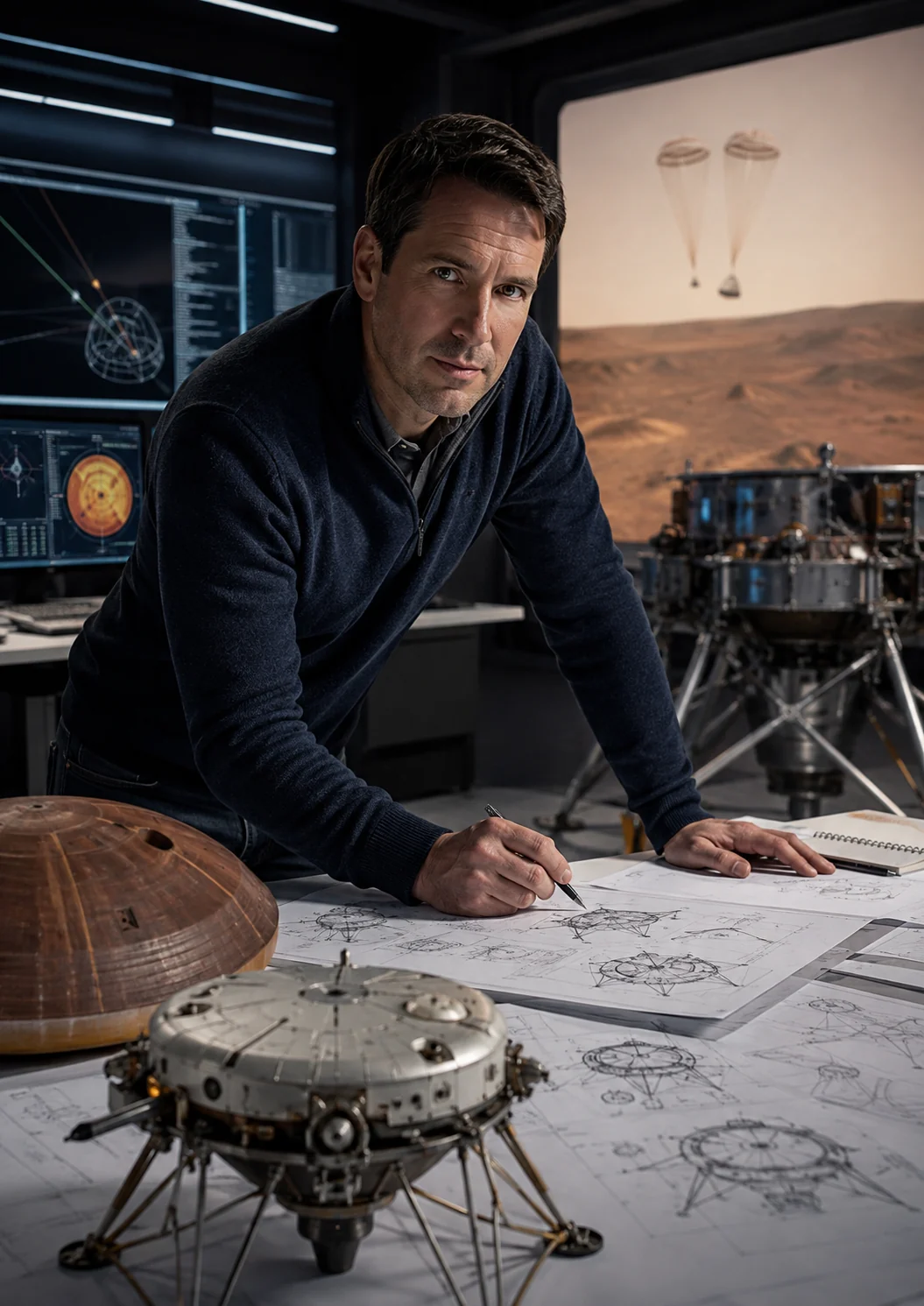
GSLV and cryogenic propulsion: difficult autonomy
GSLV reveals another side of India’s rise: some technologies are far harder to acquire than others. Cryogenic propulsion, needed for high performance with liquid hydrogen and oxygen at extremely low temperatures, became both an industrial and geopolitical challenge. Restrictions surrounding Russian technology transfer in the 1990s strengthened India’s effort to develop an indigenous cryogenic stage. 19.
A cryogenic engine combines high-speed turbopumps, stable combustion, thermal insulation, ignition and fluid management in regimes where properties vary strongly with temperature. The challenge is not merely drawing a combustion chamber; it requires materials, test infrastructure, instrumentation and manufacturing culture able to reproduce the intended behaviour.
Success eventually created a propulsion community and specialised leaders, with V. Narayanan, who became ISRO chairman in 2025, among its most visible representatives. His career illustrates how a long technical struggle also produces a generation of leaders who experienced testing, failure and industrial maturation firsthand.
Cryogenic autonomy expands accessible payload mass and reduces a critical dependency. More importantly, it gives India greater freedom in selecting future architectures, including heavy and human-rated launchers. Sovereignty is therefore not an abstract condition: it appears in precise subsystems whose absence constrains every higher-level option.
For Mars the lesson concerns bottlenecks. A settlement could master 95 percent of a system yet remain dependent on one component it cannot manufacture locally. Identifying such dependencies before a crisis and investing in test rigs or substitutes is a form of resilience as important as stocking spare parts.
Technological independence must nevertheless be distinguished from economic efficiency. Developing a technology domestically can cost more than buying an available service. The decision becomes strategic when a dependency can be interrupted, politically constrained or incompatible with long-term goals.
LVM3: from GSLV Mk III to the Gaganyaan launcher
The launcher now called LVM3, formerly GSLV Mk III, represents a change of scale. It combines large solid boosters, a liquid stage and a cryogenic upper stage, and has served missions including Chandrayaan-2, Chandrayaan-3 and commercial payloads. Most importantly, a human-rated version is intended for Gaganyaan. Moving from satellites to crew fundamentally changes design and certification criteria. 20.
A crewed system cannot merely maximise mission success probability; it must manage abort scenarios, detect anomalies rapidly and provide margins appropriate to human life. This changes testing, redundancy, software, component traceability and process qualification. The launcher becomes part of a wider safety system including crew module, service module, escape system and recovery operations.
The transition mobilises many ISRO centres and new suppliers. The Human Space Flight Centre coordinates a dedicated part of the effort while established centres provide propulsion, structures, avionics and operations. Gaganyaan is therefore as much an institutional integration programme as a vehicle.
Human rating forces requirements to be formalised in ways robotic missions can sometimes avoid. It creates methods relevant to an orbital station and, in the longer term, to any crewed mission beyond low Earth orbit. The real asset is certification discipline, not merely the ability to lift a capsule.
Mars requires several additional orders of magnitude in autonomy, duration and maintainability. Gaganyaan is therefore not a Mars-mission demonstration; it builds a first layer of human-spaceflight competence: cabin environment, human factors, recovery, medicine, procedures and operational responsibility.
Describing LVM3 as already 'Mars-ready' would be misleading. Interplanetary masses, velocities and architectures far exceed its present role. Its value in this story is to show how an organisation transforms existing infrastructure into a more demanding system through verifiable steps.
Chandrayaan-2: when a lander fails but the orbiter continues
Chandrayaan-2, launched in 2019, combined an orbiter, the Vikram lander and the Pragyan rover. The lander was lost during final descent while the orbiter remained operational and continued its science mission. The episode is especially instructive because it resists a binary success-failure classification: a distributed architecture can lose one element while preserving substantial scientific value. 21.
Entry, descent and landing impose a different difficulty regime from orbital flight. Terrain-relative navigation, throttled engines, altitude estimation, vertical and horizontal velocity, dispersion management and guidance logic must converge within minutes. A late anomaly leaves almost no time for recovery.
The Indian team turned the failure into a correction programme. Chandrayaan-2 data informed Chandrayaan-3 choices: redundancies, margins, tests, software and operational envelopes were revisited. The real indicator of maturity therefore became the ability to convert an accident into stronger requirements for the next mission.
That continuity is a form of institutional capital. If teams, data and design rationale had vanished between missions, Chandrayaan-3 would have had to relearn part of the problem. Preserving anomaly traceability is therefore as important as preserving manufacturing drawings.
Mars would make landing failures even more consequential, especially for heavy or crewed payloads. The lesson is not that Chandrayaan-2 proves Mars capability; it shows how a programme can separate functions, preserve surviving assets and prepare another attempt without erasing the previous failure.
The orbiter should not be described as a consolation prize. Its science mission is real and distinct. That nuance matters in systems thinking: the value of one element does not depend entirely on the success or failure of another.
Chandrayaan-3: succeeding after failure
Chandrayaan-3, launched in 2023, returned to the landing objective with a propulsion module, lander and Pragyan rover. Its successful landing in the lunar south-polar region carried enormous symbolic importance, but its technical value lies in continuity with Chandrayaan-2. It was not a fresh start: it embodied years of feedback, testing and revised margins. 22.
The programme placed greater emphasis on descent robustness and tolerance to dispersions. Ground tests, simulations and validation became a visible part of the story. This is a reminder that final success is often the tip of a documentary iceberg made of tests that never receive public attention.
Success involved navigation, propulsion, software, range, communications and science teams. The rover added a second operational layer: deployment, mobility, local planning and a thermally limited lifetime. Even a short mission therefore requires an organisation able to synchronise several decision chains.
Chandrayaan-3 strengthens India’s credibility for sample return and eventual crewed lunar goals under Space Vision 2047. The gap remains enormous, but some building blocks — powered descent, navigation and surface operations — now rest on real experience rather than simulation alone.
For Mars the most useful analogy is the maturation method: repeat an architecture, concentrate corrections on functions that failed and preserve realistic science objectives. The Martian atmosphere, distance and payload masses nevertheless make Mars EDL fundamentally different from lunar landing.
History should therefore resist turning one lunar success into proof of general technological superiority. A successful mission closes some questions and opens others. Maturity lies precisely in knowing which uncertainties remain unresolved.
Mangalyaan: five instruments, one learning mission
MOM carried a relatively compact science payload, including a colour camera and instruments addressing the atmosphere and exosphere. The choice reflected mission priority: first demonstrate technologies required for interplanetary flight while still producing useful science. The balance between technology demonstration and scientific ambition was explicit rather than hidden. 23.
A small payload reduces mass, power and data complexity, leaving greater system margin on a first mission. That does not make the instruments incidental; it means their selection is constrained by the overall technology-demonstration objective. Every watt and kilogram participates in a closed architecture.
Scientists worked with observation opportunities determined by a highly elliptical orbit. That geometry produced data different from a low-altitude mapping orbiter. It is a reminder that an instrument cannot be evaluated independently of orbit, pointing and available communications bandwidth.
The mission also operated far beyond its initial nominal duration, providing valuable experience in ageing, consumables management and prolonged operations. A robust platform can therefore produce institutional return beyond its minimum specification.
For Mars the lesson is to prioritise the objectives of a first demonstration. A settlement will not always benefit from loading every mission with every imaginable function. A simpler system that closes one critical chain and generates data can be more valuable than an overloaded architecture in which every subsystem consumes the margins of the others.
Operational longevity and scientific quality must also be distinguished. Surviving for a long time is an engineering success, while scientific value depends on instruments, calibration, observation geometry and resulting publications. The two dimensions complement each other without being identical.
Microgravity 2026: building a science community before the station
In January 2026 ISRO opened the IMEx-2026 call for Indian microgravity experiments in the context of Gaganyaan and the future Bharatiya Antariksh Station. The institutional significance is substantial: a station has scientific value only if a community knows how to design experiments, miniaturise them, assure safety, interpret results and organise successive campaigns. 24.
Microgravity imposes specific constraints: fluid containment, particle control, fire safety, electrical interfaces, experiment autonomy and limited crew time. Every payload becomes a small certified system that must coexist with a human environment. A station therefore turns science into an operational discipline.
The call also broadens the actor base. Universities, institutes, biologists, physicists and engineers can prepare experiments before the full station exists. That anticipation matters: building infrastructure without preparing users would create an under-utilised asset during its early years.
Scientific expansion helps justify BAS as more than a national symbol. A station is expensive to maintain; its legitimacy depends on the scientific, technological and industrial output it enables. The experiment ecosystem must therefore be designed in parallel with vehicles and modules.
For Mars the lesson is even stronger. A crewed base will be a permanent laboratory for medicine, biology, materials, agriculture and closed systems. Experiments will often serve science and survival at the same time. Building a community able to work under severe constraints increases the value of human-spaceflight investment long before departure for Mars.
Microgravity should not be confused with the Martian environment. A low-Earth-orbit station studies near-weightlessness, while Mars has roughly 38 percent of Earth gravity. Some biological questions will overlap; others will require dedicated partial-gravity platforms.
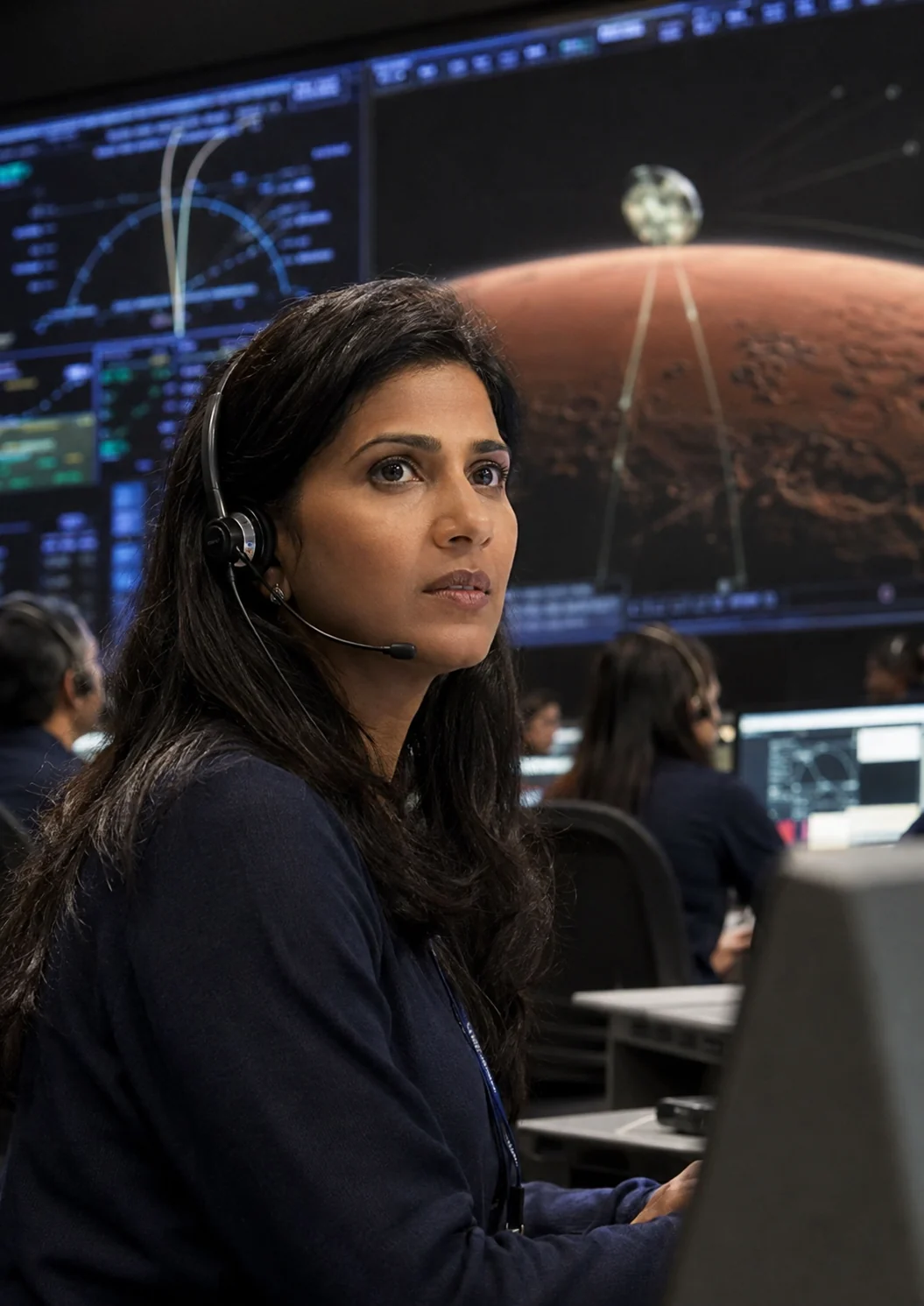
Chandrayaan-4: learning to bring material home
Chandrayaan-4 has been approved as a lunar sample-return mission. Its objective goes beyond landing: material must be collected, launched from the surface, transferred through orbital operations and returned to Earth in a protected container. This connects several functions that Chandrayaan-3 did not need to demonstrate together. 25.
Sample return is also a chain-of-custody architecture. Propulsion, rendezvous, capture, sealing, re-entry and recovery must preserve both material and scientific value. The container becomes a critical subsystem whose cleanliness and traceability matter as much as returned mass.
The programme demands new interfaces between surface, orbital and re-entry teams. It also prepares capabilities useful to human spaceflight: docking, transfer and control of several vehicles cooperating around another body. Complexity comes less from one component than from the number of sequences that all must succeed.
Scientifically, returning samples allows analyses impossible to miniaturise on a rover. Institutionally, it requires India to prepare laboratories, receiving procedures and scientific communities able to exploit material for years.
The Mars parallels are obvious but the difficulties are much greater: distance, planetary protection, ascent from stronger gravity than the Moon and interplanetary navigation. Chandrayaan-4 will therefore not be a rehearsal for Mars Sample Return, but it will train several common functions.
Because the mission is still future, approved configuration, detailed design and demonstrated performance must be distinguished. This page should evolve with reviews, tests and flights rather than freeze an architecture that may still change.
Venus Orbiter Mission: learning planetary science before dreaming of settlement
India’s approved Venus Orbiter Mission targets the surface, subsurface, atmosphere and solar interaction. Venus may seem peripheral to a Mars reference, yet it matters for the maturation of a planetary power: a programme must learn to build instruments, navigate far from Earth and operate in different thermal and radio environments without forcing every mission to serve human settlement directly. 26.
A Venus mission changes thermal constraints, communications, trajectory and instrument selection. Planetary models become comparative: understanding why Venus, Earth and Mars evolved so differently helps test models of atmospheres, water and greenhouse processes.
Indian scientists can thereby broaden expertise beyond the Moon and Mars. Diversification reduces the risk that a community becomes dependent on one political programme. It also produces instruments and methods that can be reused elsewhere.
In a national strategy, pure exploration therefore has a training and intellectual-resilience function. An agency that funds only immediate applications risks losing the ability to formulate new questions and invent the instruments required to answer them.
For Mars the contribution is indirect but profound: climate and atmospheric models gain credibility when tested across several planets. A settlement will depend on reliable environmental forecasting; comparative planetology helps avoid treating Mars as an isolated system.
It would nevertheless be wrong to describe VOM as a mandatory step to Mars. Its science goals stand on their own. The useful reading identifies transferable capabilities without reducing all planetary science to a colonial justification.
V. Narayanan and the propulsion generation moving into leadership
V. Narayanan became ISRO chairman in January 2025 after a career strongly associated with propulsion, including cryogenic systems. His trajectory is significant because it shows how a technical struggle from earlier decades becomes a school for leadership. The current head did not arrive from outside an abstract system: he worked in programmes where tests, materials, turbomachinery and propulsion interfaces were daily problems. 27.
A leader from one specialty cannot govern only that specialty. The central function is to balance exploration, applications, human spaceflight, launchers, budgets and industry. Technical experience can help evaluate margins and evidence, but it must be complemented by system and institutional judgement.
Narayanan’s generation must also lead an organisation more open to private actors than historical ISRO. IN-SPACe, NSIL and the growth of Indian space companies are gradually changing the boundary between public agency, commercial operator and industry. Leadership must therefore manage an ecosystem transition, not merely internal programmes.
In 2026 this governance must simultaneously prepare Gaganyaan, an orbital station, new science missions and future launch vehicles. Accumulating objectives increases the risk of dilution. Sequencing becomes critical: which infrastructure and teams must mature before the next phase begins?
For Mars the parallel concerns technical governance. A settlement cannot be led solely by a propulsion, medical or energy specialist. It will need leaders who understand enough of every domain to arbitrate risk and listen to specialists when margins disappear.
Institutional biographies should nevertheless avoid attributing agency results to the chairman of the moment. Space programmes often span several tenures. Leaders influence priorities and culture, but capability is collective and schedules are inherited.
Deep-space networking: hearing a spacecraft millions of kilometres away
A Mars mission becomes useless if it can no longer be tracked, commanded and interpreted. The Indian Deep Space Network near Bengaluru, together with support agreements involving other networks, gives ISRO the ability to communicate with distant probes. The infrastructure turns antennas and clocks into the nervous system of interplanetary operations. 28.
At great distance received power falls dramatically and data rate becomes precious. Communication windows must be planned, data compressed and coded, timing maintained, and operators must accept that some events are observed only after they have already happened. Mission control therefore cannot fly a Mars probe like a real-time drone.
Radiometric navigation, flight dynamics and communications specialists become central actors. Their work connects range and velocity measurements, orbital models and commands sent to the spacecraft. A timing, reference-frame or sequencing error can be as serious as a hardware failure.
The network also creates useful international interdependence: partner antennas can support missions when geometry or operations require it. Cooperation increases resilience, but it must be contracted and tested before critical events.
A Mars settlement will need to go further, developing orbital relays, data storage and substantial local autonomy. Communications with Earth will remain essential, but they cannot carry every medical, energy or daily navigation decision.
IDSN should not be presented as equivalent in scale and coverage to NASA’s Deep Space Network. Its value is different: it provides India with foundational sovereign competence and the ability to integrate partnerships, already enough to change its interplanetary autonomy significantly.
From MOM to a future Mars mission: what India knows and what remains unknown
After MOM India has real experience of Mars cruise and orbital operations, but a more ambitious future mission would face new problems: heavier communications, more demanding instruments, landing, mobility and perhaps sample return or international cooperation. The jump from a light orbiter to a surface architecture should never be hidden merely because both are called 'Mars missions'. 29.
The likely path will depend on Space Vision 2047 priorities and available resources. The Moon, Gaganyaan, BAS, Venus and new launchers already demand teams and budgets. An agency must sequence ambition so that an overly broad portfolio does not erode margins in every programme.
MOM experience remains valuable because it created specialists, procedures and organisational confidence. Engineers who worked on the mission can transmit what public documents never fully capture: actual equipment behaviour, planning difficulties, anomalies and operational compromises.
Future maturation will depend on preserving this memory across mission generations. A long interplanetary gap can disperse teams. Lunar and Venus programmes can serve as bridges that keep some common capabilities alive even when no spacecraft is travelling to Mars.
For human presence India would still need to acquire or share capabilities in heavy EDL, surface power, life support, radiation protection, habitats, medicine and interplanetary logistics. A serious reference should make these gaps visible: acknowledging them does not diminish an agency; it makes the roadmap credible.
Any future Mars announcement should therefore be integrated here with its exact status: study, approval, funding, design, launch or operation. This discipline prevents political intent from being prematurely converted into an accomplished mission.
Budgets, frugality and the real cost of space capability
India’s programme is frequently described as exceptionally low cost. There is substance behind the reputation: salary structures, reuse of infrastructure, limited redesign and focused architectures can reduce some costs. Yet comparing headline mission prices without harmonising salaries, infrastructure, accounting, exchange rates, objectives and risk leads to misleading conclusions. 30.
Useful frugality is a discipline of choice: remove unnecessary functions, reuse a spacecraft bus, accept lower performance when science permits and reduce operational complexity. It becomes dangerous if it removes tests, redundancy or margins required for safety.
Experienced teams matter because they know where simplification is safe and where it is not. A young organisation that copies only the cost reduction without equivalent human capital may take risks it cannot even quantify.
Mission cost must also be placed inside the cost of the system that enabled it: centres, networks, launchers, software and decades of training. MOM appears economical partly because it rests on earlier investment. Amortised infrastructure remains a real historical expenditure.
For Mars frugality will be essential because every transported kilogram is expensive. A settlement cannot, however, equate economy with the absence of backup. The useful question will be: which function can be simplified without creating a common failure that threatens several life-critical systems?
This reference should therefore resist viral comparisons such as 'cheaper than a movie'. They attract attention but explain little engineering. The real achievement lies in closing a mission under constrained resources while preserving enough margin.
A mission culture: procedures, reviews and the right to doubt
Behind launchers and spacecraft lies a culture of technical reviews, configuration control and operational preparation. Major programmes create gates where assumptions must be justified before moving to the next phase. These mechanisms can look bureaucratic, but their purpose is to create moments when teams outside a subsystem can ask questions its designers may no longer see. 31.
Reviews work only if negative evidence can travel upward. A worrying plot, exceeded tolerance or divergent simulation must be able to delay a decision. Safety culture is therefore measured by the institution’s ability to hear doubt before launch, not only by the quality of speeches after an incident.
Configuration, quality and mission-assurance engineers are often invisible actors in this process. They ensure that test results correspond to flight hardware, changes are documented and interfaces remain coherent. Without such discipline an organisation can employ brilliant specialists while losing control of the complete system.
ISRO is obviously not exempt from error; no complex system is. The historical question is how processes strengthen after anomalies and whether lessons remain active when teams and leaders change.
On Mars the right to doubt will become vital. A decision millions of kilometres away cannot wait for Earth arbitration. Local crews and technicians will need procedures, but also authority to stop an operation when evidence leaves the expected envelope.
It would be unwise to infer culture only from celebratory institutional narratives. A complete history must also examine failure reports, controversies and delays. Documentary depth comes precisely from the tension between stated doctrine and programme reality.
ISRO in 2026: an agency becoming an ecosystem
By 2026 ISRO is no longer the small group of the Thumba era. It operates national space services, prepares human spaceflight, develops a station, pursues lunar and planetary exploration, supports a private industry and maintains multiple launcher and spacecraft families. This accumulation of responsibilities is as much an organisational risk as a sign of maturity. 32.
The portfolio requires prioritisation. The same experienced engineers cannot be everywhere, test facilities have schedules, suppliers have limited capacity and budgets must carry long programmes. Future success will therefore depend on ecosystem growth, not simply more announced missions.
Private-sector growth can provide some of that additional capacity. It also requires greater interface standardisation, shared infrastructure and clarity over who carries technical risk. The agency is evolving from a largely integrated builder toward a more complex role as architect, customer, technical authority and explorer.
The quality of this transition will be measured less by press releases than by sustainable mission cadence, published lessons, industrial depth and the ability to maintain existing services while frontier programmes advance.
For Mars this evolution may be the most interesting of all: permanent settlement cannot be managed forever by one integrated organisation. It must become an ecosystem of suppliers, operators, scientists and authorities able to cooperate without losing life-critical standards.
The final caution is not to confuse trajectory with guarantee. India now possesses deep space capability, but 2047 ambitions remain exposed to budgets, failures, political choices and technological disruption. A living history must preserve those uncertainties rather than turning a roadmap into destiny.
Power, thermal control and longevity: systems that rarely make headlines
Indian missions illustrate a general rule: no payload exists without power and thermal control. Batteries, solar arrays, regulation, radiators, heaters and survival modes determine whether an instrument remains available after eclipse, winter or anomaly. These subsystems rarely dominate public narratives because they do not directly produce spectacular images, yet they set the real lifetime of a mission. 33.
Energy design begins with a budget: average power, peaks, degradation, solar orientation and converter efficiency. Thermal design adds another equation: every component has an allowable temperature range and the environment changes with orbit, attitude and solar distance. The system must therefore preserve margin across several dimensions simultaneously.
Platform engineers create this quiet continuity. Their success is often measured by events that do not happen: no depleted battery, frozen sensor or overheated computer. A history of ISRO centred only on leaders and launchers would therefore omit a fundamental part of real capability.
The longevity of several spacecraft, including MOM, provides ageing data, though every environment remains specific. Accumulated experience helps size margins and understand degradation modes, particularly when replacement delays are long.
On Mars power and thermal management become collective survival functions. A solar failure during a dust storm or thermal-management error can affect habitat, water, communications and medicine at the same time. Budgeting and degraded-mode techniques learned on spacecraft become principles of a city.
Spacecraft reliability should not be transferred directly to a human habitat. Power levels, repair possibilities and tolerances differ greatly. The transferable lesson lies in disciplined budgets, monitoring and safe-mode design.
Flight software and autonomy: deciding when Earth replies too late
As Indian missions travel farther from Earth, flight software stops being a simple sequence controller. It must detect states, protect the vehicle, manage safe modes and execute planned commands without instant supervision. MOM, lunar missions and future crewed systems therefore progressively increase the responsibility delegated to software. 34.
Autonomy requires validation, simulation and strict version management. One line of code can alter a critical physical function, so software must be tested against models of the vehicle, sensors and actuators. The exact configuration loaded on board becomes part of certification.
Software teams work with navigation, propulsion and operations. Their challenge is not only to write correct algorithms but to translate sometimes ambiguous physical requirements into deterministic logic. Anomalies often arise at the boundary between what an engineer intended and what software actually executes.
Interplanetary experience also teaches pre-planning of critical events. Commands are prepared, verified and uploaded early enough for the spacecraft to act even if communications are interrupted. This discipline reduces improvisation when margins are smallest.
A Mars settlement will need even greater software autonomy, but it must remain explainable and reversible. Life-critical systems cannot become black boxes that local crews cannot diagnose. Useful autonomy increases crew capability rather than removing every possibility of manual recovery.
This topic also requires documentary caution: mission-software details are rarely public. General engineering principles must therefore be separated from features actually documented for a specific programme, avoiding invented internal architectures.
Cooperating without losing decision capability
From Thumba to international instruments on Chandrayaan, India has used cooperation as an accelerator for learning. Partners sometimes provide launchers, payloads, antennas or expertise. The strategic question is not to avoid every dependency, but to decide which dependencies remain compatible with national ability to design missions and control critical functions. 35.
Well-structured cooperation defines interfaces, responsibilities, data, schedules and anomaly procedures before flight. This prevents partners from discovering late dependencies on information or functions that were never formalised. International engineering is therefore legal and organisational as much as technical.
Scientists benefit because cooperation allows instruments and expertise to be shared without duplicating every capability. Engineers also learn from different standards. Yet cooperation can become fragile when political relationships change, as the history of many space programmes demonstrates.
India therefore seeks a balance between international participation and national control of selected infrastructure. The strategy is visible in launchers, navigation, satellites and deep-space networking. Sovereignty appears as freedom of choice rather than complete isolation.
Mars will require even deeper international or inter-company cooperation. No actor is likely to lead every domain simultaneously. The challenge will be to design interfaces in which losing one partner does not immediately create a life-threatening failure.
History should therefore avoid two caricatures: treating every cooperation as shameful dependency, or conversely as proof of permanent harmony. Partnerships are architectures of responsibility exposed to technology, law and politics.
Before rockets: PRL, TIFR and the birth of a space-science community
This chapter deepens an aspect that timelines often compress into one date. Before INCOSPAR, India already had a culture of cosmic-ray, upper-atmosphere and geophysical research around the Physical Research Laboratory and Tata Institute of Fundamental Research. Sarabhai therefore connected existing communities rather than creating competence from nothing. 36.
From an engineering perspective, Sounding rockets turned academic physics into field engineering with instrumentation, telemetry, safety and schedules. Researchers learned to become responsible for real systems exposed to flight environments. A programme truly advances when competence can be reproduced by another team, on another vehicle and years later.
The institutional effect lasts. This base later provided scientists able to become systems engineers, payload leaders and centre directors. Fundamental research and applied programmes remained durably connected. The mission leaves people and routines behind, not merely a success announcement. That accumulation enables several programme families to run in parallel today.
The Mars transfer must remain cautious. An interplanetary agency depends as much on laboratories able to ask the right questions, build instruments and exploit data as on launch vehicles. The analogy does not mean India already possesses this function at Mars scale; it identifies competence whose logic could be reused after new qualification.
The durable point of ‘Before rockets: PRL, TIFR and the birth of a space-science community’ lies in transmission: This base later provided scientists able to become systems engineers, payload leaders and centre directors. Fundamental research and applied programmes remained durably connected. Looking forward, An interplanetary agency depends as much on laboratories able to ask the right questions, build instruments and exploit data as on launch vehicles. Space power is therefore measured here by what later teams can reproduce, verify and improve without depending on individual memory.
Indian space science predates the agency: radio, cosmic rays and the upper atmosphere
Starting the story with an administrative creation date would erase a crucial layer. India already had communities working on cosmic rays, ionospheric physics, scientific balloons and radio experiments during the 1940s and 1950s. Homi Bhabha’s TIFR and Vikram Sarabhai’s Physical Research Laboratory trained researchers to design experiments, calibrate instruments and extract weak signals before India had an orbital launcher. ISRO’s review of national space science explicitly traces balloon-borne cosmic-ray work and ionospheric research to this pre-rocket period. 1
That chronology changes the meaning of foreign assistance. When sounding rockets became available, India did not import the scientific question together with the vehicle. National researchers already knew what they wanted to measure; the foreign rocket initially provided access to an altitude balloons could not reach. Sovereignty therefore accumulated in layers: domestic science, partner launch access, instrumentation, operations and eventually the vehicle itself.
Vikram Sarabhai: Cambridge, PRL and selective importation of scientific methods
Behind the milestone lies a longer learning mechanism. Sarabhai belonged to a generation of Indian scientists who acquired part of their training in leading foreign environments before returning to build national institutions. His international experience fed a vision in which space first served development. 37.
The learning is not merely theoretical. He did not seek to reproduce NASA. He combined science, telecommunications, education, meteorology and Earth observation, using foreign partnerships as accelerators of learning rather than permanent substitutes. Facilities, tests and procedures built to solve the problem remain available and reduce the starting risk of later programmes.
The consequence is a transformation of collective memory. This doctrine required engineers to understand end users and explains SITE, Kheda, INSAT and remote sensing as much as rockets. The agency thus gained national legitimacy beyond space prestige alone. When documented, that memory becomes a strategic asset; when it rests in a few veterans, it disappears with them.
For Mars, the value is methodological before it is material. A durable Mars settlement would likewise need to connect exploration, communications, resources, health and daily services so infrastructure remains useful between major feats. Differences in scale, environment and duration would force almost every system to be requalified, but the acquired discipline remains relevant.
The durable point of ‘Vikram Sarabhai: Cambridge, PRL and selective importation of scientific methods’ lies in transmission: This doctrine required engineers to understand end users and explains SITE, Kheda, INSAT and remote sensing as much as rockets. The agency thus gained national legitimacy beyond space prestige alone. Looking forward, A durable Mars settlement would likewise need to connect exploration, communications, resources, health and daily services so infrastructure remains useful between major feats.
Homi Bhabha and INCOSPAR: why scientific administration came before the agency
To understand India’s rise, capability chains matter more than symbols. INCOSPAR was created in 1962 under the Department of Atomic Energy with Homi Bhabha support. Before India possessed a launcher, the young programme therefore benefited from a scientific administration accustomed to complex equipment and long programmes. 38.
The technical mechanism is more instructive than heroic narrative: That structure could recruit, import equipment, contract, organise a site and sustain budgets. Institutional capability therefore preceded part of the technical capability. The mission becomes a school where interfaces, quality and decisions matter as much as nominal performance.
This maturation also changes governance. The creation of ISRO in 1969 and the Department of Space and Space Commission in 1972 formalised an existing maturation. India’s programme appears as a network of institutions rather than an agency that suddenly appeared. A larger organisation must delegate, audit, manage change and trade among programmes competing for the same specialists and test facilities.
This history offers a Mars maturity test. A Mars programme lasting decades requires administration able to survive political cycles and preserve teams long before visible results arrive. Demonstrated capability, transferable heritage, technology under development and absent function must remain distinct; combining them would create an artificially optimistic picture.
The durable point of ‘Homi Bhabha and INCOSPAR: why scientific administration came before the agency’ lies in transmission: The creation of ISRO in 1969 and the Department of Space and Space Commission in 1972 formalised an existing maturation. India’s programme appears as a network of institutions rather than an agency that suddenly appeared. Looking forward, A Mars programme lasting decades requires administration able to survive political cycles and preserve teams long before visible results arrive.
Thumba 1963: learning with Nike-Apache before building Rohini
The engineering history becomes clearer when people, facilities and procedures are followed together. The first Thumba launch on 21 November 1963 used a Nike-Apache sounding rocket. International cooperation provided vehicles, instruments, procedures and access to a global scientific community. 39.
This step shows why technology is never reducible to drawings. Teams could first learn range operations, telemetry, payloads and safety while parts of the launcher remained foreign. Rohini rockets then progressively internalised propulsion, structures and operations. Teams must also manufacture, inspect, operate and diagnose the system when flight differs from prediction.
The organisation changes in turn. Thumba became a permanent school. Thousands of sounding-rocket launches provided a repetition environment that rare and expensive orbital missions cannot offer. New professions, review criteria and relationships with industry or universities appear. Capability becomes broader than the team that created it.
A Mars connection exists without needing exaggeration. The demonstrator principle is directly relevant to Mars: test a cheaper function, repeat it, understand anomalies, then integrate it into a more ambitious architecture. The precedent shows how an organisation learns and industrialises, not that an Earth or lunar solution is immediately sufficient on the red planet.
The durable point of ‘Thumba 1963: learning with Nike-Apache before building Rohini’ lies in transmission: Thumba became a permanent school. Thousands of sounding-rocket launches provided a repetition environment that rare and expensive orbital missions cannot offer. Looking forward, The demonstrator principle is directly relevant to Mars: test a cheaper function, repeat it, understand anomalies, then integrate it into a more ambitious architecture.
Nike-Apache, M-100 and Centaure: three foreign schools inside one Indian laboratory
Thumba functioned as more than the site of a first launch. India began with the American Nike-Apache, also operated Soviet M-100 and French Centaure sounding rockets, and later initiated manufacture of Centaure rockets in India. An ISRO historical publication explicitly links Sarabhai to that French technology-manufacturing programme. 2
The variety mattered. American, Soviet and French procedures were not identical. Indian engineers had to translate documentation, normalise interfaces, maintain range safety and make different hardware families work at the same site. Long before ISRO routinely used the phrase systems engineering, Thumba was already forcing young teams to learn the practical art of integrating technologies born in different institutional cultures.
Training engineers when the space profession does not yet exist
This case shows how a capability becomes an institution. In the 1960s India did not have a labour market full of experienced space engineers. Early teams came from physics, electronics, aeronautics, telecommunications, metallurgy and mechanical engineering. 40.
The real difficulty lies in interfaces. Training came through mentoring, Thumba campaigns, foreign assignments, work with NASA and partners, then return to national projects. Many learned a system by actually building it. Such a chain forces teams to document assumptions, measure margins and preserve reasons so the next generation does not repeat the same learning.
The result is not always visible in public performance figures. This model produced a versatile generation able to move from payloads to launchers, laboratories to the range and research to management. Specialisation came later. Yet this human infrastructure later shortens schedules and enables more complex missions without restarting from zero.
At the scale of human settlement, Early Mars teams would similarly cover jobs not yet established as mature professions before turning their experience into formal curricula. Such continuity above all requires an organisation able to preserve expertise for decades, including between missions separated by long intervals.
The durable point of ‘Training engineers when the space profession does not yet exist’ lies in transmission: This model produced a versatile generation able to move from payloads to launchers, laboratories to the range and research to management. Specialisation came later. Looking forward, Early Mars teams would similarly cover jobs not yet established as mature professions before turning their experience into formal curricula.
Satish Dhawan: Caltech, IISc and a culture of technical inquiry
ISRO did not advance through the sudden appearance of isolated technologies. Dhawan was educated in India and the United States, earning a Caltech doctorate in aeronautics and mathematics. At IISc he developed experimental fluid mechanics and test facilities before taking charge of the space programme in 1972. 41.
From an engineering perspective, He brought a culture in which hypotheses had to be measured, responsibilities distributed and failures analysed without hiding causes. That discipline influenced how ISRO moved through SLV, ASLV and later programmes.
The institutional effect lasts. Dhawan strengthened specialised centres and gave greater authority to project leaders. The agency progressively became able to run launchers, spacecraft and applications simultaneously.
The Mars transfer must remain cautious. A distant Mars mission cannot depend on a charismatic founder; it requires procedures allowing bad news to surface and be corrected before it becomes catastrophic.
The durable point of ‘Satish Dhawan: Caltech, IISc and a culture of technical inquiry’ lies in transmission: Dhawan strengthened specialised centres and gave greater authority to project leaders. The agency progressively became able to run launchers, spacecraft and applications simultaneously. Looking forward, A distant Mars mission cannot depend on a charismatic founder; it requires procedures allowing bad news to surface and be corrected before it becomes catastrophic.
Dhawan: importing an experimental culture and making it Indian
Satish Dhawan studied in India and the United States, including Caltech, then built a modern experimental aerodynamics and fluid-mechanics culture at IISc. His significance to ISRO cannot be reduced to being the chairman after Sarabhai. He brought an expectation that technical claims must survive measurement, experiment and criticism, and he led the organisation through the formative 1972–1984 period.
That helps explain the later style of failure investigations: reconstruct the physical sequence, compare flight telemetry with models and ground tests, and convert findings into design and procedural changes. An organisation that learns is not one that never fails; it is one that prevents the same poorly understood failure from being rediscovered by the next generation.
U. R. Rao: from MIT and Pioneer to India’s satellite school
A capability-based reading reveals a genuine change of level here. U. R. Rao worked in the United States, including MIT and the Pioneer and Explorer mission environment, before returning to India in 1966. He brought direct experience of instrumented space science. 42.
The learning is not merely theoretical. From 1972 he led Indian satellite technology. Aryabhata became a training programme for structures, thermal control, power, command, payloads and integration even though the launch remained Soviet.
The Rao generation transformed science experiments into operational systems. Later, as ISRO chairman, Rao also accelerated PSLV, GSLV and cryogenic development.
The career shows how a payload scientist can become a platform builder and then a portfolio leader, a continuum essential to interplanetary autonomy.
The durable point of ‘U. R. Rao: from MIT and Pioneer to India’s satellite school’ lies in transmission: The Rao generation transformed science experiments into operational systems. Later, as ISRO chairman, Rao also accelerated PSLV, GSLV and cryogenic development. Looking forward, The career shows how a payload scientist can become a platform builder and then a portfolio leader, a continuum essential to interplanetary autonomy.
A. P. J. Abdul Kalam: SLV-3 as a school of system responsibility
This case separates one-off success from repeatable competence. Abdul Kalam joined the space programme after aeronautical engineering training and assumed major responsibility on SLV-3. He belonged to the first generation learning to close a complete orbital launcher. 43.
The technical mechanism is more instructive than heroic narrative: The 1979 flight failed to reach orbit and the 1980 flight succeeded. Learning centred on integration: components, sequence, guidance, separation, telemetry and responsibility cannot be analysed independently.
This maturation also changes governance. SLV-3 then trained leaders who spread into launch and other programmes. Capability did not remain trapped in one vehicle; it travelled through people, methods and facilities.
This history offers a Mars maturity test. Each Mars demonstrator should produce not only data but a new generation of engineers able to reuse the experience in the next system.
The durable point of ‘A. P. J. Abdul Kalam: SLV-3 as a school of system responsibility’ lies in transmission: SLV-3 then trained leaders who spread into launch and other programmes. Capability did not remain trapped in one vehicle; it travelled through people, methods and facilities. Looking forward, Each Mars demonstrator should produce not only data but a new generation of engineers able to reuse the experience in the next system.
Brahm Prakash: materials, metallurgy and invisible industry
The Indian trajectory here combines science, engineering and organisation. Brahm Prakash, a metallurgist and science administrator, helped consolidate materials, manufacturing and management at VSSC while India learned to build its own launch vehicles. 44.
Solid-motor casings, light alloys, tanks, welding, heat treatment and defect control determine mass and reliability as much as trajectory. Sovereignty is therefore never reducible to possessing a drawing.
The organisation changes in turn. The programme had to develop suppliers able to reproduce a material and a process. A technology understood intellectually but impossible to manufacture remains a dependency.
A Mars connection exists without needing exaggeration. Pressure vessels, cryogenics, dust and Martian thermal cycles make manufacturing-process mastery as strategic as overall design.
The durable point of ‘Brahm Prakash: materials, metallurgy and invisible industry’ lies in transmission: The programme had to develop suppliers able to reproduce a material and a process. A technology understood intellectually but impossible to manufacture remains a dependency. Looking forward, Pressure vessels, cryogenics, dust and Martian thermal cycles make manufacturing-process mastery as strategic as overall design.
SITE: using ATS-6 to learn a service before owning the satellite
This step is less famous than major launches yet explains much of their later success. The 1975-1976 Satellite Instructional Television Experiment used NASA ATS-6 to broadcast educational programmes to Indian villages. India therefore learned the service before possessing the whole orbital infrastructure. 45.
The real difficulty lies in interfaces. SITE required ground antennas, programme production, maintenance, users, impact measurement and interagency coordination. These functions do not build the spacecraft but turn space into a public tool.
The experiment prepared INSAT and showed that temporary dependence can be strategic if it trains a complete national capability rather than becoming permanent outsourcing.
At the scale of human settlement, A Mars habitat or relay supplied by a partner could have the same value if the period of dependence genuinely trains local teams in operations and maintenance.
The durable point of ‘SITE: using ATS-6 to learn a service before owning the satellite’ lies in transmission: The experiment prepared INSAT and showed that temporary dependence can be strategic if it trains a complete national capability rather than becoming permanent outsourcing. Looking forward, A Mars habitat or relay supplied by a partner could have the same value if the period of dependence genuinely trains local teams in operations and maintenance.
Learning a service before owning the satellite
One of the early programme’s most consequential choices was to reject the intuitive order “build first, use later.” ISRO’s Genesis account states explicitly that India saw no need to wait for domestic satellites before developing applications; foreign satellites could be used to test the system and its social value. 4
SITE is the famous example, but the principle is broader. It temporarily separated vehicle sovereignty from learning sovereignty. Indian teams could discover how programmes were produced, distributed and received in villages before the country could build the geostationary satellite that would eventually carry such services. When national spacecraft arrived, they were solving needs already encountered in practice rather than searching for applications after launch.
Kheda: turning SITE into a local communications laboratory
After SITE, the Kheda Communications Project deepened local television and communications. The task was no longer merely receiving a signal but designing content and networks around concrete needs. 46.
From an engineering perspective, Engineers learned that a space system is useful only if its user segment works: stations, power, maintenance, human interfaces and feedback matter as much as the transponder in orbit.
The institutional effect lasts. This applications culture became a lasting ISRO characteristic and prepared infrastructures that became routine for the economy and administration.
The Mars transfer must remain cautious. A Mars presence would need to connect spacecraft, sensors, agriculture, health and logistics; the space segment has value only through the decisions it enables on the ground.
The durable point of ‘Kheda: turning SITE into a local communications laboratory’ lies in transmission: This applications culture became a lasting ISRO characteristic and prepared infrastructures that became routine for the economy and administration. Looking forward, A Mars presence would need to connect spacecraft, sensors, agriculture, health and logistics; the space segment has value only through the decisions it enables on the ground.
Aryabhata: building the spacecraft while accepting a Soviet launch
Aryabhata, launched in 1975 by a Soviet launcher, deliberately separated spacecraft construction from launch autonomy. India gained orbital-platform experience while its own rockets remained experimental. 47.
The learning is not merely theoretical. The mission required structures, thermal control, power, command, payload integration and operations preparation. Even with a partner launch, the Indian spacecraft had to survive the environment and operate in orbit.
Whole teams gained first-hand spacecraft lifecycle experience and could later approach Bhaskara, APPLE, INSAT and IRS with greater autonomy.
A nation can learn rovers, habitats or science before possessing its own interplanetary transport, provided it masters critical interfaces.
The durable point of ‘Aryabhata: building the spacecraft while accepting a Soviet launch’ lies in transmission: Whole teams gained first-hand spacecraft lifecycle experience and could later approach Bhaskara, APPLE, INSAT and IRS with greater autonomy. Looking forward, A nation can learn rovers, habitats or science before possessing its own interplanetary transport, provided it masters critical interfaces.
Bhaskara: remote sensing as a school for data systems
The Bhaskara satellites strengthened Indian experience in Earth observation, sensors and data processing. Their value came as much from ground exploitation as from the spacecraft itself. 48.
The technical mechanism is more instructive than heroic narrative: Calibration, geometry, archiving, distribution and user relationships turn pixels into decisions. This discipline prepared IRS, resource management and disaster response.
This maturation also changes governance. ISRO learned to maintain a service after launch: data quality, continuity and use became success criteria over several years.
This history offers a Mars maturity test. Orbital imaging, weather and resource mapping on Mars would similarly need to become continuous services rather than one-off science experiments.
The durable point of ‘Bhaskara: remote sensing as a school for data systems’ lies in transmission: ISRO learned to maintain a service after launch: data quality, continuity and use became success criteria over several years. Looking forward, Orbital imaging, weather and resource mapping on Mars would similarly need to become continuous services rather than one-off science experiments.
APPLE: Ariane as an accelerator for geostationary learning
APPLE was launched by Ariane in 1981. The mission gave India communications and geostationary-operations experience before it possessed a domestic launcher for that orbit. 49.
Separating transport from payload avoided waiting for every national technology to mature simultaneously. Orbital learning could advance while PSLV and GSLV were still gestating.
The organisation changes in turn. APPLE also trained teams that later operated INSAT and illustrates progress through overlapping learning curves rather than strictly sequential stages.
A Mars connection exists without needing exaggeration. A country can develop deep-space communications, instruments or operations using partner transport and internalise transportation once it becomes strategic.
The durable point of ‘APPLE: Ariane as an accelerator for geostationary learning’ lies in transmission: APPLE also trained teams that later operated INSAT and illustrates progress through overlapping learning curves rather than strictly sequential stages. Looking forward, A country can develop deep-space communications, instruments or operations using partner transport and internalise transportation once it becomes strategic.
SLV-3: closing a complete orbital system for the first time
SLV-3 was India’s first school for complete orbital-launcher design. The problem extended beyond the solid motor to structures, guidance, staging, avionics, ground preparation and trajectory. 50.
The real difficulty lies in interfaces. The 1979 flight showed the vulnerability of a function chain; the 1980 success showed the organisation could analyse, correct and fly again. Test facilities and documentation then remained available.
SLV-3 value therefore far exceeded its modest payload: it built a systems school, procedures and a common language among disciplines.
At the scale of human settlement, Mars will require exactly this ability to close a complete system, because an excellent isolated technology cannot compensate for poorly controlled interfaces.
The durable point of ‘SLV-3: closing a complete orbital system for the first time’ lies in transmission: SLV-3 value therefore far exceeded its modest payload: it built a systems school, procedures and a common language among disciplines. Looking forward, Mars will require exactly this ability to close a complete system, because an excellent isolated technology cannot compensate for poorly controlled interfaces.
ASLV: failures as technical capital
ASLV suffered several failures before achieving success. Its architecture confronted ISRO with stability, sequencing, dynamics and margins that no textbook can reproduce like real flight. 51.
From an engineering perspective, The programme created experience with strap-ons, transient phases and qualification methods that later fed PSLV. Each instrumented flight reduced the space of possible causes.
The institutional effect lasts. The agency learned to institutionalise post-failure review and treat a demonstrator as a source of knowledge even when the nominal mission was not achieved.
The Mars transfer must remain cautious. Mars demonstrators should be designed so telemetry and analysis can convert an expensive failure into real risk reduction for the next attempt.
The durable point of ‘ASLV: failures as technical capital’ lies in transmission: The agency learned to institutionalise post-failure review and treat a demonstrator as a source of knowledge even when the nominal mission was not achieved. Looking forward, Mars demonstrators should be designed so telemetry and analysis can convert an expensive failure into real risk reduction for the next attempt.
PSLV: reliability built through repetition
PSLV became the backbone of Indian access to polar orbit and launched Chandrayaan-1 and Mars Orbiter Mission. Its reputation came from decades of repetition and controlled improvement. 52.
The learning is not merely theoretical. Reliability requires configuration control, qualified processes, supplier surveillance and discipline over changes. A local improvement must not create an untested system risk.
PSLV also became an industrial school: companies learned to produce repeatable components under documentation, inspection and cadence.
For Mars logistics, predictable cadence, interchangeable parts and statistically understood reliability would matter more than one performance record.
The durable point of ‘PSLV: reliability built through repetition’ lies in transmission: PSLV also became an industrial school: companies learned to produce repeatable components under documentation, inspection and cadence. Looking forward, For Mars logistics, predictable cadence, interchangeable parts and statistically understood reliability would matter more than one performance record.
Commercial PSLV: learning customer interfaces
Launching foreign satellites forced the Indian ecosystem to manage contracts, customer interfaces, schedules and responsibilities beyond national missions. 53.
The technical mechanism is more instructive than heroic narrative: A customer cannot accept a late change merely because it suits the provider. Interface documents, reviews and change processes become part of commercial trust.
This maturation also changes governance. This experience prepared NSIL and the progressive separation of public development, commercial operation and regulation.
This history offers a Mars maturity test. Multinational Mars architectures would need the same contractual and technical language around responsibilities, interfaces, verification and change.
The durable point of ‘Commercial PSLV: learning customer interfaces’ lies in transmission: This experience prepared NSIL and the progressive separation of public development, commercial operation and regulation. Looking forward, Multinational Mars architectures would need the same contractual and technical language around responsibilities, interfaces, verification and change.
GSLV: crossing PSLV’s energy limit
PSLV was insufficient for the heaviest communications satellites bound for geostationary transfer. GSLV combined PSLV heritage, Vikas engines and a cryogenic stage to cross that limit. 54.
Technologies do not mature at the same rate: reliability of solid or liquid stages cannot compensate for weak cryogenics. The full chain must be qualified.
The organisation changes in turn. GSLV exposed strategic dependence on foreign technology and then the need to turn that dependence into domestic capability, a process lasting years and passing through failures.
A Mars connection exists without needing exaggeration. High-energy interplanetary departures show why turbomachinery, materials, test stands and a test culture matter more than an engine drawing alone.
The durable point of ‘GSLV: crossing PSLV’s energy limit’ lies in transmission: GSLV exposed strategic dependence on foreign technology and then the need to turn that dependence into domestic capability, a process lasting years and passing through failures. Looking forward, High-energy interplanetary departures show why turbomachinery, materials, test stands and a test culture matter more than an engine drawing alone.
Cryogenics: from Russian dependence to CE-7.5
Early GSLV versions used Russian cryogenic stages while India developed an indigenous stage. The first successful flight with an Indian cryogenic stage came in January 2014. 55.
The real difficulty lies in interfaces. Liquid oxygen, liquid hydrogen, high-speed turbopumps, ignition, combustion, insulation and ground systems form a far more complex system than storable or solid propulsion.
Transfer denial or restriction can slow a programme but also turn commercial dependence into a national substitution priority with its own stands and teams.
At the scale of human settlement, The most dangerous dependencies for Mars are those requiring a decade to rebuild; they must be identified long before the mission.
The durable point of ‘Cryogenics: from Russian dependence to CE-7. 5’ lies in transmission: Transfer denial or restriction can slow a programme but also turn commercial dependence into a national substitution priority with its own stands and teams. Looking forward, The most dangerous dependencies for Mars are those requiring a decade to rebuild; they must be identified long before the mission.
CE-20 and C25: moving to high-thrust cryogenics
The CE-20 engine and LVM3 C25 stage represent a different step from CE-7.5: the objective is no longer merely replacing a GSLV function but possessing more powerful cryogenic propulsion designed for a heavy launcher. 56.
From an engineering perspective, LPSC designs, industry manufactures subsystems and IPRC integrates and tests. Repeated turbopump, chamber, ignition and endurance tests build a data set that becomes a strategic asset in its own right.
The institutional effect lasts. In 2025 LVM3 also demonstrated an in-space C25 restart on CMS-03, showing that the stage is evolving beyond its initial qualification.
The Mars transfer must remain cautious. Mars missions need restarts and precise energy management; a culture of qualified, reconfigurable propulsion is more relevant than an isolated thrust record.
The durable point of ‘CE-20 and C25: moving to high-thrust cryogenics’ lies in transmission: In 2025 LVM3 also demonstrated an in-space C25 restart on CMS-03, showing that the stage is evolving beyond its initial qualification. Looking forward, Mars missions need restarts and precise energy management; a culture of qualified, reconfigurable propulsion is more relevant than an isolated thrust record.
LVM3: when a heavy launcher must become human-rated
LVM3 combines large solid boosters, a liquid stage and the cryogenic C25. Moving toward Gaganyaan does not mean using exactly the same launcher: it imposes human-rating logic. 57.
The learning is not merely theoretical. Human rating requires additional margins, process surveillance, redundancy, better knowledge of dispersions and above all an abort system able to save the crew if the launcher becomes dangerous.
Launcher, crew module, communications, maritime recovery and medicine become one safety chain, deeply broadening the organisation.
A human Mars transport would have the same property: performance, escape, life support, return and crisis operations must be designed as one system.
The durable point of ‘LVM3: when a heavy launcher must become human-rated’ lies in transmission: Launcher, crew module, communications, maritime recovery and medicine become one safety chain, deeply broadening the organisation. Looking forward, A human Mars transport would have the same property: performance, escape, life support, return and crisis operations must be designed as one system.
SSLV: reducing the organisational cost of small launches
SSLV targets a simpler, more responsive architecture for small satellites. The goal is as much reducing preparation, staffing and campaign constraints as providing another payload class. 58.
The technical mechanism is more instructive than heroic narrative: An agency managing constellations and private actors cannot mobilise a heavy campaign for every small satellite. The vehicle must be treated as a repeatable service rather than an exceptional programme.
This maturation also changes governance. The 2025 SSLV technology transfer to industry marks a shift: a state-developed capability is intended for broader production without monopolising the same public teams.
This history offers a Mars maturity test. Mars logistics would need vehicles in different classes; using a heavy system for every kilogram would destroy cadence and economics.
The durable point of ‘SSLV: reducing the organisational cost of small launches’ lies in transmission: The 2025 SSLV technology transfer to industry marks a shift: a state-developed capability is intended for broader production without monopolising the same public teams. Looking forward, Mars logistics would need vehicles in different classes; using a heavy system for every kilogram would destroy cadence and economics.
VSSC: turning launcher development into institutional memory
The Vikram Sarabhai Space Centre concentrates much of launch-vehicle design, structures and solid propulsion and directly continues the history of Thumba. 59.
Senior engineers, test procedures, flight data, suppliers, stands and documentation accumulate over decades. The centre therefore functions as permanent technical memory.
The organisation changes in turn. VSSC nonetheless depends on other centres for liquid propulsion, avionics, launch and tracking. National capability therefore depends as much on inter-centre interfaces as on each centre individually.
A Mars connection exists without needing exaggeration. Between widely spaced Mars windows, loss of knowledge is a major risk; permanent organisations must preserve design rationale and flight lessons.
The durable point of ‘VSSC: turning launcher development into institutional memory’ lies in transmission: VSSC nonetheless depends on other centres for liquid propulsion, avionics, launch and tracking. National capability therefore depends as much on inter-centre interfaces as on each centre individually. Looking forward, Between widely spaced Mars windows, loss of knowledge is a major risk; permanent organisations must preserve design rationale and flight lessons.
LPSC and IPRC: propulsion design on one side, testing on the other
Liquid and cryogenic propulsion is organised around specialised centres: LPSC designs engines and stages while IPRC at Mahendragiri provides assembly, integration and hot testing. 60.
The real difficulty lies in interfaces. The separation forces formal measurement interfaces, test configurations and acceptance criteria. It also allows expensive facilities to serve multiple engines and programmes.
Test stands become shared national infrastructure and a source of reference data rather than disposable equipment tied to one vehicle.
At the scale of human settlement, For Mars, independent test capability is a better autonomy indicator than possession of an engine alone because endurance and degraded modes must be demonstrated.
The durable point of ‘LPSC and IPRC: propulsion design on one side, testing on the other’ lies in transmission: Test stands become shared national infrastructure and a source of reference data rather than disposable equipment tied to one vehicle. Looking forward, For Mars, independent test capability is a better autonomy indicator than possession of an engine alone because endurance and degraded modes must be demonstrated.
URSC: moving from prototype spacecraft to platform families
The U R Rao Satellite Centre builds and integrates much of India’s spacecraft fleet. The historical challenge was moving from Aryabhata as a learning prototype to repeatable families for communications, navigation, observation and science. 61.
From an engineering perspective, Reusing a bus allows innovation to focus on payloads rather than redesigning structure, power, thermal systems and software for every mission. Qualified components also reduce risk.
The institutional effect lasts. Standardisation must also manage obsolescence and renewal so old heritage does not constrain new missions. The centre therefore maintains continuity and evolution simultaneously.
The Mars transfer must remain cautious. A durable Mars infrastructure would need standard buses for communications, weather, navigation and science so each spacecraft does not become a unique project.
The durable point of ‘URSC: moving from prototype spacecraft to platform families’ lies in transmission: Standardisation must also manage obsolescence and renewal so old heritage does not constrain new missions. The centre therefore maintains continuity and evolution simultaneously. Looking forward, A durable Mars infrastructure would need standard buses for communications, weather, navigation and science so each spacecraft does not become a unique project.
SDSC SHAR: a spaceport is a logistics chain
Sriharikota became India’s primary spaceport. Launch pads, assembly buildings, safety, storage, transport and control zones turned a coastal site into an industrial system. 62.
The learning is not merely theoretical. A campaign coordinates stage arrival, integration, checkout, fuelling, weather, trajectories and drop zones. The pad is only the visible part of a long chain.
As cadence rises, multiple campaigns must overlap without one vehicle blocking the entire infrastructure. Scheduling becomes an organisational technology.
Mars would require logistics ports with storage, maintenance and traffic management rather than sites designed for one spectacular mission.
The durable point of ‘SDSC SHAR: a spaceport is a logistics chain’ lies in transmission: As cadence rises, multiple campaigns must overlap without one vehicle blocking the entire infrastructure. Scheduling becomes an organisational technology. Looking forward, Mars would require logistics ports with storage, maintenance and traffic management rather than sites designed for one spectacular mission.
ISTRAC and IDSN: deep-space networking as permanent infrastructure
ISTRAC tracks spacecraft and launch missions while the Indian Deep Space Network provides large antennas needed for lunar and Mars missions. MOM also used NASA/JPL network support. 63.
The technical mechanism is more instructive than heroic narrative: An antenna is not enough: clocks, orbit software, calibration, availability, scheduling and operations teams must work continuously. The greater the distance, the more important onboard autonomy becomes.
This maturation also changes governance. The network builds a school of interplanetary navigation and operations that remains available for Chandrayaan, Aditya and future missions.
This history offers a Mars maturity test. A Mars presence would need orbital relays, local navigation and redundant interplanetary links; IDSN is directly relevant heritage.
The durable point of ‘ISTRAC and IDSN: deep-space networking as permanent infrastructure’ lies in transmission: The network builds a school of interplanetary navigation and operations that remains available for Chandrayaan, Aditya and future missions. Looking forward, A Mars presence would need orbital relays, local navigation and redundant interplanetary links; IDSN is directly relevant heritage.
SAC: designing payloads with the final user in mind
The Space Applications Centre brings together communications payloads, remote-sensing instruments and applications. This proximity connects instrument specifications to final-service needs. 64.
A camera is not better merely because it has more pixels if data rate, revisit and processing do not match the intended decision. Instrument-to-use dialogue becomes a discipline.
The organisation changes in turn. This culture reduces the risk of elegant but useless missions and supports communications, meteorology, navigation and Earth observation.
A Mars connection exists without needing exaggeration. On Mars, instruments must answer water, dust, resource, weather and safety needs; their value would depend on integration with surface decisions.
The durable point of ‘SAC: designing payloads with the final user in mind’ lies in transmission: This culture reduces the risk of elegant but useless missions and supports communications, meteorology, navigation and Earth observation. Looking forward, On Mars, instruments must answer water, dust, resource, weather and safety needs; their value would depend on integration with surface decisions.
NRSC: the mission continues after the spacecraft
The National Remote Sensing Centre processes, archives and distributes observation data and links spacecraft to administrations responsible for resources, agriculture, water, cities and disasters. 65.
The real difficulty lies in interfaces. Georeferencing, ground validation, time series and geographic information systems turn raw signals into knowledge. This work differs from spacecraft construction but is equally essential.
A dedicated centre means data become heritage and sometimes serve uses not anticipated during initial design.
At the scale of human settlement, A map of Martian ice or dust would have value only if it feeds logistics, safety and resource planning through usable systems.
The durable point of ‘NRSC: the mission continues after the spacecraft’ lies in transmission: A dedicated centre means data become heritage and sometimes serve uses not anticipated during initial design. Looking forward, A map of Martian ice or dust would have value only if it feeds logistics, safety and resource planning through usable systems.
IISU: inertial systems, sensors and the invisible sovereignty of navigation
Inertial systems and navigation sensors determine where a vehicle is, how it rotates and when it must correct trajectory. India built specialised capability in these less visible building blocks. 66.
From an engineering perspective, Gyroscopes, accelerometers, computers, calibration and algorithms are interdependent. A better sensor adds little if estimation software cannot exploit its accuracy or drift.
The institutional effect lasts. Programme autonomy is therefore also measured in small components, sometimes subject to stricter export controls than far more visible structures.
The Mars transfer must remain cautious. Autonomous landing, orbital rendezvous and Mars mobility would depend on sensors and algorithms able to function without terrestrial GPS.
The durable point of ‘IISU: inertial systems, sensors and the invisible sovereignty of navigation’ lies in transmission: Programme autonomy is therefore also measured in small components, sometimes subject to stricter export controls than far more visible structures. Looking forward, Autonomous landing, orbital rendezvous and Mars mobility would depend on sensors and algorithms able to function without terrestrial GPS.
INSAT: turning geostationary orbit into a national service
INSAT combines communications, television, meteorology and at times search and rescue. The series marks the transition from experiments to a service expected to remain continuously available to the economy and administration. 67.
The learning is not merely theoretical. Spacecraft must be replenished while orbital slots, frequencies, ground stations and replacement before end of life are managed. Service continuity becomes an engineering requirement.
This routine is a deeper maturity sign than one exceptional mission because the organisation must repeat without consuming all its effort on every spacecraft.
Mars would require communications and weather constellations on which inhabitants depend daily; the difference between demonstrator and vital infrastructure would be decisive.
The durable point of ‘INSAT: turning geostationary orbit into a national service’ lies in transmission: This routine is a deeper maturity sign than one exceptional mission because the organisation must repeat without consuming all its effort on every spacecraft. Looking forward, Mars would require communications and weather constellations on which inhabitants depend daily; the difference between demonstrator and vital infrastructure would be decisive.
IRS: observation, resources and industrialisation of data
Indian Remote Sensing satellites built a series of platforms and instruments adapted to resource mapping. Continuity enables temporal comparison rather than one-off photography. 68.
The technical mechanism is more instructive than heroic narrative: Standard products, archives, calibration and distribution allow thousands of users to work without understanding every spacecraft detail. Data become an industrial product.
This maturation also changes governance. The programme thus creates geospatial skills and a data economy beyond the space agency, an important mechanism for diffusing investment nationally.
This history offers a Mars maturity test. On Mars, observation spacecraft would become more valuable when they produce standard products automatically usable by robots, vehicles and safety teams.
The durable point of ‘IRS: observation, resources and industrialisation of data’ lies in transmission: The programme thus creates geospatial skills and a data economy beyond the space agency, an important mechanism for diffusing investment nationally. Looking forward, On Mars, observation spacecraft would become more valuable when they produce standard products automatically usable by robots, vehicles and safety teams.
NavIC: building a constellation, clocks and a positioning service
NavIC targets an independent regional navigation service using spacecraft, clocks, a ground segment, orbit determination, signal integrity and compatible receivers. 69.
Errors combine: clock drift, ephemerides, ionosphere, geometry and the user terminal must be controlled together. A navigation constellation is therefore a permanent precision system.
The organisation changes in turn. The NVS generation illustrates the need to replenish spacecraft and evolve signals. A navigation service is never finished; it must be maintained for decades.
A Mars connection exists without needing exaggeration. Mars would need local navigation independent of Earth for rovers, crews and logistics; NavIC experience is directly transferable in service logic.
The durable point of ‘NavIC: building a constellation, clocks and a positioning service’ lies in transmission: The NVS generation illustrates the need to replenish spacecraft and evolve signals. A navigation service is never finished; it must be maintained for decades. Looking forward, Mars would need local navigation independent of Earth for rovers, crews and logistics; NavIC experience is directly transferable in service logic.
Disaster management: space becomes time-critical decision-making
India uses communications, weather and remote sensing for cyclones, floods, fires and landslides. Data arriving too late can then be almost as useless as incorrect data. 70.
The real difficulty lies in interfaces. Revisit, automation, distribution and coordination with non-space organisations must be optimised together. The real metric is total time from measurement to decision.
This requirement pushes ISRO toward operational services and justifies redundancy and constellation continuity beyond science goals.
At the scale of human settlement, Martian dust storms, habitat failures or mobility incidents would require even more integrated warning chains with far less external assistance.
The durable point of ‘Disaster management: space becomes time-critical decision-making’ lies in transmission: This requirement pushes ISRO toward operational services and justifies redundancy and constellation continuity beyond science goals. Looking forward, Martian dust storms, habitat failures or mobility incidents would require even more integrated warning chains with far less external assistance.
Chandrayaan-1: integrating foreign instruments without losing system ownership
Chandrayaan-1 carried Indian and foreign instruments and enabled India to enter international lunar science rapidly. The mission contributed to work on lunar water and hydroxyl. 71.
From an engineering perspective, Foreign payloads impose electrical, mechanical, thermal, data, contamination and schedule interfaces across different engineering cultures. Cooperation becomes an engineering discipline.
The institutional effect lasts. The benefit is twofold: more science from one platform and learning international standards without surrendering responsibility for the complete spacecraft.
The Mars transfer must remain cautious. Multinational Mars missions would need exactly this ability to integrate foreign contributions while preserving clear system ownership.
The durable point of ‘Chandrayaan-1: integrating foreign instruments without losing system ownership’ lies in transmission: The benefit is twofold: more science from one platform and learning international standards without surrendering responsibility for the complete spacecraft. Looking forward, Multinational Mars missions would need exactly this ability to integrate foreign contributions while preserving clear system ownership.
Chandrayaan-2: a landing failure does not erase the orbiter
Chandrayaan-2 combined an orbiter, Vikram lander and Pragyan rover. The lander loss in 2019 did not cancel the orbiter success, which continued producing science data. 72.
The learning is not merely theoretical. The terminal phase reveals the difficulty of guiding, braking and navigating within minutes as sensors, software, thrust dispersion and margins must converge without human recovery.
The organisation can preserve the orbiter, investigate the lander and prepare a follow-on targeted at the failed function rather than restart the entire programme.
A Mars landing failure should not erase capabilities already acquired in orbit, communications or science; decomposing functions protects progress.
The durable point of ‘Chandrayaan-2: a landing failure does not erase the orbiter’ lies in transmission: The organisation can preserve the orbiter, investigate the lander and prepare a follow-on targeted at the failed function rather than restart the entire programme. Looking forward, A Mars landing failure should not erase capabilities already acquired in orbit, communications or science; decomposing functions protects progress.
Chandrayaan-3: increasing margins after failure
Chandrayaan-3 simplified the architecture relative to Chandrayaan-2 and focused on landing and mobility. On 23 August 2023 India achieved a soft landing and surface experiments. 73.
The technical mechanism is more instructive than heroic narrative: The redesign increased margins and considered more off-nominal scenarios. It no longer assumed every sensor, engine or estimator would behave exactly as expected.
This maturation also changes governance. Maturity here means correcting the direct cause while also making the architecture less fragile to surprises through a broader robustness philosophy.
This history offers a Mars maturity test. A human Mars landing would need even greater dispersion tolerance; Chandrayaan-3 contributes useful method without being equivalent to Mars physics.
The durable point of ‘Chandrayaan-3: increasing margins after failure’ lies in transmission: Maturity here means correcting the direct cause while also making the architecture less fragile to surprises through a broader robustness philosophy. Looking forward, A human Mars landing would need even greater dispersion tolerance; Chandrayaan-3 contributes useful method without being equivalent to Mars physics.
Chandrayaan-3 as a map of ISRO’s federation of centres
ISRO’s own account of Chandrayaan-3 lists a wide range of centres involved in design, testing and realisation: URSC, VSSC, LPSC, ISTRAC, SAC, LEOS, IISU, IPRC, SDSC-SHAR, NRSC, PRL and the Space Physics Laboratory. 10
The list is an institutional diagram disguised as mission documentation. No single centre “owns” the full lunar landing capability. Platform, propulsion, inertial systems, payloads, tracking, launch and science are distributed. Learning from Chandrayaan-2 therefore had to cross organisational boundaries: increased margins, sensors, algorithms and tests could only work if the entire configuration remained coherent.
Chandrayaan-4: learning sample return
Chandrayaan-4 targets several new functions: sampling, ascent from the Moon, orbital rendezvous or assembly depending on architecture, sample transfer and Earth return. 74.
A return mission must guarantee not only landing but ascent, capture, container integrity and final re-entry. Every interface becomes a new source of risk.
The organisation changes in turn. The mission is therefore a systems milestone as much as a science mission and brings India closer to capabilities needed for cislunar logistics.
A Mars connection exists without needing exaggeration. Mars sample return and human missions use analogous functions at larger scale: surface ascent, orbital rendezvous, containment and return.
The durable point of ‘Chandrayaan-4: learning sample return’ lies in transmission: The mission is therefore a systems milestone as much as a science mission and brings India closer to capabilities needed for cislunar logistics. Looking forward, Mars sample return and human missions use analogous functions at larger scale: surface ascent, orbital rendezvous, containment and return.
LUPEX: prospecting lunar ice with JAXA
The Lunar Polar Exploration project with JAXA targets the lunar polar region and volatiles including water ice. It relies on cooperation more integrated than a guest payload. 75.
The real difficulty lies in interfaces. Rover, lander, instruments, navigation and operations must be divided among partners while remaining verifiable at the interfaces.
Cooperation shares cost and expertise but also creates schedule and configuration dependencies; common governance becomes as important as technology.
At the scale of human settlement, Ice prospecting and polar operations are directly relevant to future extraterrestrial-resource strategies, including Mars.
The durable point of ‘LUPEX: prospecting lunar ice with JAXA’ lies in transmission: Cooperation shares cost and expertise but also creates schedule and configuration dependencies; common governance becomes as important as technology. Looking forward, Ice prospecting and polar operations are directly relevant to future extraterrestrial-resource strategies, including Mars.
AstroSat: moving from national applications to a multi-wavelength space observatory
AstroSat, launched in 2015, is India’s first dedicated multi-wavelength space observatory. It combines several Indian instruments and requires teams to manage calibration, pointing, science operations and data archiving together. 76.
From an engineering perspective, An observatory is useful only if stability, attitude knowledge, instrument synchronisation and ground processing remain coherent for years. That requirement pushes the platform beyond a standard applications-satellite logic.
The institutional effect lasts. The mission broadens the pool of scientists able to exploit a national flagship facility and strengthens interfaces among universities, ISRO centres and science archives.
The Mars transfer must remain cautious. Mars will require the same continuity among instrument, platform, mission centre and science community, especially when data must be interpreted over decades.
The durable point of ‘AstroSat: moving from national applications to a multi-wavelength space observatory’ lies in transmission: The mission broadens the pool of scientists able to exploit a national flagship facility and strengthens interfaces among universities, ISRO centres and science archives. Looking forward, Mars will require the same continuity among instrument, platform, mission centre and science community, especially when data must be interpreted over decades.
Aditya-L1: learning operations around a Lagrange point
Aditya-L1 extends Indian experience to the Sun-Earth L1 region. The mission adds a navigation and operations discipline very different from that of an Earth satellite to solar science. 77.
The learning is not merely theoretical. Trajectory corrections, halo-orbit maintenance, thermal constraints and science planning require precise mission geometry to be sustained over time.
This experience broadens ISTRAC and flight-dynamics teams into deep-space regimes where response times and margins no longer resemble low Earth orbit.
A Mars architecture will depend on teams able to navigate and maintain vehicles far from Earth without permanent real-time support.
The durable point of ‘Aditya-L1: learning operations around a Lagrange point’ lies in transmission: This experience broadens ISTRAC and flight-dynamics teams into deep-space regimes where response times and margins no longer resemble low Earth orbit. Looking forward, A Mars architecture will depend on teams able to navigate and maintain vehicles far from Earth without permanent real-time support.
NISAR: a joint mission testing the integration of two engineering cultures
NISAR, the joint NASA-ISRO mission launched in 2025, combines major contributions from both partners on one radar Earth-observation platform. 78.
The technical mechanism is more instructive than heroic narrative: Cooperation at this level is not box-stacking. Electrical, mechanical and software interfaces, schedule, tests and configuration authority must be contracted and verified jointly.
This maturation also changes governance. The mission teaches ISRO to manage interdependence with a major agency while retaining national responsibility for critical subsystems and part of the ground segment.
This history offers a Mars maturity test. An international Mars expedition would need exactly this ability to certify interfaces between organisations that do not share every procedure or supply chain.
The durable point of ‘NISAR: a joint mission testing the integration of two engineering cultures’ lies in transmission: The mission teaches ISRO to manage interdependence with a major agency while retaining national responsibility for critical subsystems and part of the ground segment. Looking forward, An international Mars expedition would need exactly this ability to certify interfaces between organisations that do not share every procedure or supply chain.
NISAR: international integration continues on the ground after launch
NISAR, launched on 30 July 2025, is not merely a NASA radar and an ISRO radar sharing a spacecraft. Commissioning and calibration require terrestrial infrastructure as well. ISRO deployed corner reflectors at sites in Gujarat and elsewhere so radar measurements could be compared against targets with known geometry and response. 11
This is invisible but essential science. A radar image becomes a quantitative measurement only when the returned signal can be related to calibration standards. International cooperation therefore continues well beyond launch through calibration procedures, data exchange and agreement on what constitutes a validated measurement.
SpaDeX: rendezvous and docking become a national capability
In January 2025 SpaDeX achieved India’s first in-orbit docking, followed by undocking, re-docking and power transfer in April. The sequence adds a function not required by classical satellites. 79.
Rendezvous requires relative navigation, sensors, guidance, control, fine propulsion, approach geometry and safety logic. Docking adds mechanisms, capture, structuralisation and combined-configuration management.
The organisation changes in turn. The demonstration creates a base for a space station, orbital assembly and sample return because several future Indian programmes now assume separate vehicles must meet.
A Mars connection exists without needing exaggeration. For Mars, orbital rendezvous and resource transfer may become central functions of a distributed architecture; SpaDeX remains an initial demonstration but opens that school.
The durable point of ‘SpaDeX: rendezvous and docking become a national capability’ lies in transmission: The demonstration creates a base for a space station, orbital assembly and sample return because several future Indian programmes now assume separate vehicles must meet. Looking forward, For Mars, orbital rendezvous and resource transfer may become central functions of a distributed architecture; SpaDeX remains an initial demonstration but opens that school.
SpaDeX: repeat docking and power transfer move from demonstration toward system behaviour
After its first docking demonstration, ISRO performed a second autonomous SpaDeX rendezvous and docking in April 2025 and then transferred electrical power bidirectionally between the spacecraft for several minutes. 12
Repeatability is the important step. A capability required by sample return, a station or orbital assembly cannot remain a one-off sequence. Power transfer adds another layer: the vehicles do not merely make mechanical contact; they begin to operate as components of an assembled system. That interface knowledge will matter as much as rendezvous accuracy in later architectures.
Gaganyaan: human-rating and a different definition of reliability
Gaganyaan forces ISRO to transform launch and re-entry systems designed for payloads into systems where crew survival becomes a top-level requirement. 80.
The real difficulty lies in interfaces. Human-rating means revisiting margins, redundancy, failure modes, anomaly detection, documentation, manufacturing quality and test evidence. A part acceptable for a satellite may no longer be acceptable in a crewed chain.
The programme also forces centres to share a common safety baseline across launcher, crew module, service module, recovery, medicine and operations.
At the scale of human settlement, A crewed Mars mission would extend this evidence regime to years of autonomous life; Gaganyaan is therefore a necessary school but far from complete Mars qualification.
The durable point of ‘Gaganyaan: human-rating and a different definition of reliability’ lies in transmission: The programme also forces centres to share a common safety baseline across launcher, crew module, service module, recovery, medicine and operations. Looking forward, A crewed Mars mission would extend this evidence regime to years of autonomous life; Gaganyaan is therefore a necessary school but far from complete Mars qualification.
Human-rating changes the acceptable standard of proof
A lost science satellite can be devastating, but the consequence remains primarily material and scientific. With a crew, the same defect becomes a life-safety risk. Gaganyaan therefore requires stronger redundancy, margins, fault detection, abort logic, parachute qualification, recovery systems and process control. CE-20’s explicit qualification against human-rating requirements shows how that standard reaches down into propulsion hardware. 13
The documentation burden changes as well. The programme must be able to show why a configuration is safe, which tests cover which environments and where uncertainty remains. Reliability culture developed for launchers and satellites has to produce a different kind of evidence when people are inside the system.
2026: qualifying parachutes, uprighting and separation rather than merely announcing a flight
In July 2026 ISRO was still conducting qualification tests on the main parachute, post-splashdown crew-module uprighting, umbilical interfaces and apex-cover separation loads. 81.
From an engineering perspective, These tests illustrate the difference between a designed vehicle and a habitable vehicle: safety depends on secondary functions that must work at the right instant and sometimes after a primary anomaly.
The institutional effect lasts. Maturation through testing produces qualification dossiers, reference configurations and acceptance criteria reusable on later flights.
The Mars transfer must remain cautious. On Mars, parachutes, uprighting, evacuation or post-landing survival would change scale and environment; the transferable lesson is qualification discipline, not hardware copying.
The durable point of ‘2026: qualifying parachutes, uprighting and separation rather than merely announcing a flight’ lies in transmission: Maturation through testing produces qualification dossiers, reference configurations and acceptance criteria reusable on later flights. Looking forward, On Mars, parachutes, uprighting, evacuation or post-landing survival would change scale and environment; the transferable lesson is qualification discipline, not hardware copying.
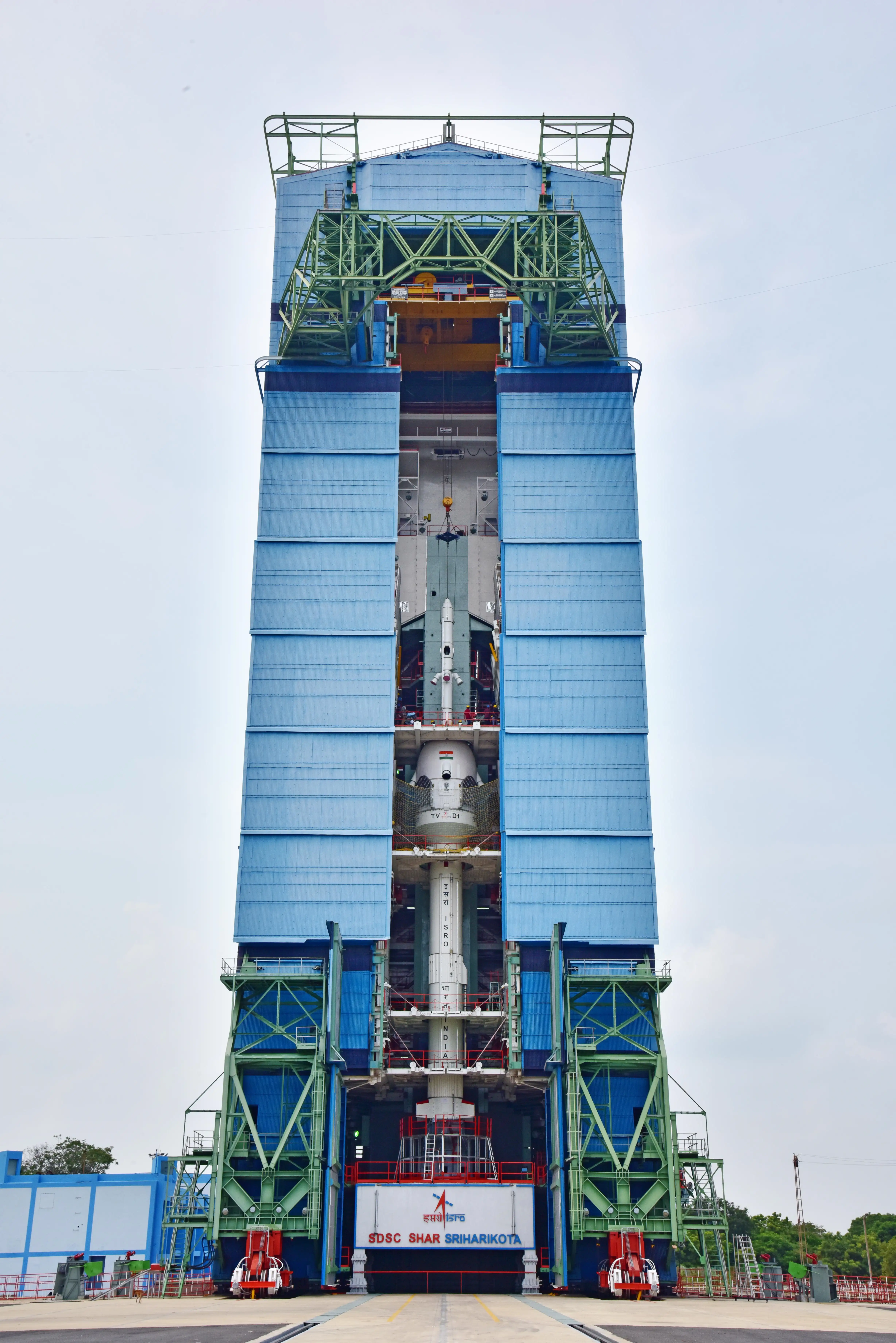
SOLVE: creating a dedicated test vehicle to learn faster
In 2026 ISRO is developing SOLVE, a suborbital vehicle derived from a PSLV strap-on motor, to enable integrated Gaganyaan parachute tests from roughly 10 to 17 kilometres altitude. 82.
The learning is not merely theoretical. Reusing mastered technology to create a flying test bed lowers the cost of learning. The demonstrator can reproduce targeted conditions without consuming a complete orbital launcher.
This institutionalises a culture in which test assets are programmes in their own right rather than mere accessories to the final vehicle.
A Mars architecture would benefit from multiplying this kind of terrestrial, orbital and lunar demonstrator to isolate risks before stacking them into a crewed mission.
The durable point of ‘SOLVE: creating a dedicated test vehicle to learn faster’ lies in transmission: This institutionalises a culture in which test assets are programmes in their own right rather than mere accessories to the final vehicle. Looking forward, A Mars architecture would benefit from multiplying this kind of terrestrial, orbital and lunar demonstrator to isolate risks before stacking them into a crewed mission.
Training astronauts: from Russian cooperation to an Indian pipeline
Initial Gaganyaan astronaut preparation included a training phase in Russia before deeper training in India. The pattern echoes the early Indian space programme: use a partner to accelerate a first generation, then progressively internalise. 83.
The technical mechanism is more instructive than heroic narrative: Training covers physiology, emergency response, vehicle systems, survival, operations, simulation and crew work. These skills require facilities, instructors and scenarios that are continuously updated.
This maturation also changes governance. An astronaut corps becomes genuinely national when instructors, physicians, simulators and mission teams can train the next generation without depending abroad for each step.
This history offers a Mars maturity test. Mars would require far broader training: heavy maintenance, autonomous medicine, geology, science operations and decision-making under communication delay.
The durable point of ‘Training astronauts: from Russian cooperation to an Indian pipeline’ lies in transmission: An astronaut corps becomes genuinely national when instructors, physicians, simulators and mission teams can train the next generation without depending abroad for each step. Looking forward, Mars would require far broader training: heavy maintenance, autonomous medicine, geology, science operations and decision-making under communication delay.
IIST: institutionalising space education rather than recruiting only after graduation
The Indian Institute of Space Science and Technology was established in 2007 in Thiruvananthapuram as a university dedicated to space science and technology, offering undergraduate, postgraduate, doctoral and post-doctoral programmes. 84.
The principle changes recruitment: propulsion, avionics, structures, physics and applications can be taught in an environment already connected to space problems and Department of Space laboratories.
The organisation changes in turn. IIST turns part of tacit transmission into explicit curricula and creates a place where academic research and programme needs can meet before recruitment.
A Mars connection exists without needing exaggeration. For Mars, the same model could train successive generations before every mission exists, a necessary condition for a programme lasting decades.
The durable point of ‘IIST: institutionalising space education rather than recruiting only after graduation’ lies in transmission: IIST turns part of tacit transmission into explicit curricula and creates a place where academic research and programme needs can meet before recruitment. Looking forward, For Mars, the same model could train successive generations before every mission exists, a necessary condition for a programme lasting decades.
IIRS: training data users as well as spacecraft builders
The Indian Institute of Remote Sensing in Dehradun trains professionals and researchers in remote sensing, geoinformatics and applications, with programmes ranging from short courses to postgraduate study. 85.
The real difficulty lies in interfaces. An observation constellation has national value only if users can correct, interpret and combine its data. Training must therefore cover geometry, radiometry, GIS, field work and decision-making.
This approach diffuses space competence beyond ISRO into administrations, universities and user sectors, broadening the base of support and innovation.
At the scale of human settlement, A Mars settlement would likewise need a school of local data for mapping, resources, weather, agriculture and safety, not only launch engineers.
The durable point of ‘IIRS: training data users as well as spacecraft builders’ lies in transmission: This approach diffuses space competence beyond ISRO into administrations, universities and user sectors, broadening the base of support and innovation. Looking forward, A Mars settlement would likewise need a school of local data for mapping, resources, weather, agriculture and safety, not only launch engineers.
Training technicians: space power does not rest on PhDs alone
ISRO launched a technical training programme with the Ministry of Skill Development and Entrepreneurship in 2022 to upgrade technicians and scientific assistants across centres and training institutes. 86.
From an engineering perspective, Reliability depends on repeatable work in assembly, wiring, machining, metrology, nondestructive inspection and maintenance. An organisation training only engineers leaves a critical part of quality outside its strategy.
The institutional effect lasts. Continuous training of technical personnel reduces dependence on a few veterans who know a machine or process by habit rather than documentation.
The Mars transfer must remain cautious. Mars will require exactly this depth of trades: repair, fabrication, inspection and maintenance must be possible without sending every component back to Earth.
The durable point of ‘Training technicians: space power does not rest on PhDs alone’ lies in transmission: Continuous training of technical personnel reduces dependence on a few veterans who know a machine or process by habit rather than documentation. Looking forward, Mars will require exactly this depth of trades: repair, fabrication, inspection and maintenance must be possible without sending every component back to Earth.
Training future programme leaders: management and leadership in 2026
In January 2026 ISRO launched new residential management programmes for junior and middle-level engineers from different centres, complementing technical skills with leadership and project-management capability. 87.
The learning is not merely theoretical. A large mission can fail through poor information flow, late decisions, weak configuration governance or competition for test assets. These problems are not solved by more equations alone.
The programme therefore formalises the transition from excellent specialist to leader able to trade mass, cost, schedule, risk and interfaces.
A crewed Mars architecture will first be a giant organisation; training systems leaders is therefore as important as training propulsion engineers or physicians.
The durable point of ‘Training future programme leaders: management and leadership in 2026’ lies in transmission: The programme therefore formalises the transition from excellent specialist to leader able to trade mass, cost, schedule, risk and interfaces. Looking forward, A crewed Mars architecture will first be a giant organisation; training systems leaders is therefore as important as training propulsion engineers or physicians.
From specialist to programme leader: building a responsibility pipeline
Space education does not end with an engineering degree. A subsystem expert eventually has to understand configuration, budgets, schedules, interfaces and people if he or she is to lead a project. ISRO’s recent management-development programmes for junior and mid-level engineers formalise part of that transition rather than leaving leadership to emerge accidentally.
The demographic problem is unavoidable: the engineers who lived through SLV, ASLV or the first PSLV campaigns cannot carry the programme forever. Successors need to be prepared before mentors depart, combining formal teaching with review participation, movement between projects and exposure to real anomalies where judgement matters more than textbook knowledge.
IN-SPACe: moving from an agency that does nearly everything to an authorised and regulated ecosystem
Reforms begun in 2020 created IN-SPACe to promote, authorise and oversee space activities by non-government entities and, under conditions, open access to certain public facilities. 88.
The technical mechanism is more instructive than heroic narrative: The change shifts part of the problem: ISRO must learn to specify interfaces, access conditions, responsibilities, safety and intellectual property for actors it does not manage hierarchically.
This maturation also changes governance. This can multiply teams capable of innovation while forcing the state to separate public mission, regulation, commerce and breakthrough R&D more clearly.
This history offers a Mars maturity test. For Mars, a sustainable architecture will probably depend on an ecosystem of suppliers and operators; experience in regulation and interfaces therefore becomes strategic.
The durable point of ‘IN-SPACe: moving from an agency that does nearly everything to an authorised and regulated ecosystem’ lies in transmission: This can multiply teams capable of innovation while forcing the state to separate public mission, regulation, commerce and breakthrough R&D more clearly. Looking forward, For Mars, a sustainable architecture will probably depend on an ecosystem of suppliers and operators; experience in regulation and interfaces therefore becomes strategic.
NSIL: transferring mature technologies instead of keeping all production inside the agency
NewSpace India Limited is tasked with commercialising services and transferring mature technologies, while reforms seek to have more launchers, satellites and services produced by industry. 89.
Technology transfer is not simply handing over drawings: it requires supplier qualifications, process documents, inspection tools, assistance on early units and acceptance criteria.
The organisation changes in turn. When industry can take over a mature family, public centres can shift more people toward demonstrators, science and future technologies.
A Mars connection exists without needing exaggeration. A viable Mars economy would require the same transition from institutional prototype to distributed production maintainable by several actors.
The durable point of ‘NSIL: transferring mature technologies instead of keeping all production inside the agency’ lies in transmission: When industry can take over a mature family, public centres can shift more people toward demonstrators, science and future technologies. Looking forward, A viable Mars economy would require the same transition from institutional prototype to distributed production maintainable by several actors.
SSLV to HAL: testing whether a complete launcher can be transferred
The 2025-26 annual report states that a technology-transfer agreement for SSLV to Hindustan Aeronautics Limited was signed in September 2025. The case goes beyond buying private components. 90.
The real difficulty lies in interfaces. Transferring a complete launcher requires moving configuration, special processes, suppliers, documentation, tooling, tests and acceptance authority. It is a test of documentary maturity for the whole chain.
If production becomes genuinely repeatable outside historic centres, ISRO proves that competence has left the sole memory of its founding teams.
At the scale of human settlement, For Mars, no settlement could depend forever on a single Earth factory or team; transferability and documentation would be conditions of resilience.
The durable point of ‘SSLV to HAL: testing whether a complete launcher can be transferred’ lies in transmission: If production becomes genuinely repeatable outside historic centres, ISRO proves that competence has left the sole memory of its founding teams. Looking forward, For Mars, no settlement could depend forever on a single Earth factory or team; transferability and documentation would be conditions of resilience.
The private sector: Skyroot, Agnikul and pluralising architectures
Reforms opened the way for companies developing engines, launchers, satellites, data and services in parallel with historic ISRO families. The pluralisation remains young but is already changing the skills landscape. 91.
From an engineering perspective, Companies can choose different architectures, development cycles and supply chains, creating comparisons that a single agency did not naturally produce.
The institutional effect lasts. The state challenge is to benefit from diversity without fragmenting safety requirements, anomaly data and scarce infrastructure.
The Mars transfer must remain cautious. A Mars architecture could benefit from multiple transport, power or communications suppliers provided standards and interfaces remain common.
The durable point of ‘The private sector: Skyroot, Agnikul and pluralising architectures’ lies in transmission: The state challenge is to benefit from diversity without fragmenting safety requirements, anomaly data and scarce infrastructure. Looking forward, A Mars architecture could benefit from multiple transport, power or communications suppliers provided standards and interfaces remain common.
Indian frugality: mass economy and heritage reuse, not accounting magic
The low cost of some Indian missions is often reduced to cultural exceptionalism. In reality it also reflects salaries, platform reuse, compact teams, launcher heritage, focused objectives and mass discipline. 92.
The learning is not merely theoretical. Reusing a known architecture reduces new design, qualification and software but also constrains the mission. Frugality therefore becomes an engineering trade between ambition and risk, not disappearance of physical cost.
The model works mainly when an organisation knows its heritage well enough to distinguish what can be reused from what must be requalified.
Mars will reward mass economy and reuse but punish cost-cutting that removes life-critical redundancy or long-duration qualification.
The durable point of ‘Indian frugality: mass economy and heritage reuse, not accounting magic’ lies in transmission: The model works mainly when an organisation knows its heritage well enough to distinguish what can be reused from what must be requalified. Looking forward, Mars will reward mass economy and reuse but punish cost-cutting that removes life-critical redundancy or long-duration qualification.
Mars Orbiter Mission: adapting heritage spacecraft to interplanetary flight
Mars Orbiter Mission relied heavily on skills and subsystems developed for earlier Indian missions while adding functions required for interplanetary travel. 93.
The technical mechanism is more instructive than heroic narrative: The adaptation requires more autonomy, long-distance communications, power management, trajectory corrections, thermal control and reliable engine restart after a long cruise.
This maturation also changes governance. The choice created a Mars school at controlled cost by pushing known heritage to a new boundary rather than redesigning everything at once.
This history offers a Mars maturity test. The logic remains relevant for future Mars demonstrators, but a heavy lander or crew would require system families far removed from this heritage.
The durable point of ‘Mars Orbiter Mission: adapting heritage spacecraft to interplanetary flight’ lies in transmission: The choice created a Mars school at controlled cost by pushing known heritage to a new boundary rather than redesigning everything at once. Looking forward, The logic remains relevant for future Mars demonstrators, but a heavy lander or crew would require system families far removed from this heritage.
MOM as a training system for an interplanetary generation
Mars Orbiter Mission should also be read as an institutional school. Its constrained architecture forced teams to solve trans-Mars injection, deep-space navigation, autonomy, power management and long-range communication with a heritage spacecraft platform and a launcher unable to inject it directly toward Mars. The sequence of Earth-orbit raises was therefore a system response to available capability, not an eccentricity.
The durable product was not only the orbiter. It was a generation of engineers who learned to plan trajectory corrections, work with light-time delay, manage a propulsion system after months of cruise and interpret telemetry at distances where immediate intervention is impossible. A future Indian Mars vehicle can be completely different and still inherit that operational memory.
Six Earth-orbit raises before departure to Mars
MOM was not injected directly toward Mars by its launcher. The mission used multiple Earth-orbit manoeuvres to progressively raise apogee before trans-Mars injection. 94.
This architecture shifts part of launch performance into spacecraft propulsion and increases the number of critical manoeuvres while allowing use of an available PSLV.
The organisation changes in turn. It illustrates an institutional strategy of optimising the whole system rather than waiting for an ideal launcher.
A Mars connection exists without needing exaggeration. For Mars, future architectures may likewise distribute energy among launcher, orbital propulsion, assembly and refuelling; the Indian precedent shows the value of system-level thinking.
The durable point of ‘Six Earth-orbit raises before departure to Mars’ lies in transmission: It illustrates an institutional strategy of optimising the whole system rather than waiting for an ideal launcher. Looking forward, For Mars, future architectures may likewise distribute energy among launcher, orbital propulsion, assembly and refuelling; the Indian precedent shows the value of system-level thinking.
MOM: onboard autonomy under communication delay
MOM documentation explicitly identifies autonomy as a technology objective because a Mars spacecraft cannot wait for an instantaneous Earth command when an anomaly occurs. 95.
The real difficulty lies in interfaces. The computer must detect some situations, protect the spacecraft, reconfigure functions and preserve a recoverable state until the next communication opportunity.
This discipline changes software, validation, parameter tables and failure scenarios: a decision previously made on the ground must be encoded and verified before launch.
At the scale of human settlement, For a Mars crew, autonomy must extend from avionics to humans, medicine and maintenance; MOM proves only the first robotic step.
The durable point of ‘MOM: onboard autonomy under communication delay’ lies in transmission: This discipline changes software, validation, parameter tables and failure scenarios: a decision previously made on the ground must be encoded and verified before launch. Looking forward, For a Mars crew, autonomy must extend from avionics to humans, medicine and maintenance; MOM proves only the first robotic step.
A mission designed for months that survives for years
Mars Orbiter Mission operated far beyond its initial nominal mission duration, for years in Mars orbit. That longevity provides experience different from merely achieving orbit insertion. 96.
From an engineering perspective, Teams learn battery ageing, thermal degradation, sensor drift, consumables management and adaptation of operations to an ageing spacecraft.
The institutional effect lasts. A long mission also transforms ground centres: shift procedures, anomaly memory, training new operators and maintaining software become as important as the first weeks.
The Mars transfer must remain cautious. Human Mars missions are measured in years and decades; robotic longevity is therefore useful but very partial experience of that duration problem.
The durable point of ‘A mission designed for months that survives for years’ lies in transmission: A long mission also transforms ground centres: shift procedures, anomaly memory, training new operators and maintaining software become as important as the first weeks. Looking forward, Human Mars missions are measured in years and decades; robotic longevity is therefore useful but very partial experience of that duration problem.
Mars after MOM: distinguishing studies, announcements and approved missions
After MOM many concepts for new Mars missions circulated. They do not all have the same budgetary, institutional or industrial status and should not be presented as firm schedules. 97.
The learning is not merely theoretical. A mission becomes genuinely committed when objectives, architecture, responsibilities, budget and development schedule begin producing traceable hardware and contracts.
This distinction protects future history from confusing a roadmap, a concept study and a vehicle actually under qualification.
To assess India’s place on Mars, MOM must be treated as demonstrated capability and later architectures according to their actual maturity level.
The durable point of ‘Mars after MOM: distinguishing studies, announcements and approved missions’ lies in transmission: This distinction protects future history from confusing a roadmap, a concept study and a vehicle actually under qualification. Looking forward, To assess India’s place on Mars, MOM must be treated as demonstrated capability and later architectures according to their actual maturity level.
Space Vision 2047: a national sequence rather than a single slogan
Space Vision 2047 includes a first Bharatiya Antariksh Station module around 2028, a complete station around 2035 and a goal of an Indian lunar landing around 2040, with NGLV, Chandrayaan-4 and Venus Orbiter among approved projects. 98.
The technical mechanism is more instructive than heroic narrative: The logic is sequential: rendezvous, human spaceflight, station, more capable launcher, sample return and lunar operations create functions that can later be combined.
This maturation also changes governance. Such a long roadmap primarily guides centres, recruitment and test facilities before every detailed mission is frozen.
This history offers a Mars maturity test. Mars is not therefore a dated human commitment in this document: lunar capabilities may become prerequisites, but a Mars architecture would remain a distinct programme.
The durable point of ‘Space Vision 2047: a national sequence rather than a single slogan’ lies in transmission: Such a long roadmap primarily guides centres, recruitment and test facilities before every detailed mission is frozen. Looking forward, Mars is not therefore a dated human commitment in this document: lunar capabilities may become prerequisites, but a Mars architecture would remain a distinct programme.
Chandrayaan-4: sample return as a new system of systems
Chandrayaan-4 is approved to develop and demonstrate technologies for returning to Earth after lunar landing and bringing samples back. 99.
Sample return adds ascent from the surface, rendezvous, transfer, containment, return and re-entry. Several vehicles must succeed in a precise order, sharply increasing interface complexity.
The organisation changes in turn. The mission directly extends SpaDeX and Chandrayaan-3 learning by turning separate demonstrations into a distributed architecture.
A Mars connection exists without needing exaggeration. Mars sample return would require the same functional families under much harsher gravity, atmosphere, delay and energy constraints; the Moon is therefore a learning ground, not an equivalent.
The durable point of ‘Chandrayaan-4: sample return as a new system of systems’ lies in transmission: The mission directly extends SpaDeX and Chandrayaan-3 learning by turning separate demonstrations into a distributed architecture. Looking forward, Mars sample return would require the same functional families under much harsher gravity, atmosphere, delay and energy constraints; the Moon is therefore a learning ground, not an equivalent.
Venus Orbiter Mission: building a second planetary school
Venus Orbiter Mission is among approved Space Vision 2047 projects and is intended to study surface, subsurface, atmosphere and solar interaction. 100.
The real difficulty lies in interfaces. Venus imposes thermal, communications, observation geometry and instrumentation conditions different from Mars. Diversifying targets prevents an organisation from confusing a local solution with universal competence.
The planetary programme can thus retain teams between Mars windows and broaden the science community without depending on one destination.
At the scale of human settlement, For future Mars ambition, this workforce continuity is as important as any one mission: a planetary school must survive between launch cycles.
The durable point of ‘Venus Orbiter Mission: building a second planetary school’ lies in transmission: The planetary programme can thus retain teams between Mars windows and broaden the science community without depending on one destination. Looking forward, For future Mars ambition, this workforce continuity is as important as any one mission: a planetary school must survive between launch cycles.
2025-2026: running several major programme families in parallel
The 2025-26 annual report places Gaganyaan, NISAR, SpaDeX, LVM3, SSLV, Chandrayaan-4, Venus Orbiter, Bharatiya Antariksh Station and new launch infrastructure side by side. Concurrency is itself a maturity indicator. 101.
From an engineering perspective, Several programmes share specialists, test facilities, budgets and suppliers. The problem is no longer only to succeed once but to prevent one urgent project from destabilising all others.
The institutional effect lasts. Capacity planning, test priority and management of scarce resources become portfolio disciplines alongside vehicle engineering.
The Mars transfer must remain cautious. A Mars architecture requiring transport, communications, power, habitat and science in parallel cannot exist without this portfolio maturity.
The durable point of ‘2025-2026: running several major programme families in parallel’ lies in transmission: Capacity planning, test priority and management of scarce resources become portfolio disciplines alongside vehicle engineering. Looking forward, A Mars architecture requiring transport, communications, power, habitat and science in parallel cannot exist without this portfolio maturity.
The new difficulty is concurrency: several technological transitions at once
ISRO in the mid-2020s is no longer climbing one ladder at a time. It has to fly LVM3, mature Gaganyaan, qualify recovery systems, develop semi-cryogenic propulsion, prepare Chandrayaan-4, Venus Orbiter Mission, NGLV and Bharatiya Antariksh Station while maintaining operational services and ongoing science missions. The 2025–26 annual report makes that widened portfolio visible. 15
The risk becomes organisational as much as technical. Rare experts, test stands and budgets are demanded by several programmes simultaneously. Maturity is therefore the ability to run generations of systems in parallel without allowing future programmes to consume the resources required to keep present systems safe and operational.
CE-20 in 2026: indigenous technology entering routine
In July 2026 ISRO performed an acceptance test of a CE-20 engine intended for LVM3-M7. The agency said the engine had already flown successfully on eight LVM3 missions and met human-rating requirements for Gaganyaan. 102.
The learning is not merely theoretical. The critical transition is therefore no longer merely succeeding with a first cryogenic engine but repeating production, refurbishment, acceptance testing and thrust-level changes on a stable family.
Cryogenics becomes an industrial infrastructure with stands, procedures and teams, allowing it to be used as a building block rather than an exceptional experiment.
Mars will likely require other propulsion regimes and different scale; the lesson is the ability to turn difficult technology into qualified routine.
The durable point of ‘CE-20 in 2026: indigenous technology entering routine’ lies in transmission: Cryogenics becomes an industrial infrastructure with stands, procedures and teams, allowing it to be used as a building block rather than an exceptional experiment. Looking forward, Mars will likely require other propulsion regimes and different scale; the lesson is the ability to turn difficult technology into qualified routine.
2026: when a cryogenic engine stops being a breakthrough and becomes production routine
In July 2026 ISRO conducted a flight-acceptance test of a CE-20 intended for a C32 stage. The agency noted that CE-20 had already powered eight consecutive LVM3 missions successfully and met human-rating qualification requirements. 8
This is the point at which “developing an engine” becomes an industrial capability. Each flight article has to be manufactured, inspected, accepted and tied to a controlled configuration. Prototype performance no longer suffices; the critical knowledge moves into repeatable processes, supplier control, deviation handling and the decision that a particular engine is fit to fly.
From Russian engines to CE-7.5: cryogenics as an autonomy story
Early GSLV versions used Russian cryogenic stages. After a long indigenous development effort, the national cryogenic stage using CE-7.5 flew successfully on GSLV-D5 in January 2014. 103.
The technical mechanism is more instructive than heroic narrative: Liquid oxygen and liquid hydrogen impose extreme temperatures, high-speed turbopumps, ignition, combustion, insulation, cleanliness and pressurisation sequences that are difficult to master together.
This maturation also changes governance. The delay ultimately becomes investment in test stands, materials, turbomachinery and people that later serves CE-20 and LVM3.
This history offers a Mars maturity test. Credible Mars autonomy would likely follow the same curve: initial dependence may be acceptable, then critical supply functions must be internalised.
The durable point of ‘From Russian engines to CE-7. 5: cryogenics as an autonomy story’ lies in transmission: The delay ultimately becomes investment in test stands, materials, turbomachinery and people that later serves CE-20 and LVM3. Looking forward, Credible Mars autonomy would likely follow the same curve: initial dependence may be acceptable, then critical supply functions must be internalised.
Industrialising quality: suppliers, configuration and evidence of conformity
As Indian industry manufactures more structures, electronics, engines and satellites, the central question shifts from who can design to who can produce two genuinely equivalent units. 104.
Industrial quality rests on material traceability, special processes, statistical control, nonconformances, waivers, supplier audits and configuration control.
The organisation changes in turn. An agency delegating more must therefore strengthen its role as technical authority; otherwise growth in actors turns diversity into uncontrolled variation.
A Mars connection exists without needing exaggeration. Mars will make this discipline vital: a locally produced component will need to be verifiable without the full Earth certification infrastructure.
The durable point of ‘Industrialising quality: suppliers, configuration and evidence of conformity’ lies in transmission: An agency delegating more must therefore strengthen its role as technical authority; otherwise growth in actors turns diversity into uncontrolled variation. Looking forward, Mars will make this discipline vital: a locally produced component will need to be verifiable without the full Earth certification infrastructure.
Quality becomes a supply-chain property, not a final inspection
As more production moves to industry, quality changes location. A component is not reliable merely because it passes one final inspection; its material batch, process history, treatments, tests and accepted deviations have to remain traceable. ISRO’s role increasingly shifts from direct fabrication toward requirements, supplier audits and acceptance of hardware produced across a broader industrial network.
This will be decisive for higher cadence and transfers such as SSLV production. A small series can survive on experts who personally remember every anomaly. Larger production requires that memory to be encoded into processes and evidence. Otherwise the attempt to scale output can destroy the reliability that made the system valuable in the first place.
Mission software: preserving infrastructure that ages with spacecraft
Long missions force ISRO to maintain control software, parameter databases, compilers, interfaces and simulation facilities long after initial development. 105.
The real difficulty lies in interfaces. An update can fix a vulnerability while breaking an old diagnostic tool; conversely, preserving obsolete environments indefinitely creates other risks.
Software memory therefore becomes an institutional responsibility involving version archives, emulation, interface documentation and training new operators.
At the scale of human settlement, A twenty-year Mars infrastructure would face exactly this problem, with far fewer opportunities for hardware replacement.
The durable point of ‘Mission software: preserving infrastructure that ages with spacecraft’ lies in transmission: Software memory therefore becomes an institutional responsibility involving version archives, emulation, interface documentation and training new operators. Looking forward, A twenty-year Mars infrastructure would face exactly this problem, with far fewer opportunities for hardware replacement.
Environmental qualification: vibration, acoustics, thermal vacuum and margins
Growth of India’s programme has been accompanied by mechanical, acoustic, thermal and vacuum qualification capabilities across centres and suppliers. They allow systems to be tested before the space environment performs the experiment at maximum cost. 106.
From an engineering perspective, The challenge is not to reproduce flight exactly but to construct conservative envelopes, qualification factors and representative configurations without introducing artificial damage.
The institutional effect lasts. Each campaign enriches correlations among model, ground test and flight, progressively improving criteria for the next generation.
The Mars transfer must remain cautious. Mars would add dust, surface cycles, low pressure, radiation and long duration; India possesses qualification culture but not complete evidence for those human environments.
The durable point of ‘Environmental qualification: vibration, acoustics, thermal vacuum and margins’ lies in transmission: Each campaign enriches correlations among model, ground test and flight, progressively improving criteria for the next generation. Looking forward, Mars would add dust, surface cycles, low pressure, radiation and long duration; India possesses qualification culture but not complete evidence for those human environments.
Maritime recovery: human spaceflight extends beyond the agency
Gaganyaan requires maritime preparation, capsule recovery, coordination with naval forces, medicine and crew transport after splashdown. The mission therefore continues after atmospheric entry ends. 107.
The learning is not merely theoretical. Recovery must account for localisation, flotation, weather, crew access, residual hazards and medical delay. These functions are tested with other national institutions.
The space ecosystem thus expands to organisations that build no spacecraft but become essential to human-flight safety.
Mars would require a still more radical extension into health, rescue, logistics and habitat: a human mission cannot be confined to a space agency alone.
The durable point of ‘Maritime recovery: human spaceflight extends beyond the agency’ lies in transmission: The space ecosystem thus expands to organisations that build no spacecraft but become essential to human-flight safety. Looking forward, Mars would require a still more radical extension into health, rescue, logistics and habitat: a human mission cannot be confined to a space agency alone.
Science archives: the mission continues after the spacecraft ends
Data from Chandrayaan, AstroSat, MOM and other missions gain a second life when calibrated, documented and made reusable by teams that did not design the instrument. 108.
The technical mechanism is more instructive than heroic narrative: A useful archive preserves metadata, geometry, calibration versions, quality and instrument context. Without that, a digital file can survive while its scientific meaning disappears.
This maturation also changes governance. Building archives therefore turns each mission into cumulative scientific capital and forces teams to treat documentation as a mission product.
This history offers a Mars maturity test. For Mars, where the same sites may be compared over decades, metrological continuity of archives will be essential to detect real environmental change.
The durable point of ‘Science archives: the mission continues after the spacecraft ends’ lies in transmission: Building archives therefore turns each mission into cumulative scientific capital and forces teams to treat documentation as a mission product. Looking forward, For Mars, where the same sites may be compared over decades, metrological continuity of archives will be essential to detect real environmental change.
Cooperating without losing learning: USSR, United States, Europe, France and Japan
Indian history combines Soviet launch of Aryabhata, American ATS-6 for SITE, Ariane for APPLE, international instruments on Chandrayaan and recent partnerships such as NISAR or LUPEX. 109.
The value of a partnership depends on the boundary chosen: buying a service can accelerate a programme, but enough responsibility must be retained to learn interfaces, operations and performance criteria.
The organisation changes in turn. India has often used cooperation as a temporary step while progressively developing national capability in domains that became strategic.
A Mars connection exists without needing exaggeration. Mars will likely make cooperation unavoidable; the key question will therefore be less autarky than mastery of dependencies whose failure would endanger the crew.
The durable point of ‘Cooperating without losing learning: USSR, United States, Europe, France and Japan’ lies in transmission: India has often used cooperation as a temporary step while progressively developing national capability in domains that became strategic. Looking forward, Mars will likely make cooperation unavoidable; the key question will therefore be less autarky than mastery of dependencies whose failure would endanger the crew.
Space Commission and Department of Space: separating strategic direction and execution
Since 1972 ISRO has operated under the Department of Space with a Space Commission. This architecture gives the programme a governance chain distinct from the technical direction of centres alone. 110.
The real difficulty lies in interfaces. Such an organisation must arbitrate priorities, budgets, applications programmes, science, launchers and industrial policy while each centre naturally defends its own capabilities.
Governance thus becomes a portfolio-coherence and policy-continuity mechanism when leaders or projects change.
At the scale of human settlement, Mars over several decades would require comparable authority able to preserve the overall architecture against a succession of isolated decisions.
The durable point of ‘Space Commission and Department of Space: separating strategic direction and execution’ lies in transmission: Governance thus becomes a portfolio-coherence and policy-continuity mechanism when leaders or projects change. Looking forward, Mars over several decades would require comparable authority able to preserve the overall architecture against a succession of isolated decisions.
Budget and portfolio: constraint as a prioritisation instrument
India’s programme developed under tighter budget constraints than those of the largest historic space powers. That constraint structures choices of sequencing, reuse and mission size. 111.
From an engineering perspective, The positive effect is prioritisation discipline; the potential negative effect is postponing infrastructure, tests or redundancy whose absence becomes visible only after an anomaly.
The institutional effect lasts. Maturity therefore consists in knowing where to save without shifting hidden risk into a phase where correction costs more.
The Mars transfer must remain cautious. Mars will make this distinction extreme: every kilogram is expensive, but saving on life support, maintenance or reserves can become existential.
The durable point of ‘Budget and portfolio: constraint as a prioritisation instrument’ lies in transmission: Maturity therefore consists in knowing where to save without shifting hidden risk into a phase where correction costs more. Looking forward, Mars will make this distinction extreme: every kilogram is expensive, but saving on life support, maintenance or reserves can become existential.
Conclusion: from engineers trained elsewhere to the ability to train, industrialise and renew
ISRO history can be read as a transition from a small community using cooperation and foreign training to an organisation able to train its own engineers, technicians, scientists, astronauts and future programme leaders. 112.
The learning is not merely theoretical. The rise does not come from one moment: it accumulates centres, tests, launchers, satellites, applications, data, universities, suppliers and procedures until several programmes can advance in parallel.
This renewal capability is probably the best indicator of durable space power: an institution survives when the next generation knows why choices were made and can improve them.
For Mars, India now has a much broader base in robotics, propulsion, navigation, rendezvous and training than at the time of MOM, but it has not yet demonstrated human interplanetary transport, heavy Mars landing, multi-year life support or autonomous surface habitat.
The durable point of ‘Conclusion: from engineers trained elsewhere to the ability to train, industrialise and renew’ lies in transmission: This renewal capability is probably the best indicator of durable space power: an institution survives when the next generation knows why choices were made and can improve them. Looking forward, For Mars, India now has a much broader base in robotics, propulsion, navigation, rendezvous and training than at the time of MOM, but it has not yet demonstrated human interplanetary transport, heavy Mars landing, multi-year life support or autonomous surface habitat.
SLV-3 in 1979: the failure before India’s first national orbital success
The first experimental SLV-3 flight in 1979 failed to reach orbit, while the next flight in July 1980 placed Rohini into orbit. The proximity of failure and success became a formative Indian learning case. 113.
The technical mechanism is more instructive than heroic narrative: A useful investigation must reconstruct the event chain, separate primary cause from consequences and convert the anomaly into verifiable modifications before the next flight.
This maturation also changes governance. The programme thus learns that an organisation is judged not only by absence of failure but by its ability to explain, correct and resume without losing memory.
This history offers a Mars maturity test. For Mars, an architecture unable to learn from an anomaly without years of Earth-based reconstruction would remain fragile despite good nominal results.
The durable point of ‘SLV-3 in 1979: the failure before India’s first national orbital success’ lies in transmission: The programme thus learns that an organisation is judged not only by absence of failure but by its ability to explain, correct and resume without losing memory. Looking forward, For Mars, an architecture unable to learn from an anomaly without years of Earth-based reconstruction would remain fragile despite good nominal results.
ASLV 1987-1988: two failures before stabilisation
The first two ASLV flights in 1987 and 1988 were unsuccessful, before successes in 1992 and 1994. The series shows that increased complexity is not automatically mastered through SLV-3 heritage. 114.
Adding stages, strap-ons and guidance requirements changes aerodynamics, separation sequences and stability. Each known function can become new when its interface changes.
The organisation changes in turn. ASLV became an intermediate school whose heritage was reinvested in PSLV even though the vehicle itself did not become India’s main launcher.
A Mars connection exists without needing exaggeration. Mars will demand the same realism: a module that worked alone can behave differently once integrated into a larger distributed architecture.
The durable point of ‘ASLV 1987-1988: two failures before stabilisation’ lies in transmission: ASLV became an intermediate school whose heritage was reinvested in PSLV even though the vehicle itself did not become India’s main launcher. Looking forward, Mars will demand the same realism: a module that worked alone can behave differently once integrated into a larger distributed architecture.
PSLV-D1 in 1993: failed debut, future reputation for reliability
The first PSLV, D1, launched on 20 September 1993, failed to place IRS-1E into orbit. PSLV’s later reliability reputation therefore grew after an unsuccessful debut rather than instant perfection. 115.
The real difficulty lies in interfaces. Correction requires more robust navigation, guidance, dynamics and validation, then above all repeated flights to turn a one-off fix into statistical confidence.
The long PSLV series then creates integration teams, suppliers and campaign procedures far more stable than those of a rarely flown launcher.
At the scale of human settlement, Future Mars logistics will need enough cadence to turn transport into a service rather than a spectacular demonstration.
The durable point of ‘PSLV-D1 in 1993: failed debut, future reputation for reliability’ lies in transmission: The long PSLV series then creates integration teams, suppliers and campaign procedures far more stable than those of a rarely flown launcher. Looking forward, Future Mars logistics will need enough cadence to turn transport into a service rather than a spectacular demonstration.
PSLV: cadence as a training instrument
Across decades PSLV has served Earth observation, science, navigation, interplanetary and commercial missions. This diversity gives repeated campaigns to several engineering generations. 116.
From an engineering perspective, Each campaign repeats the same fundamentals under different payload, inclination and constraint sets, enabling learning without restarting from zero.
The institutional effect lasts. Cadence creates a school where junior staff can observe several complete cycles before becoming responsible, something far harder on a one-off mission every decade.
The Mars transfer must remain cautious. Mars will require a logistics chain regular enough that launch and operations competence does not rest on a single generation.
The durable point of ‘PSLV: cadence as a training instrument’ lies in transmission: Cadence creates a school where junior staff can observe several complete cycles before becoming responsible, something far harder on a one-off mission every decade. Looking forward, Mars will require a logistics chain regular enough that launch and operations competence does not rest on a single generation.
GSLV-F02 in 2006: growth toward GTO reveals new vulnerabilities
GSLV-F02, launched in July 2006 with INSAT-4C, was unsuccessful. The geosynchronous programme showed that a family derived from PSLV remained a new system when propulsion, mass and configuration changed. 117.
The learning is not merely theoretical. Analysis must cover liquid strap-ons, first stage, structures and sequences without assuming inherited subsystems retain their margins in a new architecture.
GSLV failures later feed a more demanding review culture around heavy launchers and cryogenic stages.
The transition to heavy Mars transport will reproduce this scale problem: increasing mass can change the dominant causes of risk.
The durable point of ‘GSLV-F02 in 2006: growth toward GTO reveals new vulnerabilities’ lies in transmission: GSLV failures later feed a more demanding review culture around heavy launchers and cryogenic stages. Looking forward, The transition to heavy Mars transport will reproduce this scale problem: increasing mass can change the dominant causes of risk.
GSLV-D3 in 2010: first indigenous cryogenic flight, first in-flight failure
GSLV-D3 in April 2010 carried an indigenous cryogenic upper stage for the first time, but the flight test was unsuccessful. The technology therefore did not move directly from the test stand to operations. 118.
The technical mechanism is more instructive than heroic narrative: Flight can reveal interactions among turbomachinery, feed system, combustion, sequencing and dynamics that partial tests do not always reproduce completely.
This maturation also changes governance. The institutional response was to continue rather than abandon the line, strengthening tests and design until D5 succeeded in 2014.
This history offers a Mars maturity test. For Mars, critical propulsion or life-support technologies will need similar cycles of demonstration and correction before becoming human transport.
The durable point of ‘GSLV-D3 in 2010: first indigenous cryogenic flight, first in-flight failure’ lies in transmission: The institutional response was to continue rather than abandon the line, strengthening tests and design until D5 succeeded in 2014. Looking forward, For Mars, critical propulsion or life-support technologies will need similar cycles of demonstration and correction before becoming human transport.
GSLV-D5 in 2014: turning a technology failure into an operational line
The successful GSLV-D5 flight on 5 January 2014 marked induction of the indigenous cryogenic stage after D3’s setback. The result matters most because it opened a series of subsequent flights. 119.
Cryogenic propulsion qualification requires ground-test parameters to predict flight behaviour and subsequent production to reproduce the qualified configuration.
The organisation changes in turn. The success thus becomes a change in industrial infrastructure rather than merely symbolic redemption.
A Mars connection exists without needing exaggeration. A Mars architecture will need technologies that cross exactly this threshold: from difficult prototype to repeatable unit with predictable performance.
The durable point of ‘GSLV-D5 in 2014: turning a technology failure into an operational line’ lies in transmission: The success thus becomes a change in industrial infrastructure rather than merely symbolic redemption. Looking forward, A Mars architecture will need technologies that cross exactly this threshold: from difficult prototype to repeatable unit with predictable performance.
GSLV-F10: a public anatomy of cryogenic failure analysis
The August 2021 GSLV-F10/EOS-03 failure provides a modern view of that process. The first stage, strap-ons and second stage performed normally before the onboard computer aborted the mission following anomalous cryogenic-upper-stage behaviour. A national Failure Analysis Committee reviewed flight telemetry together with stage preparation, countdown data, simulations and confirmatory ground tests. 7
The committee traced the chain toward inadequate liquid-hydrogen-tank pressure and the resulting effect on fuel-booster-turbopump operation and propellant flow. What matters is the depth of reconstruction: an event hundreds of seconds after launch had to be connected to thermodynamic conditions, feed-system behaviour and tests capable of recreating the scenario. Failure analysis became systems engineering in reverse.
LVM3-X/CARE in 2014: testing heavy launch and re-entry together
The 2014 LVM3-X/CARE experimental flight combined validation of a heavy-launch configuration with a re-entry module experiment. India thus used one flight to reduce several future uncertainties. 120.
The real difficulty lies in interfaces. The test measured aerodynamics, loads and vehicle behaviour while acquiring data on thermal protection, re-entry and recovery.
This demonstrator strategy progressively connects heavy launch and human flight without requiring a first system to be operational in every function.
At the scale of human settlement, Mars would benefit from similarly separating atmospheric entry, habitat, propulsion and recovery before final integration.
The durable point of ‘LVM3-X/CARE in 2014: testing heavy launch and re-entry together’ lies in transmission: This demonstrator strategy progressively connects heavy launch and human flight without requiring a first system to be operational in every function. Looking forward, Mars would benefit from similarly separating atmospheric entry, habitat, propulsion and recovery before final integration.
S200: mastering some of India’s most powerful solid motors
LVM3 uses two very large S200 boosters, each an industrial system where propellant formulation, casting, casing and defect control are decisive. 121.
From an engineering perspective, A solid motor cannot be inspected while operating before flight: manufacturing-process quality and nondestructive testing therefore become essential reliability evidence.
The institutional effect lasts. S200 repetition creates facilities and suppliers able to produce large propellant masses with consistent tolerances.
The Mars transfer must remain cautious. Mars may not use this motor, but mastery of large energetic processes and their quality is directly relevant to heavy logistics.
The durable point of ‘S200: mastering some of India’s most powerful solid motors’ lies in transmission: S200 repetition creates facilities and suppliers able to produce large propellant masses with consistent tolerances. Looking forward, Mars may not use this motor, but mastery of large energetic processes and their quality is directly relevant to heavy logistics.
Vikas: international cooperation followed by appropriation of a workhorse propulsion line
The Vikas engine emerged from Franco-Indian technology cooperation around the Viking family and became a widely produced engine used on PSLV, GSLV and LVM3. 122.
The learning is not merely theoretical. Appropriation does not stop at initial transfer: materials, manufacturing, turbopumps, testing, quality control and thrust evolution must be sustained nationally for decades.
Vikas illustrates a trajectory in which foreign-origin technology becomes Indian industrial heritage through repeated operation and internal improvement.
For Mars, the foreign origin of a building block matters less than the ability to maintain, produce and evolve it when the original supplier is unavailable.
The durable point of ‘Vikas: international cooperation followed by appropriation of a workhorse propulsion line’ lies in transmission: Vikas illustrates a trajectory in which foreign-origin technology becomes Indian industrial heritage through repeated operation and internal improvement. Looking forward, For Mars, the foreign origin of a building block matters less than the ability to maintain, produce and evolve it when the original supplier is unavailable.
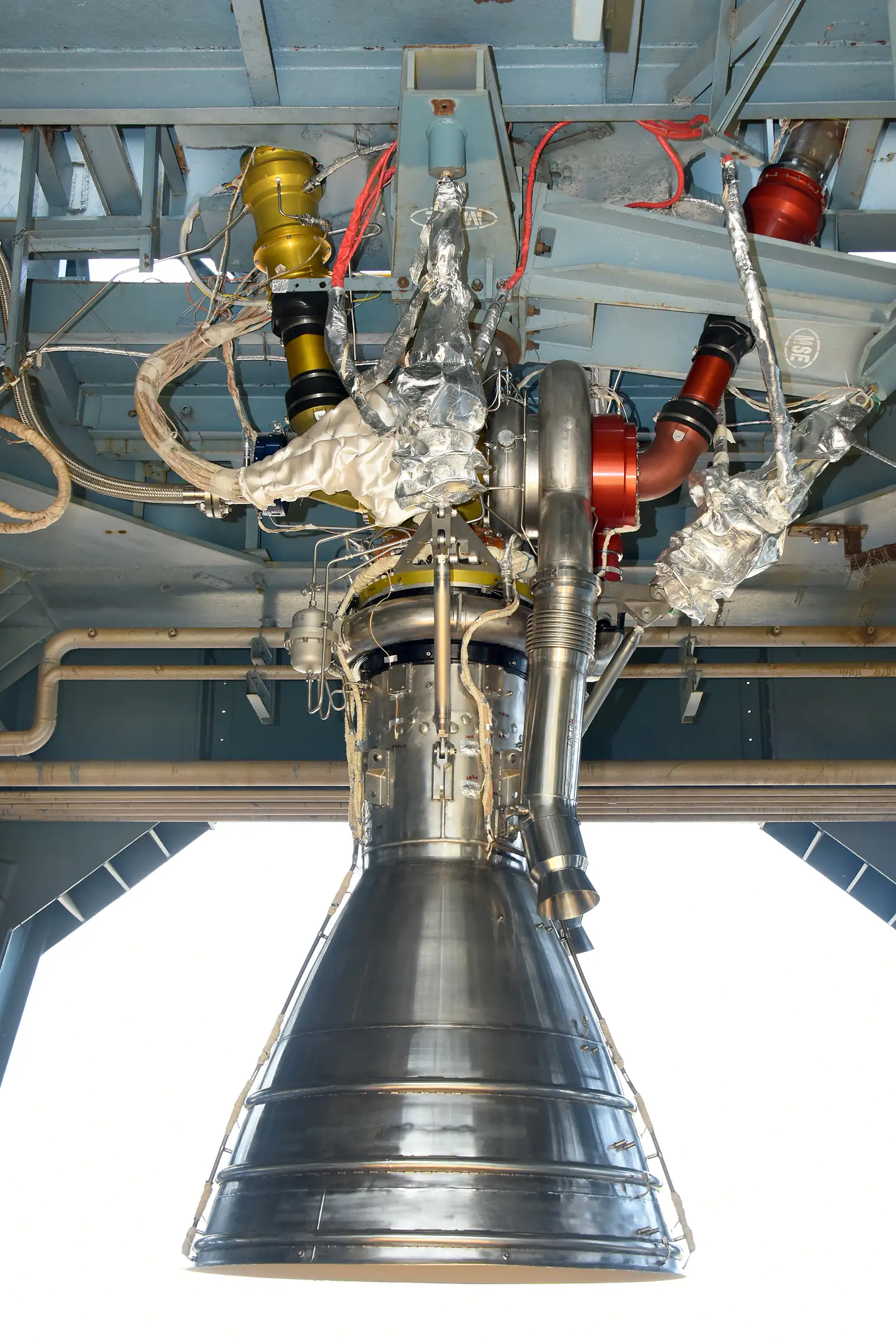
RLV-LEX: learning autonomous landing before orbital reuse
RLV-LEX experiments release the winged Pushpak vehicle from a helicopter so it can correct its trajectory and autonomously land on a runway under challenging release conditions. 123.
The technical mechanism is more instructive than heroic narrative: The demonstration isolates navigation, guidance, control, landing gear and high-speed rollout without immediately funding a complete orbital return.
This maturation also changes governance. Reuse becomes a programme of accumulated sub-capabilities rather than an economic slogan; each experiment closes part of the risk.
This history offers a Mars maturity test. For Mars, the same decomposition method will be necessary for EDL, surface vehicles and any locally reusable systems.
The durable point of ‘RLV-LEX: learning autonomous landing before orbital reuse’ lies in transmission: Reuse becomes a programme of accumulated sub-capabilities rather than an economic slogan; each experiment closes part of the risk. Looking forward, For Mars, the same decomposition method will be necessary for EDL, surface vehicles and any locally reusable systems.
Scramjet and air-breathing propulsion: exploring without confusing demonstrator and service
ISRO has conducted air-breathing and scramjet propulsion demonstrations as possible building blocks for future space transportation systems. These tests remain distinct from an operational launcher. 124.
The challenge combines supersonic combustion, inlet behaviour, thermal conditions, stability and aerodynamic integration within a narrow operating window.
The organisation changes in turn. The programme thus maintains a high-risk research line alongside operational launchers, avoiding dependence of routine missions on immature technology.
A Mars connection exists without needing exaggeration. Mars lacks an atmosphere suited to the same concept, but governance of immature technologies remains relevant to any future propulsion breakthrough.
The durable point of ‘Scramjet and air-breathing propulsion: exploring without confusing demonstrator and service’ lies in transmission: The programme thus maintains a high-risk research line alongside operational launchers, avoiding dependence of routine missions on immature technology. Looking forward, Mars lacks an atmosphere suited to the same concept, but governance of immature technologies remains relevant to any future propulsion breakthrough.
Semi-cryogenics: the SC120 future is being built on test stands first
On 27 June 2026 ISRO reported another test of the semi-cryogenic engine Power Head Test Article at roughly 175 tonnes of thrust, about 88 percent of the nominal target. The programme is developing the LOX/isrosene SE2000 engine and the future SC120 stage intended to replace LVM3’s current L110 liquid stage. 9
The status label matters. In 2026 semi-cryogenic propulsion is not yet an operational launch capability; it is a development programme accumulating subsystem evidence. Keeping test-stand technology distinct from a qualified stage and a flown system allows the book to describe genuine progress without turning development milestones into achievements that have not yet occurred.
POEM: turning a PSLV stage into an experimental platform
The PSLV Orbital Experimental Module reuses the upper stage after primary injection as a platform for additional payloads and experiments. 125.
The real difficulty lies in interfaces. The stage must become electronically habitable after its propulsion mission: power, stabilisation, telemetry, safety and operations create a second life for the hardware.
POEM opens lower-cost access for universities, startups and demonstrators without requiring a complete dedicated satellite.
At the scale of human settlement, A Mars architecture would likewise benefit from secondary platforms able to turn transport elements into relays, laboratories or test beds.
The durable point of ‘POEM: turning a PSLV stage into an experimental platform’ lies in transmission: POEM opens lower-cost access for universities, startups and demonstrators without requiring a complete dedicated satellite. Looking forward, A Mars architecture would likewise benefit from secondary platforms able to turn transport elements into relays, laboratories or test beds.
Kulasekarapattinam: a second geography for small launchers
The new Kulasekarapattinam site in Tamil Nadu is being developed for small launchers, providing launch geometry better suited to some missions than Sriharikota. 126.
From an engineering perspective, A launch site is a complete system: safety zones, telemetry, weather, roads, storage, integration and allowed trajectories must be designed together.
The institutional effect lasts. Diversification also reduces dependence on one base and creates a new operations school for light commercial vehicles.
The Mars transfer must remain cautious. Mars would similarly require multiple sites and distributed infrastructure so one geographic failure does not halt all logistics.
The durable point of ‘Kulasekarapattinam: a second geography for small launchers’ lies in transmission: Diversification also reduces dependence on one base and creates a new operations school for light commercial vehicles. Looking forward, Mars would similarly require multiple sites and distributed infrastructure so one geographic failure does not halt all logistics.
Sriharikota third launch pad: preparing NGLV and future cadence
The 2025-26 annual report describes preparations for a third launch pad at Sriharikota intended in part for the future NGLV and human-spaceflight needs. 127.
The learning is not merely theoretical. Increasing capacity is not copying a launch pad: processes, safety, instrumentation, acoustic suppression, fluids, power and circulation must fit new vehicles.
The investment anticipates a portfolio in which a space station, heavy launchers and exploration missions can no longer share the same two facilities indefinitely.
Mars requires exactly this capacity planning long before the first crew, otherwise logistics cadence will be constrained by Earth ground infrastructure.
The durable point of ‘Sriharikota third launch pad: preparing NGLV and future cadence’ lies in transmission: The investment anticipates a portfolio in which a space station, heavy launchers and exploration missions can no longer share the same two facilities indefinitely. Looking forward, Mars requires exactly this capacity planning long before the first crew, otherwise logistics cadence will be constrained by Earth ground infrastructure.
Cartosat: from space imagery to high-resolution mapping service
The Cartosat family deepens remote sensing toward finer mapping useful for planning, infrastructure and other civil or strategic uses. 128.
The technical mechanism is more instructive than heroic narrative: Performance depends as much on stability, optics, calibration and geometric processing as on sensor pixel count.
This maturation also changes governance. Repeating a family creates data and user chains able to absorb new generations without rebuilding the whole service.
This history offers a Mars maturity test. On Mars, high-resolution mapping and digital terrain models will be essential for routes, landing sites and resources.
The durable point of ‘Cartosat: from space imagery to high-resolution mapping service’ lies in transmission: Repeating a family creates data and user chains able to absorb new generations without rebuilding the whole service. Looking forward, On Mars, high-resolution mapping and digital terrain models will be essential for routes, landing sites and resources.
Oceansat: turning a spacecraft into environmental measurement infrastructure
Oceansat develops ocean and atmospheric observation through several mission generations. Value comes from continuity of the series as much as from each spacecraft. 129.
Comparing years requires coherent calibration, controlled sensor replacement and understanding biases among generations.
The organisation changes in turn. Teams learn to manage the transition between science mission and recurring environmental service.
A Mars connection exists without needing exaggeration. A Mars presence will need long series on dust, water, temperature and atmosphere; metrological continuity will be as critical as the initial sensor.
The durable point of ‘Oceansat: turning a spacecraft into environmental measurement infrastructure’ lies in transmission: Teams learn to manage the transition between science mission and recurring environmental service. Looking forward, A Mars presence will need long series on dust, water, temperature and atmosphere; metrological continuity will be as critical as the initial sensor.
RISAT: mastering radar imaging and its distinct constraints
RISAT satellites add an observation capability independent of sunlight and more robust against cloud cover. 130.
The real difficulty lies in interfaces. Radar imposes antennas, power, radio frequency, signal processing and calibration very different from optical imagery.
Developing multiple sensor families prevents one observation technology becoming a single point of failure or blindness.
At the scale of human settlement, On Mars, orbital and surface radar can complement optical systems for subsurface structure, ice and navigation in some dusty environments.
The durable point of ‘RISAT: mastering radar imaging and its distinct constraints’ lies in transmission: Developing multiple sensor families prevents one observation technology becoming a single point of failure or blindness. Looking forward, On Mars, orbital and surface radar can complement optical systems for subsurface structure, ice and navigation in some dusty environments.
INSAT-3D and meteorology: operating a spacecraft as a permanent service
INSAT meteorological generations provide imagery, sounding and data used by national services rather than a one-off science campaign. 131.
From an engineering perspective, A permanent service requires availability, ground redundancy, rapid distribution, calibration and user procedures stable enough to influence daily decisions.
The institutional effect lasts. ISRO thus learns to act as an infrastructure operator rather than merely a mission builder.
The Mars transfer must remain cautious. A Mars settlement will need a true space-and-surface weather service used for EVAs, aviation, power and dust management.
The durable point of ‘INSAT-3D and meteorology: operating a spacecraft as a permanent service’ lies in transmission: ISRO thus learns to act as an infrastructure operator rather than merely a mission builder. Looking forward, A Mars settlement will need a true space-and-surface weather service used for EVAs, aviation, power and dust management.
EDUSAT: specialising a satellite for education
EDUSAT, launched in 2004, was designed specifically for educational services and illustrates the Indian doctrine of adapting space infrastructure to an identified social need. 132.
The learning is not merely theoretical. Success depends on terminals, content production and user organisation as much as on the spacecraft in orbit.
This approach strengthens the link between space budget and national benefit, contributing to political stability of the programme.
Mars will need permanent educational infrastructure to train new operators and transmit skills within an isolated population.
The durable point of ‘EDUSAT: specialising a satellite for education’ lies in transmission: This approach strengthens the link between space budget and national benefit, contributing to political stability of the programme. Looking forward, Mars will need permanent educational infrastructure to train new operators and transmit skills within an isolated population.
Tele-education and telemedicine: space technology as a human network
Indian tele-education and telemedicine applications use satellite communications to connect remote institutions with specialised resources. 133.
The technical mechanism is more instructive than heroic narrative: The challenge becomes quality of service, terminal design, local training, protocols and clinical or educational responsibility rather than transponder capacity alone.
This maturation also changes governance. These programmes accustom the space ecosystem to measuring success by a human function sustained over time.
This history offers a Mars maturity test. Mars will push this logic to the extreme: telemedicine under delay will require much more local autonomy, but network and training culture remains relevant.
The durable point of ‘Tele-education and telemedicine: space technology as a human network’ lies in transmission: These programmes accustom the space ecosystem to measuring success by a human function sustained over time. Looking forward, Mars will push this logic to the extreme: telemedicine under delay will require much more local autonomy, but network and training culture remains relevant.
Disaster management: integrating space into emergency decisions
Indian Earth observation, communications and mapping are used to support disaster response and crisis planning. 134.
Value comes from rapid processing, geolocation and delivery to authorities that must act before perfect analysis is available.
The organisation changes in turn. The agency learns to work with users whose timelines and priorities differ from classical science.
A Mars connection exists without needing exaggeration. On Mars, fire, leak, dust storm or power loss will require the same short chain from sensor to interpretation to operational decision.
The durable point of ‘Disaster management: integrating space into emergency decisions’ lies in transmission: The agency learns to work with users whose timelines and priorities differ from classical science. Looking forward, On Mars, fire, leak, dust storm or power loss will require the same short chain from sensor to interpretation to operational decision.
Chandrayaan-1: lunar water and science as an outcome of cooperation
Chandrayaan-1 carried several Indian and international instruments and contributed observations strengthening evidence for water or hydroxyl on the Moon. 135.
The real difficulty lies in interfaces. A cooperative mission must guarantee pointing, thermal conditions, data interfaces and calibration for instruments developed under different institutional standards.
The science success increased India’s credibility as a partner and showed mission value exceeds ownership of individual instruments.
At the scale of human settlement, Mars can benefit from the same logic: a national architecture can remain sovereign while carrying high-level international science.
The durable point of ‘Chandrayaan-1: lunar water and science as an outcome of cooperation’ lies in transmission: The science success increased India’s credibility as a partner and showed mission value exceeds ownership of individual instruments. Looking forward, Mars can benefit from the same logic: a national architecture can remain sovereign while carrying high-level international science.
Chandrayaan-2: preserving orbiter value after lander loss
In 2019 Vikram did not complete its landing, while the Chandrayaan-2 orbiter remained operational and continued science. The mission must therefore be analysed as a system with separable outcomes. 136.
From an engineering perspective, This distinction allows successful subsystems to keep delivering while terminal descent is investigated instead of classifying the whole programme as a single failure.
The institutional effect lasts. Teams retain orbiter, data and operations experience, then focus Chandrayaan-3 on landing functions that need strengthening.
The Mars transfer must remain cautious. A distributed Mars architecture should similarly avoid one local failure cancelling every remaining system function.
The durable point of ‘Chandrayaan-2: preserving orbiter value after lander loss’ lies in transmission: Teams retain orbiter, data and operations experience, then focus Chandrayaan-3 on landing functions that need strengthening. Looking forward, A distributed Mars architecture should similarly avoid one local failure cancelling every remaining system function.
Chandrayaan-3: previous failure becomes requirements, tests and margins
After Chandrayaan-2, Chandrayaan-3 strengthened landing logic, tests and reviews, with broad involvement from internal experts, ISRO veterans, universities and science organisations. 137.
The learning is not merely theoretical. Learning becomes visible when an anomaly is converted into test scenarios, decision criteria and design margins rather than remaining in an investigation report.
The 2023 mission also proves the value of intergenerational memory in which former leaders return to challenge active teams.
Mars will require the same ability to carry lander lessons into the next generation because widely spaced launch windows slow learning.
The durable point of ‘Chandrayaan-3: previous failure becomes requirements, tests and margins’ lies in transmission: The 2023 mission also proves the value of intergenerational memory in which former leaders return to challenge active teams. Looking forward, Mars will require the same ability to carry lander lessons into the next generation because widely spaced launch windows slow learning.
More than one hundred women on Chandrayaan-3: moving beyond a few isolated figures
ISRO states that more than one hundred women played significant direct roles in Chandrayaan-3 design, realisation, testing and execution, including configuration, integration, ground segment, navigation and sensors. 138.
The technical mechanism is more instructive than heroic narrative: The rise therefore cannot be measured only through a few emblematic biographies: it requires women to be present across multiple technical trades and chain responsibilities.
This maturation also changes governance. A broader talent pool reduces dependence on a narrow social group and increases possible paths toward expertise and leadership.
This history offers a Mars maturity test. A Mars settlement could not afford to waste half its technical potential; diversity and transmission would be survival constraints as much as questions of fairness.
The durable point of ‘More than one hundred women on Chandrayaan-3: moving beyond a few isolated figures’ lies in transmission: A broader talent pool reduces dependence on a narrow social group and increases possible paths toward expertise and leadership. Looking forward, A Mars settlement could not afford to waste half its technical potential; diversity and transmission would be survival constraints as much as questions of fairness.
Ritu Karidhal and the generation of interplanetary women engineers
Indian lunar and Mars missions made engineers such as Ritu Karidhal and other navigation, operations and systems leaders visible, but their importance lies above all in the much larger teams behind those names. 139.
Interplanetary roles combine flight dynamics, software, operations and system understanding; they are built across multiple missions rather than through one-off appointment.
The organisation changes in turn. Public visibility can encourage recruitment and retention, but the institution must above all ensure paths to responsibility are repeatable for the next generation.
A Mars connection exists without needing exaggeration. For Mars, the issue is not one heroine but a durable corps of women engineers able to design, operate and lead critical systems.
The durable point of ‘Ritu Karidhal and the generation of interplanetary women engineers’ lies in transmission: Public visibility can encourage recruitment and retention, but the institution must above all ensure paths to responsibility are repeatable for the next generation. Looking forward, For Mars, the issue is not one heroine but a durable corps of women engineers able to design, operate and lead critical systems.
Women in navigation and sensors: distributed competence behind the landing
ISRO’s Chandrayaan-3 account cites women in leading roles on navigation, guidance and control simulations and critical sensors such as laser altimeter, laser Doppler velocimeter and horizontal-velocity camera. 140.
The real difficulty lies in interfaces. Safe landing requires fusing several measurements and accepting that a sensor may be biased or unavailable; simulations must test this range of cases before flight.
Distributing technical responsibility across more profiles shows Indian training now produces specialists in niches that did not exist in early Thumba days.
At the scale of human settlement, Mars will impose much harder terminal navigation with atmosphere, dust, terrain and greater mass; this sensor school is useful but still preliminary.
The durable point of ‘Women in navigation and sensors: distributed competence behind the landing’ lies in transmission: Distributing technical responsibility across more profiles shows Indian training now produces specialists in niches that did not exist in early Thumba days. Looking forward, Mars will impose much harder terminal navigation with atmosphere, dust, terrain and greater mass; this sensor school is useful but still preliminary.
PRL and planetary science after the pioneers: institutionalising curiosity
The Physical Research Laboratory remains involved in planetary science, atmospheres and instrumentation long after Sarabhai’s generation, showing a founding institute can renew rather than become only a historical monument. 141.
From an engineering perspective, Scientific continuity depends on doctoral students, laboratories, data and mission links; it cannot be guaranteed by founders’ memory alone.
The institutional effect lasts. This institutionalisation feeds future science questions that justify instruments and missions, preventing exploration from becoming only a transport demonstration.
The Mars transfer must remain cautious. Mars needs the same depth: without a permanent science community the planet becomes a political destination rather than an object of cumulative knowledge.
The durable point of ‘PRL and planetary science after the pioneers: institutionalising curiosity’ lies in transmission: This institutionalisation feeds future science questions that justify instruments and missions, preventing exploration from becoming only a transport demonstration. Looking forward, Mars needs the same depth: without a permanent science community the planet becomes a political destination rather than an object of cumulative knowledge.
SSA and debris: a space power must monitor the orbital environment it uses
Growth in Indian and global satellite numbers forces ISRO to strengthen space situational awareness, conjunction assessment and debris mitigation. 142.
The learning is not merely theoretical. Preventing collision requires an orbital catalogue, measurement quality, uncertainty propagation and manoeuvre decisions without creating a greater risk than the original one.
This function becomes a transverse service protecting all missions and therefore a new invisible infrastructure of space power.
A Mars architecture with relays, depots and vehicles will also need traffic and debris management around Mars, especially if several nations operate there.
The durable point of ‘SSA and debris: a space power must monitor the orbital environment it uses’ lies in transmission: This function becomes a transverse service protecting all missions and therefore a new invisible infrastructure of space power. Looking forward, A Mars architecture with relays, depots and vehicles will also need traffic and debris management around Mars, especially if several nations operate there.
Debris and end of life: measuring agency responsibility after the mission
Modern mitigation policies require passivation, deorbiting or disposal orbit to be considered during design rather than after spacecraft exhaustion. 143.
The technical mechanism is more instructive than heroic narrative: This adds fuel, end-of-life modes, autonomy and safety criteria that may reduce available payload but protect the shared environment.
This maturation also changes governance. ISRO must therefore trade immediate performance against long-term externality like every agency that becomes a major operator.
This history offers a Mars maturity test. Mars should not reproduce uncontrolled accumulation around a planet where tracking and cleanup infrastructure will be even scarcer.
The durable point of ‘Debris and end of life: measuring agency responsibility after the mission’ lies in transmission: ISRO must therefore trade immediate performance against long-term externality like every agency that becomes a major operator. Looking forward, Mars should not reproduce uncontrolled accumulation around a planet where tracking and cleanup infrastructure will be even scarcer.
NGLV: preparing a capacity leap beyond 30 tonnes to low Earth orbit
The 2025-26 annual report links the future Next Generation Launch Vehicle to needs exceeding 30 tonnes to low Earth orbit and 10 tonnes to geostationary transfer orbit. 144.
Such a leap requires reconsidering engines, diameters, facilities, integration, transport, launch pads and cadence economics rather than merely enlarging LVM3.
The organisation changes in turn. NGLV therefore becomes as much an infrastructure programme as a new launcher, confirmed by preparation of the third launch pad.
A Mars connection exists without needing exaggeration. Human Mars missions require precisely this class of heavy transport or an assembly equivalent; while NGLV remains under development, the capability is not demonstrated.
The durable point of ‘NGLV: preparing a capacity leap beyond 30 tonnes to low Earth orbit’ lies in transmission: NGLV therefore becomes as much an infrastructure programme as a new launcher, confirmed by preparation of the third launch pad. Looking forward, Human Mars missions require precisely this class of heavy transport or an assembly equivalent; while NGLV remains under development, the capability is not demonstrated.
NGLV and Mars: more launch mass changes mission classes, not Martian physics
The Next Generation Launch Vehicle is intended to move India into a substantially higher payload class and to incorporate reusability in its design logic. For a future Mars programme, that could reduce launch counts for some architectures or place heavier elements into assembly orbits.
It does not solve Mars entry, heavy landing, surface power or long-duration life support. A more capable launcher moves the bottleneck. This distinction matters because launcher progress can make ambitious missions financially and logistically conceivable while leaving the planet-specific engineering challenges almost untouched.
Bharatiya Antariksh Station: moving from mission to crewed infrastructure
Space Vision 2047 calls for a first Bharatiya Antariksh Station module around 2028 and a complete station around 2035, turning human spaceflight into recurring infrastructure rather than isolated capsules. 145.
The real difficulty lies in interfaces. A station requires rendezvous, resupply, maintenance, life support, configuration management, crew planning and repairs over years.
It could become the school India still lacks for long-duration crewed operations, provided schedule and funding become qualified hardware.
At the scale of human settlement, Mars will require much longer autonomy without frequent resupply; BAS would therefore be an experimental prerequisite, not sufficient proof.
The durable point of ‘Bharatiya Antariksh Station: moving from mission to crewed infrastructure’ lies in transmission: It could become the school India still lacks for long-duration crewed operations, provided schedule and funding become qualified hardware. Looking forward, Mars will require much longer autonomy without frequent resupply; BAS would therefore be an experimental prerequisite, not sufficient proof.
From Thumba to Space Vision 2047: rise as construction of layers
Over six decades India moves from a sounding-rocket range using foreign vehicles to a portfolio combining navigation, observation, science, lunar orbit, landing, Mars, rendezvous, human flight and station projects. 146.
From an engineering perspective, Each new layer reuses part of the previous ones while creating a new testing and training environment; the rise therefore resembles stratification more than one sudden leap.
The institutional effect lasts. This model explains why early foreign cooperation and contemporary autonomy are not contradictory: the issue is what the organisation learned and retained between them.
The Mars transfer must remain cautious. For Mars, the next layer must still include heavy landing, multi-year life support, surface power, logistics and habitat; the book can therefore recognise progress without announcing nonexistent capability.
The durable point of ‘From Thumba to Space Vision 2047: rise as construction of layers’ lies in transmission: This model explains why early foreign cooperation and contemporary autonomy are not contradictory: the issue is what the organisation learned and retained between them. Looking forward, For Mars, the next layer must still include heavy landing, multi-year life support, surface power, logistics and habitat; the book can therefore recognise progress without announcing nonexistent capability.
Shubhanshu Shukla on the ISS: acquiring crewed experience before Gaganyaan
In 2025 Shubhanshu Shukla spent about eighteen days aboard the International Space Station on Axiom-4, becoming the second Indian in space and the first Indian to stay on the ISS. 147.
The learning is not merely theoretical. The mission provides real experience of onboard procedures, physiological adaptation, work rhythm, international communications and medical return that cannot be fully reproduced in a ground simulator.
ISRO can feed this experience into Gaganyaan protocols, training and operations before its first national crewed flight.
Mars will require far longer durations, but direct experience of an Indian crew member in microgravity creates a first national operational memory.
The durable point of ‘Shubhanshu Shukla on the ISS: acquiring crewed experience before Gaganyaan’ lies in transmission: ISRO can feed this experience into Gaganyaan protocols, training and operations before its first national crewed flight. Looking forward, Mars will require far longer durations, but direct experience of an Indian crew member in microgravity creates a first national operational memory.
Axiom-4: gaining human-spaceflight experience before owning the full national vehicle
Shubhanshu Shukla’s 2025 ISS mission gave India operational human-spaceflight experience before Gaganyaan. ISRO’s 2025–26 annual report records his 18-day stay and seven Indian microgravity experiments. 14
In method, there is a distant echo of SITE: use a foreign infrastructure to learn a service before the entire domestic architecture exists. The analogy should not be pushed too far, but the learning mechanism is real. Crew support, flight medicine, experiment preparation, communications and post-return rehabilitation can mature before India launches a crew on its own spacecraft.
Seven Indian microgravity experiments: preparing human-spaceflight science
During Axiom-4 Shubhanshu Shukla conducted seven experiments led by Indian institutions on muscle, algae, crops, cyanobacteria, tardigrades, cognition and seeds. 148.
The technical mechanism is more instructive than heroic narrative: Each experiment must be miniaturised, made safe for a crewed station, documented for a non-specialist operator and fitted to crew time, storage and sample return constraints.
This maturation also changes governance. The programme creates a network of Indian laboratories learning to turn terrestrial science questions into human-spaceflight protocols.
This history offers a Mars maturity test. For Mars, agriculture, microbiology and physiology must move from days-long experiments to life-critical systems lasting years; this phase is only the beginning of that chain.
The durable point of ‘Seven Indian microgravity experiments: preparing human-spaceflight science’ lies in transmission: The programme creates a network of Indian laboratories learning to turn terrestrial science questions into human-spaceflight protocols. Looking forward, For Mars, agriculture, microbiology and physiology must move from days-long experiments to life-critical systems lasting years; this phase is only the beginning of that chain.
Axiom-4: learning from anomalies in a foreign provider system
Before Axiom-4 launch, technical questions involving Falcon 9 and a leak signature in the Russian segment of the ISS caused multiple postponements and reviews. 149.
The Indian team owns neither launcher nor station but must understand risk well enough to participate in safety judgement concerning its astronaut.
The organisation changes in turn. This experience matters for an agency entering international human spaceflight: crew responsibility and technical ownership do not always coincide.
A Mars connection exists without needing exaggeration. A multinational Mars mission would amplify this problem: each partner must be able to audit systems it did not fully design.
The durable point of ‘Axiom-4: learning from anomalies in a foreign provider system’ lies in transmission: This experience matters for an agency entering international human spaceflight: crew responsibility and technical ownership do not always coincide. Looking forward, A multinational Mars mission would amplify this problem: each partner must be able to audit systems it did not fully design.
Post-return rehabilitation: space medicine as an operational chain
After Axiom-4 return in July 2025 Shubhanshu Shukla underwent medical assessments and rehabilitation in Houston with participation of an ISRO flight surgeon. 150.
The real difficulty lies in interfaces. Human-spaceflight medicine therefore covers preparation, in-flight monitoring, extraction, cardiovascular and musculoskeletal tests, psychology and rehabilitation.
ISRO acquires data and procedures that can inform its own flight and recovery medical criteria.
At the scale of human settlement, On Mars there will be no recovery hospital hours away; medicine must become far more autonomous and able to manage prolonged situations.
The durable point of ‘Post-return rehabilitation: space medicine as an operational chain’ lies in transmission: ISRO acquires data and procedures that can inform its own flight and recovery medical criteria. Looking forward, On Mars there will be no recovery hospital hours away; medicine must become far more autonomous and able to manage prolonged situations.
V. Narayanan: a career linking ASLV, cryogenics and agency leadership
V. Narayanan, ISRO chairman since January 2025, joined the agency in 1984, first worked on solid propulsion and became a major cryogenic specialist before leading LPSC and programme bodies. 151.
From an engineering perspective, His career shows the value of long careers in which an engineer sees several vehicle generations, participates in a difficult technology line and eventually arbitrates broader portfolios.
The institutional effect lasts. Leadership is therefore not separated from technical memory: it can be held by someone who lived through Russian dependence, failed technology acquisition and indigenous cryogenic development.
The Mars transfer must remain cautious. Mars over several decades will need leaders able to translate technical experience into institutional choices without confusing past expertise with proof of future capability.
The durable point of ‘V. Narayanan: a career linking ASLV, cryogenics and agency leadership’ lies in transmission: Leadership is therefore not separated from technical memory: it can be held by someone who lived through Russian dependence, failed technology acquisition and indigenous cryogenic development. Looking forward, Mars over several decades will need leaders able to translate technical experience into institutional choices without confusing past expertise with proof of future capability.
Failed cryogenic technology acquisition as geopolitical experience lived by engineers
V. Narayanan’s official biography recalls that ISRO had planned cryogenic technology acquisition for manufacturing in India, but geopolitical reasons prevented it, leading to indigenous development. 152.
The learning is not merely theoretical. Technology dependence then becomes a schedule, competence and sovereignty problem: the team must experimentally reconstruct what a complete transfer would have accelerated.
This history durably influences Indian culture of mastering building blocks whose external denial could immobilise an entire programme line.
For Mars, autonomy does not mean making everything alone; it means identifying dependencies whose loss would endanger mission or crew and preparing an alternative.
The durable point of ‘Failed cryogenic technology acquisition as geopolitical experience lived by engineers’ lies in transmission: This history durably influences Indian culture of mastering building blocks whose external denial could immobilise an entire programme line. Looking forward, For Mars, autonomy does not mean making everything alone; it means identifying dependencies whose loss would endanger mission or crew and preparing an alternative.
ISSAR 2025: docking, robotics and orbital sustainability converge
India’s 2025 space situational awareness report links SpaDeX, robotic demonstrations on POEM-4 and future needs for mission life extension, active debris removal and in-space assembly. 153.
The technical mechanism is more instructive than heroic narrative: These functions share relative navigation, capture, robotics, contact control and precise knowledge of the orbital environment.
This maturation also changes governance. The convergence creates a new capability family in which orbital safety and infrastructure construction use the same building blocks.
This history offers a Mars maturity test. Mars may require robotic assembly, inspection and repair around the planet; this Earth-orbit experience is relevant but far shorter-range.
The durable point of ‘ISSAR 2025: docking, robotics and orbital sustainability converge’ lies in transmission: The convergence creates a new capability family in which orbital safety and infrastructure construction use the same building blocks. Looking forward, Mars may require robotic assembly, inspection and repair around the planet; this Earth-orbit experience is relevant but far shorter-range.
The second Indian in space becomes a training multiplier
The Department of Space stated in 2025 that it sought to derive maximum benefit from Shubhanshu Shukla’s experience for training, mission protocols and microgravity research. 154.
An expensive human flight has greater value if experience is captured through debriefs, procedures, courses and simulation scenarios rather than remaining attached to one astronaut.
The organisation changes in turn. The programme thus turns individual experience into institutional capital, just as Thumba pioneers became trainers after their own learning.
A Mars connection exists without needing exaggeration. For Mars, each crew must become a school for the next because the low number of missions will make direct experience exceptionally rare.
The durable point of ‘The second Indian in space becomes a training multiplier’ lies in transmission: The programme thus turns individual experience into institutional capital, just as Thumba pioneers became trainers after their own learning. Looking forward, For Mars, each crew must become a school for the next because the low number of missions will make direct experience exceptionally rare.
Primary and institutional sources
- ISRO — Mars Orbiter Mission
- ISRO — MOM overview
- ISRO — Mission profile
- ISRO — MOM update 2022
- ISRO — Payloads
- ISRO — Mars Orbiter Mission technical overview
- ISRO — Mars Orbiter Mission FAQ
- 155
- 156
- 157
- 158
- 159
- 160
- 161
- 162
- 163
- 164
- 165
- 166
- 167
- 168
External links open in a new tab.
Institutional reading: ISRO and the value of architecture under constraint
Mangalyaan is often summarized by its cost or by India reaching Mars on its first attempt. To understand ISRO, the constraints are more instructive than the slogan. An interplanetary mission has to close propulsion, navigation, deep-space communication, autonomy, thermal control and operations at the same time. Tight margins force the organization to decide what is essential, what can be simplified and where a small failure would propagate through the mission. 169
That culture cannot simply be scaled into a human mission, which requires far more mass and redundancy. It nevertheless provides a capability relevant to every Mars architecture: build competence step by step, validate missing links and do not confuse vehicle prestige with operational maturity. Mangalyaan’s institutional legacy is therefore as much the interplanetary team and procedures that were built as the science returned by the spacecraft. 170
The Indian signature: closing an interplanetary mission under constraint
Mangalyaan is most useful when read as an architecture-closure exercise. Propulsion, navigation, communications, autonomy, thermal control and operations all had to reach a sufficient level while mission mass and programme resources were tightly constrained. That discipline exposes real trade-offs more clearly than a simple ranking by budget. 171
A human mission would of course require far greater redundancy and capacity. Yet ISRO’s experience retains a directly applicable lesson: a programme advances when it turns ambition into verifiable functions, ranks its margins and uses each mission as institutional preparation for the next rather than as an isolated demonstration. 172