


Living at 0.38 g: what Martian gravity might do to the human body
Mars has real gravity, but nobody yet knows whether 0.38 g is sufficient for lifelong human health.

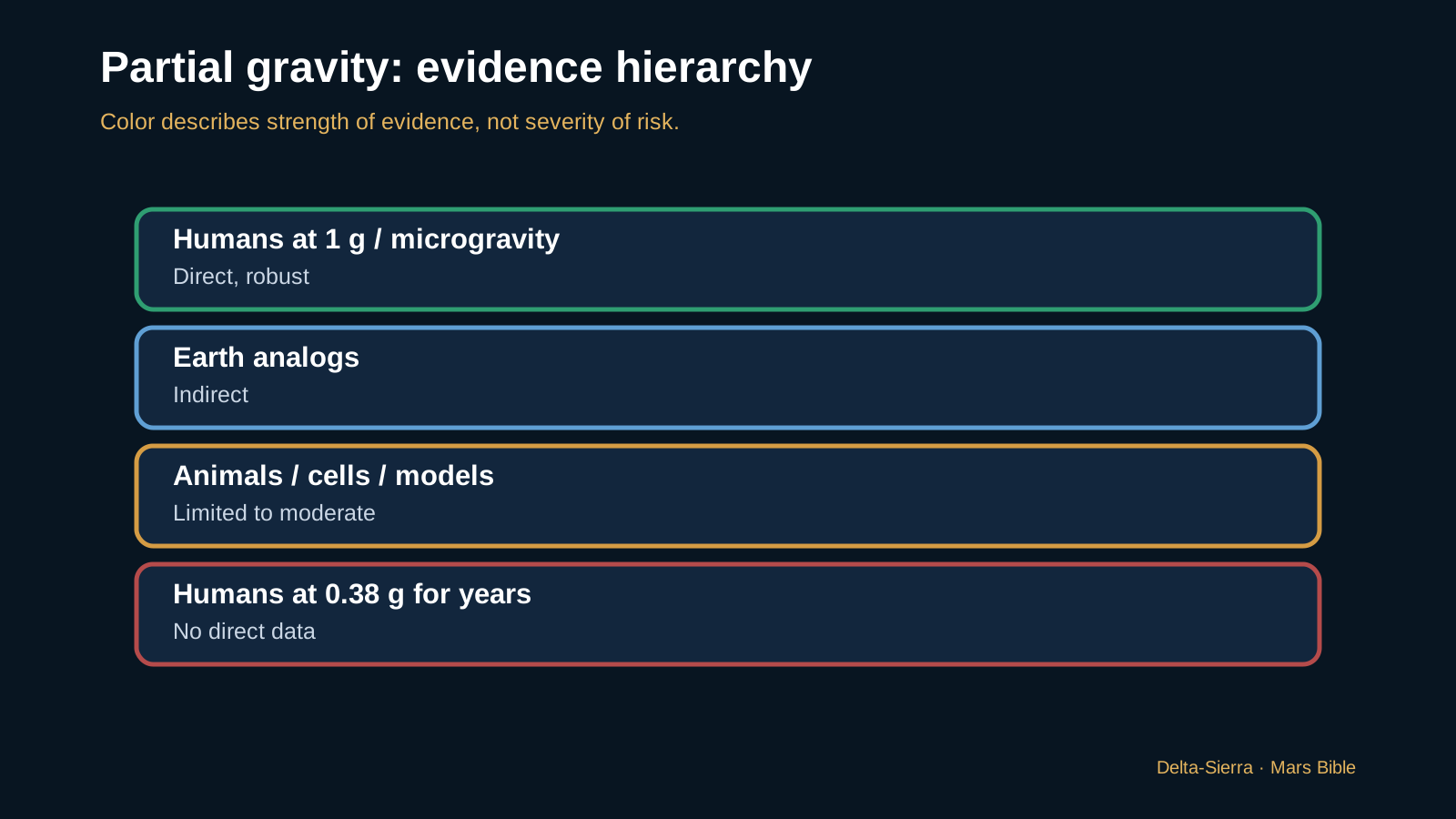
0.38 G is neither zero g nor Earth: a nearly empty part of the evidence map
Mars gravity is about 38% of Earth gravity. That number is often followed by an unjustified conclusion: either “it will be enough” or “it will be dangerous.” Humans have extensive experience near 1 g and months-long experience near zero g, but continuous long-duration exposure between those regimes remains poorly sampled.
Microgravity shows that bone, muscle, cardiovascular regulation, balance and other systems adapt when mechanical loading changes. Mars restores continuous loading, so it is reasonable to expect differences from ISS. What we do not know is the shape of the response curve. Different tissues may require different gravitational thresholds.
The rigorous separation is: prolonged microgravity produces measured human adaptations; partial gravity should modify some of them; lifelong health at 0.38 g has not been demonstrated.
0.38 G: a mechanical number, not a biological answer
Martian surface gravity is about 3.71 m/s², roughly 38% of Earth gravity. That supports simple mechanical calculations. A 70 kg person retains a mass of 70 kg, but their static weight force on Mars is:
W = m × g = 70 kg × 3.71 m/s² ≈ 260 N.
On Earth, with g ≈ 9.81 m/s², the same person produces about 687 N. The ratio is close to 0.38. Yet none of those numbers tells us how much bone might be lost in five years, how a cardiovascular system would adapt over thirty years, or how a child’s vestibular system would develop. Mechanics supplies the load; biology responds to exposure history, activity, age, nutrition, genetics and recovery.
That is why the question “is 0.38 g enough?” has to be decomposed. Enough for what? Preserving bone mineral density in a thirty-year-old adult? Maintaining muscle power? Limiting cardiovascular deconditioning? Supporting pregnancy? Building a child’s skeleton? Preparing for a return to 1 g? Different tissues and life stages may have different thresholds. A single gravity level could therefore be adequate for one function and inadequate for another.
The evidence map needs several distinct levels
Human evidence is rich at 1 g and substantial in microgravity. Between them, the map is sparse. Bed-rest studies reproduce selected aspects of unloading and fluid shifts but do not create 0.38 g. Centrifuges create artificial acceleration, often with gradients and short exposure durations. Animal partial-weight-bearing models can apply a fraction of normal loading, but a rat supported at 40% body weight is not a human living in a Martian town. Cellular systems answer still different questions.
A rigorous statement should therefore carry a mental label: direct human evidence, human analogue, animal evidence, cellular evidence, model, or unknown. This hierarchy prevents an interesting result from a small animal study being converted into a clinical recommendation for future Martian generations.
Bone and muscle: daily loading becomes an architectural variable
Bone responds to mechanical strain and muscle to use. On Mars apparent weight is lower while mass and inertia remain unchanged. A 30-kilogram object is easier to support than on Earth but still resists acceleration and deceleration. Daily activity will therefore load the body differently rather than simply at “38 percent of Earth.”
Exercise will almost certainly remain important, but it consumes volume, energy, maintenance and human time. If two hours of exercise per day were required for one thousand inhabitants, the settlement would spend two thousand human-hours per day on a health-support function. Countermeasures scale into economics and urban design.
Architecture can add loading through resistance systems, stairs, work design or centrifugation. The real research question is what mechanical dose preserves which function, with what adherence, over years.
Bone is not passive structure: it remodels in response to use
Bone is continuously broken down and rebuilt. Mechanical loading, muscle contraction, hormones, nutrition and age affect that balance. In microgravity, weight-bearing regions can lose mineral density despite exercise. Mars provides continuous loading, which is a fundamental difference, but we do not possess a human dose-response curve connecting fraction of gravity with long-term bone preservation.
Static weight must also be distinguished from the spectrum of daily activity. Walking at 0.38 g does not generate the same mechanical peaks as running, jumping, carrying loads or resistive exercise. A settlement can therefore design countermeasures into architecture: stairs, carried loads, resistive equipment, sports, short-radius centrifugation and selected physical work. The point is not to romanticize manual labour; it is to recognize that biomechanics may become an urban-design requirement.
Muscle, power and emergency capability
Muscle mass is not the only useful outcome. In an EVA emergency, power, endurance, coordination and the ability to work in a suit matter. A resident may be “medically stable” yet unable to move a crewmate, operate a tool or climb quickly. Performance standards therefore have to connect health with safety-critical tasks.
Exercise systems also have a system cost. A heavy, complex machine that reproduces selected terrestrial loads perfectly may be less resilient than a simpler mix of resistive devices and routines integrated into daily life. Martian research should measure both biomarkers and the ability to perform the tasks for which health is required.
Cardiovascular and vestibular adaptation: arrival can be an operational risk
Microgravity changes fluid distribution and cardiovascular reflexes. Returning to stronger gravity can produce orthostatic intolerance. Mars asks for only 0.38 g, but crews may arrive after months of transit and immediately need to walk, escape, rescue colleagues and activate infrastructure.
The vestibular system also has to recalibrate. Nausea or disorientation is not merely discomfort if it reduces the ability to evacuate a vehicle or drive a rover. Human performance on the first surface days must therefore be part of landing and base design.
Robotics and pre-deployed infrastructure can reduce the assumption that newly arrived humans are instantly a full-strength construction team.
The problem is not only the heart: it includes the brain’s motion sensors
The vestibular system, vision, proprioception and mechanical signals from the limbs combine to create balance. After long exposure to a different gravity environment, the brain may reweight those signals. A person arriving on Mars could therefore have adequate muscle strength yet make movement, perception or coordination errors exactly when the crew needs to perform safety-critical operations.
The same question becomes deeper for children. A brain developing from birth at 0.38 g could learn a different relationship between head motion, falling, jumping and effort. Today it is impossible to know whether that adaptation would be benign, advantageous on Mars, or problematic during exposure to 1 g. This is a case where “unknown” should remain visible rather than being replaced by intuition.
Arrival and return: transitions may be harder than the steady state
A Mars mission combines several transitions: departure from 1 g, transit in microgravity or possible artificial gravity, arrival at 0.38 g, and perhaps later return to 1 g. Transition periods may concentrate operational risk. After months of transit, crewmembers must leave a vehicle, respond to anomalies and potentially assist an injured colleague. After years on Mars, Earth return imposes a static load more than two and a half times the Martian load.
Medicine therefore needs transition metrics: time to safe walking, orthostatic tolerance, balance, muscle power and recovery. A city whose residents never intend to return to Earth may accept adaptations that would be unacceptable for a rotating expedition crew.
AGBRESA and artificial gravity: what a ground analogue can and cannot teach
AGBRESA, a joint DLR/NASA/ESA study, used sixty days of head-down bed rest and short-arm centrifugation. Bed rest is not Mars and a centrifuge is not continuous 0.38 g. Its value is controlled measurement of deconditioning, tolerance and possible artificial-gravity countermeasures.
Short-radius centrifuges require faster rotation and create stronger head-to-foot gradients; large-radius systems are more comfortable but heavier. Artificial gravity is therefore a trade between physiology and spacecraft architecture.
A Mars settlement could theoretically use centrifugation if future evidence shows that 0.38 g is insufficient. Building it before the medical need is known would be expensive. Preserving the architectural option while improving evidence is more defensible.
What AGBRESA can actually tell us
AGBRESA, jointly conducted by DLR, NASA and ESA, used sixty days of head-down bed rest to reproduce selected physiological effects of unloading. A short-arm human centrifuge tested artificial-gravity countermeasures, including daily continuous or intermittent exposure. The study is valuable because the environment is highly controlled and many human measurements can be collected. It remains an analogue: participants are on Earth, breathe terrestrial air, still experience Earth gravity at the cellular level and do not live with deep-space radiation or actual 0.38 g.
Bed rest is mainly a model of deconditioning: fluid redistribution, reduced use of postural muscles, cardiovascular changes, bone loss and metabolic effects. If a countermeasure improves those endpoints, it deserves further study. If it fails, that does not prove it would fail in exactly the same way in flight, but it needs a strong explanation before consuming mass and crew time.
A short-arm centrifuge creates a gravity gradient
In a centrifuge, acceleration is approximately a = ω²r, where ω is angular velocity and r is distance from the axis. The feet, farther from the center, can receive more acceleration than the head. A small centrifuge saves volume but increases this gradient and rotation-related vestibular effects. A larger radius reduces gradients but adds mass and structure.
This relation explains why “add a centrifuge” is not a minor design choice. Radius, spin rate, exposure duration and body position all matter. A Mars base has one advantage over a spacecraft: it does not need to rotate the whole home. A dedicated medical or exercise centrifuge may be heavy and stationary if power and maintenance are available.
Artificial gravity on Mars: supplement or treatment?
If 0.38 g proves insufficient for some tissues, a centrifuge could provide an additional dose. The scientific question would then become how many minutes, at what acceleration and how often. For a resident adapted to Mars, periodic 1 g exposure might also preserve return-to-Earth capacity. For a child born on Mars, the issue becomes ethically more difficult: should 1 g exposure be imposed to preserve a future option to live on Earth while the body develops in a different environment?
Bed rest: isolate mechanisms without pretending to create Mars
AGBRESA used sixty days of roughly −6° head-down bed rest and a short-arm human centrifuge to test artificial-gravity protocols. The model reproduces selected features of deconditioning and fluid redistribution, making it a powerful experiment. But participants do not walk at 0.38 g, carry their weight in partial gravity or live inside a Martian settlement. AGBRESA does not establish that centrifugation solves chronic Martian gravity exposure. Its value is narrower: a controlled analogue can test mechanisms and countermeasures that help design later partial-gravity studies.
Published results illustrate the need for caution: thirty minutes of daily centrifugation did not prevent all cardiovascular adaptations seen after bed rest. A countermeasure can improve selected outcomes without restoring the terrestrial state. That supports combined architectures: normal activity, resistive exercise, cardiovascular training, nutrition, possible artificial gravity and individualized monitoring.
How fast must it spin? A short-radius centrifuge calculation
Ideal centripetal acceleration can be written:
a = ω² × r
where a is acceleration in m/s², ω is angular velocity in radians per second, and r is radius. To produce 1 g at a point 2 m from the axis:
ω = √(9.81 / 2) ≈ 2.21 rad/s.
Converting to revolutions per minute:
rpm = ω × 60 / (2π) ≈ 21.1 rpm.
Twenty-one revolutions per minute is fast for a human subject; head motion can generate Coriolis effects and acceleration varies strongly from feet to head. To produce only 0.38 g at 2 m:
ω = √(3.71 / 2) ≈ 1.36 rad/s ≈ 13.0 rpm.
These calculations are not a medical prescription. They show the geometric trade: smaller radii require faster rotation for the same acceleration. A settlement centrifuge could be larger than a spacecraft device, but it would consume structure, space, maintenance and power. The research question then becomes whether to create 1 g for short periods, add a fraction of g on top of Martian gravity, or use the device only for selected patients and recovery phases.
Pregnancy and development: where uncertainty becomes an ethical problem
Human pregnancy has never been studied at 0.38 g. Embryonic and fetal development involves circulation, bone formation and many gravity-sensitive mechanical processes. Animal experiments and concepts such as MICEHAB can define research questions, but cannot certify human reproductive safety.
MICEHAB is valuable because it treats multigenerational mammalian development in partial gravity as a distinct research problem. It expands the question from whether an adult can work on Mars to whether an organism can develop, reproduce and age normally there.
Early missions have no scientific justification for turning human pregnancy into an experiment. A permanent society, however, cannot avoid the generational question forever. Knowledge, consent and ethics must advance before demographic necessity.
Reproduction is a chain of processes, not one yes-or-no outcome
“Can pregnancy occur at 0.38 g?” compresses many mechanisms into one sentence: gametogenesis, fertilization, implantation, placental development, organogenesis, fetal growth, maternal circulation, birth, neonatal adaptation, skeletal development and neurovestibular maturation. Partial gravity might affect some stages and not others. Radiation adds another dimension and the closed environment a third.
No human pregnancy has been studied in microgravity in a way that provides a clinical basis, and there are no direct human data for gestation at 0.38 g. Animal research and concepts such as MICEHAB are useful for designing a research programme, not for concluding that human reproduction on Mars is safe or impossible. The scientifically correct output is a matrix of questions and evidence levels.
Ethics: uncertainty changes category when the subject cannot consent
An adult can accept experimental risk after informed consent. A future child cannot. A Martian society facing desired reproduction would therefore have to decide which levels of uncertainty are acceptable and which authority may intervene. Temporarily restricting pregnancy might appear rational from a safety perspective; it would also be a profound restriction of bodily autonomy. Ignoring unknown biological risks in the name of freedom would shift those risks onto people who did not choose them.
There is no purely technical answer. The problem requires transparent governance, open evidence, independent review, individual rights and rules that can change as knowledge improves. This may be one of the first places where Martian biology becomes immediately political.
Returning to 1 g — or growing up at 0.38 g — may create different bodies
Adults arriving from Earth developed at 1 g. Children born on Mars could develop under 0.38 g. We do not know whether resulting differences would be large, reversible or clinically important during travel to Earth.
A person healthy on Mars might be vulnerable under Earth gravity. A long-term Martian resident returning to Earth may require extensive rehabilitation. Interplanetary medicine therefore includes changing worlds, not only surviving one world.
This is a fundamental distinction between a mission and a society. A mission plans to return to its reference environment; a society can create a new reference environment for its citizens.
Two human trajectories could emerge
The first settlers will arrive with bodies developed at 1 g. A child born on Mars, if that ever becomes medically acceptable, would develop skeleton, muscle and movement strategies under 0.38 g. Both might live in the same settlement yet have different tolerance for Earth return. Interplanetary mobility could therefore become biologically asymmetric.
It is premature to claim that a Mars-born person could not live on Earth. It is equally premature to assume that a transition to 1 g would be trivial. The settlement might eventually need gravity-conditioning protocols, intensified exercise or centrifuge exposure before travel. A health system originally designed for countermeasures could become a kind of “gravity airlock” between worlds.
The central question is not “is 0.38 g dangerous?” but “how much gravity is enough for which function?”
We know that prolonged microgravity changes the human body profoundly. We know that terrestrial 1 g supports an organism adapted to Earth under ordinary conditions. Between them lies a large scientific gap. The Moon provides about 0.16 g and Mars about 0.38 g, but humans have never lived for months or years at either level. There is no clinically demonstrated threshold saying “above 0.4 g everything is fine” or “at 0.38 g this organ loses exactly this much function.”
The useful concept is an unknown dose-response curve. Some systems may need only modest loading to retain much of their function; others may require peaks closer to 1 g; still others may depend on duration, direction or dynamics. Martian walking, resistance exercise, jumping and manual work can create mechanical forces greater than static body weight alone. Health architecture should therefore measure actual loading rather than stare at the number 0.38.
Gravity acts continuously; exercise acts in episodes
Two hours of training does not necessarily replace twenty-two hours in a different gravity environment. Conversely, intense exercise can create substantial skeletal and muscular forces for short periods. The combination of Mars gravity and exercise should therefore be treated as a loading program: intensity, frequency, direction and recovery. Wearable sensors could estimate whether each resident receives adequate mechanical stimulus over weeks.
This opens a personalized approach. Two people of the same age may not show the same bone or muscle response. Monitoring can adjust resistance exercise, nutrition, vitamin D, medications when medically justified and perhaps artificial-gravity exposure. The “Mars countermeasure” may become an individualized package rather than one prescription for the entire population.
Arrival on Mars: the first test of 0.38 g occurs at the worst possible time
After months of microgravity, a crew does not discover Martian gravity in a physiology laboratory. It encounters it after dynamic entry, descent and landing with immediate operational tasks. The vestibular system must reinterpret signals, the cardiovascular system must support a new hydrostatic gradient, muscles must carry body weight and someone may need to walk in a spacesuit. “Can humans live at 0.38 g?” and “can a deconditioned crew perform during the first hours?” are therefore different questions.
A prudent architecture can automate more early tasks, provide seats and handholds, limit immediate EVA and allocate time for readaptation. Pressurized rovers or robots can prepare the environment before people carry heavy loads. This is not comfort engineering: a fall on day one can create a medical emergency when the entire base is still fragile.
Return to Earth is the mirror image
A long-term Mars resident returning to 1 g experiences more than twice their Martian gravitational load. An 80 kg person has the same mass on both planets, but weight changes with gravity. The cardiovascular system and muscles must tolerate the larger load again.
This may eventually influence mission policy. If future evidence shows substantial adaptation to 0.38 g, short-stay crews, multi-year residents and Mars-born people may need very different preparation. Martian medicine could end up classifying people not only by age and disease but also by gravitational history.
Reproduction: the uncertainty matrix should be impossible to miss
Reproduction is where caution must be strongest. Research concepts such as MICEHAB have proposed multigenerational mammalian studies under partial gravity. That shows the question is recognized as important; it provides no evidence that human pregnancy at 0.38 g is safe. Fertilization, implantation, placental development, vestibular formation, skeletal growth, birth and postnatal development could respond differently to gravity and radiation.
The page should therefore separate four columns: human evidence on Earth, human spaceflight or microgravity evidence where it exists, animal/cellular evidence, and Martian unknown. A sentence that jumps directly from mice to human children should fail review. Animal models identify mechanisms and questions; they do not grant medical or ethical permission.
Ethics comes before statistics
Reproductive uncertainty cannot be solved by simply exposing the first pregnant residents “to see what happens.” A serious settlement would need to determine what preclinical evidence, monitoring, obstetric and neonatal care, and rescue capability should exist before pregnancy is considered acceptably supported. Individual freedom, community survival and the interests of a future child may conflict; no engineering equation resolves that alone.
This caution does not mean a Martian society must abandon the idea of future generations. It means evidence must be built progressively and uncertainty kept visible. The true scientific frontier is not declaring that “humans can reproduce on Mars,” but defining what evidence would one day justify that statement.
Measure adaptation instead of assuming it
The first Mars residents should be treated as participants in a carefully instrumented natural experiment, with ethical protections appropriate to human research. Bone imaging, muscle strength, cardiovascular response, gait, balance, vision, sleep and exercise load can be followed over time. The objective is not to turn daily life into a laboratory but to learn whether 0.38 g stabilizes physiological systems after transit or whether some continue drifting toward clinically important impairment.
Individual trajectories matter. Group averages can hide one person losing bone rapidly while another remains stable. A countermeasure program should therefore be adjusted from measurements rather than copied indefinitely from ISS routines. Exercise hardware that works beautifully in microgravity may not be optimal when residents also walk, climb, lift and work under partial gravity every day.
Sensorimotor adaptation can affect safety before it affects medicine
Vestibular and motor adaptation matters because errors become accidents. A person misjudging a step, ladder or vehicle motion can fall even if no disease is present. Mars gravity also changes how thrown objects, tools and the body move. Training environments on Earth can approximate some dynamics through harnesses or parabolic flight, but continuous months-long adaptation remains unknown.
Arrival procedures should therefore be designed for degraded performance. Handholds, wide paths, robotic unloading, gradual EVA schedules and conservative vehicle operations reduce consequences while crews adapt. The same reasoning applies to return to Earth: medical rehabilitation and operational restrictions may be needed before a long-term Mars resident safely drives, climbs or performs heavy work at 1 g.
Cardiovascular physiology poses a threshold question that microgravity alone cannot answer
Human spaceflight shows that the cardiovascular system adapts to radically altered gravitational loading and that return to 1 g can produce orthostatic intolerance. Mars, however, is not microgravity. At 0.38 g hydrostatic gradients return, walking imposes load and postural muscles work. Nobody yet knows whether that stimulus is sufficient to stabilise every cardiovascular function over years. The scientific difficulty is precisely this intermediate state: Mars is neither an Earth control nor a microgravity experiment.
A useful research programme would therefore measure trajectories, not only averages: plasma volume, heart rate, pressure, exercise capacity, post-EVA recovery, standing tolerance and responses to rapid posture changes. Curves over time — rather than one measurement after six months — are what could distinguish acceptable adaptation from progressive deconditioning.
Vision, balance and locomotion: residents must learn when to trust their sensors
The brain combines vision, vestibular signals, proprioception and learned expectations to determine where the body is and how it is moving. After months of microgravity, Mars suddenly introduces a new acceleration regime. The first week therefore concerns more than muscle strength. It concerns perceptual reliability during walking, climbing, driving and emergency operations.
For a permanent population the question becomes even more unusual. A child who learns to walk at 0.38 g would build a sensorimotor model under different physics from an adult who adapts after an Earth childhood. That does not justify predicting disability on Earth or superiority on Mars. It simply creates two different neurological histories. A settlement research programme would need to follow coordination, balance, reflexes and movement strategies over decades.
Kidney, calcium and bone: physiology does not respect chapter boundaries
Bone loss in microgravity is not only a skeletal issue. Mobilised calcium interacts with mineral balance, urinary excretion and stone risk. Reduced loading on Mars might produce smaller effects, but the magnitude is unknown. This is why physiology cannot be treated as independent organs: a countermeasure that improves one system can change the constraints on another.
Monitoring should therefore connect bone density and geometry, activity, nutrition, hydration, biomarkers, renal function and any countermeasures. At population scale individual variation becomes part of the engineering problem. Age, sex, activity history, genetics and radiation exposure may all alter the response to the same gravitational field. The “Martian threshold” may not be one universal number.
Partial-gravity animal models fill an evidence gap — they do not eliminate it
Space-biology programmes use partial weight-bearing models on Earth and increasingly use centrifugation in flight to expose animals to different fractions of g. These experiments matter because they can examine mechanisms that cannot ethically be tested in humans for years before departure. They can compare bone, muscle, cardiovascular function, behaviour, circadian systems and microbiomes under controlled conditions.
Yet an animal model is never a human measurement at 0.38 g. Body size, lifespan, locomotion and physiology differ. The correct use is to build an evidence chain: animal signal → plausible mechanism → human hypothesis → measurement to test on early missions. Any sentence that jumps directly from “observed in rodents” to “will happen to a Mars-born child” would break that chain.
A research programme before generations: turn uncertainty into a schedule
Partial-gravity uncertainty will not be resolved by one experiment. It requires progression. Before a multigenerational settlement, investigators would need to consolidate long-duration human flight data, exploit analogues and centrifugation, expand partial-gravity animal research, measure early Mars crews with harmonised protocols, and follow recovery and non-human reproductive development before any extrapolation to human pregnancy. Scientific milestones should be linked to demographic decisions: each step toward permanent generations should demand stronger evidence.
This changes the ethical question. Exploration can never require certainty, but it can distinguish uncertainty accepted by a consenting adult from uncertainty imposed on a child who cannot consent. Partial gravity therefore becomes a problem of physiology, engineering and governance at the same time.
Artificial gravity is an engineering variable before it is a medical prescription
Rotating a habitat or a short-arm centrifuge can create acceleration, but that does not tell us the required biological “dose.” Radius, rotation rate, exposure duration, body position and session frequency all change the experience. A large radius reduces gradients and some rotational effects but increases size, mass and complexity. A compact centrifuge is easier to install, yet head and feet experience different acceleration.
These concepts are therefore experimental as well as operational. They can test whether a stronger stimulus for limited periods complements Martian gravity and exercise. Before a town is designed around rotating habitats, researchers need to know which physiological systems respond, how well people tolerate rotation and whether benefits persist. A known equation does not make the technology a proven health solution.
The research programme should measure gravitational dose as an exposure history
An individual gravitational history might include months of microgravity in transit, exercise sessions, daily movement at 0.38 g, possible centrifuge sessions, EVA, illness, immobilisation and eventual return to 1 g. Two people living on the same planet could therefore receive very different mechanical loading depending on occupation and activity.
This suggests a research method: record activity, force, performance and biomarkers to study the relation between cumulative loading and adaptation. The objective is not to reduce physiology to one counter. It is to replace the vague statement “they live at 0.38 g” with a measurable description of what their bodies actually experience.
The first major result may be that there is no single gravity threshold
Bone, muscle, cardiovascular function, vestibular adaptation, vision and reproduction may have different requirements. “What minimum gravity is enough?” may therefore have several answers. A load sufficient for locomotor performance could be insufficient for another system, while exercise could compensate some effects and not others.
That possibility should shape early missions. Measurements must be rich enough to reveal systems that diverge and individuals who respond differently. A crew average can hide a person who deconditions much faster. Long-term settlement may therefore require increasingly personalised countermeasures rather than one universal Martian exercise prescription.
Design the research program before claiming to know the answer
The 0.38 g question will not be solved by one experiment. A progressive campaign would measure crew before departure, through microgravity transit, immediately after landing and repeatedly over months and years. Longitudinal data are powerful because each person becomes a partial self-control even when the initial sample is small.
Measurements should span bone structure, muscle force, aerobic capacity, circulation, balance, vision, kidney function, immunity and cognition. Operational measures matter too: walking speed, ability to rise, load handling, suited work and fall risk. A physiological result has architectural value only when its effect on real tasks is understood.
Research must distinguish adaptation from damage. A change can be a normal response to a new environment without being pathological; conversely someone can feel functional while losing bone or accumulating renal-stone risk. Health decisions need performance, biomarkers and long-term trajectory together.
Any reproductive policy before robust evidence exists should therefore be treated as bioethics and research governance, not as a simple engineering milestone. The objective is not to find a magic number proving Mars safe or unsafe; it is to reduce uncertainty and clearly identify what remains unknown.
What 0.38 g would force us to measure from the first sol
The first crew to live for long periods on Mars cannot simply be “observed.” The base will need a cautious physiological monitoring program. Monitoring should be selective rather than exhaustive, concentrating on variables that can reveal a harmful trend before capability is lost: muscle strength and power, bone structure, orthostatic tolerance, balance, vision, activity, metabolic markers and relevant cardiovascular adaptation.
An evidence ladder, not a color of certainty
The strongest evidence would be humans living for years at 0.38 g; that cell is currently empty. Below it are human data from microgravity and 1 g, bed-rest analogues, brief parabolic-flight exposures, partial-loading animal models and numerical models. Each answers a different question. Bed rest can examine deconditioning and countermeasures, but it does not reproduce Martian locomotion, dust, radiation or operational autonomy.
The hierarchy must remain visible in the prose. A plausible mechanism is not a measurement. A microgravity effect does not establish its magnitude at 0.38 g. An animal result is not a human clinical recommendation. That discipline makes the chapter stronger, not weaker.
Artificial gravity: one calculation exposes the radius-speed trade
For a centrifuge, centripetal acceleration is a = ω² × r, where a is acceleration in metres per second squared, ω angular velocity in radians per second and r radius in metres. To target roughly 0.38 Earth gravity, a ≈ 0.38 × 9.81 = 3.73 m/s². At a 4 m radius, ω = √(3.73/4) ≈ 0.97 rad/s. Converting to revolutions per minute gives rpm = ω × 60 /(2π) ≈ 9.2 rpm. At a 10 m radius, the same acceleration requires about 5.8 rpm.
The calculation shows why small centrifuges rotate rapidly: reducing radius demands greater angular velocity. Vestibular effects, head-to-foot gradients and motion tolerance then become major design variables. “Artificial gravity” is therefore not a binary feature. Architecture must specify radius, exposure duration, body position, rotation rate, gradient and physiological goal.
The Martian protocol must be longitudinal
Mars offers scientific value through duration. Measurements should start before departure, continue in transit, intensify after landing and repeat over years. Each person becomes a longitudinal record. With later cohorts, researchers may separate early adaptation from aging, occupation, activity level and possible differences between people arriving as adults and people who grow up on Mars.
That program also creates a rights problem. A scientific settlement cannot automatically turn every citizen into a lifelong research subject. Consent, data governance and the right to decline become part of the architecture. The first long human exposure to 0.38 g will therefore be a medical program, an engineering program and a civil-rights problem at the same time.
A centrifuge gradient reminds us that “0.38 g” may not be uniform across the body
In a short-radius centrifuge, the feet are farther from the axis than the head and therefore experience greater acceleration. If the feet are 4 m from the center and the head 2 m away, acceleration at the same angular velocity is proportional to radius: the head receives only about half the acceleration at the feet. This is why radius, posture and orientation matter as much as the headline “0.38 g.” A countermeasure may load the legs effectively without reproducing uniform planetary gravity.
Readers should distinguish nearly uniform planetary gravity across a human body from rotational artificial gravity, which adds gradients and Coriolis effects. Both can show the same number at the feet while producing different physiological and vestibular conditions.
The first generation of data must publish failures as well as successes
Political pressure will favor describing every long surface stay as success. Scientifically, anomalies matter equally: stress fracture, vestibular problem, visual change, slow recovery or injury caused by an aggressive countermeasure. A serious reference should defend publication of negative results and limitations because those are precisely the observations that improve countermeasures before larger populations are exposed.
An atlas of evidence: what each experiment can and cannot tell us about 0.38 g
Martian gravity lies in an awkward scientific territory. It is strong enough to make human mechanics very different from microgravity, yet no human has lived in it long enough to measure chronic adaptation directly. The rigorous approach is therefore an evidence ladder: humans at 1 g, humans in microgravity, terrestrial analogs, very short partial-gravity exposures, animals under partial loading, models, and finally the still-empty category of humans living for years at 0.38 g.
Gravity dose: magnitude, duration and repetition belong together
The statement 'Mars is 0.38 g' does not define a biological dose. A mechanical countermeasure depends on acceleration, exposure time, loading direction, frequency, activity and the biological system being considered. Bone adapts over weeks and months; vestibular responses can occur within seconds; circulation operates across several time scales. A single universal threshold for every organ is therefore scientifically implausible.
Artificial gravity introduces more variables. For a centrifuge, a = ω²r: acceleration a depends on angular speed ω squared and radius r. A larger radius can provide the same acceleration at lower rotation rate, potentially reducing some Coriolis effects, but increases structural size. A short-radius leg centrifuge and a rotating habitat are not physiologically identical even when the feet experience the same nominal acceleration.
Landing after months in transit: the transition itself is a hazard
The first Martian day is often narrated as an EDL success. Physiologically it is also an abrupt transition. A deconditioned crew must suddenly support body weight, move equipment, operate a habitat and perhaps respond to emergencies before adaptation to 0.38 g has occurred. Cardiovascular control, postural muscles and balance must work immediately.
That links medicine to mission design. Does the landing architecture require an immediate EVA or heavy manual task? Should the vehicle include powered handling aids, seats, pressurized mobility or a protected recovery period? Human capability after transit can influence the first-surface-operations plan just as directly as power or communications.
Pregnancy, childhood and return to 1 g: direct evidence is largely absent
Reproductive biology requires even more caution. NASA programs can study cells, embryos, animals and reproductive function, but those are not experiments on human pregnancy in microgravity or at 0.38 g. A credible evidence matrix must explicitly say 'no direct human data' where that is true rather than labeling the evidence merely 'limited.'
The same applies to a child raised on Mars who later wishes to live on Earth. Skeleton, muscle, cardiovascular regulation and balance would develop under different loading. Today it would be irresponsible to claim that return to 1 g would be easy or impossible. The scientifically honest conclusion is more consequential: no human population has ever undergone that development, so multigenerational settlement would deliberately enter a major evidence gap.
The most important fact about 0.38 g is still the one we do not have
Mars produces about 38% of Earth's surface gravity. That number is well known. The larger question for a society is not: what is Martian gravity? It is: can humans live for years, age, heal fractures, carry pregnancies and grow normally at 0.38 g? No human has ever lived for long duration at that gravity level. The strongest human datasets are concentrated around orbital microgravity and Earth gravity; between them we rely on acute experiments, simulations, animal models and inference.
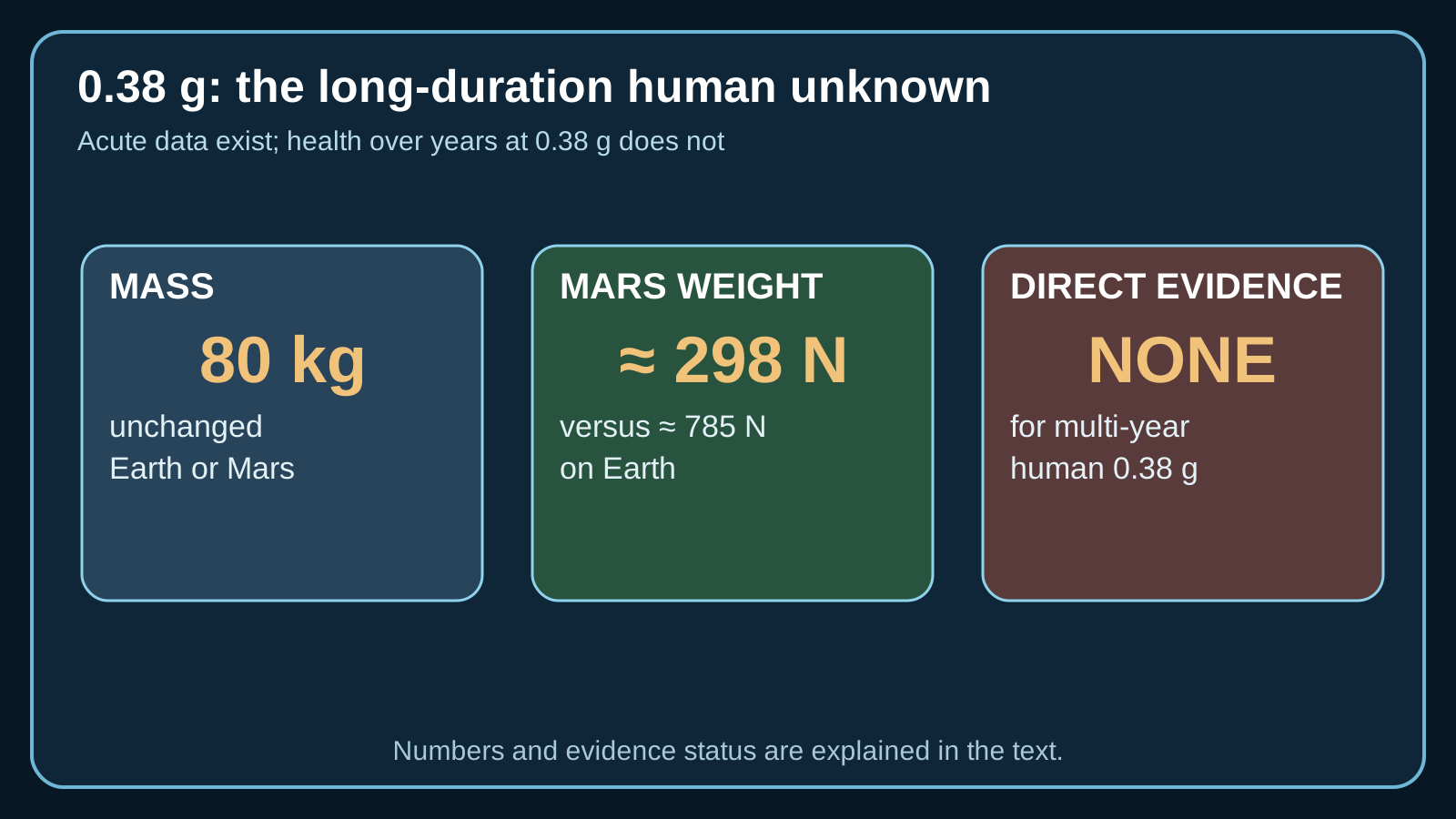
Mass and weight: the first calculation that prevents a common error. Mass measures amount of matter and is expressed in kilograms. Weight is a force and is expressed in newtons. For a person with mass m = 80 kg, weight is P = m × g. On Earth, using g ≈ 9.80665 m/s²:
P_Earth = 80 × 9.80665 ≈ 785 N.
On Mars, using 0.38 times Earth gravity:
P_Mars ≈ 80 × 9.80665 × 0.38 ≈ 298 N.
The person still has 80 kg of mass but weighs about 298 N. This changes skeletal and muscular loading, while the inertia of the 80 kg remains when the body or an object must be accelerated or stopped.
What recent experiments can say — and what they cannot. A NASA study presented in 2025 tested twelve participants during parabolic flight at 0.25 g, 0.5 g and 0.75 g while they stood, walked, crossed an obstacle and jumped. It informs acute functional performance during gravity changes. It cannot show what happens to bone after five years at 0.38 g. Likewise, NASA's 2026 Crew-12 research examines adaptation to low gravity, including venous flow and piloting performance through gravitational transitions. These studies reduce operational uncertainty without closing the central biological question of chronic Martian gravity.
Why “0.38 is almost 0.4” is not medical proof. A paper available through NASA NTRS has argued from indirect evidence that gravity below roughly 0.4 g may be insufficient to fully maintain some human systems. It should be presented as an evidence-based interpretation, not an established physiological threshold. Biology is not a switch between 0.38 and 0.40. Response can differ by bone, muscle, cardiovascular system, age, exercise loading and exposure duration.
A true settlement must instrument its own gravity environment. The first Mars residents will also become the first humans to generate longitudinal 0.38 g data. That calls for permanent scientific infrastructure: bone density, muscle strength, cardiovascular imaging, balance, vision, sleep, metabolic markers, injuries, recovery time and exercise response. As the population ages, monitoring must extend beyond highly selected astronauts. A city that stops collecting these data after the expedition era would discard exactly the evidence required for its long-term safety.
Primary and institutional sources: NASA NTRS — Functional Task Tests in Partial Gravity During Parabolic Flight; NASA — Crew-12 altered-gravity research, 2026; NASA NTRS — The Partial Gravity of the Moon and Mars Appears Insufficient to Maintain Human Health, treated here as an analysis rather than an official medical limit.
The first Mars city should be designed as a medical experiment lasting decades. Mars surface gravity is about 38% of Earth’s. That statement gives an acceleration, not a health answer. It does not tell us how the human skeleton, cardiovascular system, vestibular system, vision, muscles, kidneys or childhood development respond after five, twenty or sixty years at 0.38 g. Here g denotes standard Earth gravity, about 9.81 m/s²; 0.38 g is therefore about 3.7 m/s².
Human evidence mostly spans the extremes of 1 g on Earth and near-zero g in orbit. Parabolic flights can create tens of seconds of partial gravity. A NASA study presented in 2024 tested twelve participants performing functional tasks at 0.25 g, 0.50 g and 0.75 g. That can tell us about standing, handling loads and acute performance. It cannot substitute for years of exposure.
Why 0.4 g must never become a “law”. A paper available through NASA NTRS argues from indirect evidence that gravity below roughly 0.4 g may be insufficient to maintain some musculoskeletal and cardiopulmonary functions over the long term. Mars lies close to that value, making the hypothesis important. But this is an interpretation of indirect evidence, not a demonstrated NASA clinical threshold. It would be wrong to write “0.38 g is unsafe because the threshold is 0.4 g.” The defensible conclusion is that Mars sits in an uncertainty region that demands precise longitudinal measurement.
Mass and weight: a simple calculation of what the body feels. A person with mass m = 80 kg has the same mass on Earth and Mars. Weight is a force calculated as P = m × a. On Earth: 80 kg × 9.81 m/s² ≈ 785 N. On Mars: 80 kg × 3.71 m/s² ≈ 297 N. N means newton, the SI unit of force. Muscles holding the body upright therefore work against much less gravitational force, one reason mechanical loading of bone and muscle is central.
A smart settlement should not wait thirty years to discover the answer. From the first crews, habitats can support longitudinal cohorts: bone imaging when available, biomarkers, muscle strength, aerobic capacity, blood pressure, sleep, vision, balance, task performance and exercise history. Measures should remain comparable across missions and over decades. NASA’s Crew-12 studies altered-gravity adaptation, including venous flow and manual piloting. These studies do not directly answer the Mars question, but they improve the methods needed to ask it.
Artificial gravity should remain an option without being sold as a proven cure. A centrifuge creates acceleration by rotation. Physiology depends on rotation rate, radius, daily exposure, body orientation and the gravity gradient from head to feet. A small exercise centrifuge is not equivalent to a rotating home. A prudent colony would reserve interfaces, power and space that allow artificial-gravity doses to be tested if medical surveillance shows that 0.38 g is inadequate.
Four to one thousand residents changes the ethics. Four selected adult astronauts can accept a tightly controlled experimental risk. One hundred residents introduce age, sex, health and occupational diversity. A thousand may eventually include elderly people and children. Health systems must then separate research from care, obtain genuine consent and prevent housing or employment from depending on study participation. “Is 0.38 g enough?” becomes a medical, architectural and ethical question at once.
Sources: NASA NTRS — Functional Task Tests in Partial Gravity; NASA NTRS — The Partial Gravity of the Moon and Mars Appears Insufficient to Maintain Human Health; NASA — Crew-12 studies of adaptation to altered gravity, 2026.
What would count as evidence strong enough to redesign the settlement?. Because long-duration human data at 0.38 g do not exist, the first decades of Mars habitation should use predeclared decision rules rather than vague impressions. A decline in bone density, muscle power, aerobic capacity or balance should not be judged only against an astronaut’s own previous measurement. Investigators would need Earth controls, microgravity experience, age-adjusted reference ranges and repeated measurements using the same instruments. Otherwise a change of scanner, training schedule or population age could be mistaken for an effect of Martian gravity.
The distinction between acute and chronic evidence is central. Acute means a response observed over seconds, minutes or perhaps days. Chronic means a response accumulated over months or years. Parabolic-flight studies can reveal whether a person can stand, walk or handle a load at a chosen gravity level, but they cannot show whether bone remodeling reaches a stable equilibrium after five years. Likewise, excellent exercise performance does not prove that every organ system is protected.
Countermeasures themselves become experiments. Exercise is likely to remain important, but “exercise” is not one treatment. Resistance loading, cycling, running, jumping and centrifugation expose tissues to different forces. A Mars program should record dose just as carefully as a drug trial records medication: load, repetitions, duration, frequency, missed sessions and adverse effects. Only then can health outcomes be related to the actual mechanical stimulus received.
Artificial gravity has a design equation of its own. For a rotating system, centripetal acceleration is approximately a = ω²r, where a is acceleration in metres per second squared, ω (omega) is angular velocity in radians per second, and r is radius in metres. The equation immediately shows the engineering trade: a small radius requires a higher rotation rate to produce the same acceleration. Higher rotation rates can increase motion-sickness and head-to-foot gravity gradients. A large rotating structure reduces those effects but costs more mass, bearings, volume and maintenance. This is why “just add a centrifuge” is not a complete architecture.
Medical surveillance must remain compatible with civil rights. When the settlement grows beyond a selected expedition crew, mandatory research can conflict with privacy and autonomy. Health surveillance needed for safe work may be legitimate, while publication of an individual’s research data is a different matter. Residents should know which measurements are clinical, which are occupational safety, which are research, who can see them and how participation can be refused. That distinction becomes particularly important if future children are born on Mars: they cannot be treated as experimental subjects simply because the environment is scientifically unique.
Specialized sources — partial gravity and evidence levels
- NASA NTRS — Partial Gravity of the Moon and Mars — indirect-evidence analysis requiring cautious interpretation
- NASA Science — Animal Biology Experiments — animal models and physiological research
- DLR — Bed Rest Studies — AGBRESA and deconditioning analogs
- NASA Science — Developmental, Reproductive & Evolutionary Biology — reproduction and development research
- NASA NTRS — MICEHAB — multigenerational mammalian partial-gravity concept
Martian gravity creates a documentary paradox: its physical value is precisely known, while its chronic human effects are not. Microgravity data and short partial-gravity exposures constrain the question but do not reproduce years at 0.38 g. Medicine should neither assume Mars gravity is sufficient nor treat it as equivalent to zero gravity.
The relevant research program begins before permanent settlement and continues on Mars because bone, muscle, cardiovascular function, balance, pregnancy and development may have different dose-response curves. Countermeasures should remain adaptable until a real Martian cohort provides the missing evidence.
The central partial-gravity problem is not that Mars has “some gravity,” but that the long-term human response curve between microgravity and 1 g is poorly constrained. An engineering program should therefore preserve options for countermeasures and measurement. Exercise systems, workload design, habitat geometry, and medical monitoring should be chosen so that they can be adjusted as evidence accumulates. The settlement itself becomes a longitudinal experiment only if measurements remain standardized enough to distinguish biological adaptation from changes in equipment, training, diet, or population.
Artificial gravity should be evaluated as an architecture trade rather than a binary cure. Rotating systems introduce radius, rotation rate, structural loads, motion sickness, bearings, power, and maintenance requirements, while intermittent centrifugation would provide a different exposure pattern from continuous gravity. The useful comparison asks what biological outcome is being targeted and how much additional system complexity is justified by the expected benefit. Until long-duration 0.38 g human data exist, claims of a safe threshold should remain hypotheses rather than design facts.
Turn the unknown of 0.38 g into an operational research programme
Mars provides about thirty-eight percent of Earth gravity, but that number does not answer the medical question. The human body does not contain one gravity sensor with a single safe threshold. Bone, skeletal muscle, cardiovascular regulation, balance, vision, motor performance, pregnancy, development and ageing can respond on different time scales and may have different dose-response relationships. A settlement therefore should not ask only whether 0.38 g is “enough.” It should define, function by function, what will be measured, which trend would trigger concern, which countermeasure can be intensified and which loss could become difficult to reverse if the signal is ignored for months.
The first month on Mars mixes readaptation with the experiment itself
New arrivals are not a stable Martian population. They have just completed a long transit in microgravity or in whatever partial-gravity environment their spacecraft provided, endured entry and landing, and then begun unfamiliar surface work. Weakness, orthostatic intolerance or poor coordination during the first sols cannot automatically be blamed on 0.38 g. The medical design must separate transit effects, acute readaptation and the slower response to Mars gravity. That requires baseline measurements before departure, repeated measurements during transit, a dense series after landing and then a sustainable long-term schedule. Otherwise normal recovery can be mistaken for deterioration, or a real long-term trend can be hidden inside the noise of arrival.
Measure function as well as biology
Bone density, muscle imaging and biochemical markers can reveal important changes, but a settlement ultimately depends on what people can safely do. Can a resident rise from the floor after a fall, carry a load, climb, work in a suit, stabilize a patient, perform maintenance and recover after exertion? Functional tests should therefore sit beside laboratory and imaging data. Simple standardized tasks repeated over years can be especially valuable because they create an individual trajectory rather than a single comparison with an Earth reference population. The aim is to detect persistent change early enough that training, workload or medical management can be adjusted.
Gravity dose may be divisible
If 0.38 g does not fully protect a tissue or function, the only alternatives are not “accept the damage” or “build an entire 1 g city.” A countermeasure architecture could combine ambient Mars gravity, resistance exercise and short-radius centrifugation or other loading. The scientific question then becomes a dose-response problem: how much acceleration, for how long, how often and in which body orientation produces a useful effect? Short-radius centrifuges also create a head-to-foot acceleration gradient; they do not expose the whole body uniformly to one number. That gradient, motion sickness and the practicality of repeated use must be measured rather than hidden behind the convenient phrase “artificial gravity.”
Children would require a much higher standard of evidence
Adult explorers developed under 1 g and are mainly trying to preserve or recover established functions. A child conceived, born or raised on Mars would be building a body under 0.38 g. There is no direct human evidence for that developmental pathway. Animal studies, microgravity observations, bed-rest analogues and mechanical models can identify mechanisms and concerns, but none can certify normal human development on Mars. A mature settlement policy would therefore distinguish adult operational medicine from reproduction and paediatric development, which carry deeper uncertainty and ethical consequences. “We did not observe a problem in selected adults” would not be evidence that gestation or growth is safe.
Use the settlement as a longitudinal observatory
The first long-duration residents could produce an unprecedented dataset, but only if measurements remain comparable. Every clinically important value should carry context: instrument and calibration, protocol version, local time, recent exercise, hydration, medication, injury, training load and time since arrival. Without those metadata, an apparent biological trend can be a measurement change. The settlement therefore needs a data-governance plan that treats longitudinal health records as part of mission infrastructure while preserving privacy and clinical boundaries. Years later, researchers should be able to tell whether a signal came from the body, the environment, the countermeasure or the measurement system.
Define decision thresholds before the data become emotionally difficult
Exploration programmes are vulnerable to a subtle bias: once people have travelled to Mars, everyone has an incentive to interpret ambiguous data as acceptable. Predefined decision rules can reduce that pressure. Examples include a sustained loss of a functional capacity, a rate of bone change beyond a chosen limit, repeated injury patterns, or failure to recover after a prescribed countermeasure period. The thresholds need not imply immediate evacuation, which may be impossible. They can trigger workload restrictions, stronger countermeasures, specialist review, additional monitoring or a change in future crew-selection and mission design. The point is to decide in advance what evidence would cause the programme to change.
Population scale changes the question again
A four-person exploration crew can receive highly individualized training and medical attention. A community of one thousand people includes different ages, body sizes, occupations, chronic conditions and levels of fitness. Countermeasures that are feasible for a small astronaut corps may be too time-consuming or too equipment-intensive for a town. Partial-gravity research must therefore eventually ask not only whether a protocol works physiologically but whether it scales socially: how many centrifuge-hours, exercise stations, clinicians and replacement parts are required, what happens when equipment is unavailable, and whether ordinary work can provide part of the necessary loading.
Evidence boundary: NASA human-research and space-biology programmes provide extensive evidence on microgravity hazards and countermeasures, while partial-gravity evidence remains limited and indirect. Mars gravity should therefore be treated as a major long-duration human research condition, not as a known safe fraction of Earth gravity.
Countermeasure capacity becomes an infrastructure calculation
If daily centrifugation or specialized exercise is prescribed for a meaningful fraction of the population, medicine immediately creates an engineering demand: machine-hours, number of stations, maintenance, cleaning, power, spare parts and scheduling. One shared device may be practical for twenty residents; the same prescription at a population of one thousand could require many units and dedicated technical staff. Physiological studies should therefore record not only biological effectiveness but user time, failure tolerance and operational burden. A countermeasure that works in a laboratory but cannot scale through a settlement is not a complete solution.
Martian work itself contributes to mechanical loading
Walking in a suit, handling cargo and performing physical maintenance do not automatically reproduce a controlled exercise programme, but they change the mechanical dose received by muscle and bone. Wearable measurements and activity records can help distinguish a highly active resident from a sedentary operator. This matters when interpreting individual trajectories: two people living under the same 0.38 g may diverge because of work, nutrition, injury history or adherence to countermeasures rather than gravity alone.
Nutrition and gravity should be analysed together
Bone and muscle responses are influenced by energy intake, protein, micronutrients and overall health. A settlement should avoid attributing every musculoskeletal change to gravity while food availability, appetite or illness is also changing. Research protocols need enough nutritional context to interpret the signal. The same principle applies in the opposite direction: a diet that appears adequate by terrestrial criteria may still interact with a novel loading environment in ways that require observation.
Research must include people who are not ideal astronaut subjects
Early crews will be highly selected, but a settlement eventually includes a wider range of age, body size, fitness, disability and chronic disease. Evidence from exceptionally fit adults can establish mechanisms but cannot define the needs of an entire community. Expansion policy should therefore specify when the evidence is strong enough to include less-selected residents and which monitoring or countermeasure capacity has to grow first. This is a transition from astronaut medicine to public health under partial gravity.
Long-stay decisions should remain as reversible as possible
While the long-term effects of 0.38 g remain uncertain, early campaigns should define medical review points at which exposure duration, functional trends and countermeasures are reassessed. Immediate return from Mars is not available, but the evidence can still change workload, exercise prescription, centrifuge access, selection criteria and the planned duration of later missions. Scientific uncertainty does not prohibit exploration; it requires a decision architecture that learns before scaling.
Use matched measures across transit, Mars and return
The strongest human evidence will come from following the same individuals through different gravity environments with methods that remain comparable. Measurements taken only after landing cannot fully separate Mars gravity from transit. A core panel of functional and physiological measures should therefore persist before flight, during travel, on Mars and after any return to Earth, with instrument changes documented. The resulting within-person comparisons are more informative than isolated snapshots.
Define failure of a countermeasure
A programme should state what counts as inadequate protection. Is failure a continued loss despite adherence, inability to perform a critical task, injury, or an unacceptable side effect of the countermeasure itself? Clear criteria prevent endless escalation of an ineffective intervention and make it possible to compare strategies across crews. They also reveal when an engineering solution such as greater artificial-gravity exposure may be required rather than simply asking people to exercise more.
Falls and mobility incidents are direct functional evidence
Clinical measurements should be complemented by operational events: falls, near-falls, suit stumbles, lifting injuries and difficulties during emergency egress. A rise in these incidents can reveal a mismatch among physiology, task design and equipment before a laboratory measurement crosses a threshold. Incident records need enough context to separate terrain or suit problems from individual health effects.
Emergency exercise interruption needs a plan
If exercise hardware or a centrifuge is unavailable for days, the medical system should know which residents are most vulnerable, what substitute loading is possible and when loss of the countermeasure becomes clinically relevant. This turns maintenance priority into a health decision. Spare parts for exercise equipment can become medically critical even though the machine is not traditionally classified as life support.
Return to Earth may reveal deficits that Mars daily life hides
A person can function well under 0.38 g yet still be poorly prepared for 1 g after return. Early programmes should therefore preserve a separate “return readiness” concept for residents who may travel back. Countermeasures optimized only for Martian work might not maintain the cardiovascular and musculoskeletal reserve needed for terrestrial gravity, landing and rehabilitation.
Settlement design can reduce the medical burden
Handrails, lifting aids, suit-support fixtures, short travel distances and ergonomic workstations can reduce falls and excessive loading while the biological effects of partial gravity remain uncertain. Engineering controls should not be viewed as substitutes for research, but they can lower consequence while evidence accumulates. The safest strategy may combine physiology, training and a built environment designed for a population whose capabilities are still being characterized.
A practical outcome: preserve functional reserve
The objective is not merely to avoid a named disease. Residents need enough strength, balance and cardiovascular reserve to work, respond to emergencies and tolerate future changes in gravity. A monitoring programme should therefore ask whether capacity remains comfortably above the minimum needed for critical tasks, not simply whether each measurement remains inside a broad clinical reference range.
This also gives countermeasures a mission-oriented target. Exercise is successful when it preserves useful capability with acceptable time and injury burden, not when it produces attractive laboratory numbers in isolation.
Research closure: every finding should change a decision
The value of partial-gravity research is not the number of measurements collected but the decisions they can improve. A trend should connect to workload, countermeasure dose, habitat design, mission duration, medical follow-up or the eligibility of future populations. Findings that cannot alter any decision should be lower priority than measurements tied to an explicit risk or design choice.
Primary sources — partial gravity and countermeasures
The evidence assembled here does not have a single status. Human spaceflight mostly documents microgravity, parabolic campaigns provide only brief partial-gravity exposure, and animal studies probe biological mechanisms. None of those evidence classes substitutes for a human cohort living for months or years at 0.38 g.
- NASA NESC — Safe Human Expeditions Beyond LEO — State of long-duration human and partial-gravity uncertainties.
- DLR / ESA / NASA — AGBRESA protocol — Sixty-day bed rest and artificial-gravity countermeasures.
- NASA — Animal Biology Program — Partial-loading models and animal experiments.
- NASA Space Biology — Partial-gravity rodent research — NASA/JAXA work at 0, 0.33, 0.66 and 1 g.
- NASA NTRS — MICEHAB — Multigenerational mammalian partial-gravity concept.
- NASA-STD-3001 Volume 2, Revision F — Human and environmental requirements for crewed systems.