


Children and generations on Mars: when a base becomes a society
A base can survive with selected astronauts. A society must let children grow, adults age, and knowledge pass from one generation to the next.
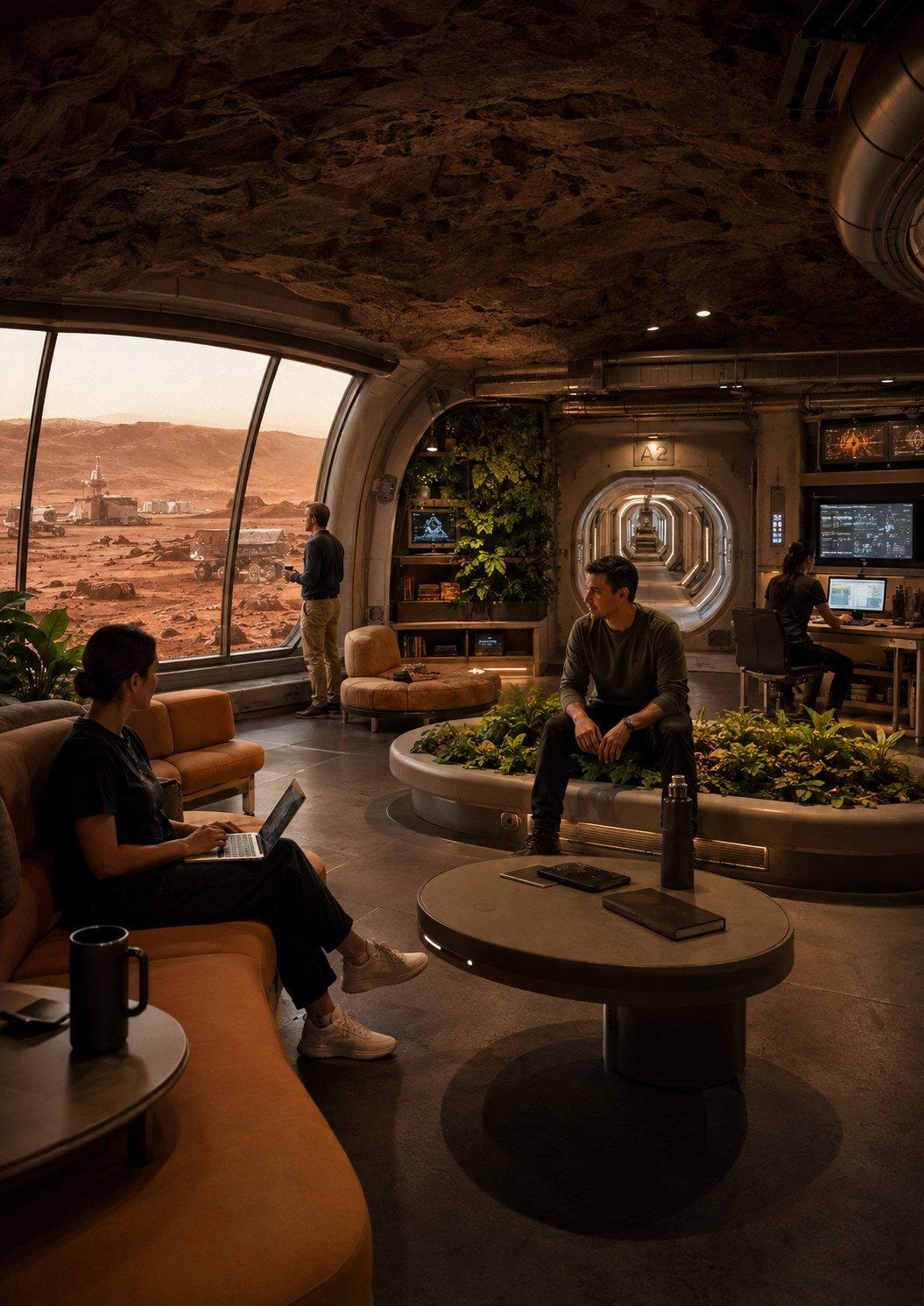
The day the first child is born, Mars stops being only a mission
A crew can be selected, trained and replaced from Earth. A child did not choose a mission profile. Their existence forces different questions: developmental safety, education, cumulative radiation, the ability to leave Mars, healthcare, family privacy and protection from involuntary experimentation.
Demography therefore cannot be treated as a simple population-growth curve. It first depends on medical evidence. If pregnancy at 0.38 g or chronic exposure is poorly understood, demographic optimism is not a safety argument. Yet a settlement that permanently forbids births never becomes demographically autonomous; it remains an outpost sustained by immigration.
The transition will likely be gradual: animal research, partial-gravity evidence, adult health monitoring, radiation standards, obstetric capability, ethics and consent. “How many children?” comes after “what do we actually know about safety?”
The first Mars-born child would be a medical, legal and civilizational event
The first child born on Mars would not simply be “the youngest resident” of a base. The birth would mean that a settlement designed for consenting adults has begun to include a person who chose neither the planet, the gravity, the radiation environment nor the political system in which they will grow. At that point the project changes moral category: the question is no longer only what pioneers accept for themselves, but what a society imposes on the next generation.
Birth would also create an obligation of duration. A crew can imagine collective return if an experiment fails. Families with school-age children, aging residents and people born locally make “everyone goes home” much less realistic. Water, air, power, medicine and knowledge systems stop being mission equipment and become institutions that must outlive their builders.
The real question is not only “can someone be born?” but “can someone develop?”
A successful delivery would answer only the first step. Growth at 0.38 g concerns skeleton, muscle, motor control, vision, balance, cardiovascular development, endocrine systems and learning. A child who crawls, walks, falls, jumps and plays in reduced gravity builds both body and sensorimotor expectations in a different world. No current model can predict with confidence what that means at age eighteen.
The Mars Bible therefore needs to resist two symmetrical stories: the optimistic claim that “humans will simply adapt,” and the catastrophic claim that a Mars-born child would necessarily be unhealthy or Earth-incapable. Both outrun the evidence. The scientifically useful answer is a structured list of unknowns and a research programme.
Pregnancy and early childhood: map uncertainty instead of disguising it
We know a great deal about pregnancy at 1 g and essentially nothing about a complete human pregnancy at 0.38 g. Cell and animal space experiments can reveal mechanisms, but translation to human clinical safety is uncertain. Radiation matters especially for developing tissues, and shielding strategies for maternity areas may differ from those for ordinary workspaces.
An evidence matrix helps: human terrestrial evidence; human microgravity evidence for the relevant system; animal or cell evidence; partial-gravity models; unknown. This prevents a mouse result from becoming a human medical recommendation by accident.
Early childhood adds motor development. Crawling, standing, falling and learning how objects move would occur in a different gravitational field. We do not know that this is harmful on Mars; we do know it could complicate later adaptation to 1 g.
An evidence matrix for every biological stage
Reproduction should be decomposed into stages: gamete production, fertilization, implantation, placental development, organogenesis, fetal growth, birth, neonatal adaptation, infant nutrition, motor development, skeletal maturation, immune development and puberty. Evidence quality can differ at every step. Some questions are grounded in enormous terrestrial human datasets and neighbouring physiological observations in microgravity; others depend mostly on animals or cells; some have almost no directly relevant evidence.
MICEHAB is valuable precisely because the concept proposed multigenerational mammalian research under partial gravity. It does not demonstrate the safety of human pregnancy on Mars. Its importance lies in showing how evidence could be acquired before humans are exposed: reproduction, development, behaviour and effects across generations. Between an experimental mammal concept and a policy for human childbirth lies an enormous scientific and ethical distance.
Radiation and reproduction: exposure is not equally important at every stage
Developing tissues can have stage-specific sensitivities. A shielding average designed for a healthy adult may therefore be inadequate as the sole basis for pregnancy protection. A future maternity area might occupy the best-shielded volume of a settlement, surrounded by water, stores and regolith. EVA could be reduced or prohibited during selected phases if evidence justified it. But until the actual effects are known, such measures must be described as risk reduction rather than guarantees.
This connects urban design directly to biology. The location of a nursery, maternity area or family housing can become a radiation-design decision. The city is then designed not only for healthy workers but for the most vulnerable phases of human life.
A Martian school is also an autonomy system
A small base imports specialists. A lasting city must train physicians, mechanics, engineers, agronomists, teachers, reactor operators, software specialists and public officials locally. Education becomes collective maintenance: it maintains competence.
The curriculum cannot simply reproduce Earth. Children need history, languages, art and general science, but must also understand the air system, water loop, emergency rules, radiation and environmental limits. That is not militarizing childhood; it is civic literacy in a technological habitat.
Earth provides an enormous library but not continuous synchronous teaching. Delay encourages local teachers, recorded resources, simulations and offline knowledge. AI may personalize learning, but the settlement must retain the ability to verify knowledge and preserve culture independently.
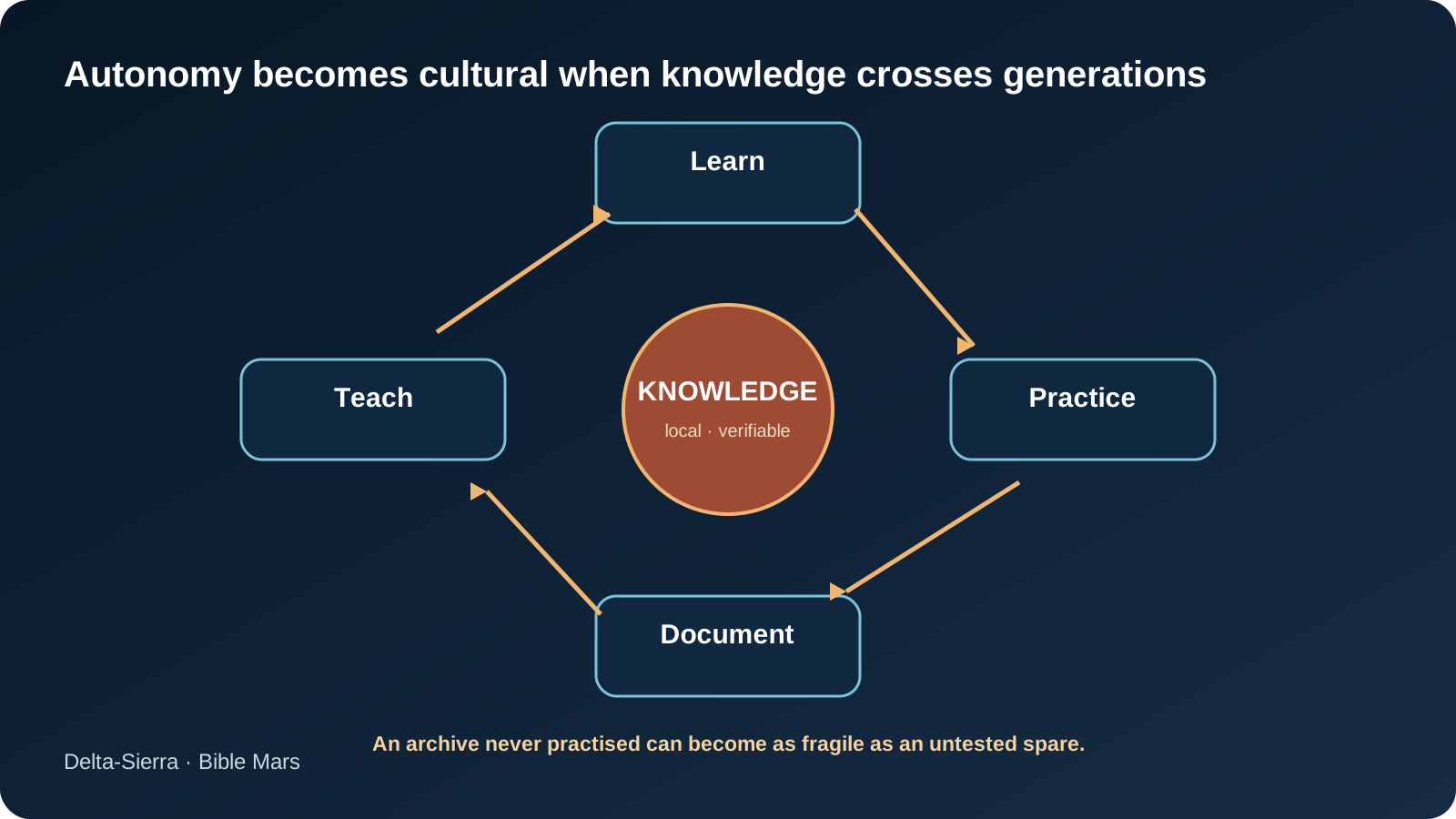
School as a civilization-continuity system
A colony can own extraordinary machines and become more fragile every year if nobody understands them. Education must therefore produce both citizens and the future maintainers of the settlement. Mathematics, physics, chemistry, biology and computing cannot be taught only as abstractions separated from daily life: air, water, power, greenhouses and communications provide real laboratories.
That does not mean turning every child into an engineer. A society also needs literature, history, art, law, philosophy, languages and social science. These fields explain why institutions exist, how earlier societies failed and how people live with disagreement. Intellectual autonomy matters as much as mechanical autonomy.
Learn, practice, document, teach
Knowledge transfer can be described as a loop: learn a skill, apply it on a real system, document what happened and teach another person. If one step fails, knowledge decays. A procedure never practiced becomes theory; an undocumented repair disappears; a skill held by one person becomes a human single point of failure.
Each critical system can therefore maintain a competence map: how many people can operate it, repair it, teach it, and when each person last practiced. Human redundancy becomes measurable. A settlement that owns three pumps but only one person able to restore them does not possess three fully redundant systems.
The local library must survive a silent Earth
A Martian community cannot assume all knowledge will always be online from Earth. Manuals, standards, papers, courses, software, drawings, medical references and historical archives need local copies, version control and open formats where possible. Loss of the interplanetary link must not remove the instructions for a medicine or power converter.
Storage capacity is only part of the problem. Formats must remain readable, backups verified, software retained and authoritative procedure versions identified. The library becomes a living infrastructure maintained like a network or factory.
A Martian school must transmit three categories of knowledge
The first is universal: language, mathematics, science, history, arts, culture, reasoning and social life. The second is local: air, water, energy, dust, airlocks, alarms, fire rules, EVA safety and emergency behaviour. The third is professional: the settlement must reproduce its engineers, caregivers, technicians, agronomists, operators, teachers and decision-makers without relying forever on graduates arriving from Earth.
That third function changes education profoundly. A terrestrial school system can assume that thousands of outside institutions train rare specialists. An isolated city must manage its own portfolio of competence. If thirty skill families are critical and the goal is at least three genuinely capable people in each, that creates 90 competency slots. One person can cover several slots, but the calculation shows why human redundancy has to be managed intentionally.
The local library is insurance against a silent Earth
Knowledge storage cannot assume that “the internet will be there.” Documentation needed to repair ECLSS, reprogram controllers, manufacture a medicine, diagnose disease or understand an alloy must exist locally, with version control, open formats and backups. Solar conjunction should not prevent a student from learning, and a political crisis on Earth should not erase the technical memory of the settlement.
A Martian library therefore combines textbooks, scientific archives, standards, software, source code where possible, 3D models, parts catalogues, maintenance histories and cultural heritage. Continuity of knowledge is infrastructure just as surely as electricity.
Demography is not an exponential curve in a spreadsheet
Real populations have age structure, skills, pregnancies, disease, death and migration. Two populations of one thousand people can therefore have very different resilience.
In a small settlement, a handful of events can reshape the age pyramid. Planning should avoid having an entire generation of specialists retire together or a critical trade resting on a single family. Demography becomes workforce and public-health planning.
Genetic questions require particular caution. A very small isolated population creates long-term diversity concerns, but there is no responsible universal “magic number” without assumptions. Migration, exchange with Earth and biological repositories all change the problem.
Demographic scenarios instead of a magic curve
Colonization graphics often use smooth growth curves. Real populations are messier. They have age structures, skills, health states, pregnancies, deaths, possible departures, years of low birth rate and housing constraints. In a small community, a few individual events strongly alter the trajectory.
An illustrative calculation shows the trap. If a community of 100 residents grew at 2% per year with no limits, N(t)=N₀(1+r)^t gives 100×1.02³⁰ ≈ 181 people after thirty years. The formula says nothing about age structure, number of potential parents, immigration, fertility, housing or life-support capacity. It is mathematically correct inside its assumptions and nearly useless as demographic policy.
Population growth must be synchronized with infrastructure
Every additional resident needs pressurized volume, water, food, power, schooling, health care, fire egress and industrial capacity. Population growth faster than infrastructure raises risk. Growth that is too slow can leave an aging population with too few qualified workers. Demography is therefore coupled to material capacity.
Genetic diversity may eventually matter, but simplistic biological claims should be avoided. A Martian population can receive immigrants, preserve reproductive material, use future medical technology and continue exchanges with Earth. The problem is not finding a magical minimum number of colonists; it is maintaining a healthy, free and sufficiently diverse population across generations.
Why the exponential curve is seductive — and often misleading
A constant growth rate makes an elegant calculation. At 2% per year, a theoretical population doubles after roughly:
t = ln(2) / ln(1.02) ≈ 35 years.
If 100 residents actually grew at 2% every year, the population would approach 200 after about thirty-five years. But the calculation silently assumes a stable age structure, compatible fertility, known mortality, no medical crisis, sufficient habitat capacity and no change in immigration. An early settlement has none of those properties. Four adults of similar age are not a stable population; they are a cohort.
The more useful model is cohort-based: adults by age, new migrants, possible births, delay before the first local generation reaches reproductive age, aging, accidents and infrastructure capacity. The settlement can then compare paths such as high immigration with low birth rates, declining immigration with gradual local births, or deliberately slow growth while major medical unknowns remain unresolved.
Infrastructure has to grow before population, not after it
A birth does not merely add an oxygen and water consumer. It creates medical, educational, spatial and social needs that change with age. A concentrated baby boom can create a sudden demand for professional training two decades later and an aging cohort decades after that. Demography is therefore a future-capacity problem.
Each scenario should test habitable area, ECLSS capacity, food, school places, medical staff, radiation-protected volume, jobs, training and available mentors. A population can be biologically able to grow faster than its industry. In that case, construction and competence — not fertility — become the limiting factors.
Public health and rights: safety does not erase civil limits
Closed habitats provide strong reasons to monitor exposure, infection, air quality and location during emergencies. A city, however, is not just a mission. Residents require medical privacy, appeal mechanisms, private space and rules governing data use.
Public health must isolate disease without turning every citizen into a permanently monitored research subject. Obstetrics and pediatrics make consent especially important. Children born on Mars must not become default experiments merely because their development is scientifically unique.
The tension between safety and liberty may become one of the defining political questions of Mars. The hostile environment makes some rules essential; it also makes clear limits on authority essential.
Bioethics begins before the first pregnancy
A settlement might be tempted to adopt a simple rule: “no pregnancy until safety is proven.” But how can human safety be proven without human pregnancies? Conversely, allowing unrestricted pregnancy immediately would make the first children the first experimental cohort. The dilemma shows why there is no purely scientific threshold.
Governance must define who decides, through which process, under what independent review, and with which rights of appeal. A temporary restriction might be defensible under extreme uncertainty; it should not automatically become permanent authority over reproduction. Residents need to know which data are missing, which experiments are being conducted and what evidence would trigger policy revision.
Consent, medical data and the rights of a Mars-born child
A child could become the most monitored person in the settlement: bone growth, vision, balance, genome, radiation exposure, microbiome and development. Scientifically, those data would be extraordinarily valuable. Ethically, they belong to a person who deserves privacy. The city must separate necessary medical monitoring from scientific curiosity and decide when the individual gains control over their own historical data.
Another question is political: does a Mars-born person have a meaningful right to travel to Earth if their body tolerates 1 g poorly? A theoretical right to mobility may be empty if gravity-conditioning infrastructure does not exist. Freedom can therefore depend on medical and engineering investments made years before travel.
Knowledge transfer: a colony can fail through forgetting
A Martian city depends on thousands of procedures, drawings, software systems and tacit skills. If specialists age without passing on knowledge, technical autonomy declines even if machines still exist. Training, archives and apprenticeship therefore become survival systems.
Knowledge should exist in several durable forms: offline documents, drawings, maintenance histories, video, models, raw data and exercises. A digital archive requiring obsolete software is fragile. A procedure not practised for ten years can be as risky as an untested spare part.
The first generation will inherit much expertise from Earth. The second must be able to understand, criticize and improve it without calling the original designer. At that point Martian autonomy becomes cultural as well as material.
Fifty years: memory must outlive the people who know the system “by heart”
At the beginning, every system has builders and experts. Thirty years later, some will be dead, retired or back on Earth. The equipment may still be operating. A multigenerational settlement therefore has to turn tacit knowledge into transferable knowledge: drawings, procedures, reasons behind design decisions, failure histories, material limits and mistakes already made.
One of the most dangerous systems is a machine that works long enough for everyone to forget why it works. When it eventually fails, documentation may be incomplete and original parts obsolete. Martian education must therefore teach not only how to operate systems but how to reconstruct them from principles.
Rare professions need succession chains
A city of one thousand cannot support unlimited specialists. Some skills may reside in only a handful of people: anesthesia, a particular metallurgical process, power electronics, microbiology, metrology or possible nuclear safety. Every critical competence should have an operational owner, a qualified backup and at least one learner. This succession chain reduces the chance that a personal accident becomes a system failure.
The colony becomes a society when it can produce adults capable of inheriting — and challenging — the technical and cultural world created by the pioneers. A generation that only follows procedures is not autonomous; it has to understand the systems deeply enough to change them.
Being born on Mars changes the scientific and political category of the project
A mission can accept many compromises because it is temporary. A city with children cannot. A child does not choose gravity, radiation dose, atmosphere or isolation. Their presence turns an exploration decision into an intergenerational responsibility. Any architecture that speaks of “colonization” without development, education, rights, pediatrics and knowledge transfer is still describing an adult outpost, not a society.
The first issue is scientific: we do not know how a human organism develops from conception to adulthood under 0.38 g. The second is medical: obstetrics, neonatal care, pediatrics, vaccination, nutrition and emergency care become necessary. The third is social: children need space, relationships, privacy and future options. The fourth is political: a community cannot treat a generation born there as mission personnel.
An evidence matrix protects against easy narratives
For every stage — conception, pregnancy, birth, skeletal growth, motor development, vision, vestibular development and puberty — the page should separate human evidence on Earth, human spaceflight evidence, animal evidence and what is completely unknown at 0.38 g. MICEHAB, for example, is a multigenerational mammalian research concept; it illustrates the need for experiments, not the safety of human pregnancy.
The matrix has a political consequence. While uncertainty remains large, the community should not present birth on Mars as a simple demographic milestone. It should build research, monitoring and care capability and openly discuss what evidence would be required.
Children, rights and collective risk: survival cannot justify unlimited control
In a small base, one person’s behavior can genuinely affect everyone’s safety. Infection, airlock violations or hazardous power operations can have collective consequences. The danger is concluding that Martian society must live permanently under emergency rule. Children and adults still need privacy, personal space, rights, appeals and participation in decisions.
Public health provides a useful example. Quarantine may be necessary during an outbreak; that does not make unrestricted permanent medical surveillance legitimate. Health records may be vital during an emergency; they should not become tools of social sorting. A Martian city will need institutions capable of protecting both collective survival and individual dignity.
The first generational conflict will also be a maturity test
Founders will have chosen Mars. Children born there will not. They may challenge rules created by the first generation, want to leave for Earth or reject some industrial priorities. A viable society must be able to absorb that disagreement. If Martian order works only while everyone shares the founders’ vision, it is not yet a stable civilization.
Education must therefore transmit not only how to maintain the system but how to criticize, change and replace institutions. Political resilience resembles technical resilience: a healthy system must be repairable without collapsing.
A generation needs more than biological survival
Children require developmental opportunity, not merely food, air and shelter. A settlement must provide varied movement, social contact, play, quiet, privacy and access to adults who are not all exhausted by operations. Architecture therefore enters developmental health: a habitat optimized only for mass efficiency can become a poor environment for years of childhood.
Education also protects political continuity. Young residents need to understand why airlocks, water rules and emergency procedures exist, but they also need the intellectual freedom to question inherited rules. A community that teaches maintenance without history or ethics may preserve machines while losing the ability to govern them responsibly.
Demographic planning should use scenarios, not targets
Instead of declaring that a colony “needs” a certain number of births, planners can explore scenarios: continued immigration from Earth, low fertility, temporary medical restrictions, uneven age structure, or rapid infrastructure expansion. Each scenario asks different questions about schools, pediatric care, housing and workforce development. The model should expose assumptions rather than present one curve as destiny.
Population policy also has a rights dimension. Reproductive decisions cannot be treated merely as inputs to a colony-growth spreadsheet. The settlement may have legitimate safety concerns when medical capability is limited, yet coercive control would create profound ethical and political problems. Designing enough medical and material capacity to expand individual choice is therefore itself an autonomy goal.
From fertility to adolescence: every stage carries a different level of evidence
“Reproduction on Mars” sounds like one question, but it hides a very long biological chain: gamete formation, fertilisation, implantation, placental function, organogenesis, fetal growth, birth, neonatal adaptation, skeletal growth, neurological development, motor learning and puberty. A small but persistent effect from radiation or gravity could matter differently at each stage. The rigorous method is not to seek one binary possible/impossible answer, but to record for every stage what is known in humans, what comes from animal models, what is inferred and where there is no direct evidence.
MICEHAB is interesting precisely because the concept addressed mammals over multiple generations under partial gravity with autonomous operations. It is not a human pregnancy experiment and it does not amount to permission to plan immediate Martian births. It belongs on the “mammalian model / research concept” rung of the evidence ladder. A serious reference must resist moving evidence up one rung merely because the story becomes more dramatic.
The ageing of the pioneers is the forgotten mirror image of birth
A multigenerational settlement contains more than children. The first adults age while the population renews itself. Physically demanding jobs must be transferred, chronic diseases emerge, vision and hearing change, and the medical system has to move from highly screened astronaut crews to a normal age distribution. A town that can support birth but not ageing is not a sustainable society.
This transition changes architecture as well. Accessibility, pressurised travel distances, airlock ergonomics, emergency response, rehabilitation, housing and mobility have to accommodate bodies less capable than those of the first crews. Ageing therefore turns a medical issue into an urban-design problem, as it does on Earth, but with less rescue margin.
Immigration and birth are not interchangeable demographic variables
A Martian population can grow by receiving adults from Earth or by local births. Those mechanisms create different age structures, educational needs and biological risks. Immigration imports skills immediately but consumes transport, housing and adaptation capacity. Local birth grows population slowly, creates paediatric and educational needs, and exposes a person to an environment they did not choose.
Demographic scenarios therefore need cohorts. Who arrives, at what age, and who leaves? How many people age in place? When do the first school classes appear? What ratio of active adults, children and older residents can the town support? An exponential curve can provide a mathematical order of magnitude but answers none of those questions. Settlement demography is a system of human flows.
Genetic diversity is a population problem, not a magic minimum number
Popular discussions often search for one minimum founder population that supposedly eliminates inbreeding risk. Real populations are more complicated. Founder diversity, family structure, later immigration, reproductive choices, stored gametes or embryos, mortality, fertility and demographic chance all matter. One isolated number therefore creates false certainty.
The useful approach is to model several scenarios and preserve options. Biological repositories could increase available diversity without removing the need for consent, governance and medical follow-up. A reference work should not simply declare “Mars needs X people.” It should explain which assumptions produce which risks and which policies keep the system reversible.
Bioethics begins long before the first pregnancy
The consent of an adult who accepts a dangerous mission does not settle the status of a child born into an environment where the lifelong effects of 0.38 g, radiation and confinement are unknown. The settlement must therefore debate difficult questions before an emergency: what evidence should exist before pregnancy is encouraged? Can postponement be recommended? Could an authority prohibit it? What happens when a pregnancy already exists? What rights would a child hold over medical data, possible travel to Earth and future care?
There is no human evidence base today that can resolve these questions biologically. That is exactly why governance has to treat them as questions of uncertainty and rights rather than as population-growth targets. Collective survival can justify safety rules; it does not automatically grant unlimited authority over reproduction.
A Martian civilisation must transmit skills it may almost never practise
Critical professions create a special problem: some rare operations may become vital after twenty years of disuse. Major reactor repair, an unusual surgical procedure, system black-start or reconstruction of a machine may not occur during an apprentice’s entire training period. The town must therefore transmit not only everyday knowledge but dormant capability.
The answer combines documentation, simulation, exercises, apprenticeship and archives that remain readable as software formats change. A fifty-year plan has to anticipate expert retirement, digital migration, lost tools and the moments at which a trainee must demonstrate real competence. In that sense school, library and workshop become three parts of the same civilisational continuity system.
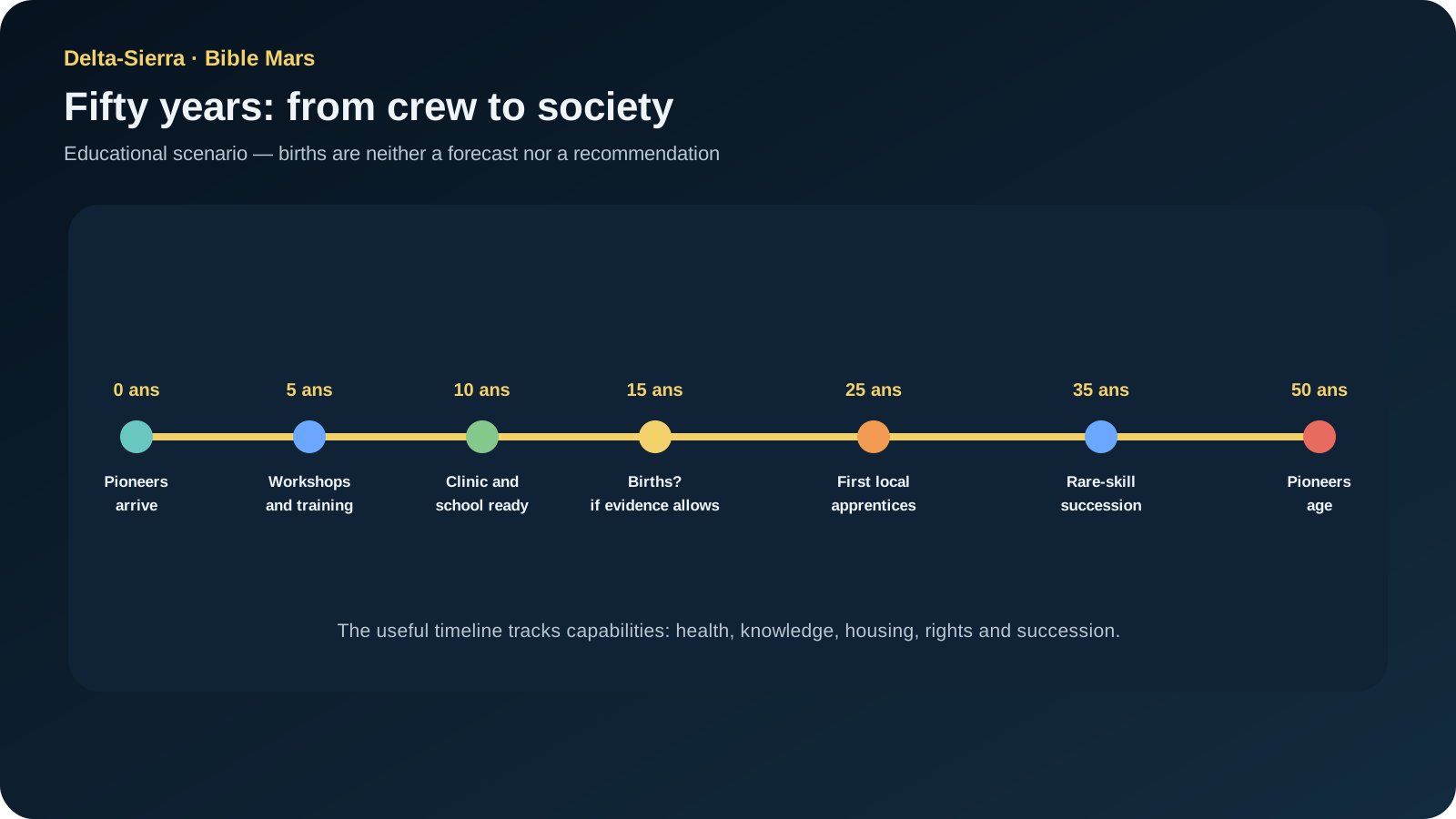
Adolescence: becoming autonomous in a society where every mistake can feel collective
A first Mars-born generation would grow up in a place where air, water and power depend on continuously managed infrastructure. Adults might be tempted to use that risk to justify extremely strong social control. Yet adolescence is a period of increasing autonomy, risk taking and identity formation. A durable society must learn to protect life-critical systems without turning every young person into a permanently monitored operator.
This tension will shape education and urban design. Young people need places to learn responsibility, experiment, play sport, meet others and make mistakes without threatening the habitat. Technical safety should create zones of freedom rather than eliminate them. That is a civilisational design problem as real as sizing an airlock.
Could someone raised at 0.38 g live on Earth? It must remain a question, not a promise
No one can currently guarantee that an adult who spent an entire developmental period at 0.38 g would tolerate prolonged life at 1 g without difficulty. Bone, muscle, circulation and vestibular development would have followed a different history. It would be equally unjustified to declare return impossible. The rigorous statement is that direct human evidence does not exist.
The uncertainty has a rights dimension. If being born on Mars could constrain the ability to live on Earth, birthplace would impose a condition the child never chose. That strengthens the obligation to research, preserve countermeasure options and avoid turning an engineering scenario into a political promise.
Language, memory and culture: society transmits more than procedures
A settlement that teaches maintenance perfectly but neglects literature, history, music, art and political argument may produce technicians without producing a rich civilisation. Later generations need to understand why institutions exist, which historical failures produced safety rules and how to challenge decisions without endangering life-support systems. Culture supplies tools for questions that cannot be reduced to equations.
Distance from Earth will probably accelerate local references: places, accidents, heroes, phrases, celebrations and shared memories. A specific “Martian culture” cannot be predicted in advance, but identity is not a secondary variable. A durable town needs to preserve multiple inherited cultures while allowing a local memory to emerge.
Rights of future generations: pioneers cannot decide only for themselves
Adults who choose Mars may accept high personal risk. They cannot automatically transfer that acceptance to children born there. A settlement must therefore confront a difficult question: what level of medical evidence is sufficient before pregnancy is encouraged, tolerated or simply supported safely?
The issue becomes harder when collective survival is invoked. A very small base may believe simultaneous pregnancies exceed medical capacity, yet unlimited administrative control over reproduction would create an authoritarian society. Rules would need to be anticipated, reviewable, rights-protecting and accountable rather than improvised during crisis.
The right to return is another unknown. If a person raised at 0.38 g required major preparation to tolerate 1 g, a theoretical seat to Earth would not equal real freedom of movement. This is not an established scientific fact; it shows how physiological uncertainty can become a legal issue.
Cultural continuity matters as much as technical continuity. A colony that preserves every maintenance manual but loses art, history, literature and political memory may remain functional without remaining fully human. Martian archives must preserve procedures and science, but also the record of why institutions made their choices.
Before the first birth: define decision gates, not a timetable
The most dangerous narrative would treat reproduction as an automatic growth phase: a few years after landing, the base simply “moves on” to children. No evidence can honestly set such a date today. A better method defines decision gates: what knowledge is still missing, what medical capability must exist, what legal protections are required, and which observations would force delay?
From gametes to adulthood: many different problems hidden inside one word
“Reproduction” includes gamete quality, fertilization, implantation, placental development, embryonic and fetal development, birth, neonatal transition, bone growth, vestibular development, puberty and adult fertility. An experiment can inform one stage without validating the others. Rodent Research-20, for example, studies ovarian function and fertility in mice after spaceflight exposure. It is an important piece of evidence, not permission to generalize directly to humans.
MICEHAB belongs to another category: a concept for multigenerational mammalian research under partial gravity. The important word is “concept.” It shows which questions researchers would like to test; it does not demonstrate that multiple human generations can live healthily at 0.38 g.
A medical gate, an institutional gate and a rights gate
A responsible decision should distinguish at least three gates. The medical gate covers obstetric capability, emergency surgery, blood, imaging, laboratory support, neonatal care, medication, infection control, nutrition and long-term follow-up. The institutional gate requires independent review, traceable decisions, incident records, data protection and a mechanism to suspend the program. The rights gate covers adult consent, the interests of the child, freedom from demographic pressure, education, privacy and periodic review of the rules.
Small population size makes those protections harder, not less necessary. In a twenty-person base, physician, commander, employer and neighbor may be the same person or part of the same tiny circle. Conflicts of interest therefore become an architectural problem for institutions.
School should create human redundancy without assigning children to jobs
An isolated town needs several people capable of understanding every life-critical system. That argues for broad scientific literacy, workshops, practical learning and deliberate transfer of rare skills. But skills redundancy must not become occupational assignment. The goal is to expand future choices, not decide at age twelve who must become the ECLSS technician because a staffing spreadsheet predicts a shortage in 2058.
At one thousand residents, the challenge changes again. A single school becomes an education system with specialist teachers, vocational training, research, culture, sport and support for different needs. Demography has become public policy. That is the point at which a base definitively stops being an extended crew.
Genetic diversity is not a single minimum-population number
Popular discussions often search for a “magic number” of settlers needed to avoid inbreeding. Real populations depend on kinship structure, later arrivals, possible gamete banks, individual choices and reproductive freedom. Reducing society to genetic optimization turns people into program parameters. Population genetics should therefore be presented as a constraint to study, never as permission to plan couples.
Over decades, diversity can also be supported by successive migration rather than one founding departure. Demography therefore connects to transportation and politics: a town that completely stops exchanging people with Earth follows a different trajectory from one receiving periodic arrivals.
The right to childhood requires spaces without immediate productivity
In an expensive habitat, every cubic metre will be pressured to justify itself. Yet children need play, privacy, sport, exploration and time without immediate output. Such spaces are not decorative luxury. They support physical, social and cognitive development. A colony optimized only for adult survival may be a deeply unsuitable place for a generation expected to grow up there.
From the first child to the first adult generation: fifty years of irreversible decisions
A settlement becomes a society when its decisions bind people who never chose the original mission. A child born on Mars does not sign an exploration contract. That child inherits a gravity field, radiation environment, medical uncertainty, technical culture and institutions created before birth. Demography, education and bioethics are therefore not optional social appendices; they determine whether a settlement can be technically and morally durable.
A developmental evidence matrix: from gametes to adulthood
Reproduction should be separated into stages because each has different mechanisms and evidence: gametogenesis, fertilisation, implantation, embryogenesis, placental development, fetal growth, birth, vestibular development, bone growth, puberty and adult fertility. Animal and cellular experiments can inform individual cells in this matrix, but they cannot be combined into the false statement that human reproduction on Mars is already understood.
NASA Rodent Research and developmental-biology programs are valuable precisely because they ask focused questions. They can examine ovarian function, tissue development or descendants after spaceflight exposure. A Martian reproductive policy, however, would have to combine far more: radiation, maternal nutrition, partial gravity, obstetric capability, neonatal care, rights and consent.
School as a safety infrastructure without becoming a coercive system
On Earth, loss of a rare skill can be mitigated by recruitment, a nearby university or specialist contractor. On Mars, a critical capability may exist in only one or two people. Education must therefore transmit general knowledge while preparing new generations to take over life-support maintenance, medicine, power, agriculture, software, chemistry, construction and surface operations.
That requirement must not turn children into inventory items. A durable society also needs choice, privacy, art, play and the possibility of becoming something other than the occupation most urgently needed by the colony. The challenge is to make knowledge redundancy compatible with human freedom.
Cohort demography: population size is not enough
A settlement of one thousand can have radically different needs depending on age structure. A young population demands schools and pediatrics; an aging population requires chronic medication, rehabilitation and support. Cohort models follow age, arrival year, births, deaths and migration. They are harder than an exponential curve but far more informative.
Immigration and local births are also not equivalent. An arrival from Earth brings a trained adult immediately but consumes an interplanetary seat. A local birth builds long-term continuity but creates decades of medical, educational and rights obligations. Real demographic policy will balance logistics, genetic diversity, age structure, medical capability and individual choices rather than chasing a single population target.
The day a base considers a birth, it enters a different moral and scientific category
A mission can be aborted, a crew can return and a technical experiment can be stopped. Pregnancy and childhood development are not reversible engineering trials. The generations question therefore begins with an uncomfortable fact: knowledge of mammalian reproduction under reduced gravity remains fragmentary, and no human pregnancy has ever occurred at Martian 0.38 g. NASA maintains a body of research on reproduction and development in space, but its own program description emphasizes that reproduction, offspring development and multigenerational effects remain fundamental questions that can challenge researchers for years.
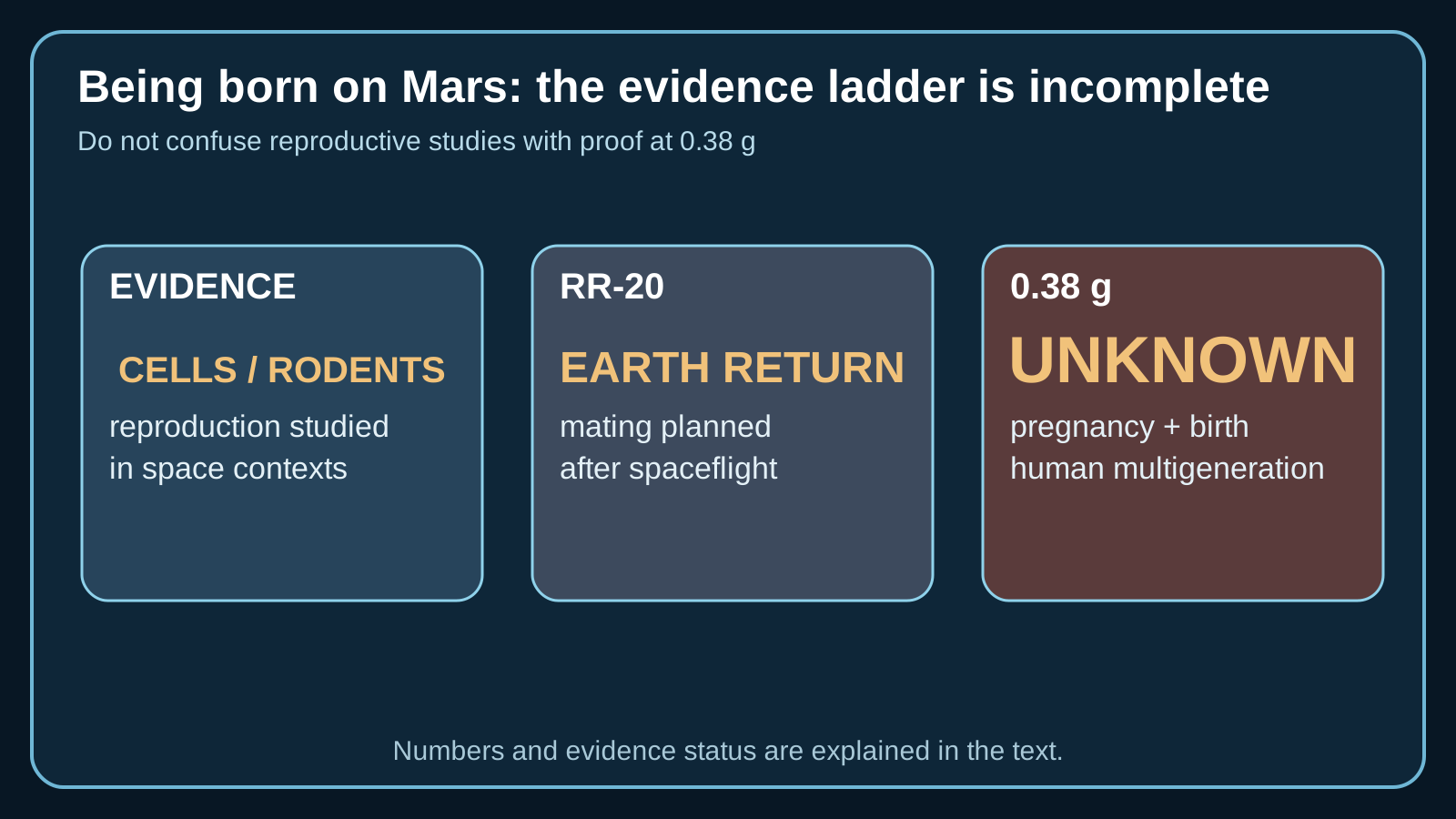
What is actually known: fragments of the process, not the full chain. Space research has studied reproductive cells, tissues, adult animals, selected phases of gestation and rodent development. NASA's reproductive-biology program summarizes experiments showing that altered gravity can influence hormonal and developmental processes. A Martian society, however, needs a much harder chain of evidence: fertilization, implantation, full pregnancy, birth, growth, puberty, fertility of the next generation, skeletal health, neurodevelopment and aging under combined partial gravity and radiation.
RR-20 illustrates methodological caution. Rodent Research-20, launched to the ISS in November 2023, studies female mouse ovarian function and hormone signaling after spaceflight, with groups evaluated after roughly twelve and sixty days. One group is to be mated after return to Earth so fertility and offspring health can be assessed. That design is instructive: the experiment addresses an important reproductive question without pretending to perform multigenerational reproduction in flight.
A mission concept is not biological proof. NASA Langley studied a mission concept for multigenerational mammalian reproduction under partial gravity using rodents and a rotating habitat. It is a research architecture: it identifies the kind of experiment that would be needed to inform future settlements. It would be incorrect to cite it as evidence that reproduction at 0.38 g is safe. Its existence demonstrates the size of the experimental gap.
Society should define evidence criteria before there are candidates. A responsible settlement should decide in advance what evidence would be required before considering pregnancy: multigenerational partial-gravity animal data, maternal-fetal radiation protection, obstetric and neonatal capability, imaging, appropriate pharmacy, blood supply, nutrition, developmental surveillance, genuinely free consent, and perhaps access to artificial gravity if 0.38 g proves insufficient. Those criteria should not be improvised after families have already settled.
Demography is not only a table of births. Even if the biology became acceptable, a city must manage age and skill structure. One thousand residents with very few children may age together; a rapid baby boom can saturate schools, pediatrics, housing and food production. Demography therefore has to connect with education, health, work and transmission of knowledge without turning individual reproductive decisions into political quotas.
Primary and institutional sources: NASA Science — Developmental, Reproductive & Evolutionary Biology Program; NASA Science — Rodent Research-20; NASA NTRS — A Mission Concept to Study Multigenerational Mammalian Reproduction in Partial Gravity.
Before the first birth, a settlement must build a society capable of protecting people who never chose Mars. The first adult settlers can accept risk after information and consent. A child born on Mars did not choose gravity, radiation, isolation or medical distance. That difference changes the problem. The question is no longer only “can adults survive?” but can this environment support acceptable development for someone who spends an entire childhood there?
“Reproduction” hides several different biological experiments. Fertility, fertilization, implantation, embryonic development, pregnancy, birth, growth, puberty and the fertility of the next generation are different endpoints. A viable reproductive cell does not prove normal fetal development. A female mouse remaining fertile after spaceflight does not prove a complete pregnancy at 0.38 g is safe. NASA’s RR-20 illustrates the distinction: the study examines female mice after space exposure and plans to mate one group after return to Earth. That can answer an important question, but it is not a birth-in-space experiment.
Gravity and radiation cannot be treated as independent. A possible Mars pregnancy would combine 0.38 g with a radiation environment unlike Earth’s. Embryonic and fetal tissues divide rapidly, demanding particular caution about radiation. Gravity also participates in mechanical loading and sensory development. Demonstrating tolerability of one factor alone would not establish safety of their combination.
A city can be materially ready and biologically unready. Schools, housing and a maternity room can be built before the evidence exists. Infrastructure does not create safety. A responsible milestone would be evidence-based: multigenerational partial-gravity animal studies, developmental follow-up, radiobiology, obstetric and neonatal capability, pharmacy, imaging, blood products, emergency surgery and the ability to manage complications without evacuation.
Education becomes survival infrastructure. In a small colony, school does more than transmit general culture. The next generation must be able to maintain the systems on which life depends: air, water, energy, agriculture, medicine, information systems, metrology and construction. That does not mean turning every child into an engineer. It means maintaining enough skill diversity that essential knowledge cannot disappear with one person.
Demography should size capacity, not control people. A settlement must model housing, teachers, pediatric care, calories and medical capacity under different population scenarios. Those calculations size infrastructure; they do not justify reproductive quotas. The ethical problem is to preserve individual autonomy in an environment where each birth has unusually visible logistical consequences.
Decisive open question: if future evidence showed that some developmental stages require more than 0.38 g, would a Mars society provide rotating habitats, long-duration centrifuges or postpone pregnancy? Science does not answer that today. A reference work should make that uncertainty impossible to hide behind enthusiasm.
Sources: NASA Science — Rodent Research-20; NASA Science — Developmental, Reproductive & Evolutionary Biology.
A generation requires continuity of institutions, not only biological viability. Even if pregnancy and childhood development were eventually shown to be medically acceptable, a settlement would still need to survive the much slower timescale of education. A pump can be replaced in hours; training an experienced physician, materials engineer or teacher takes years. Demographic planning therefore has to map future age structure against the time needed to create competence.
Skills are another resource that can run out. If only one resident knows how to calibrate a critical analyzer, that knowledge is a single point of failure. The remedy is not to assign a profession to children in advance. It is to document procedures, create apprenticeships, maintain broad foundational education and ensure several adults can teach each critical field. As population grows, universities, technical schools and research laboratories become part of life-support resilience because they regenerate expertise.
Childhood changes habitat design. An adult expedition can accept ladders, tight hatches, high work surfaces and an environment optimized for trained operators. Children require different fall protection, air-quality margins, furniture, exercise, play space and emergency procedures. In partial gravity, even basic questions such as how locomotion and motor development change with age remain open. Architecture designed only around adult astronaut anthropometry may therefore be unsuitable for a permanent society.
Public health must protect development over years. Growth is longitudinal: height, bone mass, vision, cognition, hearing, immune development and mental health must be interpreted over time. A pediatric system would need reference data that initially do not exist for Mars. Early cohorts would therefore generate scientifically valuable information while also deserving stronger protections precisely because their data are unprecedented.
The safest planning principle is to separate capacity readiness from permission. A settlement can build pediatric, obstetric and educational capacity before reproduction is considered acceptable. Having the capacity reduces risk if circumstances change; it should never be presented as pressure to create a birth milestone.
Specialized sources — reproduction, development and generations
- NASA Science — Developmental, Reproductive & Evolutionary Biology — research program on reproduction and development
- NASA Science — Rodent Research — long-duration animal research platform
- NASA NTRS — MICEHAB — multigenerational mammalian partial-gravity concept
- ESA — Mars500 — isolation, sleep, stress and crew dynamics
- NASA Science — Rodent Research-20 — mouse ovarian function and fertility after spaceflight exposure
Children would turn an outpost into a society before they greatly increased its population. Radiation, gravity, care, nutrition, privacy and education would no longer be compromises accepted by informed adult volunteers; they would be conditions imposed on someone born there. Evidence and ethics therefore have to precede demographic goals.
A multigenerational community must also preserve skills that Earth cannot deliver in an emergency. Education becomes continuity infrastructure: science, maintenance, medicine, governance and incident memory must be transferable. Demography is inseparable from the material and institutional capacity to provide a safe childhood.
Education in a permanent settlement has two simultaneous purposes: individual development and continuity of civilization-critical competence. Children should not be treated as future technicians whose curriculum exists only to serve infrastructure, yet the community cannot ignore the need to reproduce medical, engineering, scientific, legal, and operational knowledge across generations. A resilient education system therefore combines broad intellectual formation with progressively accessible pathways into scarce specialties. It also preserves the reasons behind procedures, not only the procedures themselves, because inherited rules eventually encounter equipment and circumstances their authors never saw.
Demography should be planned with uncertainty rather than with a target birth rate. Health effects of conception, gestation, childhood development, and lifelong residence in partial gravity are not established by current human evidence. Any policy that assumes normal reproduction at scale would therefore outrun the data. A cautious settlement would need staged research, strong consent and medical safeguards, the option to delay irreversible decisions, and enough social capacity to support children whose needs differ from adult crews. Population growth becomes an ethical and biomedical question before it becomes a numerical growth objective.
Primary sources — generations, development and human factors
Reproduction and childhood require an unusually strict evidence ladder. Cells, tissues, rodents, or short altered-gravity exposures can reveal mechanisms without demonstrating that pregnancy, birth, and development would be safe at 0.38 g under Martian radiation. The references are therefore classified by what they actually demonstrate.
- NASA NTRS — MICEHAB — Multigenerational mammalian partial-gravity research concept.
- NASA — Animal Biology Program — Animal models relevant to development and partial gravity.
- ESA — Mars500 study overview — Isolation and human dynamics: an analogue, not a biological Mars simulation.
- Cole et al. — Biological and ethical assessment of human reproduction in space — 2025 academic synthesis on biology and bioethics of reproduction in space.
- NASA NESC — Safe Human Expeditions Beyond LEO — Health uncertainties required for cautious multigenerational scenarios.