


MARS BIBLE — PEOPLE
Michael Hecht
Michael Hecht's documented nationality or citizenship is Not explicitly stated in the institutional sources cited; the documented birthplace is Not stated in the institutional sources cited. Michael Hecht is one of the researchers who pushed Martian ISRU across a symbolic threshold: from studying resources to producing one on Mars. After decades at JPL, experience with characterization instruments and Phoenix, he led MOXIE at MIT and demonstrated with Perseverance that oxygen can be extracted from the CO₂-rich atmosphere. His career matters because it shows how a long history of measurement can culminate in a technology essential to any settlement seeking to reduce dependence on Earth.
Chronological biography
The main narrative now follows the life in order: training, early work, acquired skills, missions, difficulties, teams, and responsibilities before reaching the Mars legacy.
Before 2008 — Three decades at JPL: turning measurements into instruments
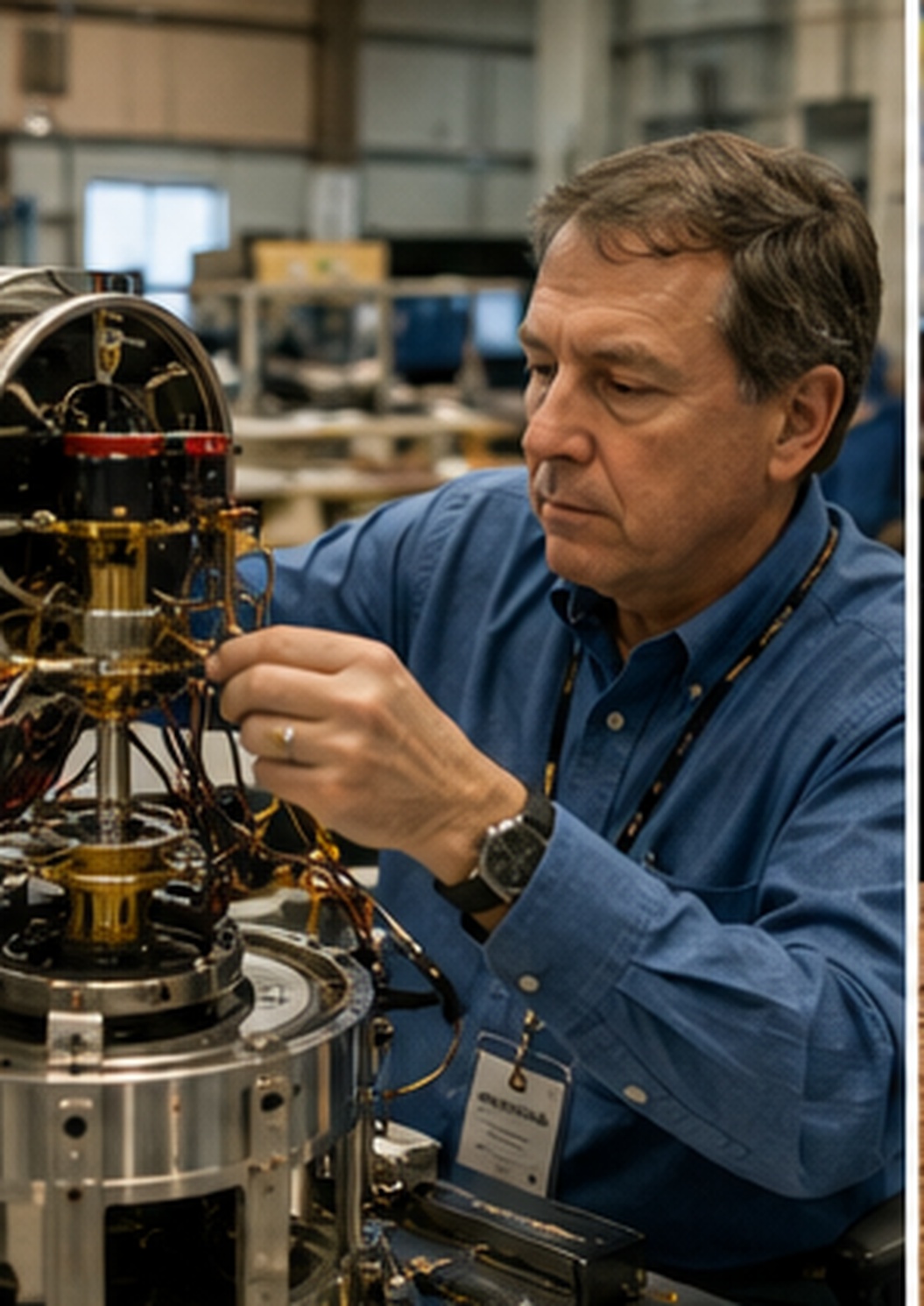
Three decades at JPL before MOXIE: learning how a measurement becomes flight hardware. Michael Hecht’s Mars story did not begin with an oxygen-making box on Perseverance. NASA notes that before moving to MIT in 2012 he spent about thirty years at the Jet Propulsion Laboratory. That span matters because a Mars instrument is not simply a physical idea. It has to survive mass and power limits, vibration, thermal cycles, dust, software interfaces and remote operations. Decades in a flight laboratory provide the experience required to turn a laboratory effect into hardware that can be reviewed, qualified and trusted on another planet.. Hecht spent much of his career learning how to measure difficult environments before attempting to produce anything from them. At JPL he worked on instruments and studies where precision, interfaces and hardware survival mattered as much as the scientific idea. Phoenix and the MECA suite strengthened that habit: before using a Martian resource, engineers must understand the soil, atmosphere and contaminants with which the system will actually operate. MOXIE therefore emerged as the logical continuation of an engineer-scientist accustomed to turning physical phenomena into devices capable of surviving on another planet.. Source Institutional source
His work crossed several areas, making him an instrument builder rather than a single-topic specialist. The common question is measurement: what can actually be observed on another world, with what calibration, uncertainty and operational risk? That discipline becomes especially valuable on Mars, where a device cannot be adjusted by a technician standing beside it.
Institutional sources: NASA Ames — Michael Hecht biography and MOXIE
Michael Hecht spent roughly three decades at the Jet Propulsion Laboratory and worked, among other missions, on the Phoenix Mars Lander. He moved to MIT Haystack Observatory in 2012 and thought his Mars work was largely behind him. That detour matters because MOXIE was not the project of a newcomer captivated by one technology; it was led by an experienced instrument scientist already familiar with planetary hardware and mission constraints. MIT — assembling the MOXIE team
When NASA solicited oxygen-production experiments for Mars 2020 in 2013, former JPL colleagues encouraged Hecht to lead a proposal. He considered the chance of selection small. MOXIE’s selection in 2014 then forced the team to earn credibility with the human-exploration community: the objective was not merely to perform interesting science but to test a link in a future Martian industrial chain.
The path from Phoenix to MOXIE shows how a Mars career can change in kind. Hecht already had long experience with JPL, instruments, and the constraints of surface missions when he moved to MIT Haystack Observatory. When the idea of producing oxygen from Martian carbon dioxide returned, it was not enough to show that the chemistry worked on paper. An industrial process had to be reduced to the scale of a rover experiment, power and mass limits accepted, thermal behavior managed, product quality measured, and a protocol designed to prove the principle without pretending to be a full factory. Selection for Mars 2020 therefore reflected accumulated competence: understanding the physics of the instrument, the constraints of the rover, and the larger question of what a future crew should manufacture locally rather than carry from Earth.
2008–2020 — Phoenix, MIT and the transition from analysis to ISRU
Phoenix and MECA: understand Martian material before trying to use it. Hecht served as principal investigator for MECA on the Phoenix lander, a collection of experiments for microscopy and soil properties. Phoenix landed in 2008 at high northern latitude. This stage of his career came before the industrial vision of MOXIE: first characterize grains, salts, chemistry and physical behavior. Resource utilization begins with the uncomfortable fact that the resource may also be a contaminant, a processing challenge or a health constraint. Source.
MOXIE then required a different posture: the goal was no longer only to characterize Mars but to demonstrate that a system could produce a useful resource there. The experiment had to be small enough to ride on Perseverance, robust enough for the Martian environment and instrumented well enough that every gram of oxygen taught engineers about a much larger future machine. Hecht therefore treated MOXIE as a bridge between science and infrastructure. It was not yet a factory, but it closed a fundamental question: the process can work on Mars itself. Institutional source.
The connection between science instruments and ISRU is therefore direct. Science establishes what the environment actually contains; engineering asks how to use it reproducibly. The soil chemistry encountered by Phoenix is a warning against slogans such as “use the regolith.” A settlement will need feedstock specifications, contamination control, quality assurance and process windows just as terrestrial industry does.
Institutional sources: NASA Ames — MECA/Phoenix in Hecht biography · JPL — Michael Hecht research profile
Before MOXIE, Michael Hecht had already spent decades turning scientific questions into hardware capable of reaching Mars. NASA notes that before moving to MIT in 2012 he spent about thirty years at the Jet Propulsion Laboratory and served as principal investigator for MECA on Phoenix. That background matters: a Mars instrument must survive launch, vacuum, cold, thermal cycling, dust, limited power and the impossibility of calling a technician. MECA was designed to interrogate Martian soil. MOXIE changes the logic: instead of only observing the environment, the instrument tries to use a resource from it. [MH1] [MH2]
MOXIE draws in the carbon-dioxide-rich Martian atmosphere, compresses it and processes it in a solid-oxide electrolysis stack operating at very high temperature. NASA/PDS documentation describes operation around 800 °C. The challenge is therefore not merely chemical: temperature, flow, pressure, power, filtration and control must work together. For the history of Mars exploration, the transition is important. The question becomes not whether local production can be imagined, but whether a miniature industrial process can actually operate in the Martian environment. [MH2] [MH3]
2012–2020: from analyzing Mars to making a resource there. After leaving JPL for MIT in 2012, Hecht became principal investigator of MOXIE. The question changed from analysis to production: can the carbon-dioxide-rich Martian atmosphere be processed to make oxygen? That requires process engineering as well as science — intake, compression, heating, solid-oxide electrolysis, separation, purity measurement and thermal control all have to coexist inside a rover. Source.
MOXIE could not be the size of a future crew’s propellant plant; it was one experiment on Perseverance. Its purpose was to retire a different risk: prove that the process could operate in the real Martian atmosphere, under real pressure and environmental variation. That is how settlement technologies should mature: demonstrate the mechanism in context before claiming industrial scale.
Institutional sources: NASA — MOXIE overview
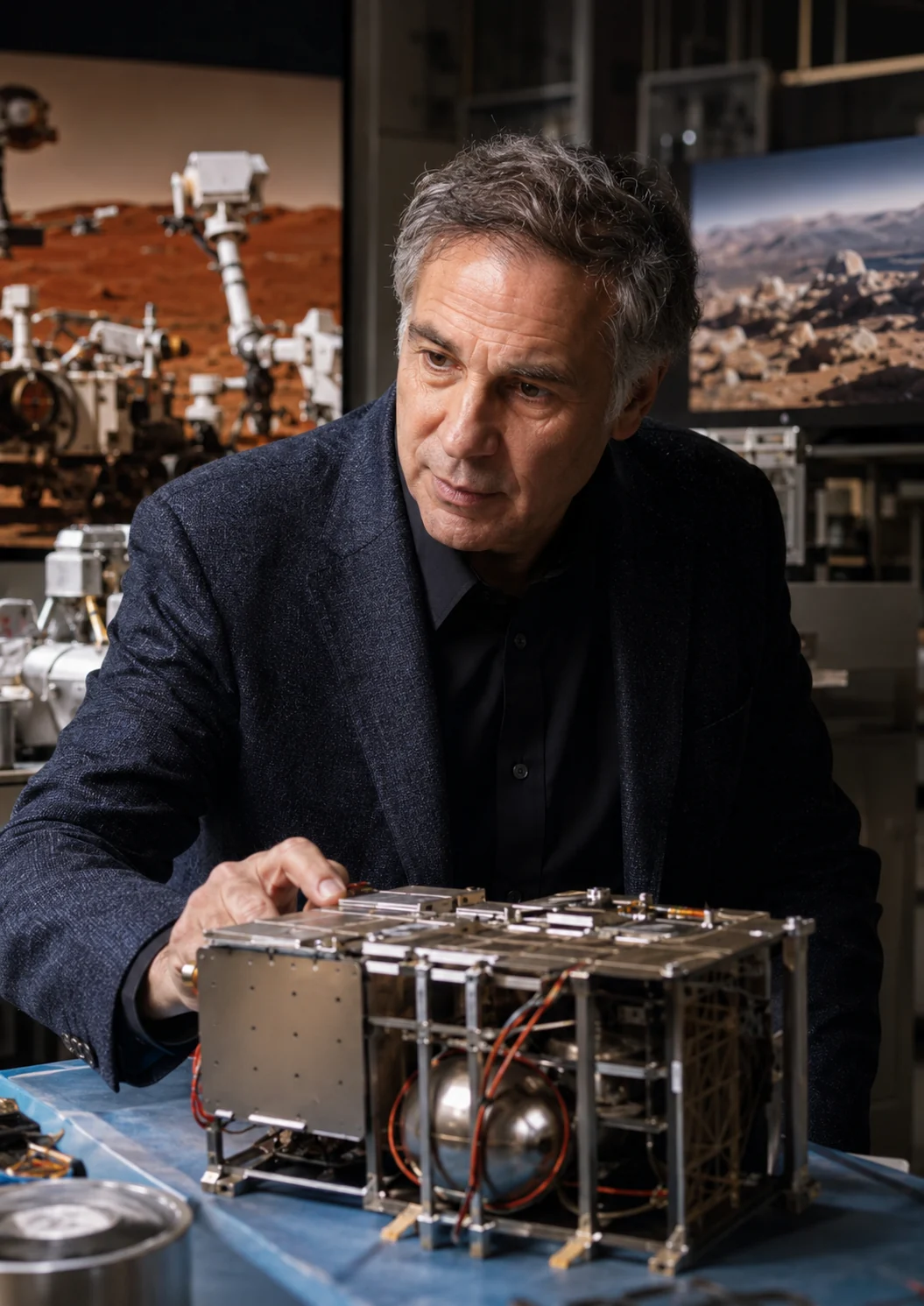
Hecht led MOXIE as principal investigator. The demonstrator compresses Mars’s carbon-dioxide-rich atmosphere and uses solid-oxide electrolysis to separate oxygen. The first success in 2021 did not prove that a full-scale Mars oxygen plant already exists; it closed a more fundamental question by demonstrating the physical and chemical chain on the planet itself. Later runs explored different conditions and helped define what must change when scaling from an experiment to production relevant to crews and, especially, return propellant. MIT — MOXIE creates oxygen on Mars
2021–2023 — MOXIE on Mars: demonstrate, repeat and define the limits
2021–2023: successful oxygen production, followed by the harder scale-up question. MOXIE operated repeatedly on Mars, and JPL described completion of the experiment as a successful technology demonstration. Oxygen matters for breathing, but the larger mass requirement for a human return mission is oxidizer for propulsion. The experiment therefore links a small rover payload to a very large future industrial need. What it does not do is make the industrial plant already solved. [source]
Hecht’s contribution is best understood as a maturity pathway: characterize the environment, build a prototype, operate it on the target planet, record its limits, then design the next scale. MECA and MOXIE connect two indispensable stages of settlement engineering — knowing the local material and learning how to transform it without confusing a successful experiment with a production system. [source]
Institutional sources: JPL — MOXIE mission completion
By the end of the campaign, NASA/JPL reported that MOXIE had made oxygen in sixteen runs, producing about 122 grams in total, reaching roughly 12 grams per hour and at least 98 percent purity. Those quantities would be negligible for a human base, but scale was not the demonstration’s purpose. The experiment operated on Mars and showed that a real process chain could extract oxygen from the local atmosphere. What terrestrial testing had promised was confronted with the actual environment. [MH2] [MH3]
The next step is much harder. On a human mission, oxygen for ascent propellant can outweigh the oxygen needed for breathing. An operational plant would need to make kilograms per hour for months and then liquefy, store and monitor the product before the crew arrived. MOXIE did not demonstrate that complete factory or years of maintenance. Hecht’s contribution is more precise: ISRU moved from a plausible architecture to a technology for which a critical link has actually worked on another planet. [MH3] [MH4]
MOXIE matters because it turned ISRU from a strategic verb into a measured process operating in the Martian environment. Producing oxygen repeatedly forced the team to confront intake conditions, electrochemistry, thermal management, power demand and the limits of a small demonstrator. The successful runs therefore answer a narrower but much more useful question than ‘can Mars make oxygen?’: can a specific process be operated and characterised on Mars well enough to justify the next engineering step? [source]
Hecht’s biography also shows why demonstration and infrastructure must remain separate categories. A settlement-scale oxygen plant would need orders of magnitude more throughput, redundancy, maintenance access, storage and integration with power and propellant systems. MOXIE reduced uncertainty; it did not remove the scale-up problem. That disciplined interpretation is one of the most important lessons his work contributes to human Mars planning. [source]
Michael Hecht holds a particular place in Mars history because MOXIE turned a frequently discussed idea — using local resources — into an experiment operating on another planet. The principle is easy to state but demanding to implement: take carbon dioxide from the Martian atmosphere, process it at high temperature and produce oxygen with a compact system able to survive rover constraints.
Hecht's importance lies in connecting scientific instrumentation with future-exploration engineering. MOXIE was not sized to support a crew or fill a return vehicle. It was designed to demonstrate processes, measure performance, understand impurities, thermal behaviour and endurance, then provide data from which a much larger system could be designed.
For a settlement, that development logic is exemplary. The jump between a small experiment and a plant producing tonnes of oxygen is enormous. But without an intermediate flight experiment the architecture would remain theoretical. Hecht's work therefore illustrates an essential method: fly a representative demonstrator early, learn in the real environment and use those results to reduce the risk of the future industrial system.
Supplementary documentary analysis
Biographical analysis, context and legacy
Thematic analysis and deeper reading
Essential timeline
- Before 2012About three decades at JPL, including scientific and instrument leadership.
- 2008Principal investigator for MECA on Phoenix.
- 2012Moves to MIT and Haystack Observatory.
- 2021MOXIE produces oxygen on Mars aboard Perseverance.
- 2021–2023MOXIE repeats production under varied Martian conditions and completes its demonstration campaign.