


MARS BIBLE — PEOPLE
Michael Meyer
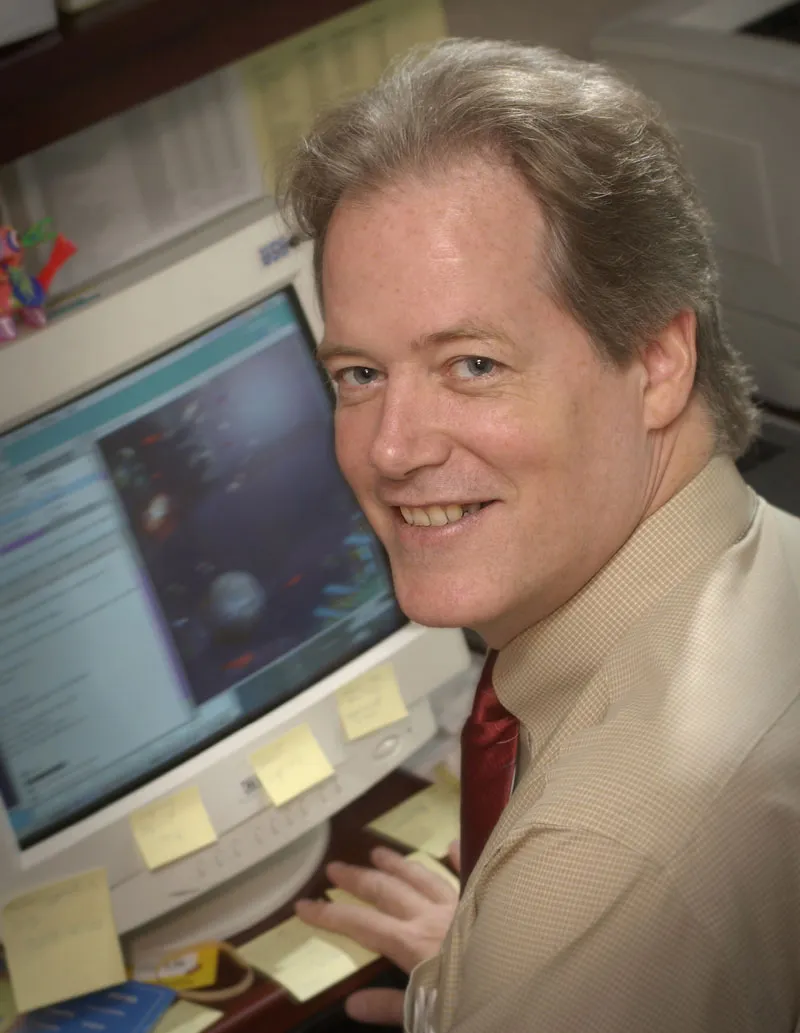
Michael Meyer's documented nationality or citizenship is Not explicitly stated in the institutional sources cited; the documented birthplace is Not stated in the institutional sources cited. Michael Meyer played a long-standing role in shaping the questions NASA asks about Mars. Trained first as an engineer and later drawn toward life science and astrobiology, he helped build programs that moved from merely describing Mars toward understanding habitability, the history of water and the best strategies for samples. His career illustrates the less visible but essential work that turns scattered discoveries into coherent scientific priorities.
Chronological biography
Engineering then biology — A course correction that prepared the question of life
Starting in engineering, switching to biology: an early course correction. Michael Meyer has described entering Rensselaer Polytechnic Institute in engineering because he was good at mathematics and was told that engineering would fit. He later decided the field did not interest him enough and switched to biology. That change is central to the career that followed. His later work in astrobiology and Mars programs sits exactly at the interface between physical exploration and the biological questions that make the search for life meaningful.. Meyer began in engineering before shifting his career toward life science and the larger questions of habitability. That dual culture matters: a Mars mission is neither just a biological experiment nor just a vehicle, but a translation of scientific questions into instruments, operations and decision criteria. Across his NASA roles, Meyer helped make that translation between communities. He contributed to programs in which water, habitable environments and samples were no longer separate topics but stages of a coherent scientific strategy.. Source
After graduation he moved into oceanography. He also recalls working as a deck hand on a treasure-salvage operation off Florida. The story is more than color: field science is carried out within logistics, weather, equipment, shifts and physical constraints. Oceanographic work and later Antarctic cruises extended that culture of working with real environments rather than only idealized models.
Institutional sources: NASA Astrobiology — Michael Meyer interview
Michael Meyer has described starting at Rensselaer Polytechnic Institute in engineering because he was good at mathematics, then deciding that biology interested him more. That change became foundational. His later Mars work would sit precisely at the interface between the physical constraints of missions and biological questions about life. Source
He then moved toward oceanography and field research. The path is a reminder that astrobiology is not an obvious undergraduate endpoint. It is built by combining biology, chemistry, geology and the study of extreme environments.
Meyer took part in oceanographic and Antarctic work involving organisms adapted to cold, dry and strongly seasonal environments. Field science forces a distinction between what is actually measured and what is merely assumed about an environment labelled extreme. That caution later becomes essential for Mars. Source
Searching for Martian life cannot be reduced to a sensor returning yes or no. Researchers must ask whether an environment was habitable, whether a biosignature could be preserved and whether an instrument has the necessary sensitivity. That chain explains why Mars exploration advances through successive missions rather than one experiment expected to settle the question.
Meyer worked on NASA's Exobiology programme, became an astrobiology discipline scientist and served as programme scientist for Mars missions. The job sits between laboratories, instrument teams, geologists and programme management. An orbiter can identify a target; a rover can characterise it; a future mission can decide what material should be cached or returned. Source
His contribution is therefore continuity of questions. Human Mars exploration will need the same discipline because crews will do science while also changing the environment around them. Operations must preserve questions that can only be asked before contamination, excavation or construction.
Michael Meyer has described beginning at Rensselaer Polytechnic Institute expecting to become an engineer because he was good at mathematics, then changing direction because biology felt more exciting. After college he moved into oceanography, worked as a deck hand on a treasure-salvage operation, and later joined expeditions that included Antarctica. Those experiences led him toward microorganisms in cold and extreme environments. NASA Astrobiology — Interview with Michael Meyer
The trajectory explains his path into astrobiology. Meyer did not approach Mars only as a world of rocks, but as a problem connecting geology, water, chemistry, microbiology, planetary protection, and mission design. At NASA Headquarters he worked across exobiology, astrobiology, and Mars exploration, helping turn broad questions — water, habitability, life-detection, samples — into sequences of missions.
Oceanography and Antarctica — Studying microorganisms at environmental limits
Oceanography and Antarctica: learning from microorganisms at environmental limits. Meyer joined Antarctic cruises and studied algae and microorganisms associated with cold and dry environments. The bridge to astrobiology is direct. Estimating whether life could exist elsewhere requires evidence about the actual limits of terrestrial organisms and about the conditions under which biological signatures can form and persist. Source.
That background also prepares an important Mars distinction: looking for life is not identical to looking for a once-habitable environment. When a direct signal is unlikely, exploration can proceed step by step — water, mineralogy, geochemistry, available energy, preservation of organics, then carefully selected samples. Meyer’s later program work is built around that cumulative logic.
Institutional sources: NASA Astrobiology — oceanography, Antarctica and extreme environments
Meyer served as program scientist for Mars Odyssey, Curiosity, and other missions, and later led science for NASA’s Mars Exploration and Mars Sample Return programs. The role reveals a different kind of expertise: preserving a scientific question across generations of spacecraft while instruments, budgets, and architectures change. Mars exploration becomes cumulative — map the planet, identify water, characterize habitability, select samples, and protect the chain of evidence. NASA Astrobiology — Michael Meyer
1994–2000s — From NASA exobiology to a Mars strategy built around successive questions
NASA: from exobiology to a sequence of Mars questions. Meyer managed NASA’s Exobiology Program from 1994 to 1997, later held senior astrobiology responsibilities and became program scientist for missions including Mars Odyssey and Curiosity. He also served in planetary-protection roles. That career put him between communities that do not use exactly the same evidence: biologists, geologists, chemists, instrument builders and mission managers. Source.
A major part of the job is maintaining scientific continuity across missions. An orbiter may identify minerals or hydrogen; a rover can investigate the setting; a later mission can decide which samples deserve caching or return. The answer from one mission becomes a requirement for the next. That is the opposite of treating Mars exploration as disconnected publicity events.
Institutional sources: NASA Astrobiology — Mars program career · NASA Astrobiology — 2024 career retrospective
His NASA career then placed him at the interface between science and programme management. He managed exobiology, served in planetary-protection roles, held astrobiology responsibilities and worked as programme scientist on multiple missions. Such a position does not mean driving a rover or designing a single instrument. It means converting very broad questions — was Mars habitable, which environments should be sampled, which measurements are decisive — into priorities precise enough to guide engineers and scientists. [source]
Mars Exploration and Sample Return — Making planetary exploration cumulative
Mars Exploration and Sample Return: making planetary exploration cumulative. Meyer became a senior science leader for Mars Exploration and Mars Sample Return planning. Sample return forces long-term reasoning. Selecting a rock on Mars means thinking about what Earth laboratories may measure years later, how geological context is documented, which contaminants have to be controlled and how the sample chain preserves evidence. [source]
For human exploration, that legacy becomes even more important. Astronauts will be extraordinary field scientists, but they also introduce far more contamination and much stronger pressure to use local terrain for operations. Meyer’s career therefore represents a governing principle: Mars exploration should accumulate evidence in an order that increases the value of the next mission instead of damaging the measurements it will need. [source]
Institutional sources: NASA Astrobiology — 2024 career retrospective [source]
Mars sample return concentrates problems that robotic exploration can otherwise keep separate. Teams must choose samples with geological context, prevent terrestrial contamination, document every transfer, preserve custody and prepare laboratories able to study material that may be scientifically unique. The objective is not merely to bring tubes home. A remarkable rock with weak context loses interpretive power; contamination can blur an organic signal; incomplete records can make it impossible to distinguish a Martian feature from something introduced by hardware or handling. Program science therefore protects the quality of evidence as much as it protects the sample itself. [source]
Human explorers would make that problem more difficult. People bring microbes, organics, waste streams, industrial processes and constant movement. Their field capability is extraordinary, but the environment around a settlement would quickly cease to be pristine. The choice is not simply science versus settlement. It is a governance problem: which regions must be studied first, which zones remain protected, which procedures are reversible, and how evidence is preserved before human activity changes the site. Meyer’s trajectory provides a core lesson: exploring Mars requires a chain of trust from the original question, through operations and sampling, all the way to the interpretation published years later. [source]
Michael Meyer’s career is useful precisely because it did not begin as a straight line toward Mars. In NASA Astrobiology interviews he describes starting in engineering because mathematics came naturally, then moving into biology when he found living systems more compelling. That shift foreshadows the structure of astrobiology itself. Habitability cannot be evaluated by one discipline. Geology, chemistry, climate, microbiology, instruments and mission constraints all have to be connected, and each field uses different evidence and different definitions of success. Meyer became valuable not because he stayed inside one narrow specialty, but because he learned to translate between scientific communities that must cooperate on the same planetary problem. [source]
The search for life therefore begins well before a detector reports an organic molecule. A program has to ask what environments existed, whether liquid water persisted long enough, which energy sources were available, what rocks could preserve biosignatures and which abiotic processes can mimic biology. Those broad questions must then become measurable requirements: landing-site criteria, instrument capabilities, sampling rules and mission sequences. This is the less visible work of a program scientist. A good scientific question is only the beginning; a space program must turn it into observations that can survive engineering trade-offs and still produce evidence strong enough to change what the next mission does. [source]
Meyer’s trajectory is especially useful because the individual missions do not read as isolated appointments. Exobiology, planetary protection, Mars Odyssey, Curiosity and sample-return planning all force the same habit: define what evidence would answer the biological question, then preserve the chain that makes that evidence interpretable. That chain runs from orbital reconnaissance to landing-site context, from field measurements to sample documentation, and finally to laboratories that may not even exist when the sample is selected. The biography therefore shows how a scientist can become valuable to Mars not by owning one instrument, but by learning how questions survive across successive missions. [source]
The Antarctic and oceanographic work also matters more than a short ‘extreme environments’ label suggests. It trained Meyer to think about organisms at the edge of measurable conditions, about contamination, and about the difference between absence of evidence and evidence of absence. Those distinctions later become operational. A Mars program has to decide where to look, what to sterilize, which measurements can be trusted, and what must be preserved for later analysis. The institutional sources linked on this page make that continuity visible from terrestrial biology to Mars program science. Source · Sample-return context.
Building a Mars strategy across generations of missions. Meyer’s work spans several phases of the Mars Exploration Program. Mars Odyssey, rover science, MEPAG planning and Mars Sample Return studies belong to one intellectual chain in which each mission narrows uncertainty and prepares the next. Orbital mineralogy identifies promising terrain; surface geology tests environmental histories; in-situ laboratories determine which materials deserve deeper study; caching and eventual sample return make possible Earth-based analyses that cannot be fully miniaturized. The sequence is cumulative, but it is never automatic. A surprising result can force the community to change priorities rather than simply execute a plan written a decade earlier.
MEPAG illustrates this architecture of learning. It does not by itself select NASA missions, but it organizes community questions into goals and investigations that mission designers can use. A human Mars program would need the same discipline. A settlement cannot be designed as one isolated construction project; it has to grow from orbital reconnaissance, resource mapping, weather records, ISRU demonstrations, health studies and planetary-protection decisions. Meyer’s career therefore shows what a program really is: not a queue of spacecraft, but a learning system in which mission N should produce both scientific results and the information required to make mission N+1 less uncertain.
Supplementary documentary analysis
Biographical analysis, context and legacy
Thematic analysis and deeper reading
Essential timeline
- PeriodMars Exploration Program
- MarsOdyssey, Curiosity, Mars Sample Return
- LegacyHabitability, life and science strategy
Deep reading: what this trajectory teaches
RPI: becoming a biologist after starting as an engineer
Michael Meyer has described entering Rensselaer Polytechnic Institute as an engineering student because mathematics came easily to him, then deciding that biology was far more compelling. The change is more than an anecdote: it helps explain why his later career sat at the interface between organisms, environments and the machines used to explore other worlds. 1
Oceanography and later work on microorganisms in cold and extreme environments taught him that “could life exist here?” is not answered by one measurement. Water, chemistry, energy, environmental duration and biological tolerance all matter. That ecological reasoning would later map naturally onto Mars and onto the shift from simply searching for life toward characterising environments that could have supported it.
Michael Meyer entered Rensselaer Polytechnic Institute because he was good at mathematics and was advised to study engineering. He changed direction when biology proved more compelling. That shift explains part of his later career: he understood the language of technical systems without treating life as a secondary variable. In his Mars work, engineering, geology, chemistry and biology gradually became disciplines that had to be organized around the scientific question rather than pursued in isolation. [source]
In the chapter “RPI: becoming a biologist after starting as an engineer,” this framework forces a check between the precise historical fact, the scientific question actually being asked and the constraints specific to that stage of the career.
In the career of this science researcher and architect of astrobiology and the Mars program, “RPI: becoming a biologist after starting as an engineer” provides a comparison with earlier stages.
For “RPI: becoming a biologist after starting as an engineer,” the Mars application should therefore be stated as a specific reduction of uncertainty rather than a general promise of settlement.
As a teaching case, “RPI: becoming a biologist after starting as an engineer” also separates three levels that are often blurred together: the observed or documented fact, the scientific interpretation that gives it meaning, and the operational decision made from that interpretation.
In “RPI: becoming a biologist after starting as an engineer,” that boundary is intentionally part of the result: it states what this stage supports and what it still leaves open.
Oceanography, treasure salvage and Antarctic expeditions
After college, Meyer moved into oceanography. He has recalled working as a deck hand on a treasure-salvage operation off Florida and later participating in cruises that took him to Antarctica. The path seems far removed from Mars, but it taught a lesson central to extreme-environment science: access, sampling, contamination control, instruments that must work in cold conditions and an unbroken chain of context from field site to laboratory are all part of the science. [source] [source]
What matters is not only what worked. That vulnerability makes the episode instructive. In the chapter “Oceanography, treasure salvage and Antarctic expeditions,” this framework forces a check between the precise historical fact, the scientific question actually being asked and the constraints specific to that stage of the career.
The chapter “Oceanography, treasure salvage and Antarctic expeditions” also shows that the work of a science researcher and architect of astrobiology and the Mars program is collective by construction.
For “Oceanography, treasure salvage and Antarctic expeditions,” the Mars application should therefore be stated as a specific reduction of uncertainty rather than a general promise of settlement.
As a teaching case, “Oceanography, treasure salvage and Antarctic expeditions” also separates three levels that are often blurred together: the observed or documented fact, the scientific interpretation that gives it meaning, and the operational decision made from that interpretation.
In “Oceanography, treasure salvage and Antarctic expeditions,” that boundary is intentionally part of the result: it states what this stage supports and what it still leaves open.
Cold-desert microorganisms: expanding the meaning of habitable
Meyer worked on microorganisms and algae in polar and desert environments. Extremophiles progressively changed what scientists considered a biological limit. The Mars analogy must remain precise: Antarctica has terrestrial pressure, abundant oxygen and a connected biosphere. Its value is to show how transient liquid water, cold, desiccation and nutrient scarcity select biological strategies, not to reproduce Mars as a whole. [source] [source]
In the chapter “Cold-desert microorganisms: expanding the meaning of habitable,” this framework forces a check between the precise historical fact, the scientific question actually being asked and the constraints specific to that stage of the career.
To understand “Cold-desert microorganisms: expanding the meaning of habitable,” the full chain matters more than one headline result. The science researcher and architect of astrobiology and the Mars program works inside a system where a schedule decision can change an observation, an instrument limit can redefine the testable hypothesis, and the documentation of an anomaly can matter as much as nominal success.
For “Cold-desert microorganisms: expanding the meaning of habitable,” the Mars application should therefore be stated as a specific reduction of uncertainty rather than a general promise of settlement.
As a teaching case, “Cold-desert microorganisms: expanding the meaning of habitable” also separates three levels that are often blurred together: the observed or documented fact, the scientific interpretation that gives it meaning, and the operational decision made from that interpretation.
In “Cold-desert microorganisms: expanding the meaning of habitable,” that boundary is intentionally part of the result: it states what this stage supports and what it still leaves open.
1993–1997: exobiology and planetary protection
Meyer managed NASA's Exobiology Program beginning in 1993 and served as Planetary Protection Officer from 1994 to 1997. The roles are closely related but can pull in opposite directions. The more seriously a mission searches for life, the more carefully it must control terrestrial microbes carried with it. Contamination can create false positives, alter an extraterrestrial environment or complicate later investigations. Planetary protection is therefore not merely a legal constraint; it protects the interpretability of science. [source] [source]
Every observation has an opportunity cost. In the chapter “1993–1997: exobiology and planetary protection,” this framework forces a check between the precise historical fact, the scientific question actually being asked and the constraints specific to that stage of the career.
At this stage, “1993–1997: exobiology and planetary protection” reveals how experience changes judgment. The science researcher and architect of astrobiology and the Mars program never has perfect information; the skill is learning which uncertainties can be tolerated, which require another measurement and which should stop a sequence.
For “1993–1997: exobiology and planetary protection,” the Mars application should therefore be stated as a specific reduction of uncertainty rather than a general promise of settlement.
As a teaching case, “1993–1997: exobiology and planetary protection” also separates three levels that are often blurred together: the observed or documented fact, the scientific interpretation that gives it meaning, and the operational decision made from that interpretation.
In “1993–1997: exobiology and planetary protection,” that boundary is intentionally part of the result: it states what this stage supports and what it still leaves open.
Astrobiology: building a discipline across different languages
In a 2002 NASA Astrobiology interview, Meyer stressed that astrobiology forces different disciplines to learn one another’s languages: biology, geology, chemistry, planetary science and instrumentation. For him, creating a common intellectual framework was not administrative decoration. It shaped which questions a mission could pose and which instruments had to be matured years before launch. 2
This perspective clarifies his influence without falsely making him the author of every mission he supported. A program scientist is not the rover builder or the PI of each payload. Meyer worked at portfolio scale, helping successive missions — Odyssey, the rovers, MRO, MAVEN, Curiosity, Perseverance and sample-return concepts — advance a sequence of questions rather than repeatedly performing the same exploration.
In the mid-1990s NASA's exobiology effort broadened into astrobiology. Meyer became a discipline scientist and co-chaired work on the early roadmap. The issue was not merely terminology. Biologists, geologists, chemists, astronomers and engineers do not always use the same definitions of evidence, environment or signal. A roadmap turns broad questions—life's origin, distribution and future—into research objectives and technologies that can be prepared before a mission opportunity appears. [source] [source]
In the chapter “Astrobiology: building a discipline across different languages,” this framework forces a check between the precise historical fact, the scientific question actually being asked and the constraints specific to that stage of the career.
In the career of this science researcher and architect of astrobiology and the Mars program, “Astrobiology: building a discipline across different languages” provides a comparison with earlier stages.
For “Astrobiology: building a discipline across different languages,” the Mars application should therefore be stated as a specific reduction of uncertainty rather than a general promise of settlement.
As a teaching case, “Astrobiology: building a discipline across different languages” also separates three levels that are often blurred together: the observed or documented fact, the scientific interpretation that gives it meaning, and the operational decision made from that interpretation.
In “Astrobiology: building a discipline across different languages,” that boundary is intentionally part of the result: it states what this stage supports and what it still leaves open.
ALH84001: learning to live with an extraordinary claim
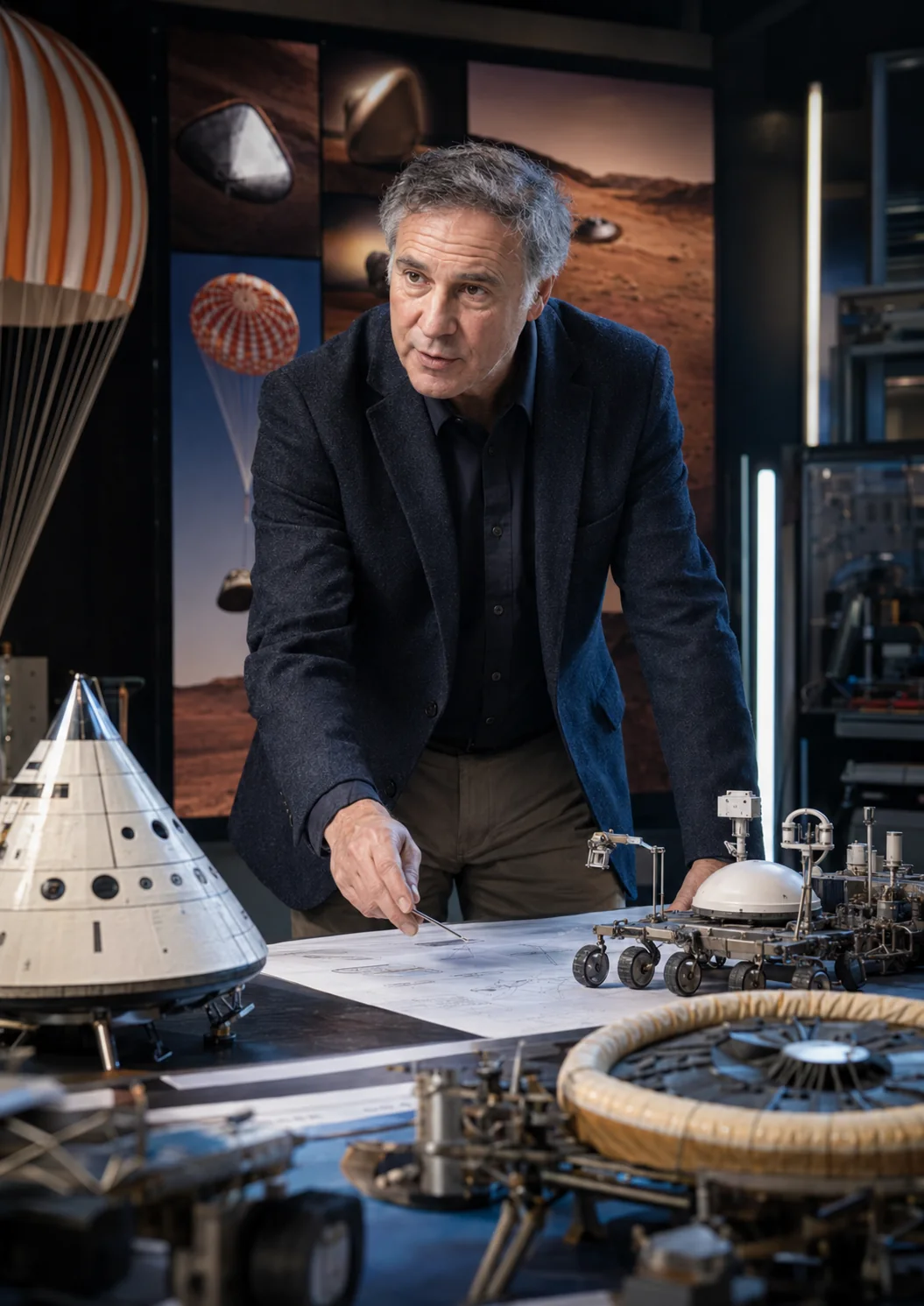
The controversy around Martian meteorite ALH84001 abruptly returned possible Martian life to public attention in the 1990s. Meyer worked in a period when several features were presented as consistent with biology and then intensely debated. The episode strengthened a rule that remains central for Mars: the more important the claim, the more it requires independent lines of evidence, knowledge of abiotic alternatives and samples with a well-understood contamination history. [source]
What matters is not only what worked. That vulnerability makes the episode instructive. In the chapter “ALH84001: learning to live with an extraordinary claim,” this framework forces a check between the precise historical fact, the scientific question actually being asked and the constraints specific to that stage of the career.
The chapter “ALH84001: learning to live with an extraordinary claim” also shows that the work of a science researcher and architect of astrobiology and the Mars program is collective by construction.
For “ALH84001: learning to live with an extraordinary claim,” the Mars application should therefore be stated as a specific reduction of uncertainty rather than a general promise of settlement.
As a teaching case, “ALH84001: learning to live with an extraordinary claim” also separates three levels that are often blurred together: the observed or documented fact, the scientific interpretation that gives it meaning, and the operational decision made from that interpretation.
In “ALH84001: learning to live with an extraordinary claim,” that boundary is intentionally part of the result: it states what this stage supports and what it still leaves open.
Exploring Mars through successive questions
In a 2002 interview, Meyer described a stepwise strategy: begin with broad questions, let answers determine the next question, and first identify environments that could have supported life. That logic helps explain the progression from 'follow the water' to habitability, biosignature preservation and samples. It protects the program from relying on a single mission that claims to answer 'is there life?' without first knowing where to look or which false positives must be excluded. [source]
In the chapter “Exploring Mars through successive questions,” this framework forces a check between the precise historical fact, the scientific question actually being asked and the constraints specific to that stage of the career.
To understand “Exploring Mars through successive questions,” the full chain matters more than one headline result. The science researcher and architect of astrobiology and the Mars program works inside a system where a schedule decision can change an observation, an instrument limit can redefine the testable hypothesis, and the documentation of an anomaly can matter as much as nominal success.
For “Exploring Mars through successive questions,” the Mars application should therefore be stated as a specific reduction of uncertainty rather than a general promise of settlement.
As a teaching case, “Exploring Mars through successive questions” also separates three levels that are often blurred together: the observed or documented fact, the scientific interpretation that gives it meaning, and the operational decision made from that interpretation.
In “Exploring Mars through successive questions,” that boundary is intentionally part of the result: it states what this stage supports and what it still leaves open.
Mars Odyssey: an orbiter inside a cumulative program
Meyer served as program scientist for 2001 Mars Odyssey. The orbiter mapped near-surface hydrogen, used gamma-ray spectroscopy and provided relay infrastructure that became crucial for later surface missions. Its value therefore exceeds its own scientific papers. A mature program reuses spacecraft as system elements: a geology mission can become a communications node, climate archive and source of context for selecting future landing sites. [source]
Every observation has an opportunity cost. In the chapter “Mars Odyssey: an orbiter inside a cumulative program,” this framework forces a check between the precise historical fact, the scientific question actually being asked and the constraints specific to that stage of the career.
At this stage, “Mars Odyssey: an orbiter inside a cumulative program” reveals how experience changes judgment. The science researcher and architect of astrobiology and the Mars program never has perfect information; the skill is learning which uncertainties can be tolerated, which require another measurement and which should stop a sequence.
For “Mars Odyssey: an orbiter inside a cumulative program,” the Mars application should therefore be stated as a specific reduction of uncertainty rather than a general promise of settlement.
As a teaching case, “Mars Odyssey: an orbiter inside a cumulative program” also separates three levels that are often blurred together: the observed or documented fact, the scientific interpretation that gives it meaning, and the operational decision made from that interpretation.
In “Mars Odyssey: an orbiter inside a cumulative program,” that boundary is intentionally part of the result: it states what this stage supports and what it still leaves open.
Deep Space 2 and Mars Polar Lander: learning from the 1999 failures
Meyer also served as program scientist for the Mars Microprobe/Deep Space 2 effort. The losses of Mars Climate Orbiter, Mars Polar Lander and the microprobes in 1999 deeply changed the culture of the Mars program. Scientifically, a mission that returns no data has failed; institutionally, interfaces, testing, requirements and unverified assumptions can still be studied. Rebuilding Mars exploration in the early 2000s depended on preserving the memory of failure as seriously as the memory of success. [source] [source]
In the chapter “Deep Space 2 and Mars Polar Lander: learning from the 1999 failures,” this framework forces a check between the precise historical fact, the scientific question actually being asked and the constraints specific to that stage of the career.
In the career of this science researcher and architect of astrobiology and the Mars program, “Deep Space 2 and Mars Polar Lander: learning from the 1999 failures” provides a comparison with earlier stages.
For “Deep Space 2 and Mars Polar Lander: learning from the 1999 failures,” the Mars application should therefore be stated as a specific reduction of uncertainty rather than a general promise of settlement.
As a teaching case, “Deep Space 2 and Mars Polar Lander: learning from the 1999 failures” also separates three levels that are often blurred together: the observed or documented fact, the scientific interpretation that gives it meaning, and the operational decision made from that interpretation.
In “Deep Space 2 and Mars Polar Lander: learning from the 1999 failures,” that boundary is intentionally part of the result: it states what this stage supports and what it still leaves open.
Curiosity: from program strategy to a habitability experiment
Meyer became program scientist for Mars Science Laboratory/Curiosity and more broadly a lead Mars scientist. Curiosity embodies the stepwise strategy: it was not designed as a direct detector of present life but as a laboratory for evaluating past habitability, chemistry, mineralogy, organics and radiation. Yellowknife Bay demonstrated the strength of that architecture: a less spectacular but better-defined question can produce a robust conclusion about an ancient habitable environment. [source] [source]
What matters is not only what worked. That vulnerability makes the episode instructive. In the chapter “Curiosity: from program strategy to a habitability experiment,” this framework forces a check between the precise historical fact, the scientific question actually being asked and the constraints specific to that stage of the career.
The chapter “Curiosity: from program strategy to a habitability experiment” also shows that the work of a science researcher and architect of astrobiology and the Mars program is collective by construction.
For “Curiosity: from program strategy to a habitability experiment,” the Mars application should therefore be stated as a specific reduction of uncertainty rather than a general promise of settlement.
As a teaching case, “Curiosity: from program strategy to a habitability experiment” also separates three levels that are often blurred together: the observed or documented fact, the scientific interpretation that gives it meaning, and the operational decision made from that interpretation.
In “Curiosity: from program strategy to a habitability experiment,” that boundary is intentionally part of the result: it states what this stage supports and what it still leaves open.
Methane: accepting a negative result
When Curiosity initially failed to detect the methane expected from some previous reports, Meyer emphasized that the result reduced one specific hypothesis—present methane-producing microbes—without eliminating every possible form of life. It is a useful example of rigor. A negative result is not a failure if the experiment genuinely tests a hypothesis. Mars science progresses in part by shrinking the space of plausible scenarios. [source]
In the chapter “Methane: accepting a negative result,” this framework forces a check between the precise historical fact, the scientific question actually being asked and the constraints specific to that stage of the career.
To understand “Methane: accepting a negative result,” the full chain matters more than one headline result. The science researcher and architect of astrobiology and the Mars program works inside a system where a schedule decision can change an observation, an instrument limit can redefine the testable hypothesis, and the documentation of an anomaly can matter as much as nominal success.
For “Methane: accepting a negative result,” the Mars application should therefore be stated as a specific reduction of uncertainty rather than a general promise of settlement.
As a teaching case, “Methane: accepting a negative result” also separates three levels that are often blurred together: the observed or documented fact, the scientific interpretation that gives it meaning, and the operational decision made from that interpretation.
In “Methane: accepting a negative result,” that boundary is intentionally part of the result: it states what this stage supports and what it still leaves open.
Mars 2020: selecting instruments for a mission that must also prepare samples
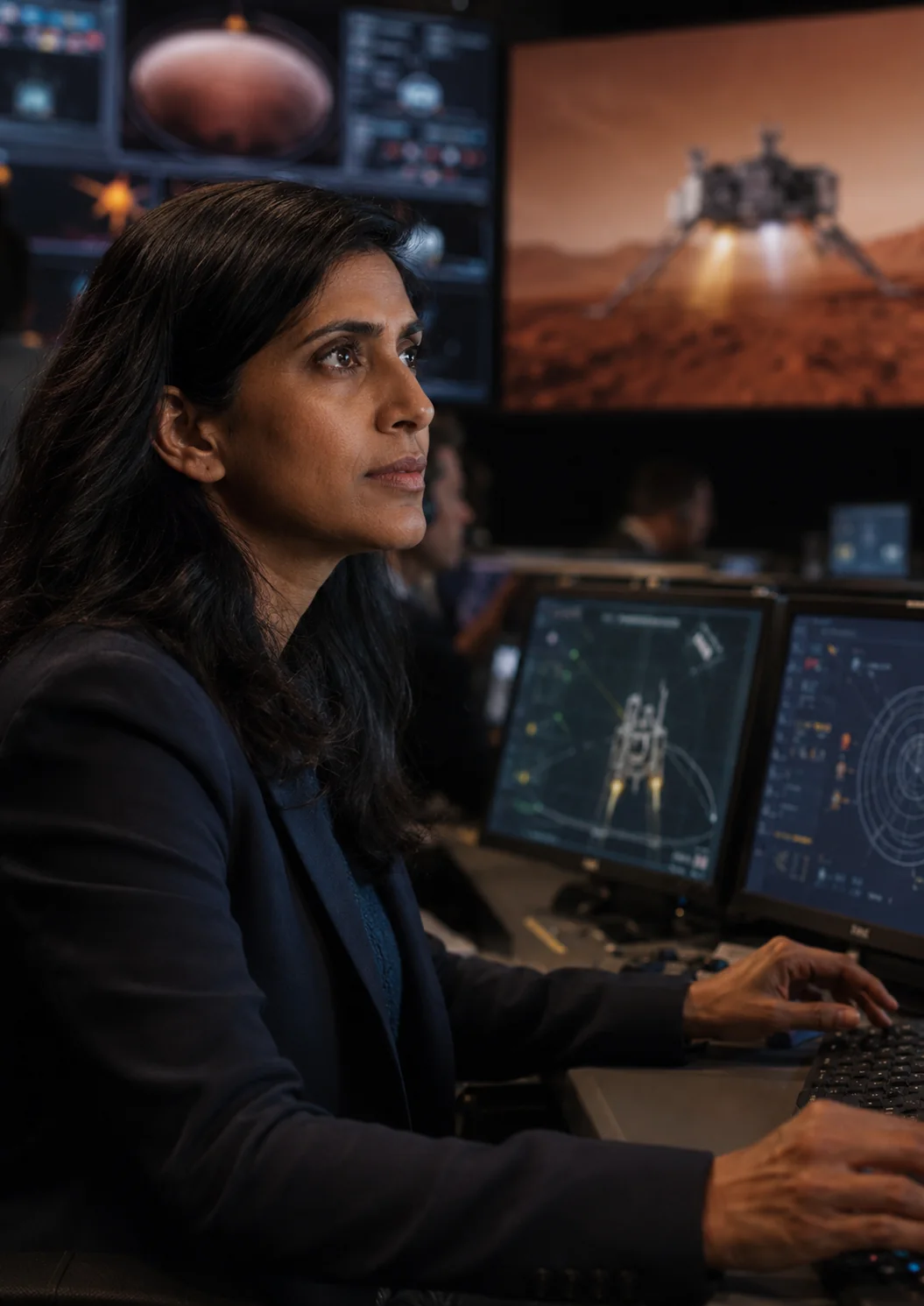
In 2014 Meyer participated in announcing the Mars 2020 instrument payload after a highly competitive selection. Perseverance had to conduct its own science while selecting and caching samples for a future campaign. That dual purpose changes the meaning of 'best target.' A rock can be attractive for immediate analysis yet poor for long-term preservation, or the reverse. Strategy must combine geological context, biosignature potential, representativeness and handling constraints. [source] [source]
Every observation has an opportunity cost. In the chapter “Mars 2020: selecting instruments for a mission that must also prepare samples,” this framework forces a check between the precise historical fact, the scientific question actually being asked and the constraints specific to that stage of the career.
At this stage, “Mars 2020: selecting instruments for a mission that must also prepare samples” reveals how experience changes judgment. The science researcher and architect of astrobiology and the Mars program never has perfect information; the skill is learning which uncertainties can be tolerated, which require another measurement and which should stop a sequence.
For “Mars 2020: selecting instruments for a mission that must also prepare samples,” the Mars application should therefore be stated as a specific reduction of uncertainty rather than a general promise of settlement.
As a teaching case, “Mars 2020: selecting instruments for a mission that must also prepare samples” also separates three levels that are often blurred together: the observed or documented fact, the scientific interpretation that gives it meaning, and the operational decision made from that interpretation.
In “Mars 2020: selecting instruments for a mission that must also prepare samples,” that boundary is intentionally part of the result: it states what this stage supports and what it still leaves open.
Mars Sample Return: a campaign harder than a rover
Meyer’s late career placed that cumulative logic against an unusually difficult institutional challenge: Mars Sample Return. A NASA programme update credits him with scientific guidance across multiple generations of Mars missions and, as MSR lead scientist, with ensuring the scientific value of samples intended for eventual return. 3
The responsibility shows why his biology background mattered to an engineering campaign. Sample science begins long before a tube reaches an Earth laboratory: it depends on what is collected, how context is recorded, what contamination is permitted, and whether future investigators can distinguish Martian signals from terrestrial or spacecraft-derived material.
Meyer became a lead scientist for Mars Sample Return and emphasized the value of Earth laboratories able to use instruments too massive, delicate or rapidly evolving to fly to Mars. But sample return multiplies interfaces: collection, tube, storage, transfer, launch from Mars, orbital capture, Earth entry, recovery and curation. Every stage must preserve scientific provenance and control contamination. The final sample's value therefore depends on the entire chain, not merely on the original drilling event. [source] [source]
In the chapter “Mars Sample Return: a campaign harder than a rover,” this framework forces a check between the precise historical fact, the scientific question actually being asked and the constraints specific to that stage of the career.
In the career of this science researcher and architect of astrobiology and the Mars program, “Mars Sample Return: a campaign harder than a rover” provides a comparison with earlier stages.
For “Mars Sample Return: a campaign harder than a rover,” the Mars application should therefore be stated as a specific reduction of uncertainty rather than a general promise of settlement.
As a teaching case, “Mars Sample Return: a campaign harder than a rover” also separates three levels that are often blurred together: the observed or documented fact, the scientific interpretation that gives it meaning, and the operational decision made from that interpretation.
In “Mars Sample Return: a campaign harder than a rover,” that boundary is intentionally part of the result: it states what this stage supports and what it still leaves open.
Planetary protection: science, safety and public trust
Sample return brings Meyer's earlier experience as Planetary Protection Officer back to the foreground. Back contamination cannot be handled simply by arguing that present Mars looks hostile to life. A credible campaign must design containment, verification, curation and procedures around low probability but potentially high-consequence perceptions. Technical rigor also protects public trust: a documented chain separates serious scientific precaution from reassurance unsupported by evidence. [source] [source]
What matters is not only what worked. That vulnerability makes the episode instructive. In the chapter “Planetary protection: science, safety and public trust,” this framework forces a check between the precise historical fact, the scientific question actually being asked and the constraints specific to that stage of the career.
The chapter “Planetary protection: science, safety and public trust” also shows that the work of a science researcher and architect of astrobiology and the Mars program is collective by construction.
For “Planetary protection: science, safety and public trust,” the Mars application should therefore be stated as a specific reduction of uncertainty rather than a general promise of settlement.
As a teaching case, “Planetary protection: science, safety and public trust” also separates three levels that are often blurred together: the observed or documented fact, the scientific interpretation that gives it meaning, and the operational decision made from that interpretation.
In “Planetary protection: science, safety and public trust,” that boundary is intentionally part of the result: it states what this stage supports and what it still leaves open.
Retirement in 2024: transferring a strategy, not just memories
NASA Astrobiology describes Meyer as retiring in January 2024 after service that included lead science roles for the Mars Exploration and Mars Sample Return programs, program-scientist responsibilities for Curiosity, Odyssey and Deep Space 2, senior leadership in astrobiology and earlier work as NASA’s Planetary Protection Officer. 4
Seen as a whole, his biography is therefore not the story of one iconic vehicle. It is the story of scientific continuity: preserving the questions that matter while architectures change, missions succeed or fail, and the boundary between exploration, planetary protection and the next programme is repeatedly redrawn.
Meyer retired from NASA in January 2024 after decades connecting exobiology, astrobiology, planetary protection, Odyssey, Curiosity, Perseverance and Sample Return. His biographical significance is less that of an instrument inventor than an architect of questions and programs. Continuity therefore requires preserving the logic of decisions: why one mission followed water, another tested habitability, Perseverance caches samples and contamination standards became more complex. [source] [source]
In the chapter “Retirement in 2024: transferring a strategy, not just memories,” this framework forces a check between the precise historical fact, the scientific question actually being asked and the constraints specific to that stage of the career.
To understand “Retirement in 2024: transferring a strategy, not just memories,” the full chain matters more than one headline result. The science researcher and architect of astrobiology and the Mars program works inside a system where a schedule decision can change an observation, an instrument limit can redefine the testable hypothesis, and the documentation of an anomaly can matter as much as nominal success.
For “Retirement in 2024: transferring a strategy, not just memories,” the Mars application should therefore be stated as a specific reduction of uncertainty rather than a general promise of settlement.
As a teaching case, “Retirement in 2024: transferring a strategy, not just memories” also separates three levels that are often blurred together: the observed or documented fact, the scientific interpretation that gives it meaning, and the operational decision made from that interpretation.
In “Retirement in 2024: transferring a strategy, not just memories,” that boundary is intentionally part of the result: it states what this stage supports and what it still leaves open.
For humans: explore without destroying the scientific question
Human presence on Mars will radically change the contamination problem. Astronauts carry a microbiome that cannot be reduced to the level of a sterilized probe; habitats, waste, air leakage and EVAs will distribute terrestrial signatures. Meyer's legacy therefore leads to an uncomfortable but essential idea: sites most valuable for possible Martian life may need protection precisely from human installations. Settlement and astrobiology do not always optimize for the same geography. [source] [source]
Every observation has an opportunity cost. In the chapter “For humans: explore without destroying the scientific question,” this framework forces a check between the precise historical fact, the scientific question actually being asked and the constraints specific to that stage of the career.
At this stage, “For humans: explore without destroying the scientific question” reveals how experience changes judgment. The science researcher and architect of astrobiology and the Mars program never has perfect information; the skill is learning which uncertainties can be tolerated, which require another measurement and which should stop a sequence.
For “For humans: explore without destroying the scientific question,” the Mars application should therefore be stated as a specific reduction of uncertainty rather than a general promise of settlement.
As a teaching case, “For humans: explore without destroying the scientific question” also separates three levels that are often blurred together: the observed or documented fact, the scientific interpretation that gives it meaning, and the operational decision made from that interpretation.
In “For humans: explore without destroying the scientific question,” that boundary is intentionally part of the result: it states what this stage supports and what it still leaves open.
Primary and institutional sources
- NASA Astrobiology — Interview with Michael Meyer
- NASA Astrobiology — Ask an Astrobiologist: Michael Meyer
- JPL — Mars Sample Return research group
- NASA/JPL — Mars 2020 landing site media call
- NASA Astrobiology — Interview with Michael Meyer
- NASA Astrobiology — Ask an Astrobiologist with Michael Meyer
- NASA Astrobiology — 1998 Astrobiology Roadmap introduction
- NASA/JPL — Mars Sample Return campaign science group
- NASA Astrobiology — Gravity Assist: Mars with Bruce Jakosky and Michael Meyer
- JPL — Mars 2020 Perseverance launch press kit management
- NASA — Mars 2020 rover instruments announcement
- NASA/JPL — New study on the fate of Mars water
- NASA/JPL — Twenty years of continuous Mars exploration
- National Academies — Michael A. Meyer biography, science strategy for human Mars exploration
- NASA NTRS — Planetary Protection and Mars Sample Return, Michael Meyer
- NASA Astrobiology — water on Mars: the story so far