


President
Defines political direction, chairs the Council of Ministers, promulgates statutes and signs ordinances and decrees deliberated in Council.
delta-sierra.com
David Salvan | Books, Public Policy and Mars Colonization
A President may define the political direction, but cannot alone turn an idea into enforceable law. The process involves the Prime Minister, ministries, lawyers, the Council of State, the Council of Ministers and, where legislation is required, Parliament.
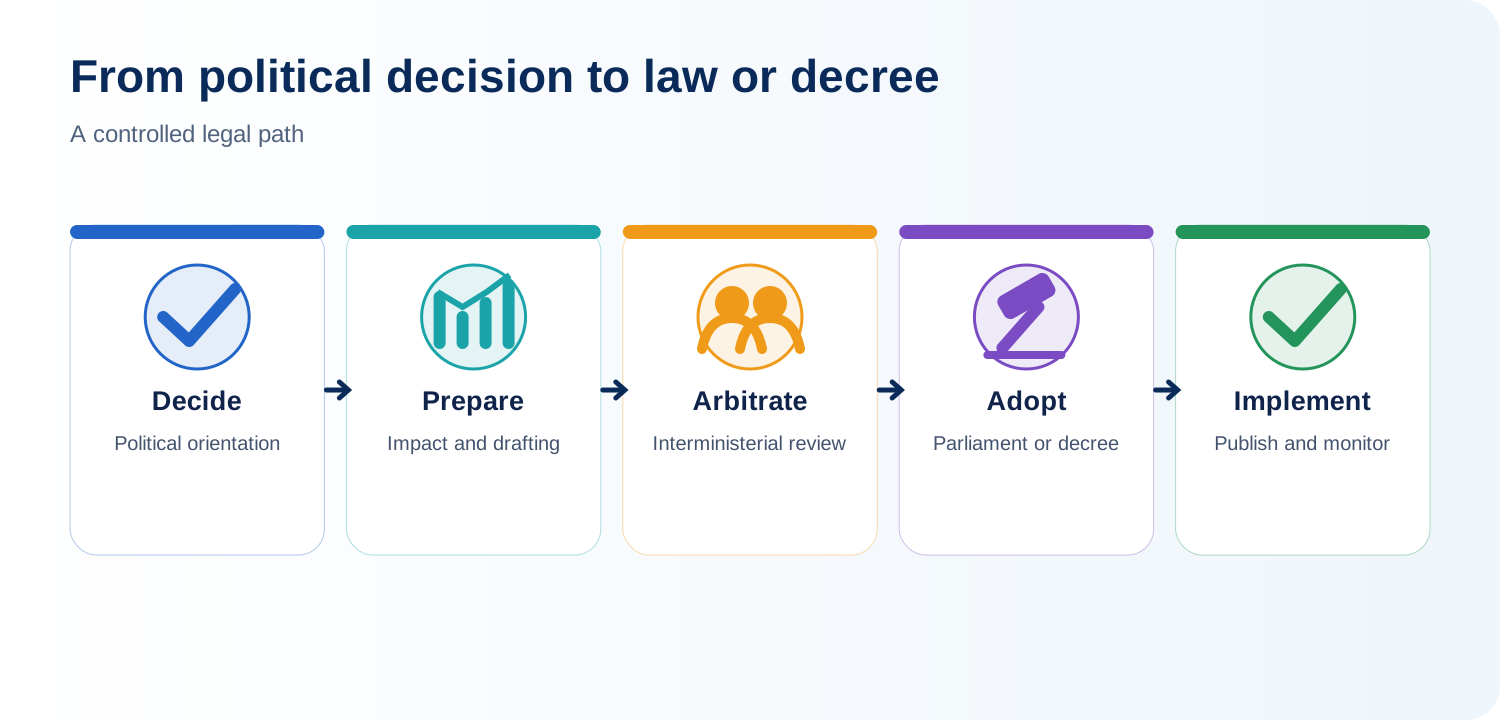
A statute is voted by Parliament. A decree is a regulatory act, generally signed by the Prime Minister. An ordinance allows the Government, after parliamentary authorisation, to act temporarily in the statutory domain. A ministerial order handles more detailed operational matters.
Defines political direction, chairs the Council of Ministers, promulgates statutes and signs ordinances and decrees deliberated in Council.
Directs Government action, ensures implementation of statutes, exercises regulatory power and carries government bills.
Map the law, draft articles, assess costs and prepare transfers.
Reviews legality, constitutional and EU compatibility, clarity and practical applicability.
Debates, amends and votes statutes.
Publication makes the rule publicly accessible and legally effective under its terms.
Objectives, options, risks and timetable.
Statutes, codes, decrees, EU law and contracts.
Economic, budgetary, social, environmental and employment effects.
Reasons, operative articles and transition.
Mandatory bodies and affected stakeholders.
Legal and drafting review.
Council of Ministers and Parliament where required.
Decrees, orders, agreements and budget decisions.
Service, cost, net savings and corrections.
No. Government bills are carried by the Government under the Prime Minister.
No. The statutory and regulatory domains must be respected.
To anticipate consequences, costs, alternatives and implementation texts.