


The Prime Minister
Under Article 21, the Prime Minister normally exercises regulatory power.
delta-sierra.com
David Salvan | Books, Public Policy and Mars Colonization
The term is common in French political news but often misunderstood. This guide explains its origin, place in the legal hierarchy, signature rules and main categories.
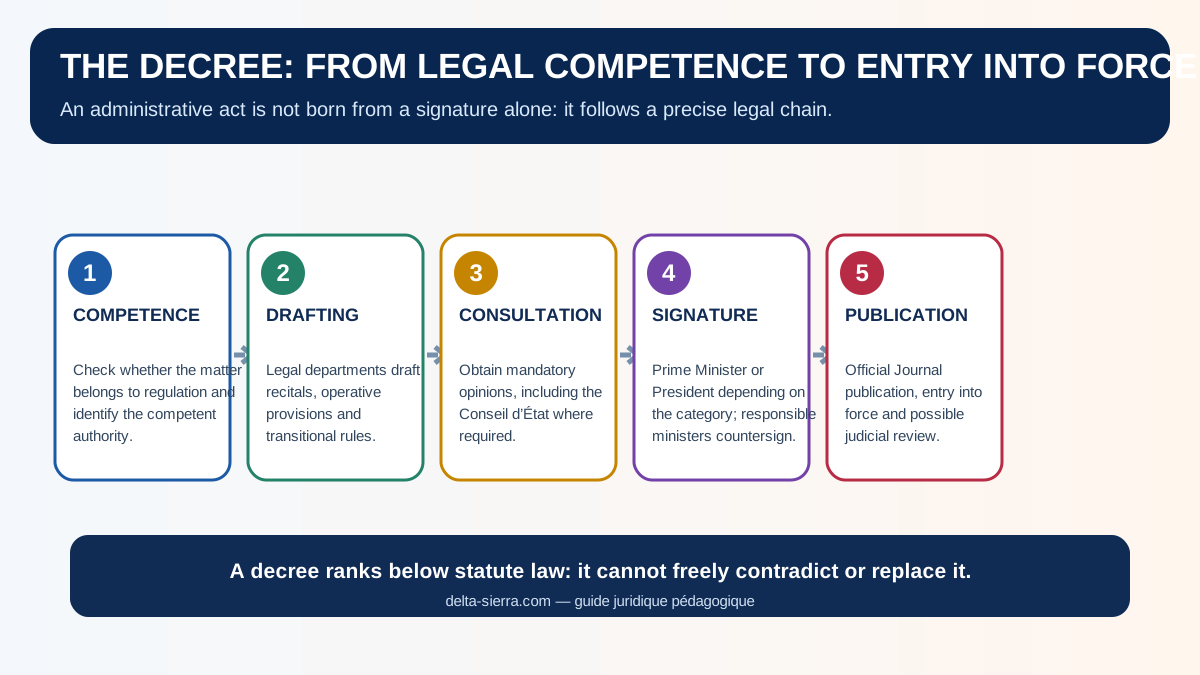
A decree is a high-level administrative act. It may create general regulatory rules, implement a statute, organise a public service or decide an individual appointment. It remains subordinate to the Constitution, treaties and statute law.
It is borrowed from the Latin legal term decretum, meaning a formal decision. The French word has been used since the Middle Ages, first in canon law and later for decisions of executive power.
Under Article 21, the Prime Minister normally exercises regulatory power.
Under Article 13, the President signs decrees deliberated in the Council of Ministers.
They may countersign the decree when they are responsible for implementing it.
| Category | Purpose | Main signature |
|---|---|---|
| Simple decree | Regulatory matter or implementation of a statute without mandatory Conseil d’État consultation. | Prime Minister. |
| Decree in the Conseil d’État | Draft must be submitted to the Conseil d’État. | Competent authority after the opinion. |
| Decree deliberated in the Council of Ministers | Formally discussed in the Council of Ministers. | President of the Republic. |
| Individual decree | Appointment, promotion, naturalisation or another individual decision. | Authority designated by the applicable rules. |
It is an additional signature by the minister legally responsible for implementing the decree. It identifies who must carry the instrument into effect.
No. A decree cannot freely amend a statute or the Constitution. The first question is always: at what legal level is the rule that the Government wishes to change?
Normally no. Ministers chiefly adopt administrative orders and countersign decrees they must implement.
No. It is an administrative act and ranks below statute law.