


Citizen legal prototype
Example: How to Abolish or Transform ADEME
ADEME is a useful case study because its existence, missions and governance are written into the statutory part of the Environmental Code, while detailed organisation appears in the regulatory part. A political announcement or isolated decree is therefore insufficient.
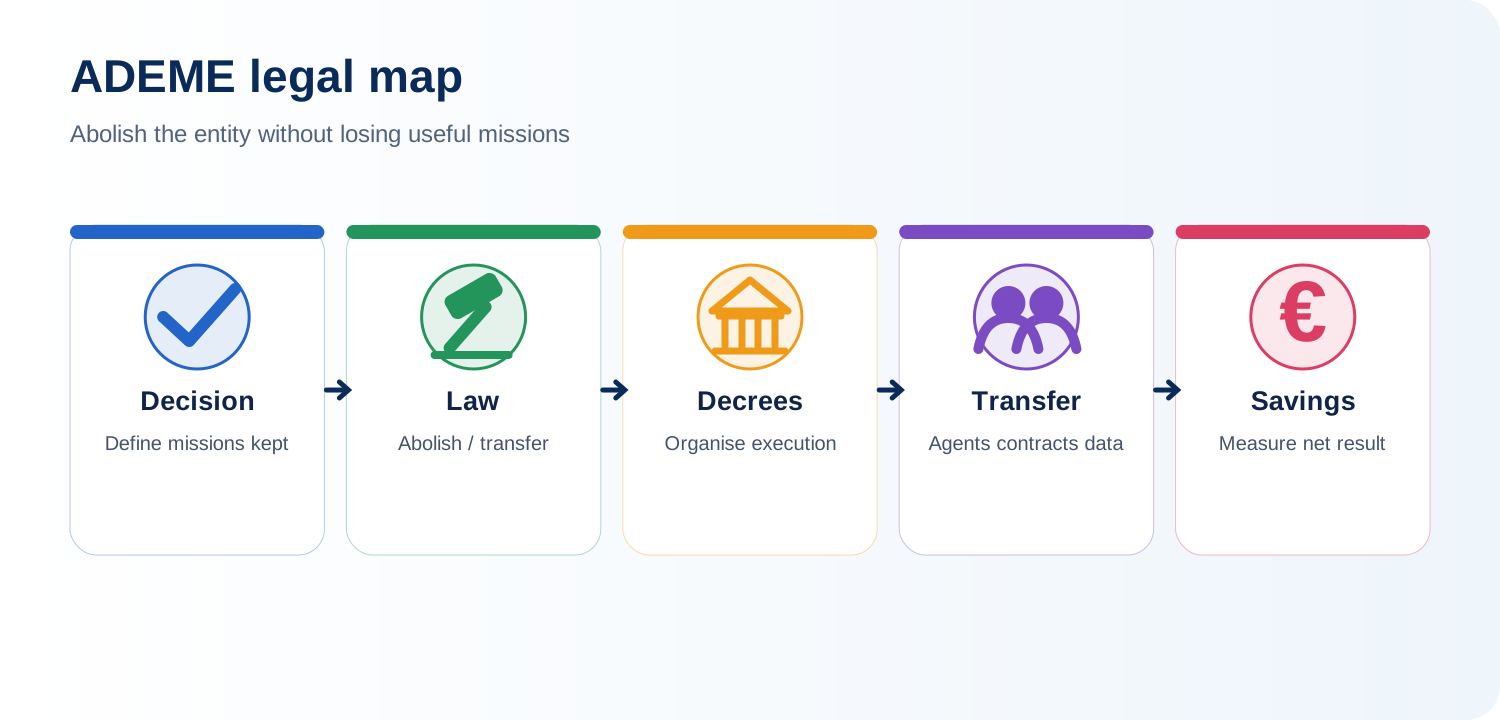
Legal warning: these documents are working structures, not final texts ready for the Official Journal.
1. Define the reform mission by mission
The proposal distinguishes grants, research, communication, certification, staff and operational support. Every function must be classified as maintained, transferred, merged or abolished.
2. Map the law
Articles L. 131-3 to L. 131-7 establish the agency in statute. Articles R. 131-1 to R. 131-26-4 govern detailed organisation. Both levels must be treated in the correct order.
Level 1 — Statute
• extinction of legal personality
• transfer or abolition of missions
• continuity of rights and obligations
Level 2 — Council of State decree
• operational date
• liquidator and inventory
• receiving bodies
• technical transfers
Level 3 — Orders, agreements, budget decisions
• appropriations
• IT and data
• staff and contracts
3. Build the impact assessment
It must cover missions, budget, staff, contracts, data, beneficiaries, EU law, transition costs and measurable results.
4. Secure continuity
The highest risk lies in the transition: beneficiaries must know who pays, staff must know their legal employer, records must remain available and contracts must retain a responsible party.
Downloads
Frequently asked questions
Why is a statute required?
Because ADEME’s status and missions are contained in the statutory part of the Environmental Code.
Must every grant disappear?
No. The institution and the programmes can be treated separately.
Are the draft texts ready to file?
No. They remain subject to legal, budgetary, social and policy decisions.