


Parliament
Authorises the Government through an enabling statute.
delta-sierra.com
David Salvan | Books, Public Policy and Mars Colonization
An Article 38 ordinance is neither an ordinary decree nor a statute adopted through the normal parliamentary procedure. It is a special constitutional instrument.
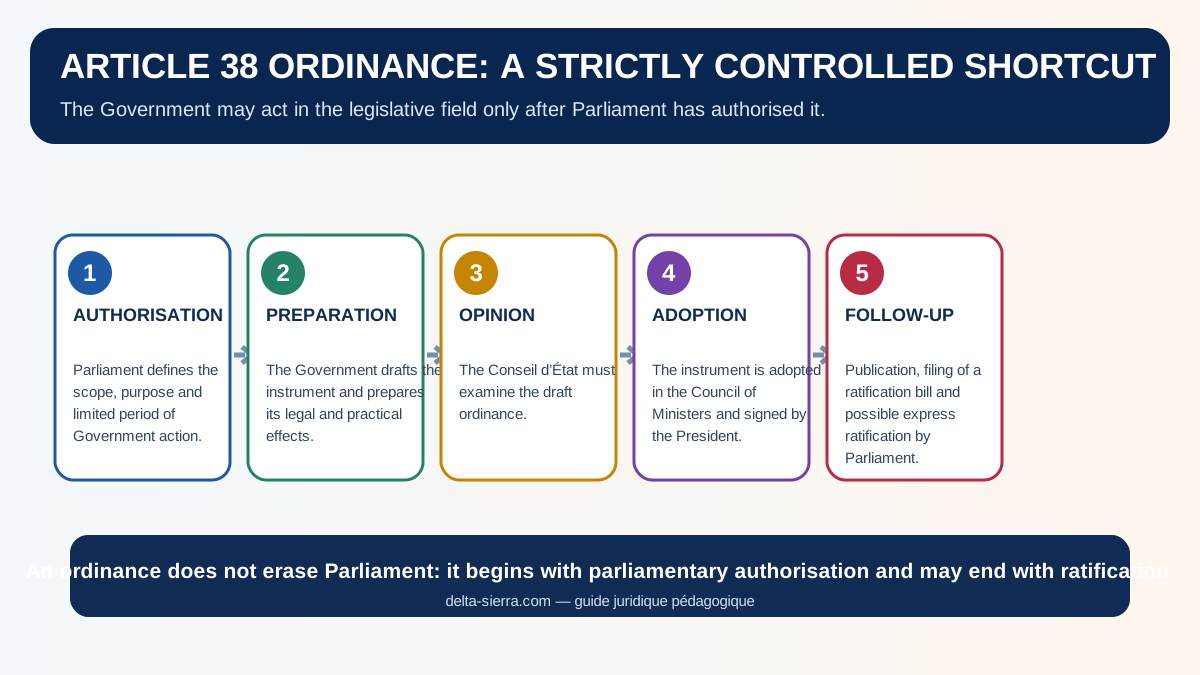
An Article 38 ordinance is adopted by the Government in a matter normally reserved for statute law, after Parliament has authorised it for a defined purpose and limited period.
It derives from ordonner: to put in order, prescribe or decide authoritatively. Historically the word has described royal rules, judicial orders and medical prescriptions. In today’s constitutional law it has a precise Article 38 meaning.
The Constitution divides legislative and regulatory fields. To act temporarily in the legislative field, the Government must obtain an enabling statute defining purpose, scope and deadline.
Authorises the Government through an enabling statute.
Drafts the ordinance within the authorised perimeter.
Must examine the draft.
Formally adopts the instrument.
Signs the ordinance under Article 13.
Its legal status is technically complex. It enters into force after publication but acquires full statutory value only after express ratification. Constitutional case law also treats some unratified provisions as legislative for constitutional-review purposes after the enabling period expires.
They may speed up technical codification, simplification or a wide reform. Their frequent use can nevertheless be criticised because Parliament does not debate every provision before publication.
No. Parliamentary authorisation, Government drafting, Conseil d’État review and Council of Ministers adoption are required first.
No. Parliament authorises the procedure and may later ratify the ordinance.