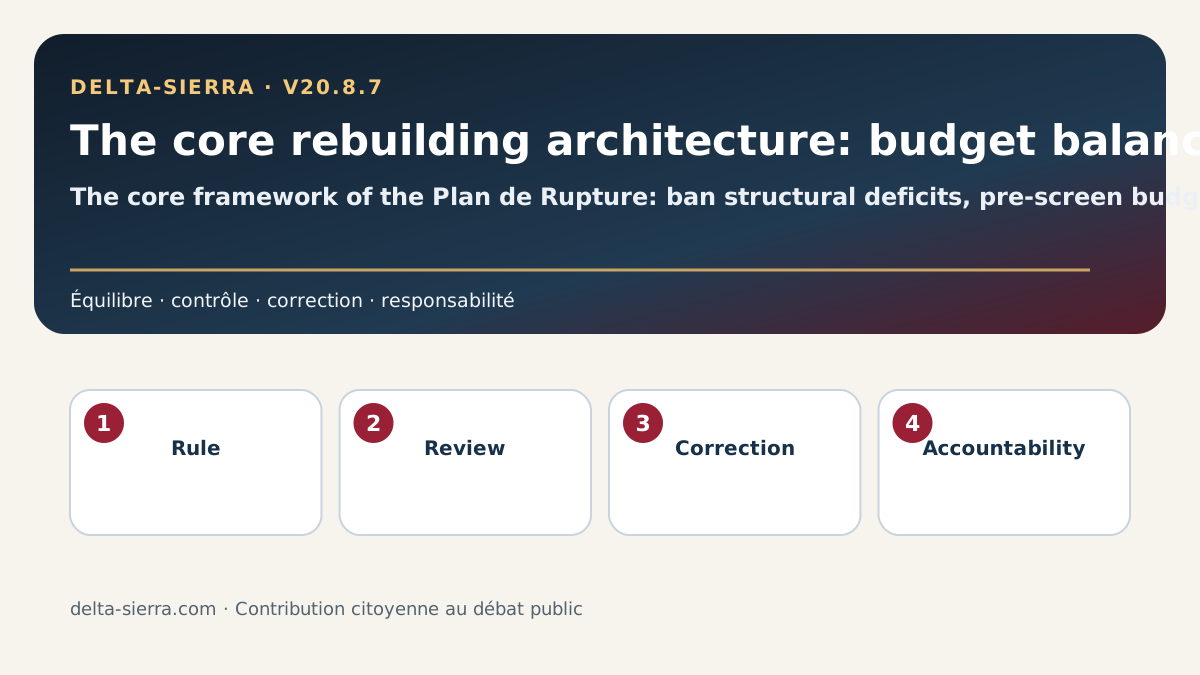
1. Constitutional prohibition
Ordinary structural deficits become legally inadmissible.
delta-sierra.com
David Salvan: narratives, analysis and proposals
The core framework of the Plan de Rupture: ban structural deficits, pre-screen budgets, correct slippage automatically and create legally bounded personal accountability.
The site now separates the political objective of sharply reducing levies from the decisive question: how far can taxes fall without recreating the deficit?
Published Plan The public dossier makes budget balance a constitutional rule: the State, local authorities and social-security bodies could not adopt an unbalanced budget outside narrowly defined exceptions. The source text also makes a finance bill inadmissible when its structural balance breaches the constitutional rule.
Architecture: permanent tax cuts must not be financed by fresh deficits. Structural savings first restore balance; tax reduction and debt reduction then follow a published trajectory.
The public Plan develops this architecture on printed pages 250–252. Read the public dossier →
Ordinary structural deficits become legally inadmissible.
The HCFP checks assumptions and compliance before filing.
Execution slippage triggers pre-defined measures while protecting sovereign functions.
Assumptions, warnings, decisions and signatures are preserved.
Deliberate or grossly negligent budget misconduct may lead to personal sanctions after judgment.
A genuine crisis may temporarily justify deficits, with limits, duration and a return-to-balance plan.
The current Constitution assigns national policy to the Government and gives Parliament law-making and oversight roles. Parliament votes finance bills. The HCFP currently issues public assessments of realism and fiscal trajectories, but its opinions are not binding. The proposal would turn influence-based scrutiny into a prior legal lock.
The French constitutional rights framework requires legally defined and necessary penalties, presumption of innocence and protection of property. The architecture must therefore combine strict duties with strict safeguards.
French Constitution, Article 20 — Government role.
Article 24 and Article 47 — Parliament and finance bills.
Article 26 — parliamentary non-liability for opinions and votes.
Article 67 and Article 68-1 — President and Government criminal regimes.
Financial Courts Code L.131-2, L.131-9 and sanctions L.131-16 et seq.
HCFP official missions; Swiss debt brake; German Basic Law Article 115.
The new version develops the constitutional amendment article by article, a fiscal-council Organic Act, mandatory constitutional review, a public warning register and a narrowly defined criminal-law prototype.
The 1993-2025 screen shows persistent nominal deficits and demonstrates that the source Plan's fixed 2% crisis cap would be too rigid for shocks such as 2009 or 2020. The working architecture therefore combines a strict ordinary rule with a certified escape clause, extraordinary account and future amortisation.
This page is part of the package on constitutional fiscal rules and accountability of public decision-makers.