PUBLIC FINANCE · 30% TARGET ·
Fiscal reform simulator: how low can France go without recreating deficits?
A public engine to test the 30% target, realised savings, the deficit, transition costs and proven recurring gains.
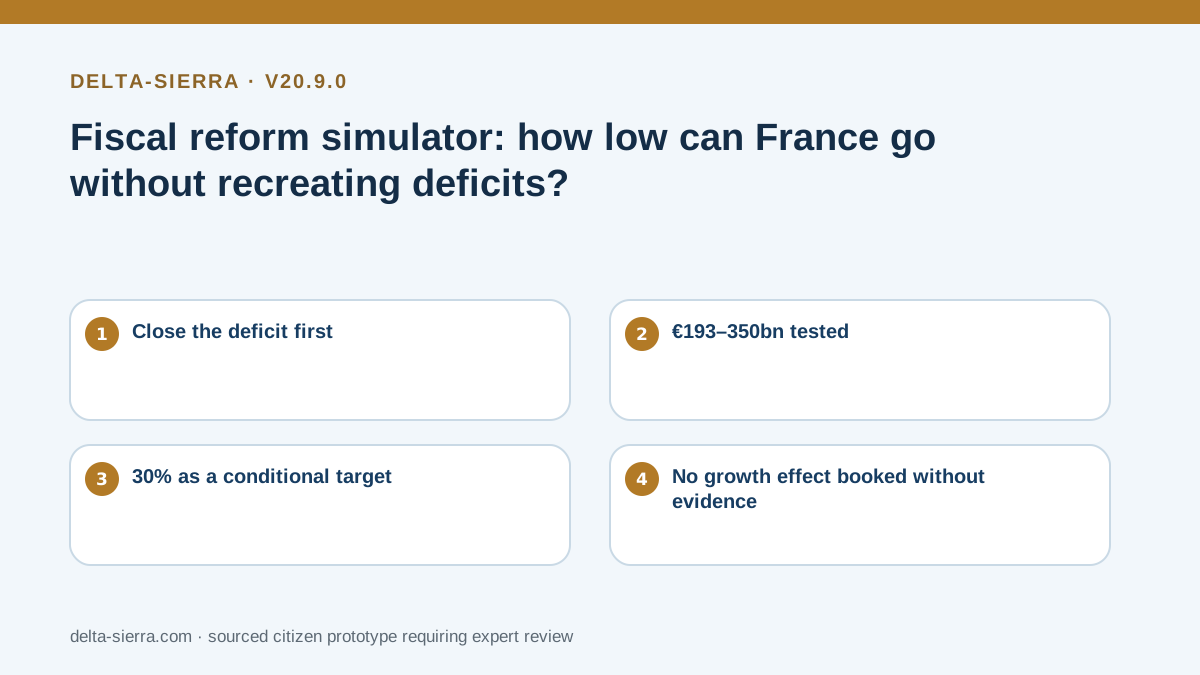
A simulator that rejects unfunded promises
The 30% target is treated as a conditional destination, never as a number to be reached through borrowing. The baseline uses 2025 GDP of €2,991.1bn, compulsory levies at 43.6% of GDP and a €152.5bn public deficit.
Core rule: ordinary structural deficits must be eliminated first. A permanent tax cut can only activate when recurring financing is actually demonstrated.
Change the assumptions
30%
€316bn
€20bn
€0bn
+0%
Calculating…
The GDP slider is a sensitivity test, not a forecast. It does not model inflation, tax elasticities or behavioural reactions.
What the static calculation already establishes
€350bn alone does not statically finance both today’s deficit and an immediate fall from 43.6% to 30% of GDP. The target therefore has to be sequenced and any growth, interest or simplification feedback proven before it is spent.