


Domestic investors
Banks, insurers, investment funds and, indirectly, households through savings and collective investment vehicles.
delta-sierra.com
David Salvan | Books, Public Policy and Mars Colonization
The most accurate answer is this: French public debt is held by many different actors, both domestic and foreign. There is no single mysterious lender. There are banks, insurers, funds, central banks and, indirectly, savers. Understanding that point removes many political fantasies and clarifies what “borrowing on the markets” really means.
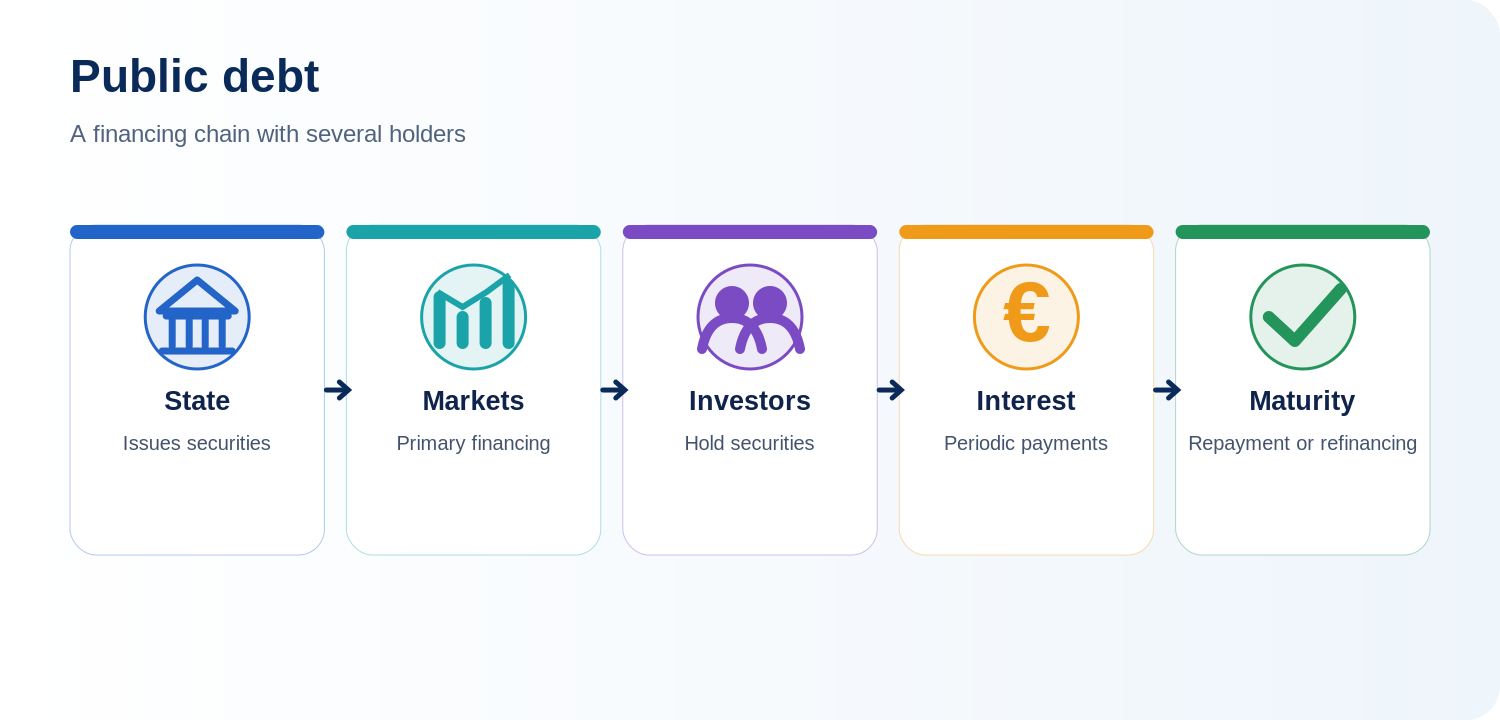
When the French state borrows, it issues securities. The best-known are medium- and long-term government bonds and short-term Treasury bills. Whoever buys those securities is lending money to the state in exchange for repayment rights and, depending on the instrument, interest payments.
Banks, insurers, investment funds and, indirectly, households through savings and collective investment vehicles.
Global funds, banks, insurers, official institutions and other non-resident holders.
Through asset purchase programmes, central banks in the euro area have also held part of public securities.
Some actors buy government paper to manage cash, others for longer-term returns or portfolio stability.
On the primary market, the state issues debt and receives funds. On the secondary market, investors buy and sell those same securities among themselves. The distinction matters because the state is not dealing every day with the same final holders.
A simple analogy is a concert ticket: first it is bought from the organiser; later it may be traded between individuals. The organiser only receives money from the first sale.
We can know categories and aggregates, but not always the exact day-by-day identity of every ultimate holder. That is why serious analysis should avoid simplistic claims such as “country X owns French debt” as if the entire financing structure depended on one national actor.
Because French government securities are seen as liquid, standardised and relatively safe within a large euro area market. Confidence, however, depends on fiscal credibility, political stability and the broader rate environment. The key issue is not only who holds the debt, but also under what conditions they will continue to hold it.
Its aim is to clarify how public financing works. The book and public file go further into reform levers, fiscal strategy and the institutional architecture of change.
Yes, often indirectly through savings products, life insurance and investment funds.
No. It is common for a large sovereign issuer. The critical issue is the cost and durability of financing.
Future refinancing becomes more expensive, which gradually raises the budgetary interest burden.