


Relocation
Some research may move abroad.
delta-sierra.com
David Salvan | Books, Public Policy and Mars Colonization
The Plan proposes removing the research tax credit for large companies. An operational draft must define large companies, tax groups, multi-year projects and prior commitments.
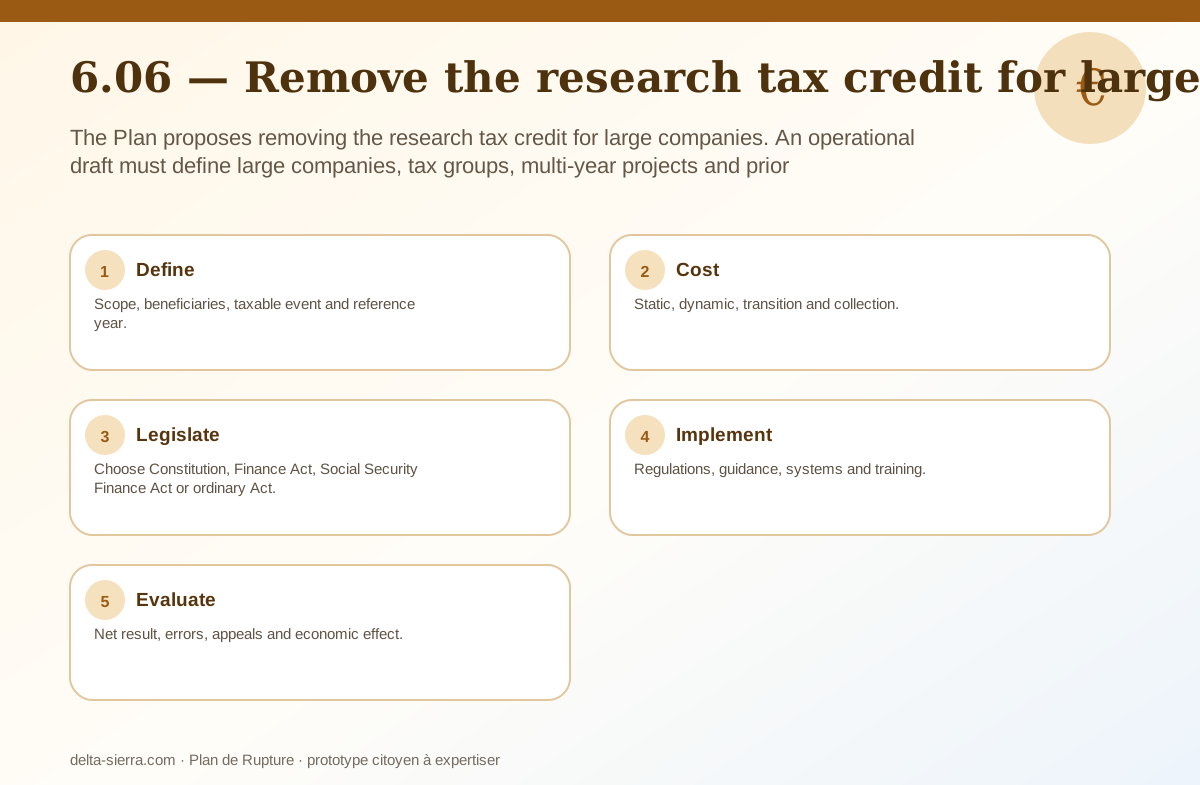
The Plan proposes removing the research tax credit for large companies. An operational draft must define large companies, tax groups, multi-year projects and prior commitments.
The CIR rate is 30% on research expenditure up to €100 million and 5% above it. That expenditure threshold is not itself a company-size definition.
Some research may move abroad.
Legal fragmentation must not bypass the rule.
Investment decisions relied on existing law.
Expected revenue must reflect behaviour.
| Indicator | Before | After | Purpose |
|---|---|---|---|
| Scope and population | Baseline | Annual value | Prevent perimeter changes |
| Budget effect | Estimate | Cash collected or spent | Separate promise from execution |
| Transition cost | Disclosed | Multi-year tracking | Calculate net effect |
| Appeals and errors | Initial rate | Corrected rate | Protect rights |
The former distinction between large companies and smaller firms is superseded. Current doctrine abolishes the French R&D tax credit for all company sizes, subject only to a transition for legally acquired claims. Measures 6.06 and 6.07 form one financial package and must never create two separate savings entries.
The Senate estimates the 2026 CIR tax expenditure at €8.041 billion. That figure is a gross benchmark, not an automatically bankable net saving because R&D behaviour, taxable profits and investment decisions can change. Read the complete corporate-tax redesign.