Competitiveness · scenario

Work, competitiveness and social-protection pact

Connect structural savings to sustainable tax cuts, higher take-home pay and major administrative simplification.
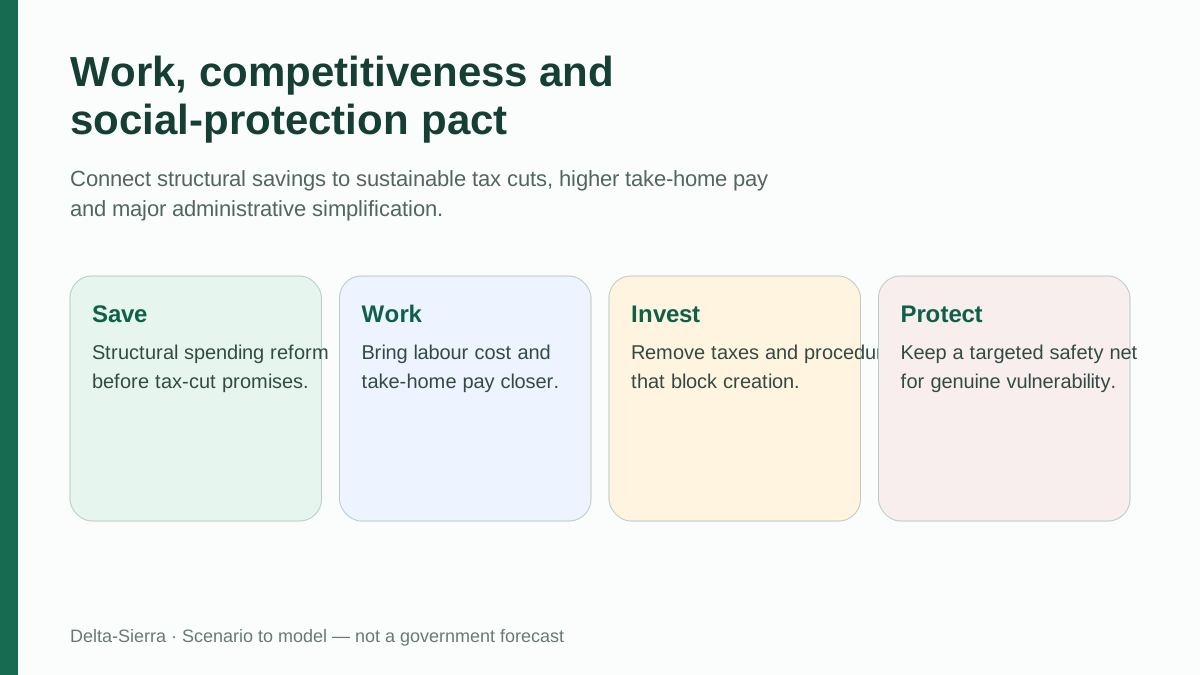
Work, competitiveness and social-protection pact

Property, housing and capital

The pact is extended by a package covering inheritance, private rental, energy certificates and home-improvement freedom: open package.

CORE ARCHITECTURE

Before permanent tax cuts: make ordinary structural deficits legally inadmissible

The Plan de Rupture first rests on a constitutional balance rule, independent pre-vote review, automatic correction and personal accountability for deliberate breaches by top decision-makers. Asset-based penalties would only follow due process and a final judgment.

A strategic revision, not a rewrite of the published Plan

Published Plan

The 155 source measures remain unchanged. Measure 6.01 therefore remains a 50% constitutional cap and measure 6.03 a €300,000 inheritance allowance per child.

strategic scenario

The site adds a clearly separate prospective layer: a much lower tax burden on work, investment and transfer of family assets, conditional on actual structural savings.

How the pact fits together

1. Reform spendingAgencies, layers, rules, duplication and overhead.
2. Close the deficitPart of savings must first stabilise public finances.
3. Cut labour costsTurn savings and poorly targeted aid into durable contribution cuts.
4. Restart supplyHigher take-home pay, investment, firm creation and growth.
Rigor: the Plan’s high scenario reaches up to €350bn/year, but that amount is not automatically available for tax cuts. Deficit closure, transition costs, priority services and debt reduction come first.

Eleven connected workstreams

30% tax target

Define the metric and a conditional trajectory.

Gross-to-net pay

Cut the labour tax wedge.

Social benefits

Make work always increase disposable income.

Housing

Compare Nordic means tests and caps.

Business support

Remove unnecessary schemes without double-counting contribution relief.

Production taxes

Accelerate the removal of taxes due before profit.

Micro-business

Test doubled/tripled thresholds and a growth bridge.

Inheritance

Test a much larger exemption, potentially €1m depending on the chosen unit.

Fuel

Model a low tax floor within legal and climate constraints.

120-day permits

Parallel reviews and enforceable timelines without weaker outcomes.

Proportionality

Heavy files only for heavy risks.

The financing test

Compulsory levies were 43.6% of GDP in 2025. A mechanical reduction to 30% would be a 13.6-point change — roughly €400bn at the scale of the 2025 economy. The site therefore treats 30% as a long-run destination, not as an already funded promise.

Universal social protection: status should no longer determine core rights

now separates company profit, the owner’s personal professional income and employee wages. No employee means no employer payroll contribution. Healthcare remains universal, while additional contributory rights follow a single personal contribution on professional income.

Open the detailed file →

Official sources and reference documents

  1. Insee — compulsory levies 2025
  2. OECD — Taxing Wages 2026