


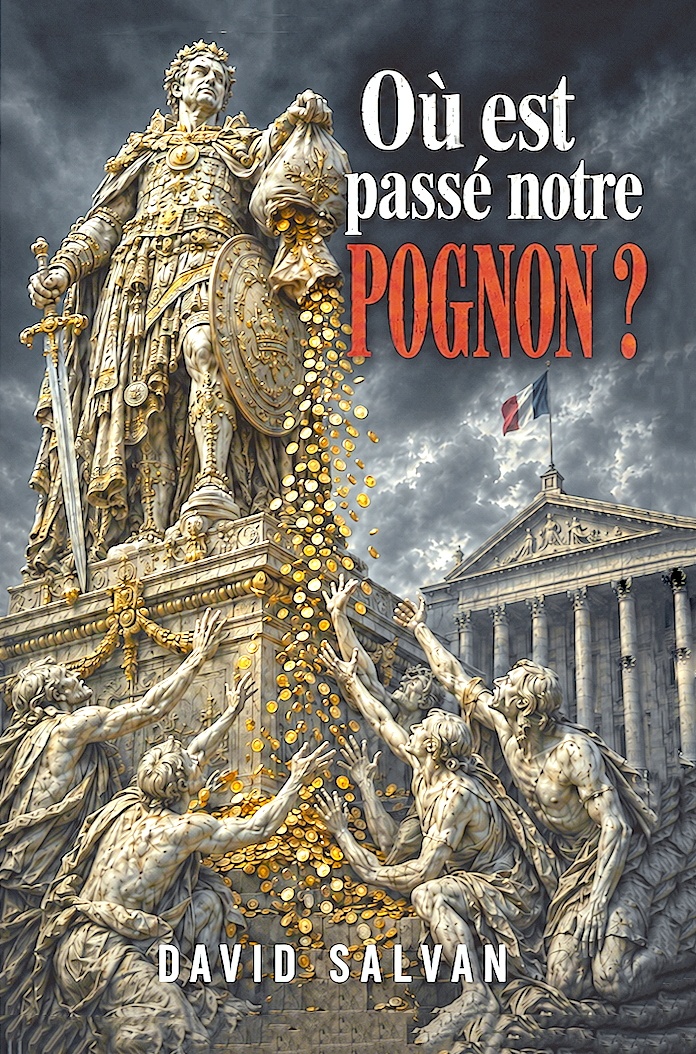
What this book helps the reader understand
- How to distinguish waste from legitimate expenditure.
- Why spectacular totals must be checked.
- How fragmented responsibility weakens control.
- What a culture of proof and evaluation would require.
Questions this book addresses
The question citizens eventually ask
High taxation can be accepted only if citizens understand what it finances and can observe results.
The book begins with a simple demand for traceability rather than a predetermined accusation.
Different cases, recurring mechanisms
Infrastructure, administration, procurement and public programmes may look unrelated.
Yet delays, weak specifications, duplicated structures and absent evaluation often recur.
Do not inflate the figures
Criticism loses credibility when incompatible amounts are added or when theoretical savings are presented as immediate cash.
The method distinguishes stock, annual flow, avoided cost and uncertain estimates.
Who decides, who controls, who answers?
When every actor controls only a fragment, failure can become nobody’s responsibility.
The book examines chains of decision, audit and accountability.
Towards a doctrine of proof and evaluation
Every major programme should state its objective, cost, timetable, indicators and exit conditions.
Evaluation must be able to stop or redesign a policy, not merely describe it after the money has been spent.
Available editions
The retail links below refer to the French-language editions. No unavailable English edition is claimed, and no purchase link is invented.
Frequently asked questions
Is the book a list of scandals?
No. It uses cases to identify structural mechanisms and proposes stronger rules of evaluation.
Are the editions in English?
The page is in English; the retail editions currently linked are in French.
Following public money from announcement to result
Citizens often hear a headline allocation but cannot see how much reaches the stated objective. The book follows the chain through programmes, operators, subsidies, administrative costs, delays and evaluations. It asks not only how much was spent, but what was delivered and who was responsible for correcting failure.
Different cases reveal recurring patterns: fragmented authority, objectives that change during implementation, indicators that measure activity instead of outcomes and reports produced too late to influence decisions.
A doctrine of proof rather than a catalogue of outrage
The book avoids adding unrelated figures merely to produce a spectacular total. Each claim must distinguish budget authorisation, actual expenditure, tax expenditure, guarantee, loan and estimated indirect cost. These categories cannot be added without explaining their nature and period.
The aim is to make democratic control possible. A citizen should be able to identify the decision, the legal basis, the responsible organisation, the expected result and the evidence available after implementation.
Evaluation must have consequences
An evaluation that documents failure but changes neither funding nor organisation becomes ritual. The book proposes stronger links between objectives, public reporting, independent review and decisions to continue, redesign or stop a programme.
This approach connects directly to the wider Plan de Rupture dossier, where savings depend on verifiable organisational changes rather than on optimistic accounting.