


Deadweight
Planned research may receive aid without new activity.
delta-sierra.com
David Salvan | Books, Public Policy and Mars Colonization
The measure aims to focus support on SMEs and mid-caps and must state whether this means a higher rate, faster refunds, a cap or simpler controls.
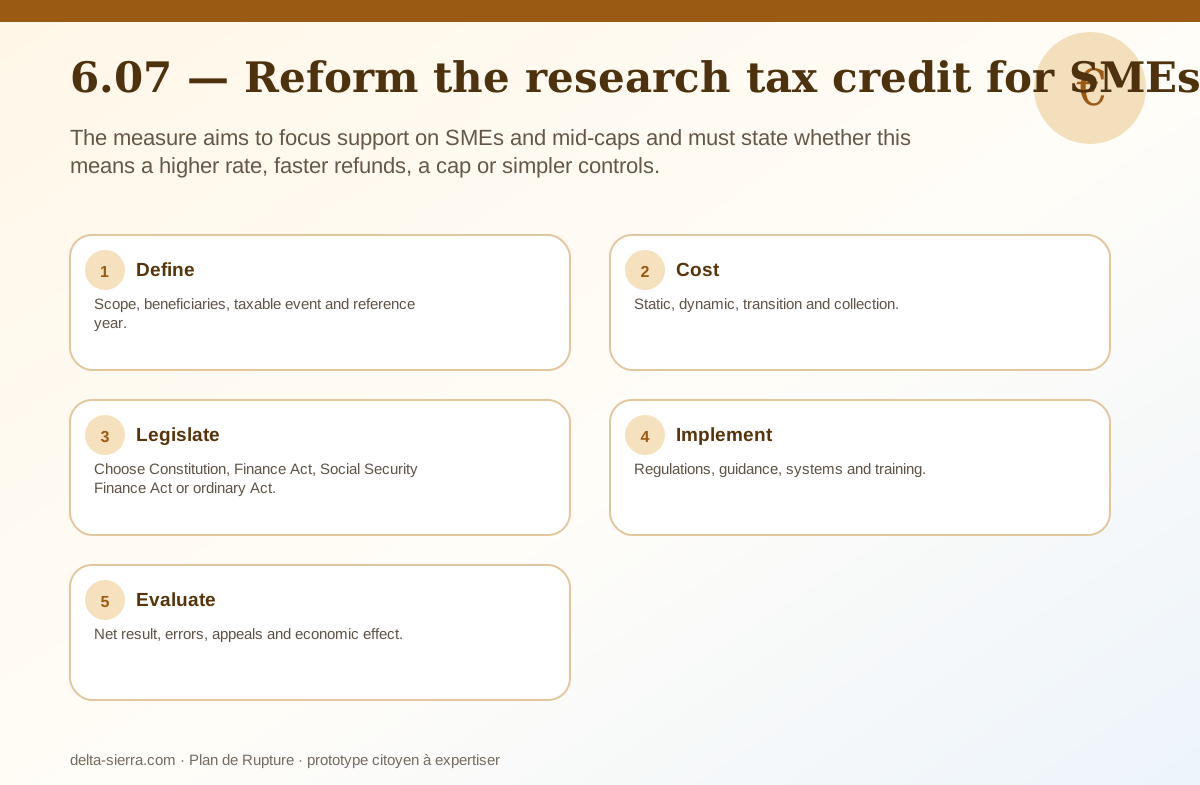
The measure aims to focus support on SMEs and mid-caps and must state whether this means a higher rate, faster refunds, a cap or simpler controls.
The CIR uses common eligible-expense rules and rate bands. SME, mid-cap and group definitions require precision.
Planned research may receive aid without new activity.
Simplification must not admit non-research costs.
Refund timing matters for young companies.
Cliff effects may discourage growth.
| Indicator | Before | After | Purpose |
|---|---|---|---|
| Scope and population | Baseline | Annual value | Prevent perimeter changes |
| Budget effect | Estimate | Cash collected or spent | Separate promise from execution |
| Transition cost | Disclosed | Multi-year tracking | Calculate net effect |
| Appeals and errors | Initial rate | Corrected rate | Protect rights |
Measure 6.07 is no longer interpreted as preserving a special CIR for SMEs and mid-caps. It becomes the legal transition layer of the full phase-out: treatment of existing claims, closure of linked rules and coordination with the new general 15–30% profit-tax schedule.
The policy objective is to replace an expertise-intensive tax expenditure with lower, simpler and more predictable general taxation rather than recreating another credit under a different name.