


Measure 4.09 · legal safeguard
Human Validation of AI-Assisted Justice Decisions
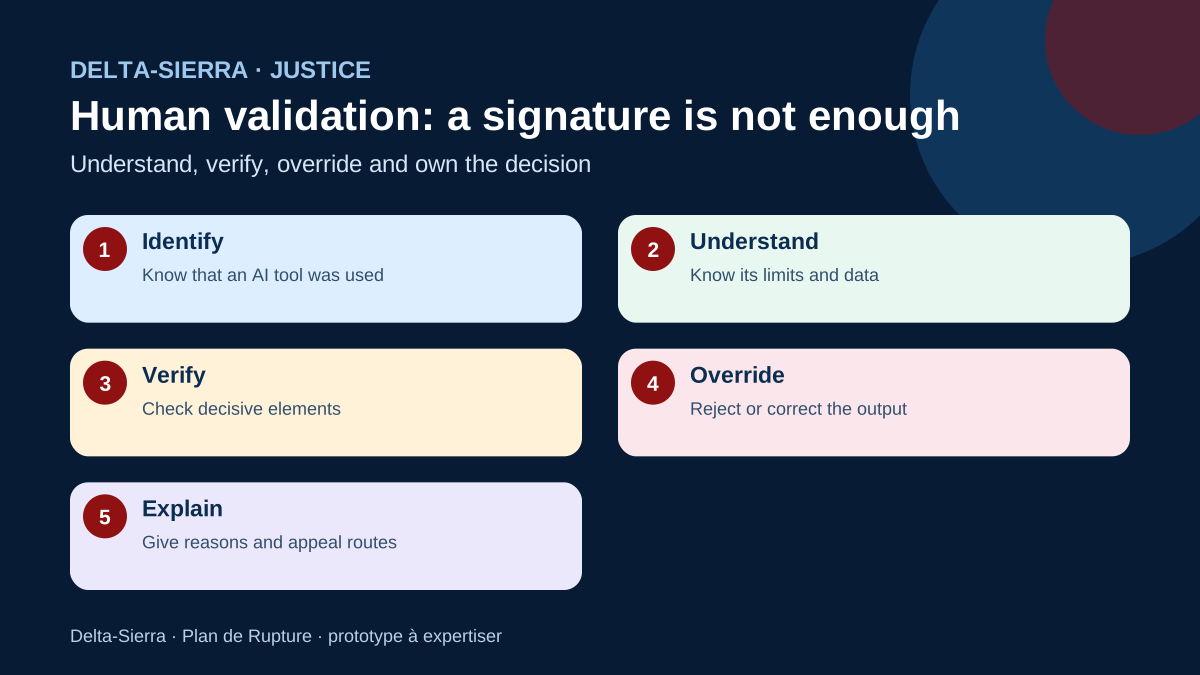
An assisted decision is legitimate only when a competent human has the power and time to understand, verify, override and explain.
Proposed rule
Measure 4.09 requires human intervention for any automated or assisted decision producing an adverse effect. The responsible person must be able to understand, review, override and own the decision. A routine click is not meaningful oversight.
What is an adverse decision?
In the proposed framework, it includes refusing a right, imposing an obligation, worsening a legal position, limiting a liberty, determining a sanction or significantly influencing the outcome of proceedings. Exact definitions must be tailored to each field.
Five human capabilities
Real oversight versus rubber-stamping
| Rubber stamp | Meaningful human validation |
|---|---|
| The output is practically impossible to challenge. | The output is one element and can be rejected. |
| The reviewer does not understand data or limitations. | The reviewer is trained and properly documented. |
| Workload leaves no time to verify. | Real review time is built into the process. |
| Reasons are copied automatically. | The competent authority writes and owns the reasoning. |
| No useful appeal information is provided. | The person receives meaningful information and available remedies. |
Minimum protocol
- Identify the tool and version.
- Check decisive inputs.
- Review output for error and omission.
- Examine contrary arguments.
- Accept, change or reject the output.
- Give legally compliant reasons.
- Record the human intervention.
- Provide relevant information and remedies.
Downloads
GDPR Article 22: it regulates solely automated decisions with legal or similarly significant effects where the GDPR applies. Judicial procedures may also be governed by specific regimes.