


What Is a Programming Act?
A programming act sets a multi-year direction. It organises a trajectory but does not replace annual budget authorisation or operational implementation.
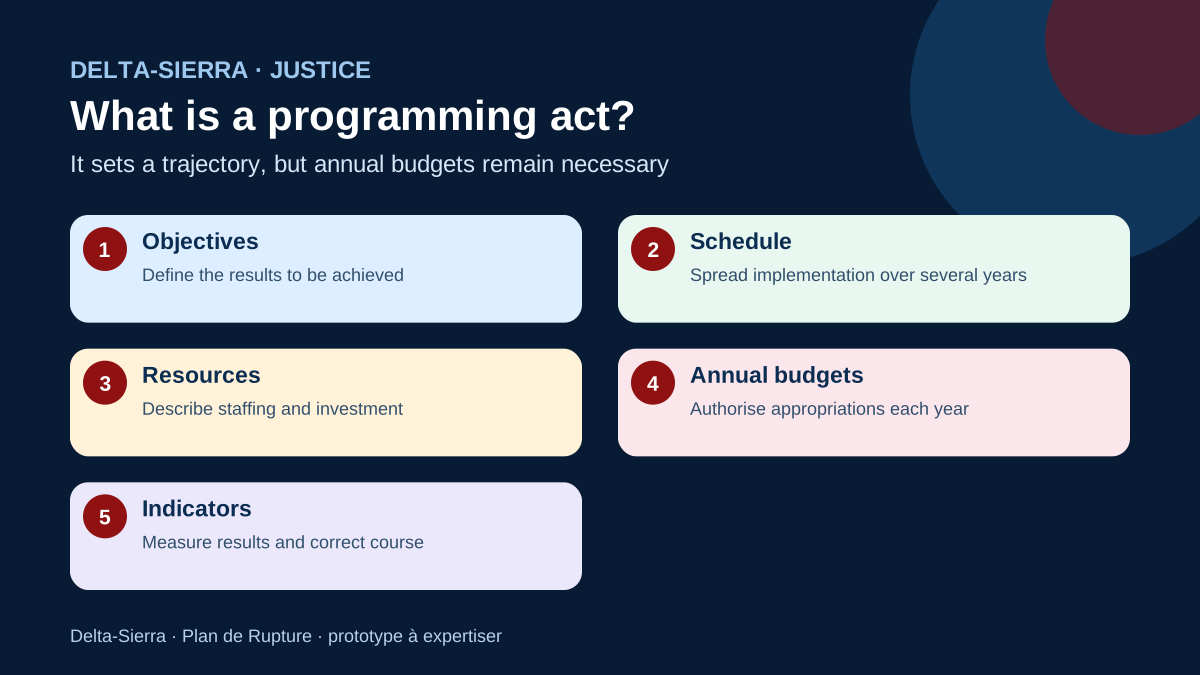
Simple definition
A programming act sets multi-year objectives for state action. It can organise resources, recruitment, investment and indicators. It does not replace annual finance acts: Parliament must still authorise appropriations each year.
Why use it?
Some policies cannot be implemented seriously within twelve months. Training judges, modernising court systems or expanding infrastructure requires several years. A programming act provides a visible direction and coordinates the stages.
What it can and cannot do
| It can | It cannot do alone |
|---|---|
| Set multi-year objectives. | Automatically authorise all future spending. |
| Present a staffing and investment path. | Guarantee every recruitment will occur. |
| Require reports and indicators. | Replace decrees, recruitment procedures and procurement. |
| Provide visibility. | Make an unrealistic implementation capacity credible. |
Word origin
The word derives from “programme”, ultimately from Greek programma, something written or publicly announced. In public law, programming means organising objectives and action through time.
Application to measure 4.01
A five-year doubling of justice resources would need a defined baseline, annual trajectories, staff targets, training capacity, infrastructure, digital investment and public performance indicators.
Budget sincerity
The trajectory must distinguish payment appropriations, commitments, staffing expenditure, investment, inflation effects, redeployments and net additions.