


Budget mission
A major group of programmes contributing to a public policy.
delta-sierra.com
David Salvan | Books, Public Policy and Mars Colonization
A reform cannot be placed in just any bill. State-budget measures and social-security measures follow two distinct legal vehicles.
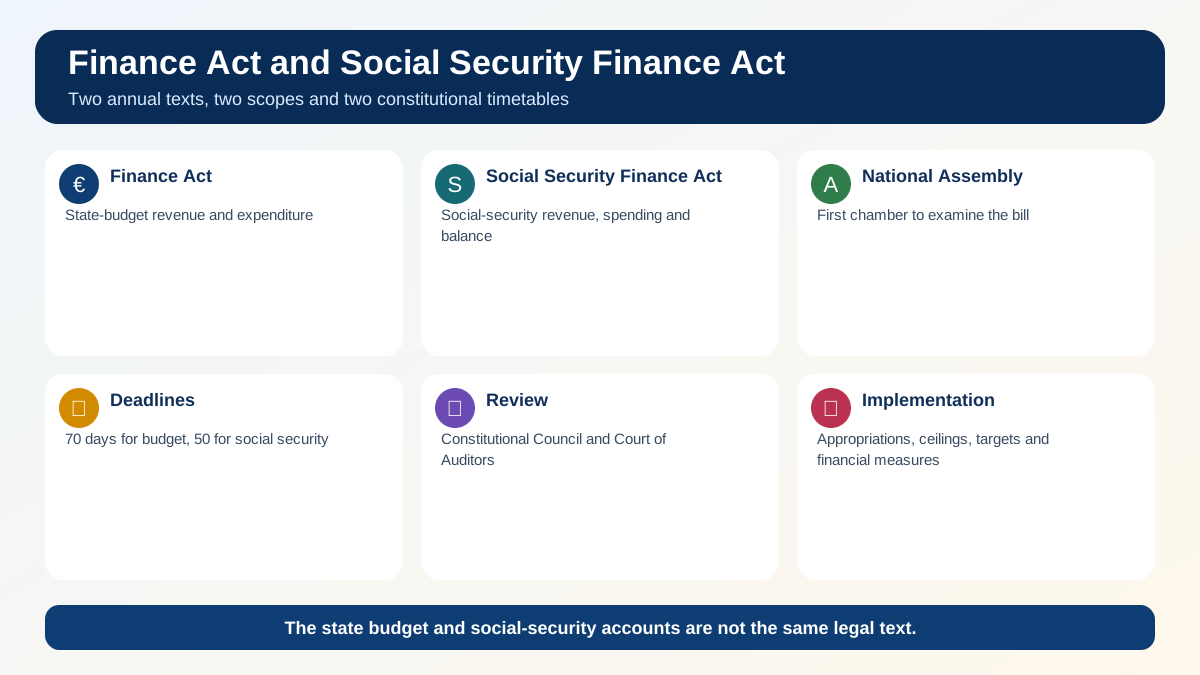
The Finance Act authorises the resources and expenditure of the central state. The Social Security Finance Act governs the general financial balance of social security. Both are financial statutes, but they do not cover the same administrations or expenditure.
| Finance Act | Social Security Finance Act | |
|---|---|---|
| Scope | Central state budget | Social-security schemes and branches |
| Constitutional basis | Articles 34 and 47 | Articles 34 and 47-1 |
| First chamber | National Assembly | National Assembly |
| Constitutional deadline | 70 days | 50 days |
| Organic framework | LOLF | Organic law governing Social Security Finance Acts |
A saving affecting a ministry, an appropriation cut or a tax reform will often require a Finance Act. A change to social contributions, health-insurance spending or social-security targets will often require a Social Security Finance Act. Some reforms require both texts, together with ordinary legislation and implementing decrees.
A major group of programmes contributing to a public policy.
Parliamentary authority to spend within a defined framework.
The article summarising the overall balance of revenue, expenditure and financing.
A provision outside the authorised scope of a financial statute and therefore liable to be struck down.