Levies / GDP
Macroeconomic Insee ratio.
delta-sierra.com
David Salvan: narratives, analysis and proposals
Define a 30% target precisely, link it to realised savings and avoid an unfunded promise.
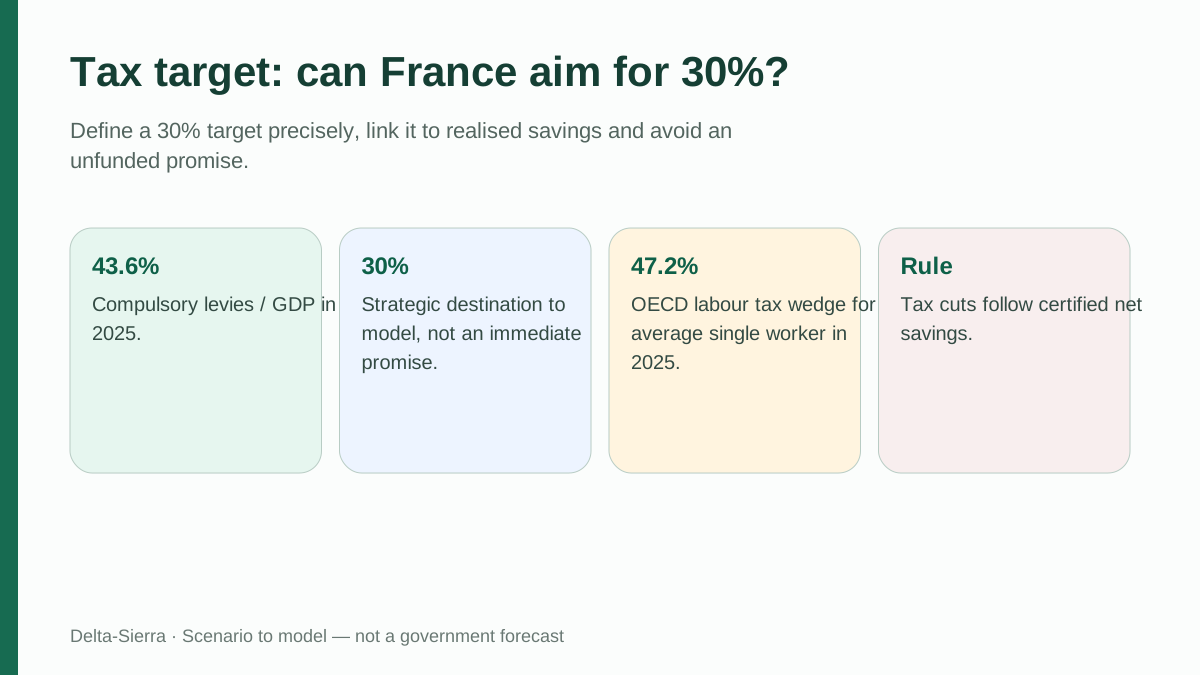
The site now separates the political objective of sharply reducing levies from the decisive question: how far can taxes fall without recreating the deficit?
The published source is preserved. The 30% target is recorded as a new strategic proposal to be modelled.
Macroeconomic Insee ratio.
Actual burden on a specific household.
Gap between total employer cost and take-home pay.
Burden on the next euro earned.
With compulsory levies at 43.6% of GDP in 2025, a macro 30% target means a 13.6-point reduction. Rate cuts must therefore follow certified net savings, deficit control and observed growth rather than precede them.
The OECD reports a 47.2% labour tax wedge for a single average-wage worker in France in 2025, the third highest among OECD members. That supports a strong focus on labour taxation, without proving that a 30% macro target is already financed.