


To specialise a mission
Technical, scientific, regulatory or operational tasks may be assigned to a dedicated body.
delta-sierra.com
David Salvan | Books, Public Policy and Mars Colonization
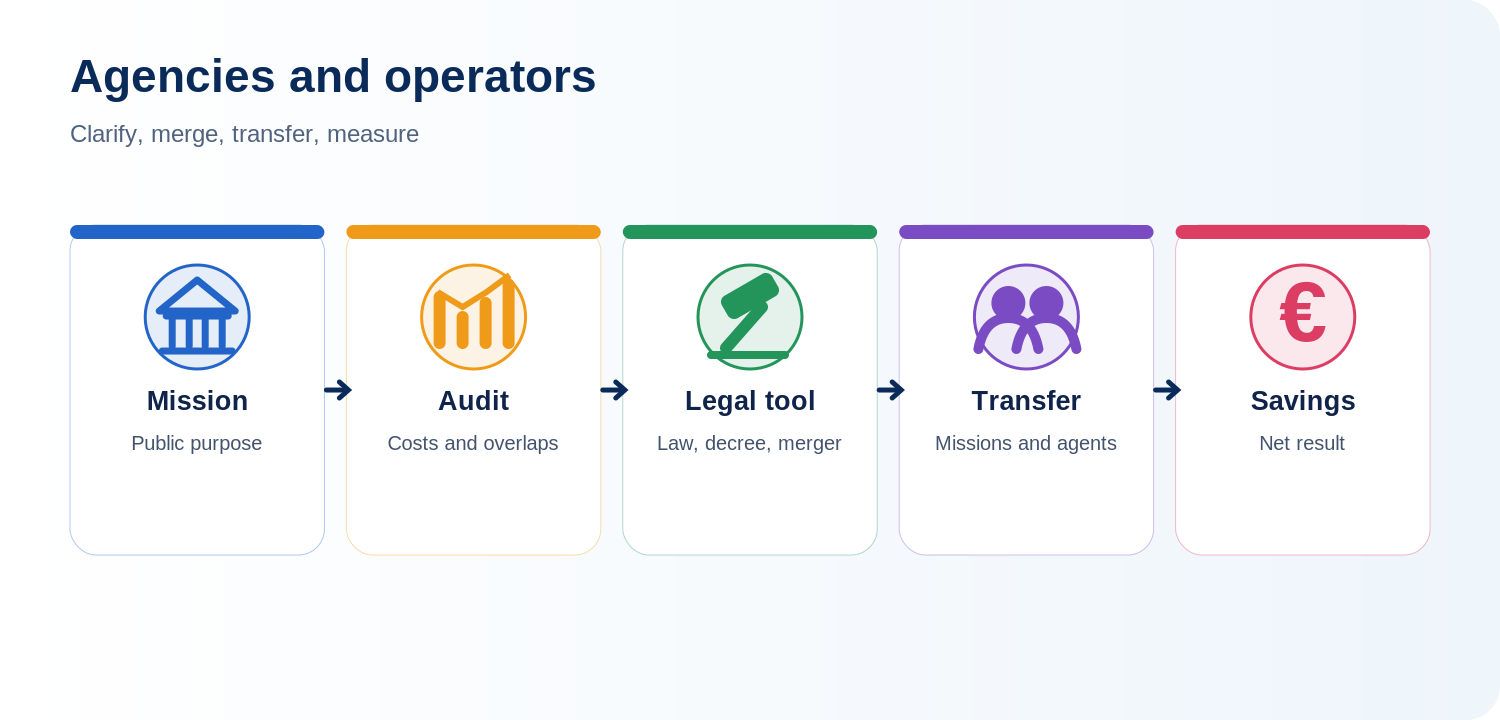
French public debate often talks about “agencies” as if they formed one uniform block. In reality, the landscape includes state operators, public establishments, independent authorities and many satellite bodies. Specialisation is not automatically bad, but it becomes a problem when it creates opacity, duplication or excessive coordination costs.
Because the legal and administrative vocabulary is technical. “Agency” is often a practical label rather than one single legal status. “State operators” are more clearly identifiable in budgetary language. Public establishments and independent authorities add further layers of complexity.
Technical, scientific, regulatory or operational tasks may be assigned to a dedicated body.
Some bodies are created to work outside the strictest ministerial framework.
Expertise, control or project management may be organisationally separated.
New structures often accumulate over older ones instead of replacing them cleanly.
When missions overlap, chains of responsibility become opaque and multiple bodies work on adjacent tasks without enough coordination.
This page is designed to make the issue intelligible. The fuller analysis of categories, mergers, reintegration and suppression scenarios is developed in dedicated dossiers and in the reform book.
No. Some perform essential functions. The issue is not indiscriminate hostility but rigorous examination.
Because some specialised or control functions may justify distinct organisations.
Mapping missions, handling transition costs and arbitrating between clarity, flexibility and effectiveness.