


Low-wage trap
Poor design may discourage wage increases.
delta-sierra.com
David Salvan | Books, Public Policy and Mars Colonization
The measure aims to reduce hiring costs on modest wages and must be coordinated with the 2026 general declining contribution reduction.
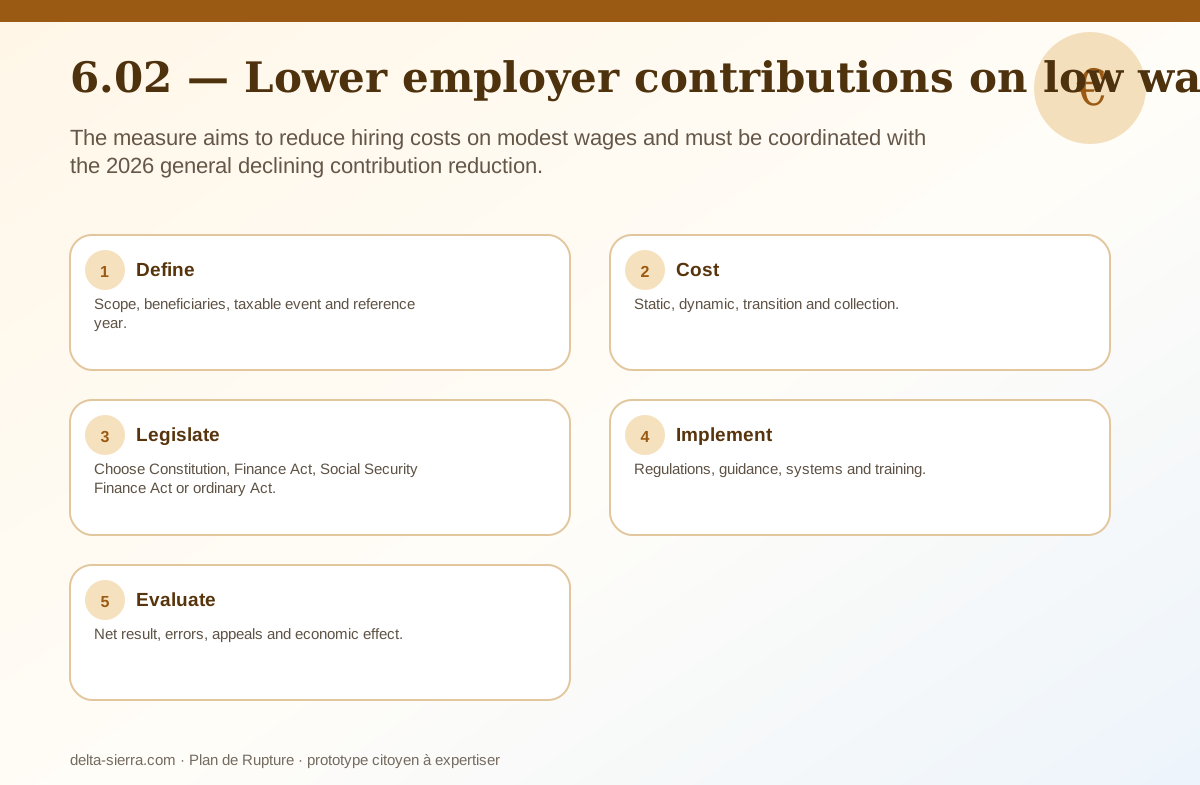
The measure aims to reduce hiring costs on modest wages and must be coordinated with the 2026 general declining contribution reduction.
Since 2026, the French general declining reduction applies to several employer contributions and decreases with pay. A new cut must state whether it replaces, supplements or simplifies that system.
Poor design may discourage wage increases.
Some hires would happen without the aid.
Multiple scales increase payroll errors.
Lost revenue must be transparent.
| Indicator | Before | After | Purpose |
|---|---|---|---|
| Scope and population | Baseline | Annual value | Prevent perimeter changes |
| Budget effect | Estimate | Cash collected or spent | Separate promise from execution |
| Transition cost | Disclosed | Multi-year tracking | Calculate net effect |
| Appeals and errors | Initial rate | Corrected rate | Protect rights |