


Inventory
Create a public register of obsolete, overlapping or contradictory rules.
delta-sierra.com
David Salvan | Books, Public Policy and Mars Colonization
Legislative clean-up is not a mass automatic deletion. It is a permanent simplification programme that classifies every rule, assesses its effects and selects the correct legal instrument.
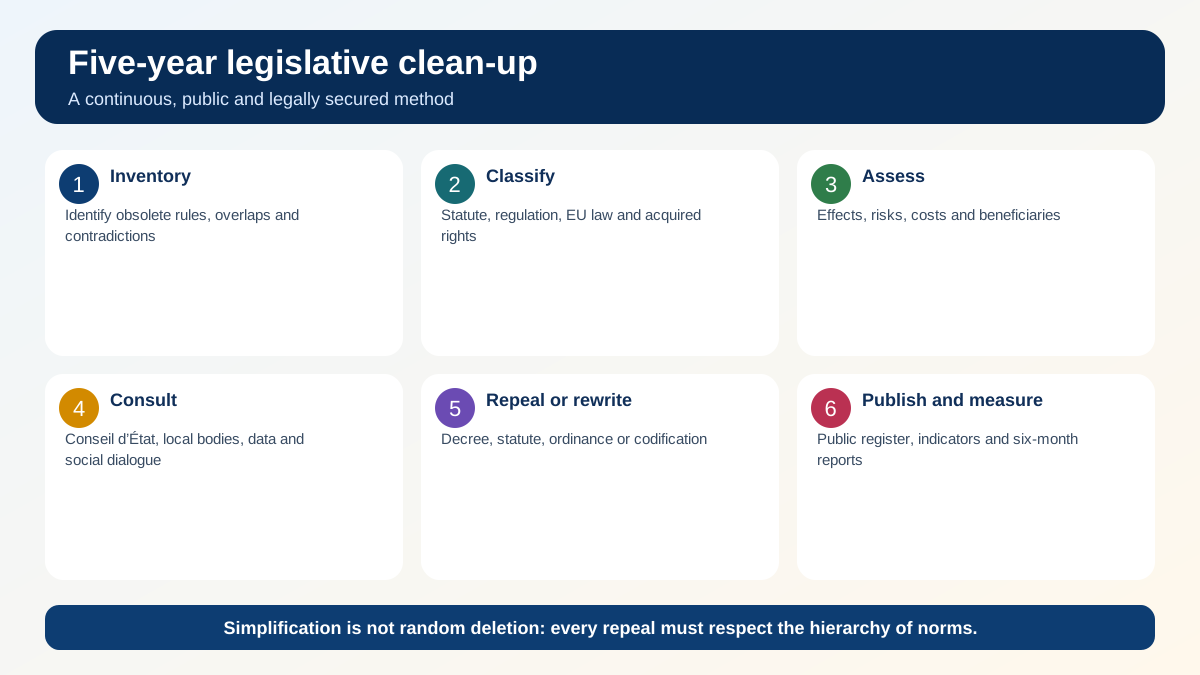
A legislative clean-up mission cannot delete rules indiscriminately. It must first determine whether a rule belongs to statutory law, regulatory law, European Union law, an international commitment or an individual right that has already been acquired.
Create a public register of obsolete, overlapping or contradictory rules.
Identify the rank of the norm and the authority competent to change it.
Assess rights, costs, local authorities, businesses and public employees.
Obtain mandatory opinions and consult affected stakeholders.
Use a statute, ordinance, decree, order or regulatory repeal as appropriate.
Publish results, litigation, savings and unintended effects.
| Situation | Likely instrument |
|---|---|
| Obsolete regulatory rule | Repealing decree or ministerial order |
| Provision formally enacted as statute but materially regulatory | Article 37 reclassification, then decree |
| Rule that belongs to the statutory domain | Simplification Act |
| Rapid rewriting of a precisely defined statutory set | Empowering Act followed by ordinance |
| Administrative reorganisation without changing statutory rights | Organisation decree and ministerial orders |
A mission attached to the Prime Minister and supported by the Government Secretariat.
Lawyers, policy departments, budget experts, data specialists, local government and user representatives.
Initial inventory within sixty days, followed by six-month simplification packages for five years.
For each proposal: targeted text, reasoning, consultation, cost, risk and proposed instrument.