Direct child
€1,000,000 exempt per child and per parent’s estate. Above that threshold, the current direct-line progressive schedule remains applicable to the excess unless a later decision explicitly changes it.
delta-sierra.com
David Salvan: narratives, analysis and proposals
The rule is now fixed: protect ordinary family wealth when today’s asset value may reflect decades of property inflation and scarcity rather than a new cash income received by the family.
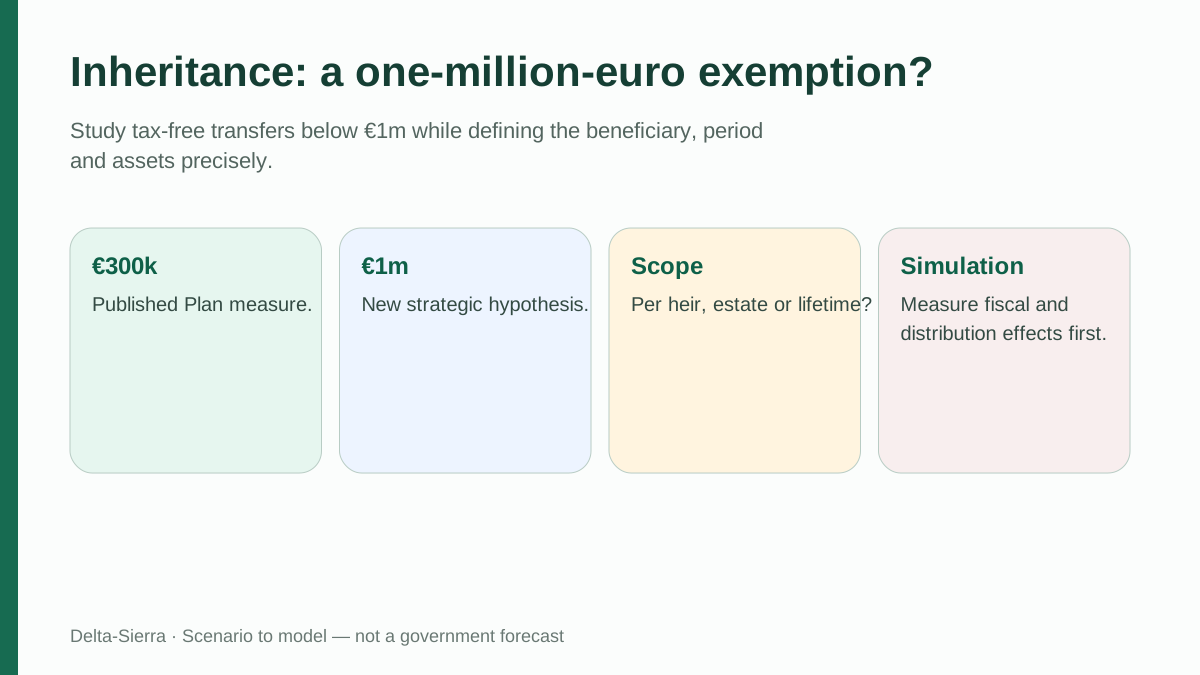
€1,000,000 exempt per child and per parent’s estate. Above that threshold, the current direct-line progressive schedule remains applicable to the excess unless a later decision explicitly changes it.
€500,000 exempt for a qualifying child of the spouse or partner under a statutory family-assimilation test. Above the threshold, the reference inheritance-tax burden is divided by three. Where current law treats the beneficiary as unrelated and taxes at 60%, this means 20% on the excess.
€1,000,000 exempt per sibling. Above the threshold, the current sibling schedule applies to the excess unless a later decision changes it.
The allowance applies to the net value transferred whether the estate consists of cash, an apartment, a house, land or other assets.
In 2026 the ordinary allowance is €100,000 per child. The taxable direct-line share then faces progressive rates from 5% to 45%. For siblings, the ordinary allowance is €15,932 followed by 35% and 45% rates, subject to a narrow full exemption for certain cohabiting siblings. Blended-family outcomes depend on filiation and adoption rules; Article 786 of the Tax Code contains specific exceptions for simple adoption.
This reform is a tax-revenue loss, not a saving. It must be microsimulated before it is allowed into any funded fiscal scenario. The decision concerns inheritance tax; lifetime gifts are not silently folded into the same allowance.
The updated doctrine no longer preserves the usufruct/bare-ownership split as a tax-optimisation tool. Article 669 of the French Tax Code currently values the two rights separately according to the usufructuary's age. Under the Delta-Sierra reform, splitting one economic asset into two legal rights must not, by itself, reduce the total tax burden below that of an economically equivalent full-ownership transfer.
The civil-law concept itself is not abolished. Bare ownership and usufruct can protect a surviving spouse or organise use of property for reasons unrelated to tax. The reform therefore imposes tax neutrality of the split: the same economic value transferred should bear the same overall tax, with a mechanism preventing the same asset from being taxed twice when the rights later reunite.