Tax reform · Plan de Rupture

How is a tax created, amended or abolished?

A complete public guide from political decision to tax notice and evaluation.
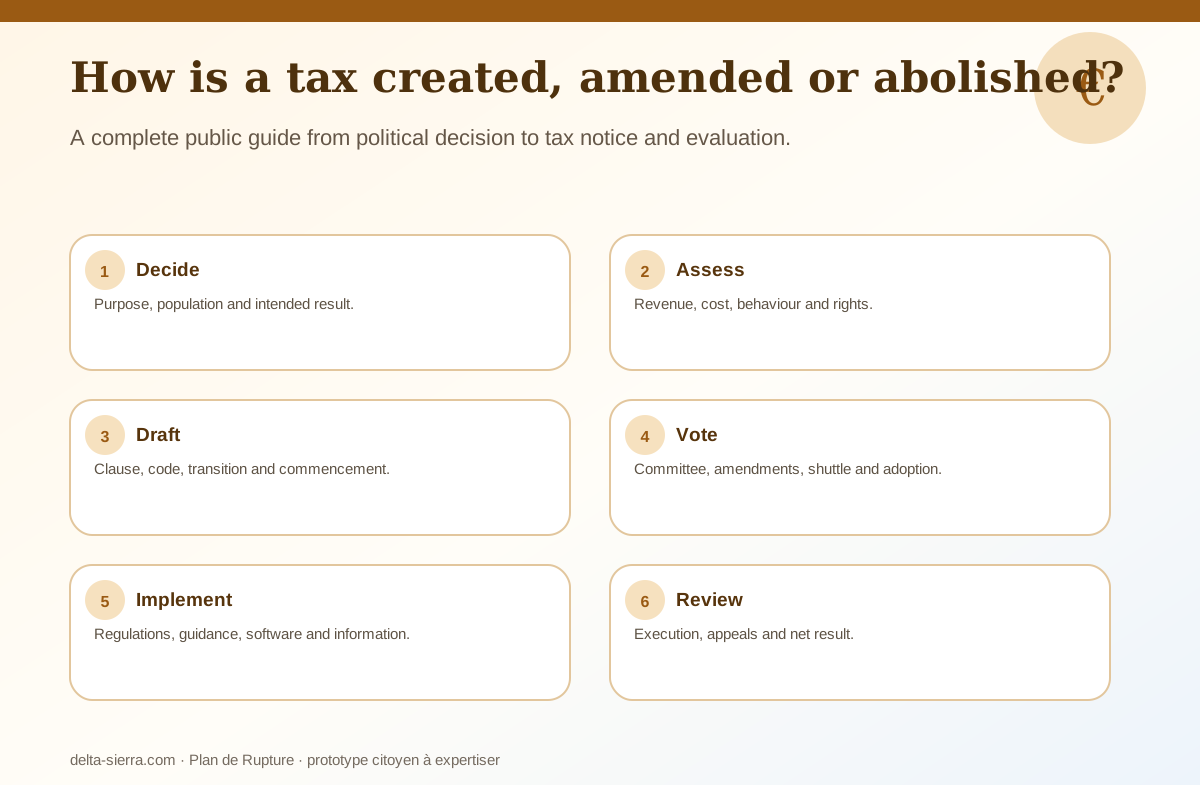
How is a tax created, amended or abolished?

Who can create, amend or abolish a tax?

Parliament

Article 34 reserves tax bases, rates and collection rules to statute.

Government

It usually prepares the bill, impact assessment and financial clauses.

Conseil d’État

It reviews government bills before the Council of Ministers.

Constitutional Council

It may review the Act before promulgation.

The complete path

  1. Political decisionDescribe the problem, expected result and affected taxpayers.
  2. Prior assessmentCost revenue, behaviour, administration and distribution.
  3. Choose the vehicleFinance Act, Social Security Finance Act, ordinary Act or constitutional amendment.
  4. DraftPrecisely amend the relevant codes.
  5. Conseil d’État and Council of MinistersReview a government bill.
  6. ParliamentFiling, committee, amendments, shuttle and vote.
  7. PromulgationPossible constitutional review, signature and publication.
  8. ImplementationRegulations, forms, software, guidance, information and control.
  9. EvaluationCompare forecast, execution, appeals and economic effect.

What a decree cannot do

Simple rule: a decree cannot by itself create a tax base or rate reserved to statute. It can organise implementation within statutory limits.

Official sources

  1. French Constitution, Article 34
  2. French Constitution, Article 89