Lower general contributions
Target levies that most penalise hiring and take-home pay.
delta-sierra.com
David Salvan: narratives, analysis and proposals
Reduce the labour tax wedge so take-home pay rises without an equivalent increase in employer cost.
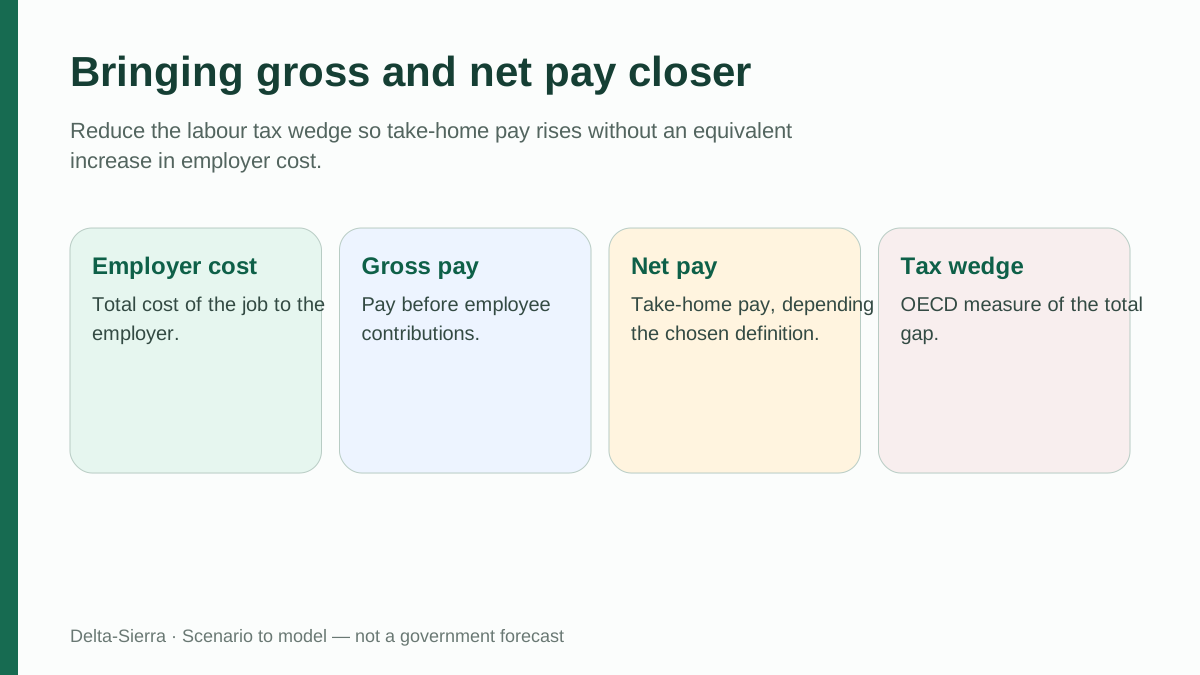
The labour tax wedge is the gap between total employer labour cost and the employee’s take-home position after taxes, social contributions and cash benefits counted by the OECD. It reached 47.2% for an average single worker in France in 2025 versus an OECD average of 35.1%.
Target levies that most penalise hiring and take-home pay.
Convert part of business support into lower general rates.
Every cut must identify the spending cut or replacement resource.
Employer cost, gross, pre-tax net and post-tax net.
Pensions, healthcare, unemployment, family and work-accident protection must be handled separately. Contribution cuts must not silently create unfunded rights.