


Constitutional basis
The Constitution must designate the matter as one governed by organic law.
delta-sierra.com
David Salvan | Books, Public Policy and Mars Colonization
Organic law is often mentioned in institutional reform but rarely explained. It specifies the Constitution in matters expressly reserved to it.
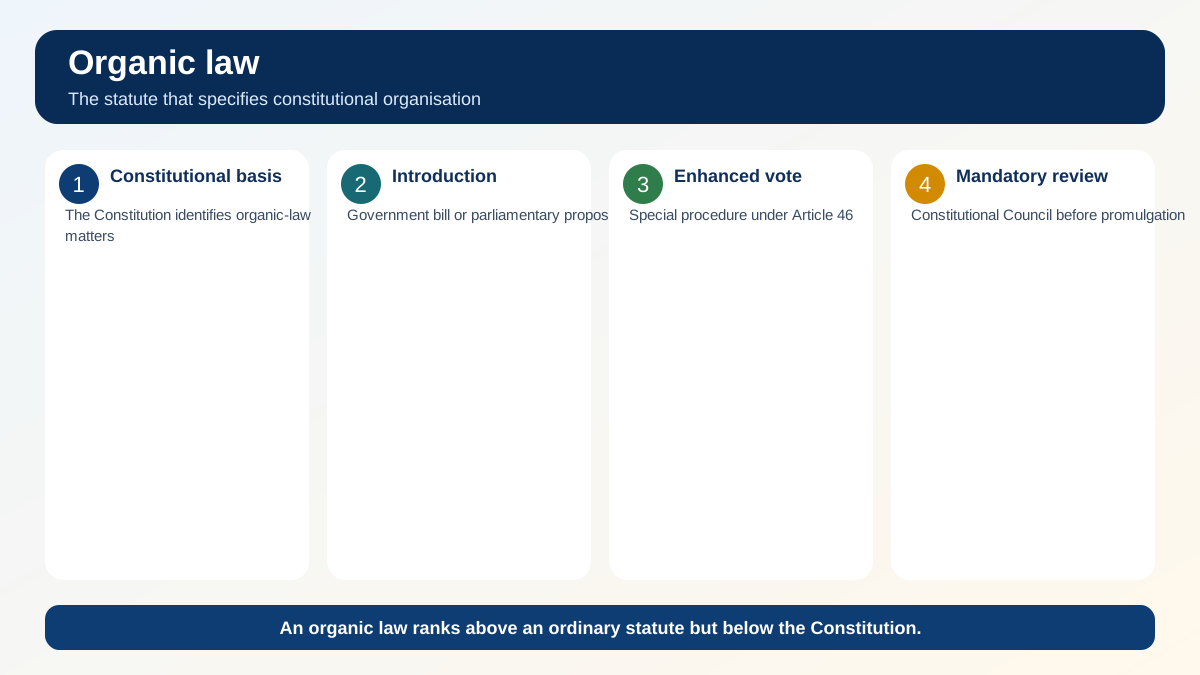
An organic law is a statute to which the Constitution assigns the task of specifying the organisation or operation of public authorities. It sits between the Constitution and ordinary legislation: it must comply with the Constitution, and ordinary statutes must comply with applicable organic rules.
The term refers to organs and organisation. Organic laws describe the operation of certain constitutional “organs”, including Parliament, the Constitutional Council, justice and public-finance frameworks where the Constitution expressly requires them.
The Constitution must designate the matter as one governed by organic law.
The text may be a government bill or a parliamentary proposal.
Article 46 provides specific deadlines and, in some situations, enhanced majority rules.
The Constitutional Council must rule before promulgation.