PUBLIC FINANCE · 30% TARGET ·
In what order should taxes fall after budget balance is restored?
A testable hierarchy for labour, production, inheritance, mobility and investment, activated through funded steps.
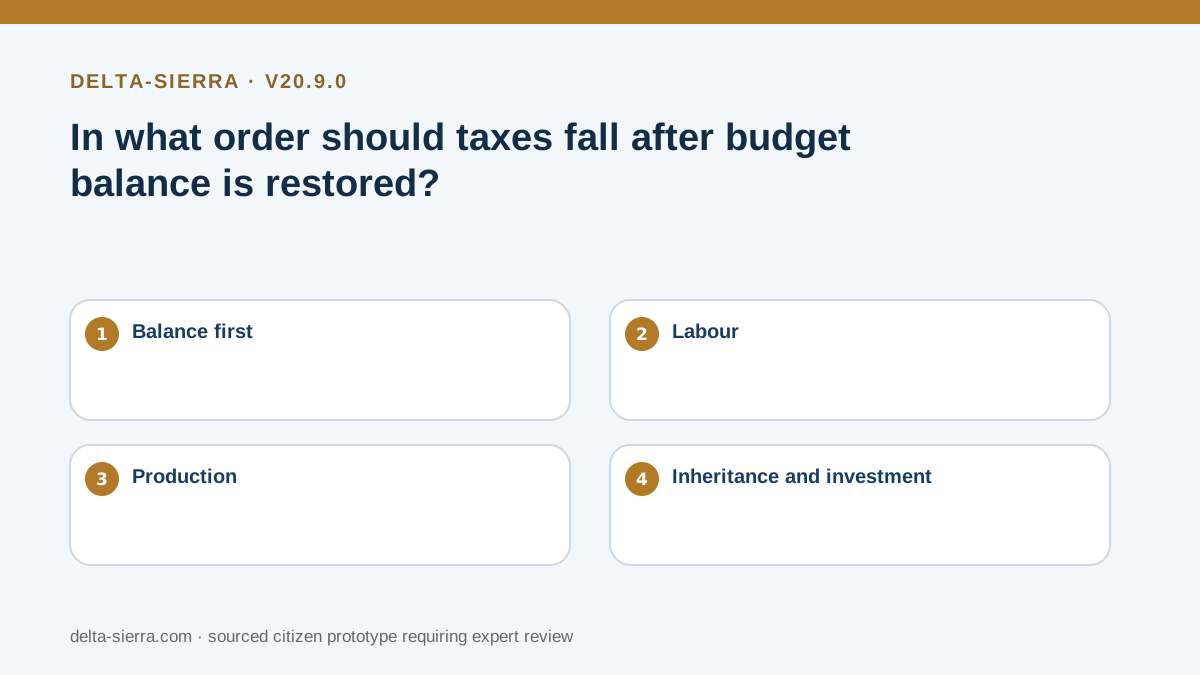
A hierarchy, not a list of tax giveaways
Tax reductions should be ordered by their capacity to support work, investment, supply and property freedom, and then tested against their actual fiscal cost.
| Priority | Axis | Working rule |
|---|---|---|
| 1 | Budget balance | No tax cut financed by a new structural deficit. |
| 2 | Labour tax wedge | After balance, prioritise levies that widen the gap between employer cost and take-home pay. |
| 3 | Production taxes | Reduce levies due irrespective of profit where they deter investment and location decisions. |
| 4 | Inheritance and gifts | Microsimulate the €1m lifetime allowance before rewriting the Plan. |
| 5 | Fuel and mobility | Reduce taxation within national financing constraints and applicable EU law. |
| 6 | Property and investment | Reduce tax frictions that lock capital in place, after impact modelling. |
This ranking is not final. It should change if simulations show a better growth/jobs/simplicity-to-cost trade-off elsewhere.